10 Cottagecore Wall Art Ideas
My cottagecore phase started the way most of mine do, with one small purchase I could not justify and a wall I could not leave blank. I had just moved a pine dresser into the spare room of my Munich flat and the wall above it stared back at me, pale and bare, for three weeks. A friend lent me a framed fern print from an old botany book, and the room changed overnight. That one print taught me more about cottagecore than any mood board ever did. The look lives on the walls, in paper and thread and wood, not in a shopping list. Here are the ten ideas I have tried, kept, or gifted since, with the prices I paid and the mistakes I made along the way.

Before You Hang Anything
- Measure twice, hang once: I mark the nail spot with a pencil dot and a strip of masking tape first, then step back and check it from the doorway before I pick up the hammer.
- Keep the palette narrow: I pick three colours from the room, usually sage, cream, and one warm brown, and I let every frame and print answer to those three.
- Mix old and new: A flea market find next to a fresh print stops a wall from looking like a shop display, and it costs far less than buying a matching set.
- Hang at eye level: The centre of a picture sits around 145 centimetres from the floor in my flat, which works for standing rooms and for sitting rooms alike.
- Leave one wall quiet: I keep at least one wall in each room bare, because a cottage needs breathing space and a full wall in every direction starts to feel crowded.
1. Vintage Botanical Prints

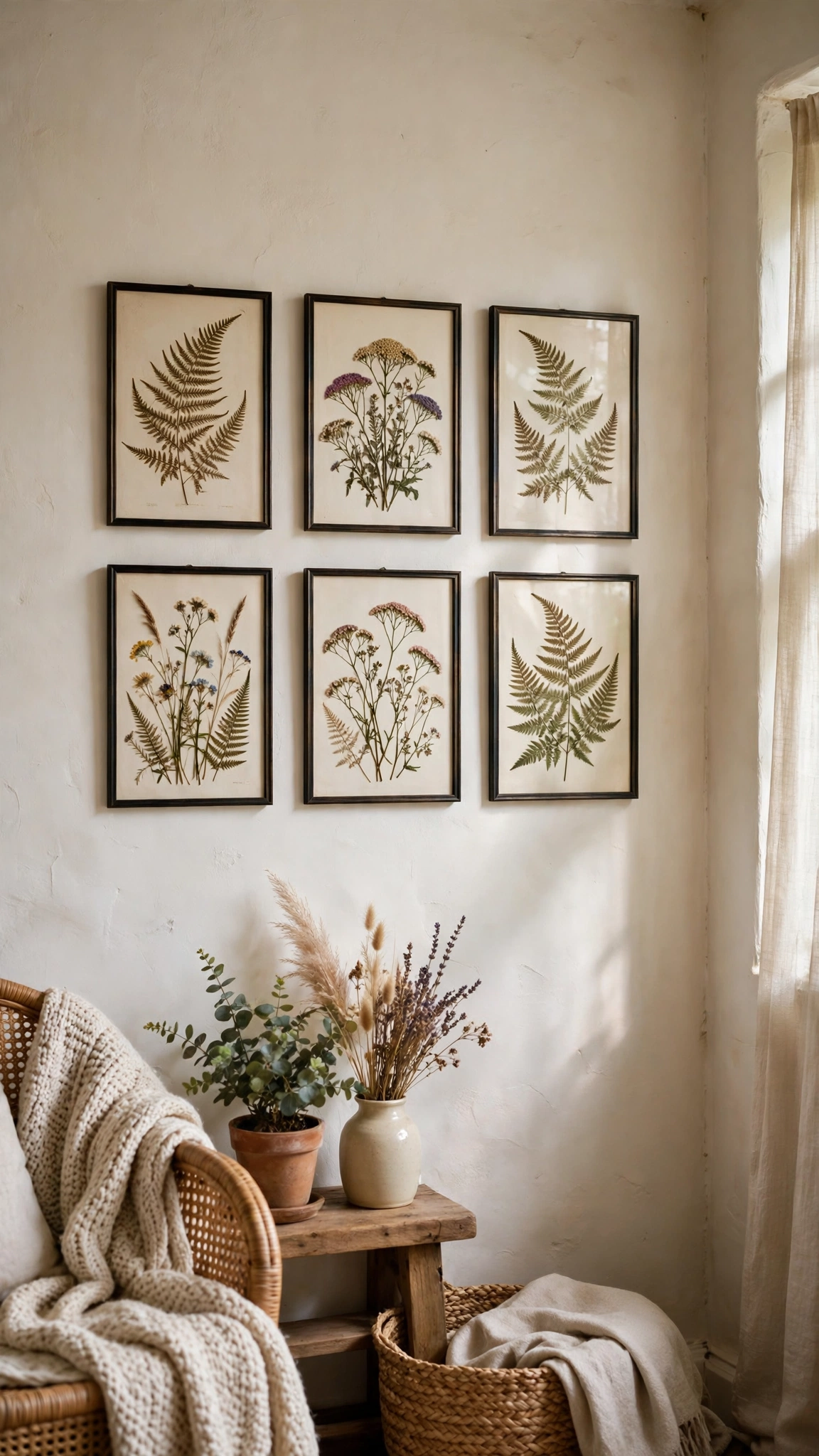
My first botanical prints came from the big flea market at Theresienwiese, where I found three fern and herb plates from a torn botany book for 18 euros. The seller had them stacked in a cardboard box under a table, and I spent a happy half hour sorting through them while Bruno waited at my feet, unimpressed. I took them home, slipped them into simple pine frames I already owned, and hung the trio in a row above the hallway bench. The paper had yellowed at the edges, the Latin names were printed in a thin old typeface, and the whole row looked like it had grown there over decades instead of one Saturday afternoon. What I learned from that wall is that botanical prints do their best work in groups of three or five, with a little space between each frame so the eye can rest. A single small print on a big wall looks lost, while a tight grid of six can turn a hallway into a museum corridor. I hang mine where the morning light reaches them but never where the sun hits the glass head on, because glare kills the soft pencil lines and fades the paper over time. If you buy reproductions, look for matte paper rather than glossy, since gloss throws back the light and cheapens the whole effect.
Try this: Pair one large fern print with two smaller herb plates and hang them in a row above a bench or a sideboard. This suits a hallway or a bedroom, and it works as a housewarming gift when you frame the prints yourself.
2. Watercolor Landscape Paintings

I bought my first watercolor landscape on a rainy weekend in Garmisch, from a painter who had set up a small stall near the church with a tarpaulin over her table and a kettle steaming behind her. The painting showed a meadow at dusk, all soft green and grey, and it cost 35 euros, which felt like a lot until I hung it in my living room and stopped noticing the blank patch above the sofa. Watercolour has a lightness that suits cottagecore, because the paint lets the paper show through and nothing in it shouts. I framed mine in a pale oak frame with a wide cream mount, and the mount matters more than people think. A narrow mount crowds the painting, while a wide one gives it room to breathe and makes even a small piece feel calm and considered. The bought piece still hangs in the same spot, and I rotate a second smaller watercolour in and out with the seasons, a snowy field in winter and a hay meadow in summer. If you shop for one, look for scenes with a low horizon and a lot of sky, since those read as peaceful from across a room, and check the colours against your sofa and curtains before you pay. An abstract floral painting can sit beside a landscape and hold its own, so I keep one small floral watercolour on the same wall for contrast.
Good to know: Hang watercolours away from direct sun and damp walls, since both fade the pigments and cockle the paper. This fits a living room or a reading corner, and it suits a quiet birthday gift for someone who loves the countryside.
3. Floral Embroidery or Cross-Stitch Art
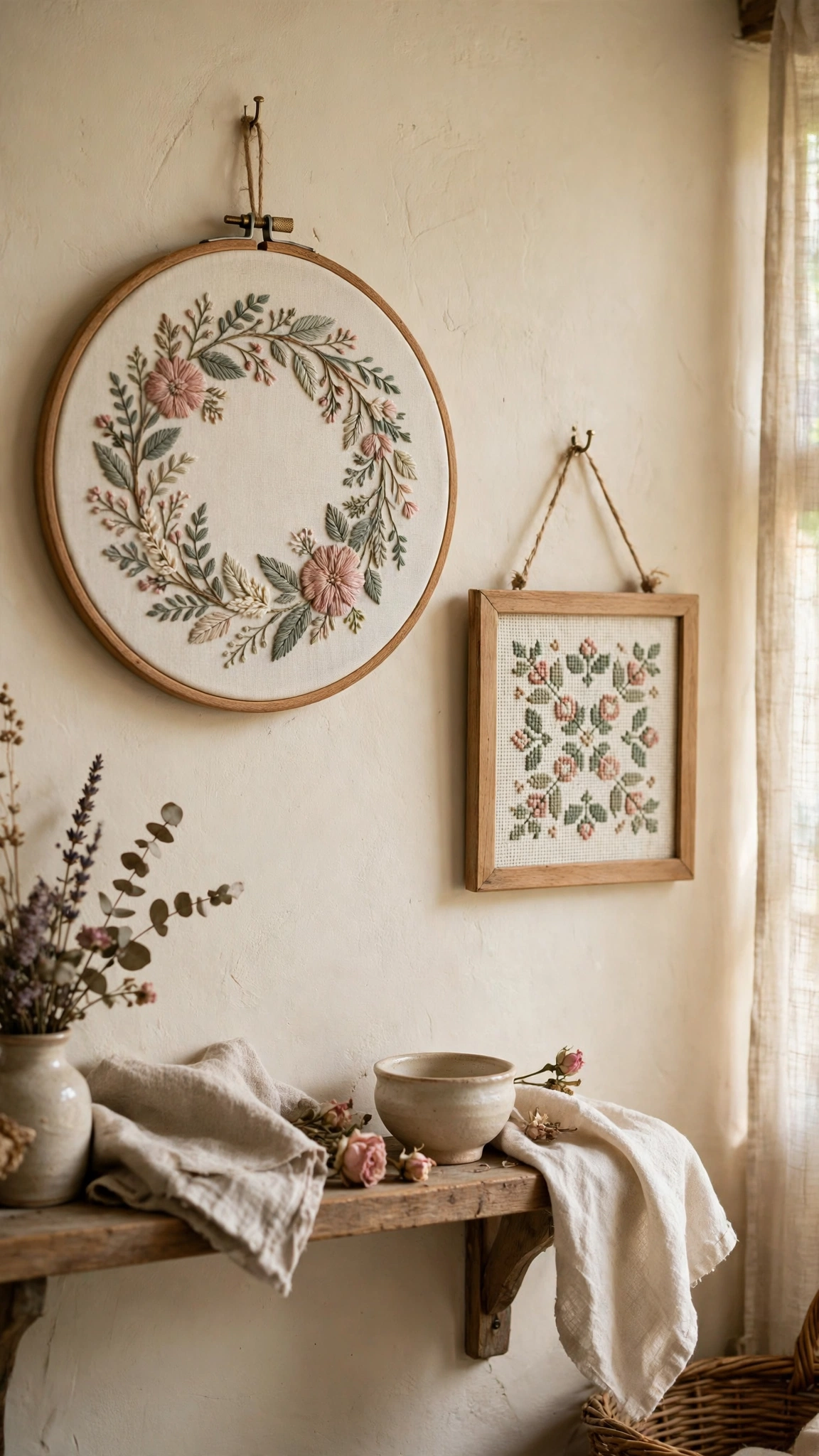
I stitched my first floral hoop on a January evening when the light went at four and the flat felt too quiet, and it took me three evenings of slow, clumsy work to finish a hoop the size of a saucer. I used a twelve-euro kit with the pattern printed on the linen, a wooden hoop, and six strands of floss in dusty pink and sage, and I unpicked the same stem four times before it looked like a stem at all. That little hoop now hangs in my kitchen, slightly crooked, and I love it more than anything else on these walls because my own hands made it. Embroidery and cross-stitch bring a texture that no print can match. The thread catches the light, the stitches cast tiny shadows, and the whole piece feels warm in a way paper never does. If you want to try it, start with a simple pattern, perhaps a sprig of lavender or a single rose, and pick a hoop no bigger than fifteen centimetres across so you can finish it in a weekend and feel proud instead of defeated. Vintage pieces turn up at flea markets too, often for a few euros, and I have found two lovely ones, a sampler with a crooked alphabet and a basket of flowers stitched in faded wool. I frame the finished hoops as they are, hoop and all, and hang them in small groups.
Make it yours: Stitch your initials and the year into one corner of the linen so the piece becomes a keepsake. This suits a kitchen, a hallway, or a nursery, and it makes a thoughtful gift for a new home.
4. Whimsical Animal Prints or Illustrations
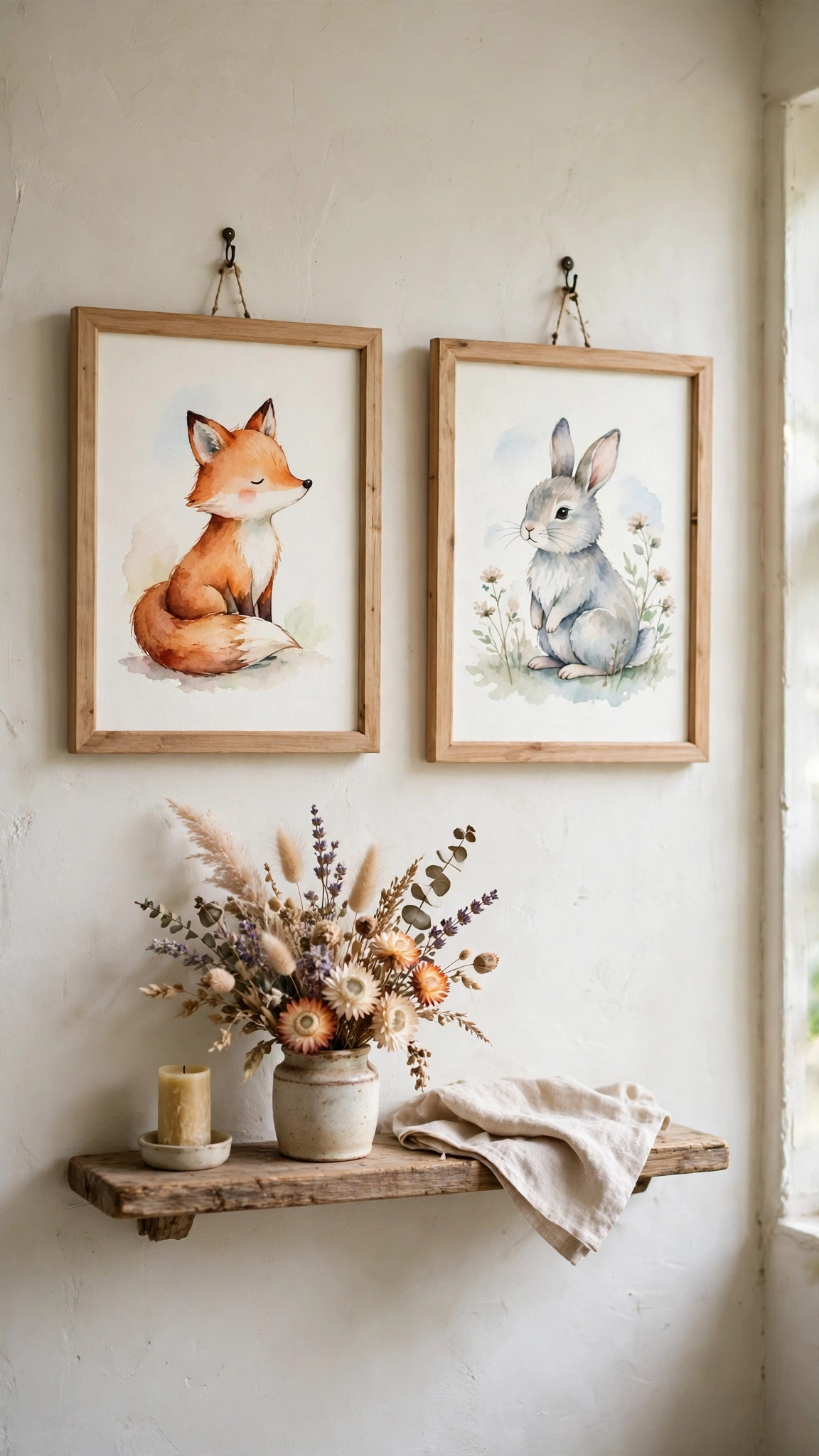
The fox print in my reading nook came home with me from a Christmas market, where I had gone to buy candles and came back with a framed fox instead, which tells you most of what you need to know about my shopping habits. The fox sits on a mossy bank in soft watercolour, looking sideways at the viewer with an expression I can only call polite suspicion, and my nephew, who was five at the time, named him Herr Fuchs and insisted on saying goodnight to him. Animal prints work in cottagecore because they bring a storybook quality to a room without tipping it into a theme park. I keep the style gentle, soft watercolour or fine line drawings, and avoid anything too cartoonish. Owls, rabbits, deer, and hares all suit the look, and I have a small hare print in the bedroom that I found in a secondhand bookshop for six euros. The frame matters here too. I use plain wood, never gilt, because gilt pushes the print toward formal and cottagecore wants ease. One animal print per room is enough, and two small ones can sit together, a rabbit and a bird on the same wall.
Budget tip: Look for animal illustrations in old children’s books at secondhand shops, where a single page often costs less than a coffee. This fits a reading nook, a bedroom, or a child’s room, and it works for a birthday present.
5. Vintage Botanical Posters
My biggest botanical poster hangs above the sofa, a fifty-by-seventy print of a peony branch that I bought online for 24 euros and framed in a plain black frame I found on sale for 15. The poster is bold where my small prints are quiet, and that contrast is the point. A large poster anchors a wall, gives the eye somewhere to land, and lets the smaller pieces around it play a supporting role. I tested the size with newspaper taped to the wall first, and I am glad I went big, since the smaller size would have vanished above a three-seater sofa. A thin frame keeps it feeling like a print rather than a painting, and a mount is optional at this scale. I chose a poster with a cream background rather than white, because cream sits better against my walls and the paper looks older, which suits the cottagecore mood. If you want wall art for the living room that makes a statement without shouting, a single large botanical poster does the job, and you can build the rest of the wall around it slowly. I added two small framed seed packets on either side a month later, and the trio now feels complete.
Beginner tip: Test the size with newspaper taped to the wall for a day before you order the print. This suits a living room, a dining area, or a hallway, and it works as a housewarming gift when you include the frame.
6. Vintage Farmhouse Prints
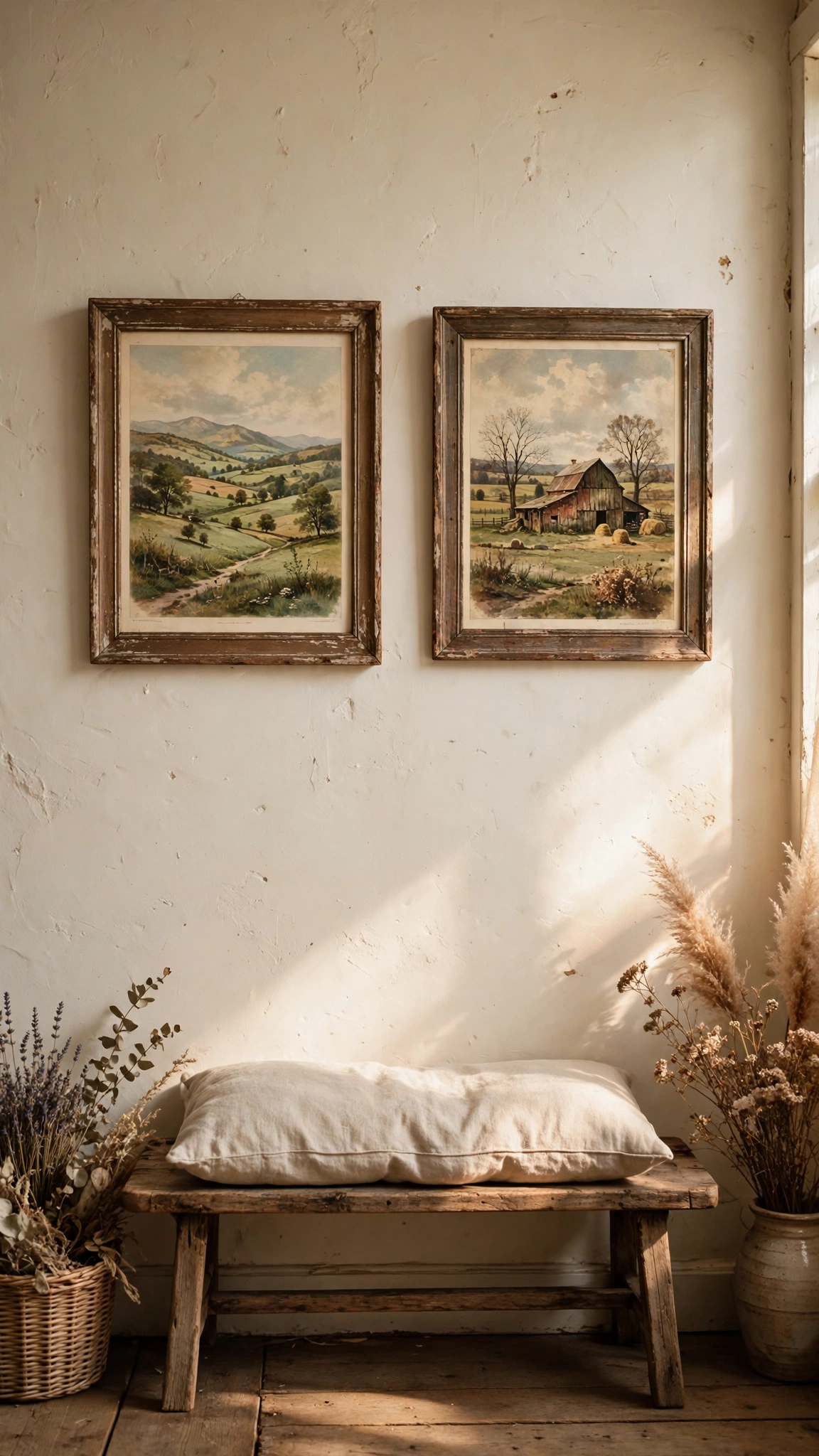
The farmhouse print in my kitchen shows a red barn, a vegetable garden, and a hen that looks thoroughly unimpressed by the whole scene, and I bought it at a flea market for nine euros because it made me laugh. It hangs beside the stove in a distressed pine frame I sanded and waxed myself. Farmhouse prints bring a sense of rural life into a room in a direct, honest way, and they suit kitchens better than any other art I have tried, because a kitchen is where the rural fantasy meets real life. I look for scenes with barns, farmhouses, chickens, or vegetable gardens, and I prefer prints that look a little worn, since a pristine farmhouse scene feels less believable than one with soft edges and faded colours. I rub a new pine frame with sandpaper and beeswax to take the shine off, and it passes for old at a glance. One farmhouse print is enough in a kitchen, and I keep mine at eye level where I can see it while I wait for the kettle. I wipe the glass once a month with a damp cloth, since kitchen grease finds its way onto every surface sooner or later.
Where it works: Hang a farmhouse print in the kitchen, the entryway, or a dining area where meals happen daily. This suits a country-style home and makes a warm gift for someone who has just moved to the countryside.
7. Nature-Inspired Mural or Wall Decal
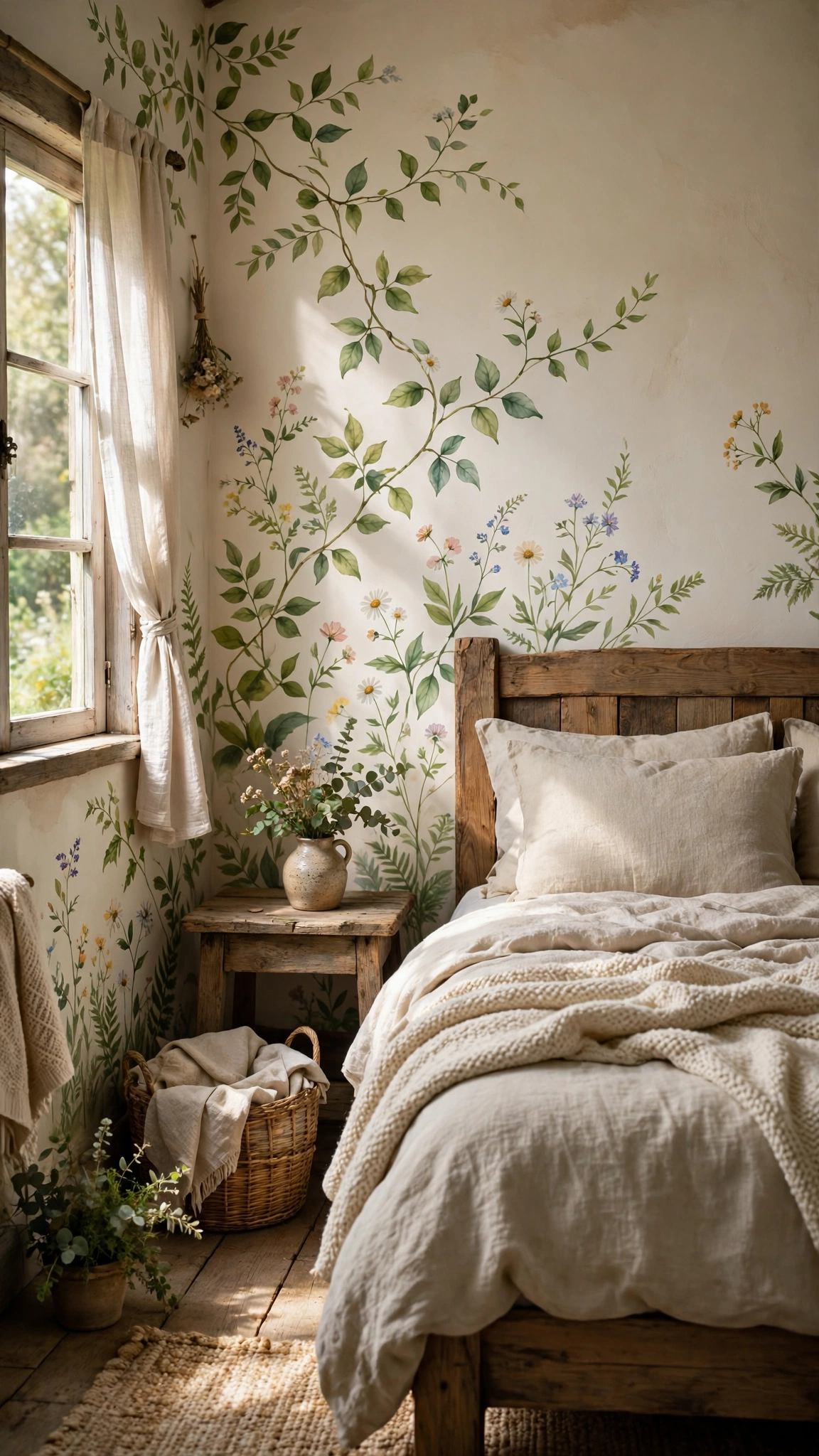
I put a peel-and-stick forest decal on one wall of my reading corner two winters ago, and I chose it because I rent my flat and a painted mural was out of the question. The decal cost 28 euros, arrived in a tube, and took me an afternoon to apply. The result is a row of soft green trees, a few birds, and a small deer, all in a style that looks hand-painted from a distance. Decals suit renters because they peel off cleanly when you move, and they suit anyone who wants a big effect without hiring a painter or committing to wallpaper. The key is the wall itself. It must be smooth, clean, and dry, and I wiped mine down with a damp cloth and let it dry for an hour before I started. I applied the largest pieces first, stepped back to check the spacing, and then filled in the smaller birds and leaves. If you want a mural instead, a local art student will often paint a small woodland scene for the cost of the paint and a good dinner. Either way, keep the rest of the wall calm, since a busy mural plus busy furniture turns a room into a forest in the wrong sense.
Watch out: Never apply a decal to fresh paint or textured wallpaper, since it will peel or refuse to stick. This fits a reading nook, a bedroom, or a nursery, and it suits a rented flat where paint is not allowed.
8. Quilted Art or Textile Wall Hangings
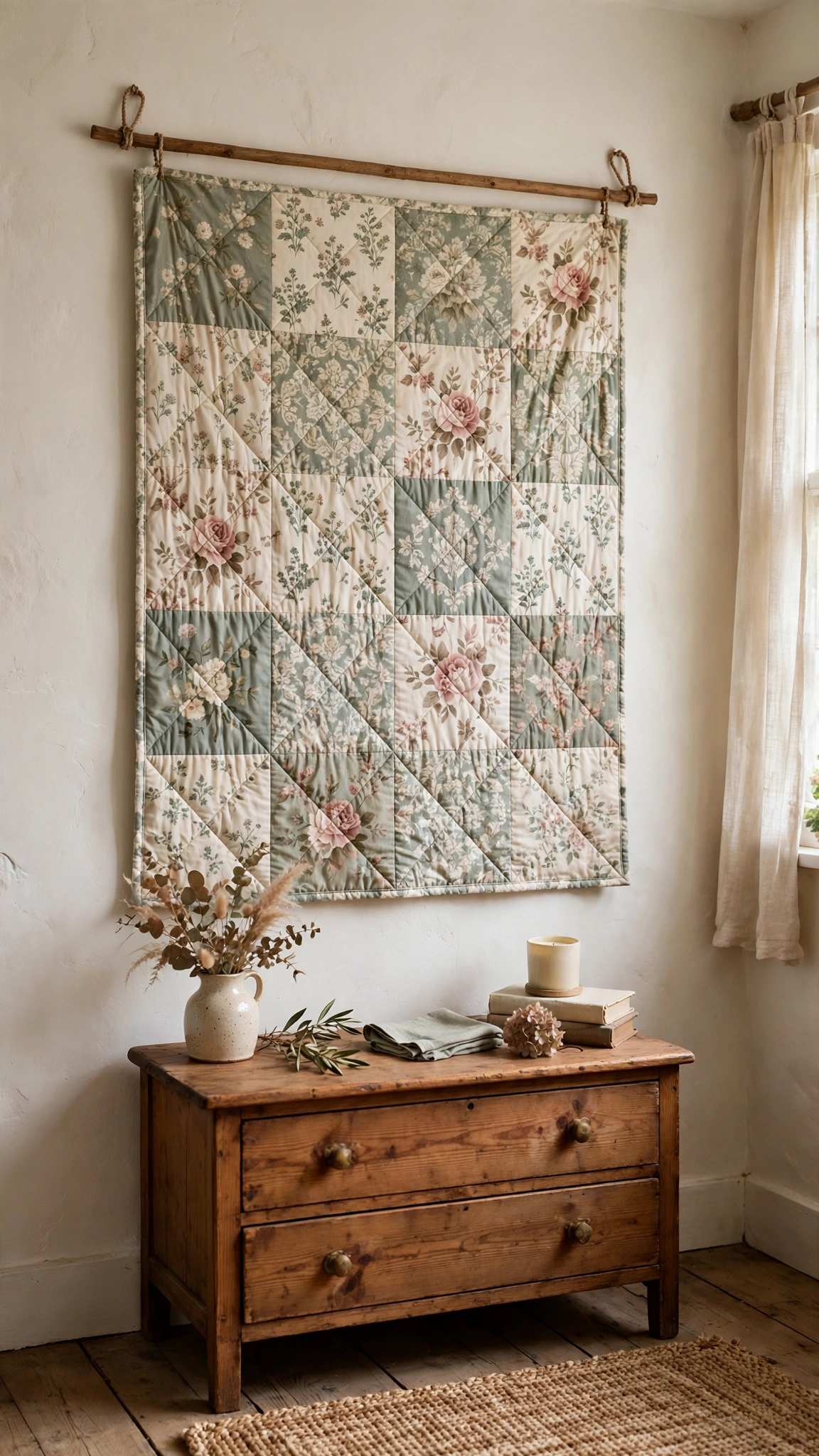
The quilted square above my desk is the oldest thing on my walls, a patchwork of faded florals that my neighbour gave me when she moved to a smaller flat, and it came with a story about her grandmother sewing it from dress scraps in the nineteen sixties. I hung it from a wooden dowel with two loops of linen tape, and it softens the whole corner of the room in a way no framed print can, because fabric absorbs sound and catches light differently from glass. Textile art brings warmth and texture, and it tells a story even when you know nothing about the maker, since the worn patches and mismatched prints speak for themselves. If you want to make your own, start with a simple square of nine patches in fabrics you already own, an old curtain, a worn shirt, a scrap of floral cotton, and stitch them by hand over a weekend. Hang a quilt with a dowel or a wooden clip rail rather than nails through the fabric, since holes in old cloth never heal. Handmade cottagecore pillow covers in the same fabrics tie the wall and the sofa together, and I use the same floral cotton for both.
Try this: Hang a quilt square from a dowel with linen tape loops instead of nails. This suits a bedroom, a living room, or a home office, and it works as a gift for a wedding or a housewarming.
9. Vintage Botanical Charts
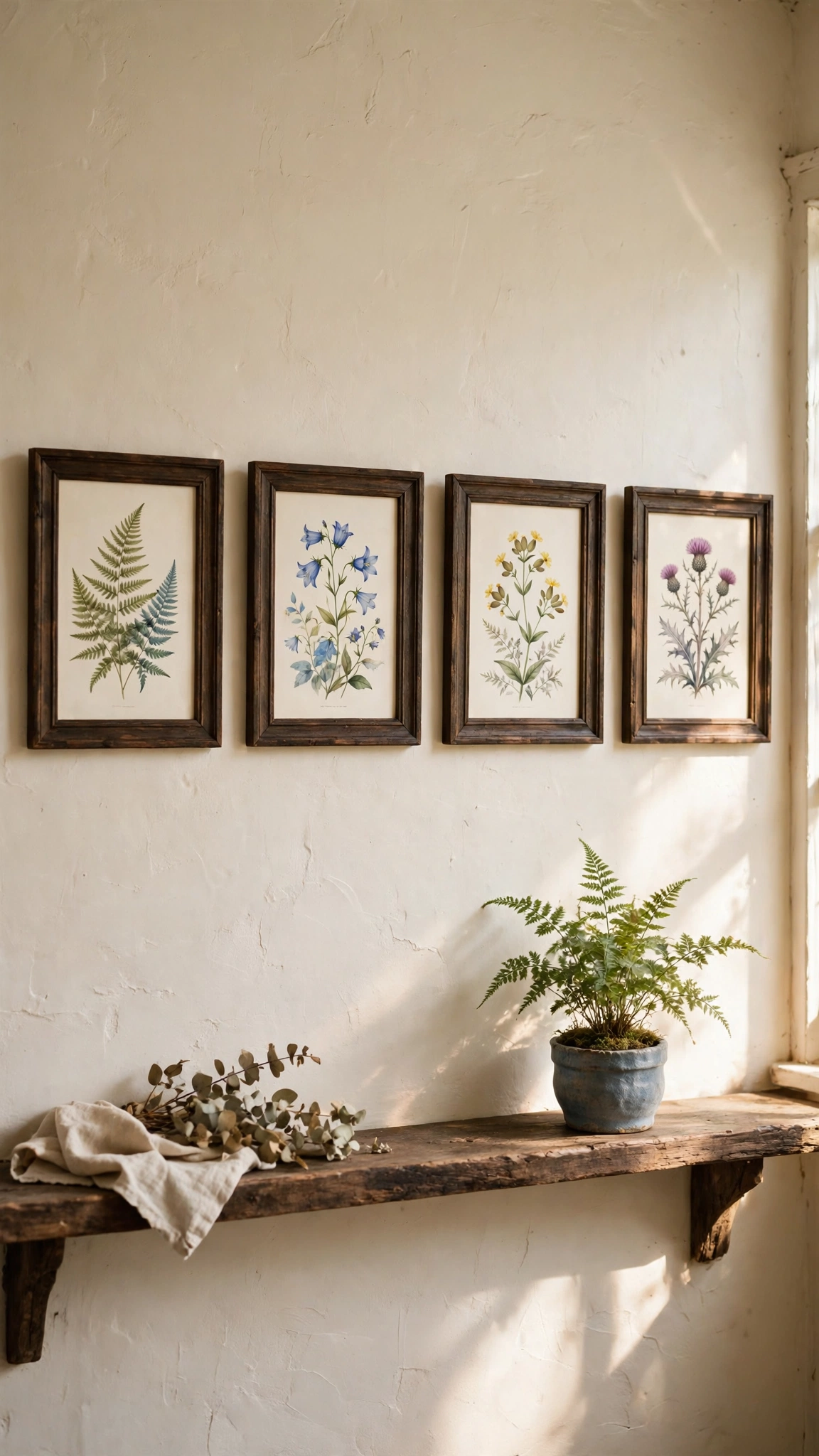
My herb chart hangs in the kitchen, a large print showing sage, thyme, rosemary, and mint with their Latin names in small capitals, and I bought it for 19 euros at a museum shop after spending a happy hour reading every label. Botanical charts differ from botanical prints because they carry information as well as beauty, and that mix suits a kitchen, where I actually use the herbs on the wall. I can glance up from the chopping board, check whether the plant in my hand is flat-leaf parsley or another herb, and feel quietly pleased with myself. The chart came from a reproduction of a nineteenth-century school poster, printed on thick matte paper with a cream background, and I framed it in a dark wood frame that matches the kitchen shelves. A chart this size needs space around it, so I cleared the wall of everything else and let it stand alone, which was the right call, since the labels and drawings reward a closer look. I have a second chart, a mushroom chart, in the hallway, chosen purely for the drawings, since I will never eat a wild mushroom. Check the print quality closely when you shop, since a blurry reproduction ruins the fine lines.
Good to know: Keep botanical charts out of steamy spots directly above the stove, since damp air cockles the paper. This fits a kitchen, a home office, or a living room, and it suits a gift for a keen cook or a gardener.
10. Rustic Wooden Frames with Family Photographs
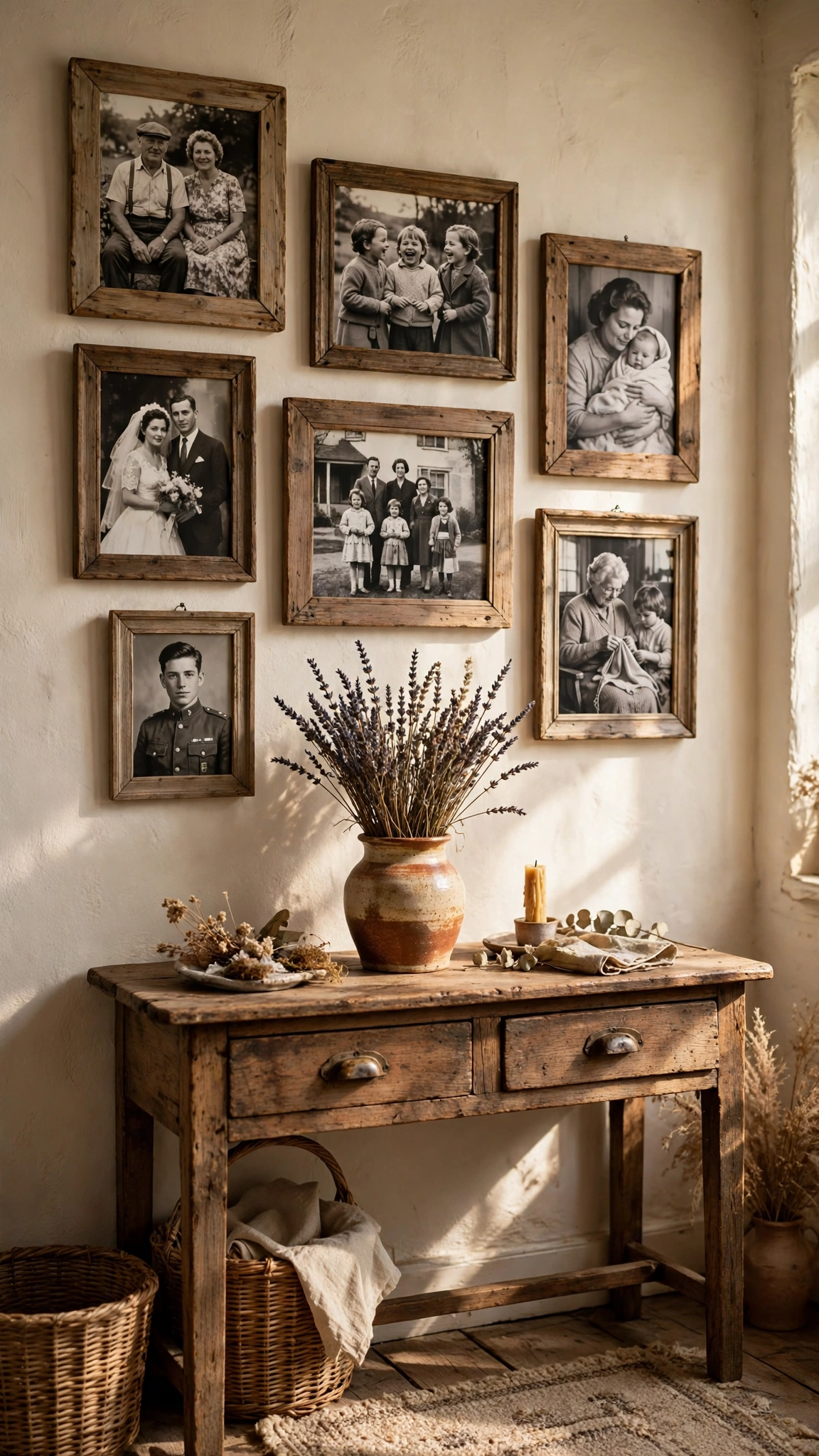
The gallery wall in my hallway holds six black-and-white photographs of my grandparents, my parents as teenagers, and one solemn-looking dog from the nineteen seventies, all in weathered wooden frames I collected over two years. I printed the photographs at a copy shop for a few euros each, choosing a matte finish so the glass would not throw back the hallway light, and I sanded each frame lightly and rubbed in beeswax to bring out the grain. I laid them out on the floor first, which saved me from at least three extra nail holes. I chose black-and-white prints over colour because the hallway light runs warm and yellow, and colour prints turned muddy under it, while black and white stays crisp. The largest frame sits in the centre, my grandparents on their wedding day, and the smaller ones gather around it like guests at a table. The wall now greets everyone who comes through the front door, and visitors always stop to look, which is the point of a hallway gallery. Family photographs bring a personal note that no bought art can match, and they remind me daily that a home is a record of the people who live in it.
Make it yours: Print one new family photograph each year and add it to the wall, so the gallery grows with your life. This suits a hallway, a living room, or a stairwell, and it works as a gift when you frame a shared memory for someone you love.
Conclusion
Cottagecore wall art works best when it grows slowly, one flea market find and one handmade piece at a time, instead of arriving in a single delivery. My walls took three years to reach this point, and the pieces I love most are the ones with a story attached, the fern prints from Theresienwiese, the fox from the Christmas market, and the quilt square from my neighbour. Start with one wall, pick the idea that speaks to you, and let the rest follow.