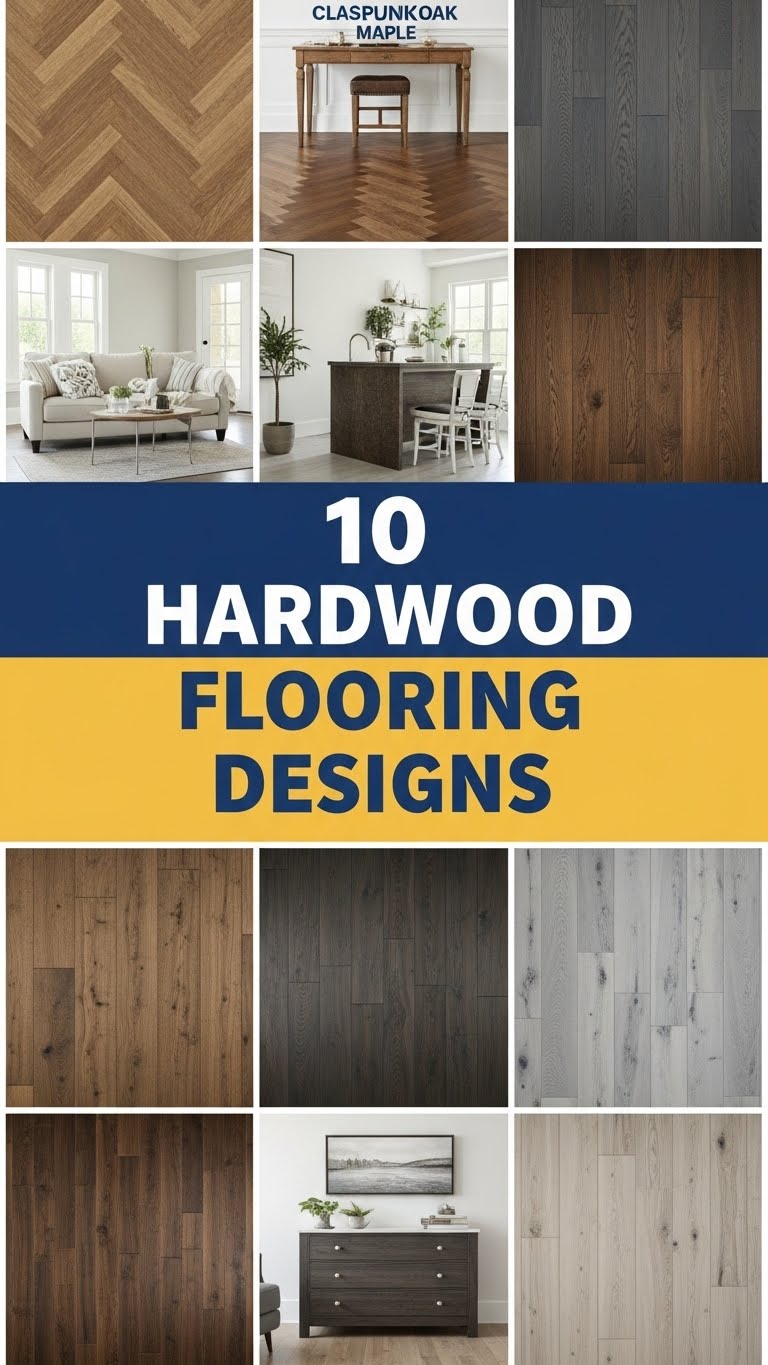
We replaced the tired laminate in our living room with real hardwood last spring, and I wish someone had walked me through the options honestly before I started. I spent weeks comparing planks, patterns, and finishes — and learned that the “best” hardwood depends entirely on your rooms, your budget, and how much chaos your household generates. Here are the ten designs worth knowing, from someone who lived through the decision.
1. Classic Oak Plank Flooring
Oak is the default for a reason: it’s hard, affordable, takes stain beautifully, and suits everything from farmhouse to modern. We chose white oak in a natural finish, and it handles our dog, our toddler, and my clumsiness with grace. Red oak is cheaper but pinker — white oak is worth the small premium for its neutral tone. If you’re overwhelmed by choice, start here: classic oak planks are the choice you will never regret.

2. Herringbone Hardwood Pattern
Herringbone is the pattern that makes guests stop and look at your floor. Those zigzag rectangles read as pure European elegance, and they make even modest rooms feel designed. The honest catch: installation costs roughly double straight planks because every piece is cut and placed individually. We did herringbone in our small entryway only — maximum impact, minimum square metres, manageable cost. If you love it, consider one feature room rather than the whole house.

3. Wide-Plank Rustic Hardwood
Wide planks (15 cm and up) with visible knots and grain variation give that relaxed, expensive-farmhouse feel. Fewer seams mean the floor looks calmer and rooms feel larger — a real advantage in open-plan spaces. The rustic grade is also the most forgiving of scratches and dents, which is why it’s my top recommendation for households with pets and kids. Our dog’s claws have met their match. Just know that “rustic” still costs real money; character grading doesn’t mean discount pricing.

4. Chevron Pattern Flooring
Chevron is herringbone’s sleeker cousin — the planks meet in clean V points instead of broken zigzags, creating continuous lines that draw the eye down the room. It reads slightly more modern and formal than herringbone. Like herringbone, it’s labor-intensive to install, so budget accordingly. I love it in hallways, where the V pattern literally points the way forward. One designer’s trick: run chevron toward your best window to pull light deep into the house.

5. Dark Walnut Drama
Dark walnut floors are pure drama — rich, chocolatey, and unapologetically luxurious. They make light furniture pop and give rooms a cocooned, evening feel. The trade-off is maintenance honesty: dark floors show every speck of dust and every pet hair. I have a friend with walnut floors and a white cat, and she vacuums daily. If you’re tidy (or child-free and pet-free), they’re breathtaking. If not, admire them in other people’s houses and choose something mid-toned.

6. Reclaimed Hardwood for Sustainable Design
Reclaimed wood — old barn beams, factory floors, gymnasium planks — brings a century of patina that no new floor can fake. It’s also the most sustainable choice, and every board has a story. The practical notes: reclaimed needs professional milling to be flat and stable, watch for old nails and (on very old wood) lead paint, and expect some boards to be unusable. We used reclaimed oak for a reading nook and the nail holes and saw marks are my favourite details in the house. Worth the extra effort if you love character.

7. Light Maple Minimalism
Pale maple floors are the Scandinavian secret: they bounce light around, make small rooms feel airy, and provide the calmest possible backdrop for furniture. Our bedroom has light maple and it genuinely feels like waking up in a cloud. Maple is hard and durable, though it doesn’t take dark stain evenly — embrace the lightness, don’t fight it. Pair with white walls and the room glows; pair with dark furniture for beautiful contrast. The minimalist’s dream floor.

8. Gray-Stained Hardwood Elegance
Gray-stained wood had its peak-trend moment, but done right — a soft, weathered gray rather than concrete-slab gray — it’s a sophisticated neutral that pairs with everything. I’d avoid the flat, lifeless grays that scream 2016; look for stains with visible grain and warm undertones. Gray floors are brilliant at hiding dust, which is a genuine practical win. If your style leans modern and cool-toned, this is your floor. Just choose a timeless shade, not the trendiest one.

9. Parquet Flooring Patterns
Parquet — those geometric squares of finger-block wood — is having a genuine revival, and I understand why: it’s graphic, warm, and unmistakably crafted. Modern parquet comes in large-format tiles that install far faster than the fiddly originals. It suits mid-century and eclectic interiors beautifully. The pattern is busy, so keep the rest of the room calm — parquet plus bold wallpaper is a fight nobody wins. In the right room, it’s the floor equivalent of a great piece of art.

10. Mixed-Width Plank Design
Mixed-width planks — random widths laid in a natural pattern — give floors an organic, hand-laid feel that uniform planks can’t match. It’s how floors looked before industrial milling standardized everything, and the irregularity is deeply pleasing to the eye. Installation needs a thoughtful installer (random doesn’t mean careless), but material costs are similar to standard planks. This is my pick for anyone who wants character without committing to a bold pattern like herringbone. Quietly distinctive.

Expert Tips for Choosing the Right Hardwood Flooring
- Test samples in your light: Flooring looks completely different under your windows than in the showroom. Borrow large samples and live with them for a few days.
- Match the wood to your lifestyle: Pets, kids, and heels demand harder species (oak, hickory) and forgiving finishes. Be honest about your household.
- Consider plank direction: Running planks toward the main light source makes rooms feel longer; across makes them feel wider.
- Don’t skimp on underlayment: Good underlayment quiets footsteps and smooths minor subfloor issues — the invisible upgrade you’ll feel daily.
- Finish matters as much as wood: Matte and satin finishes hide wear far better than gloss. Site-finished floors can be recoated; prefinished are harder to refresh.
- Acclimate the wood: Let planks sit in the room for at least a week before installation so they adjust to your home’s humidity — this prevents gaps later.
- Budget 10% extra material: Cuts, mistakes, and future repairs all draw from the same pile. Running short mid-installation is a nightmare.
A year after our install, I can say the research was worth every evening: our white oak floors have survived a toddler, a dog, and countless dinner parties, and they still make me happy every morning. Choose for your real life, test in your real light, and hire an installer whose previous work you’ve seen in person. Your floors are the one surface you touch every single day — they deserve the thought.