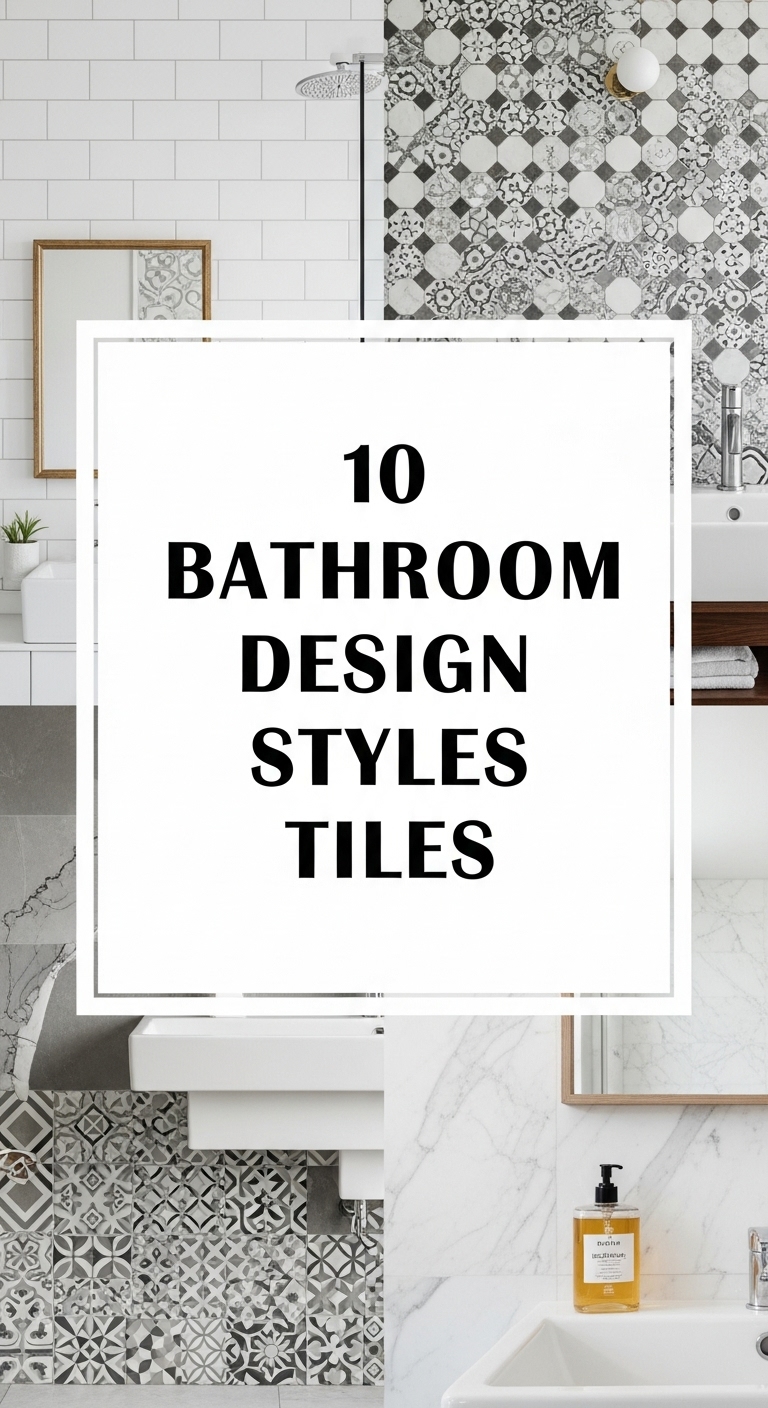
Tiles are the one decision in a bathroom you will live with for a decade, so I take them more seriously than paint or taps. When we retiled our bathroom three years ago, I spent two full weekends at tile shops with samples taped to our wall, watching how they looked in morning light versus evening light. That exercise saved me from at least two expensive mistakes. These are the ten tile styles I keep recommending, with what I learned about each one the practical way.
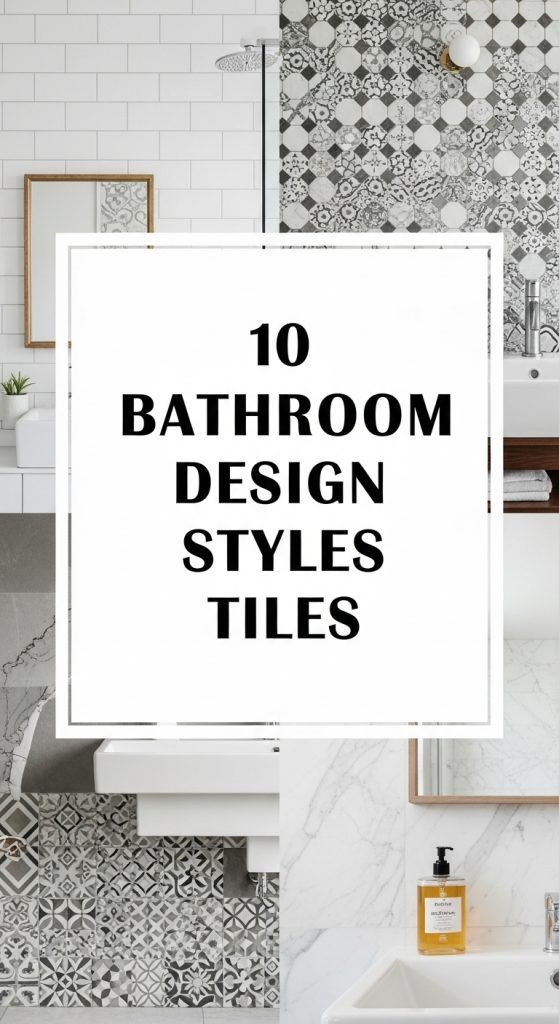
1. Modern Minimalist Bathroom Tiles
Large-format tiles in a soft grey are the closest thing to a safe bet in bathrooms. We used 60×60 cm porcelain on both floor and walls, and because there are so few grout lines, the room looks calm and noticeably bigger. The practical win nobody mentions: fewer grout lines means less scrubbing. I sealed ours once and have not thought about it since. Go for a matte or satin finish rather than high gloss — glossy large tiles show every footprint and water drip, and in a family bathroom that means constant wiping. Ours cost about 35 euros per square metre, mid-range, and I would pay it again.
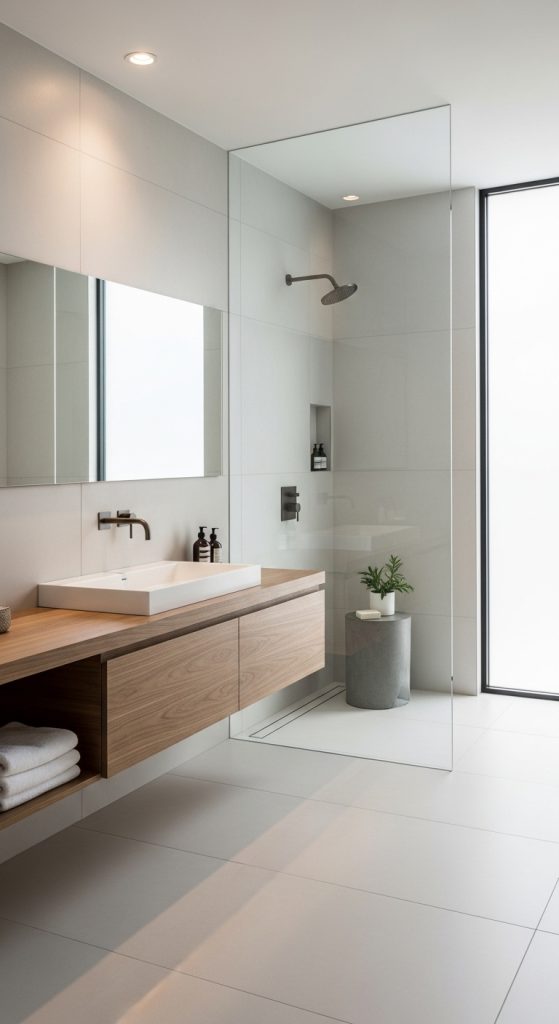
2. Rustic Farmhouse Bathroom Tiles
The combination here — white subway tile halfway up the wall, sage green paint above, terracotta-look floor tiles — is warmer than it sounds on paper. I did the subway tile wainscot in our old flat and it survived five years of steam without a single loose tile, because cement-based grout and proper sealing do the heavy lifting. The terracotta floor is actually porcelain with a terracotta print, which I recommend over real terracotta: the real thing needs sealing twice a year and stains if you look at it wrong. Keep the grout a shade darker than the tile. White grout on a bathroom floor is a cleaning commitment I would not wish on anyone.
3. Luxury Spa-Inspired Tiles
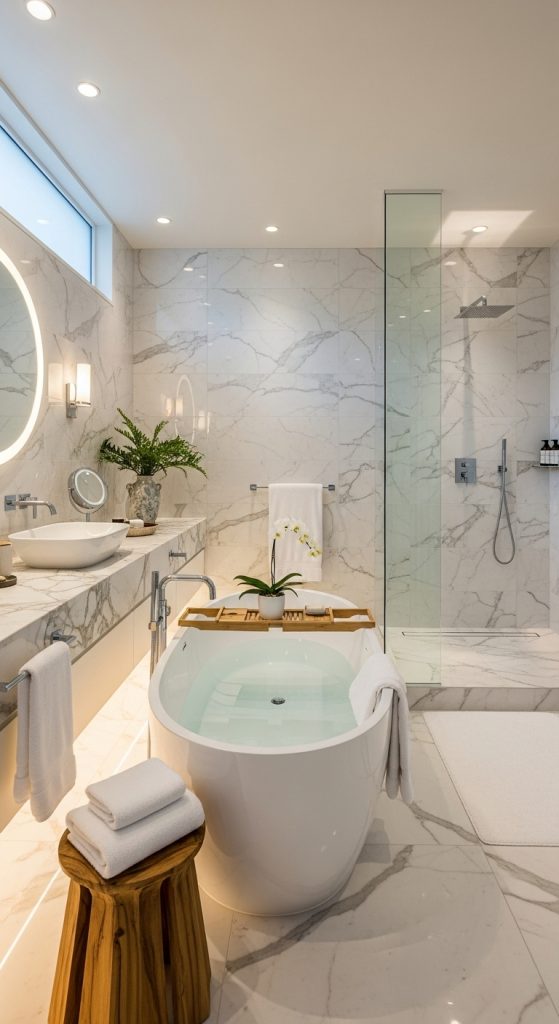
Marble-look porcelain is the best value trick in bathroom design. Real marble stains, etches from toothpaste and costs a small fortune; the porcelain version in this photo gives you the veining with none of the maintenance. We used it on one feature wall behind the tub and kept the rest plain — that restraint is what makes it look expensive rather than busy. One thing I learned: book-match the veining if you can. Our tiler aligned the pattern across two tiles so the veins flow into each other, and visitors always assume it is real stone. It added maybe an hour of his time and cost nothing extra.
4. Industrial Bathroom Tiles
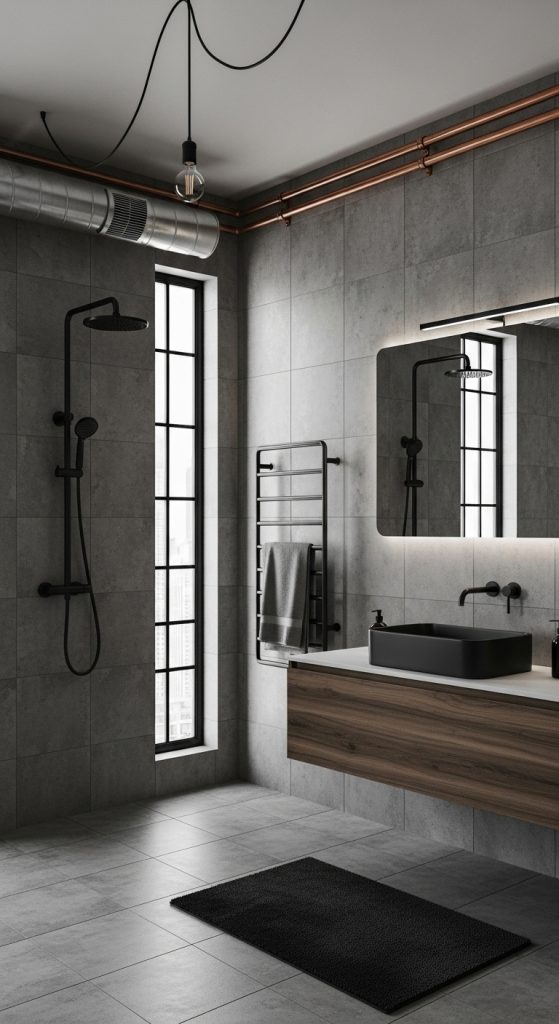
Concrete-look tiles give you the loft feeling without pouring actual concrete, which in a renovation is a blessing — real microcement over existing tiles needs a specialist and costs three times as much. The large grey tiles in this photo are porcelain, and the trick to selling the industrial look is the grout: use a dark grey grout, nearly the same tone as the tile, so the wall reads as one continuous surface. I paired ours with the exposed copper pipe I already had, and a wooden vanity to stop it feeling cold. My only regret is not adding underfloor heating when the floor was up. In an industrial-style bathroom with hard surfaces everywhere, warm feet make a ridiculous difference.
5. Coastal Bathroom Tiles
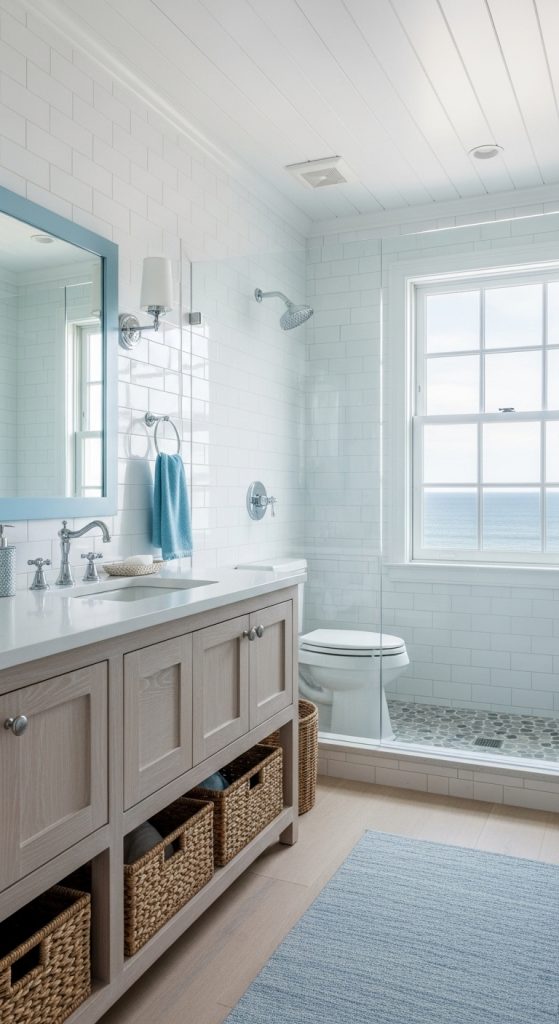
Coastal does not have to mean seashell borders. The version that works is pale blue-grey walls, white fittings and one natural texture — here it is the basket storage under the vanity. I painted our bathroom a similar dusty blue and used plain white wall tiles; the whole thing cost less than 200 euros in materials and everyone asks if we renovated. If you want actual tile pattern, keep it to the floor and keep the walls plain. A patterned floor with plain walls feels designed; patterned floor plus patterned walls feels like a beach souvenir shop. The baskets, by the way, are the cheapest storage upgrade going — 8 euros each and they hide all the ugly bottles.
6. Vintage Glam Tiles
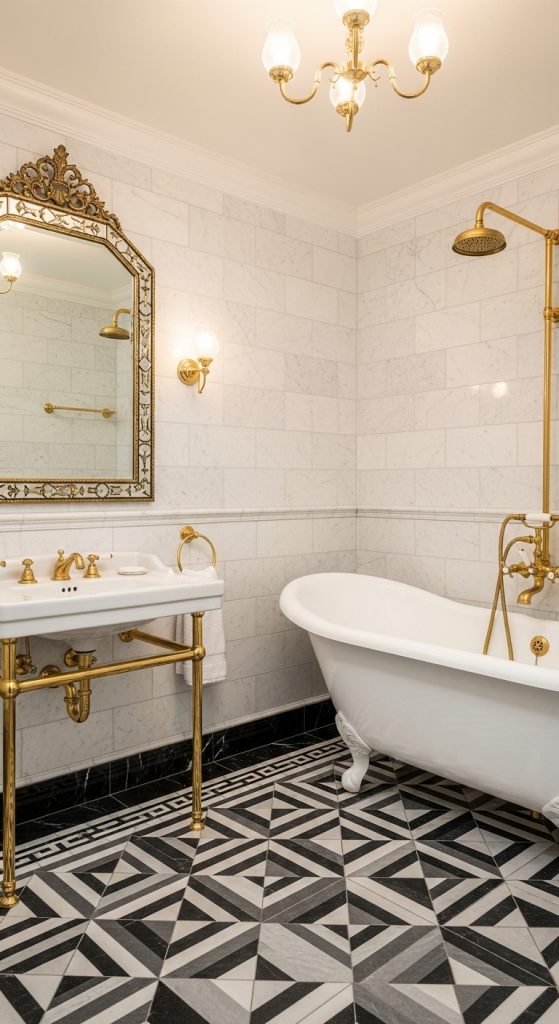
That black-and-white geometric floor is the star here, and it is easier to live with than you would think. Patterned cement-look porcelain hides dirt brilliantly — ours went a week between mops and still looked fine, which in a house with a dog is saying something. Keep the walls simple white subway or plain tile so the floor can do the talking. The gold fixtures are the glam part, and I will be honest: gold-look taps at the budget end chip. If you are going gold, buy from a brand with a proper PVD coating, or stick to accessories (mirror frame, light fittings) where wear is not an issue. The clawfoot tub is gorgeous but needs 30 cm clearance all round for cleaning — measure before you fall in love.
7. Bohemian Bathroom Tiles
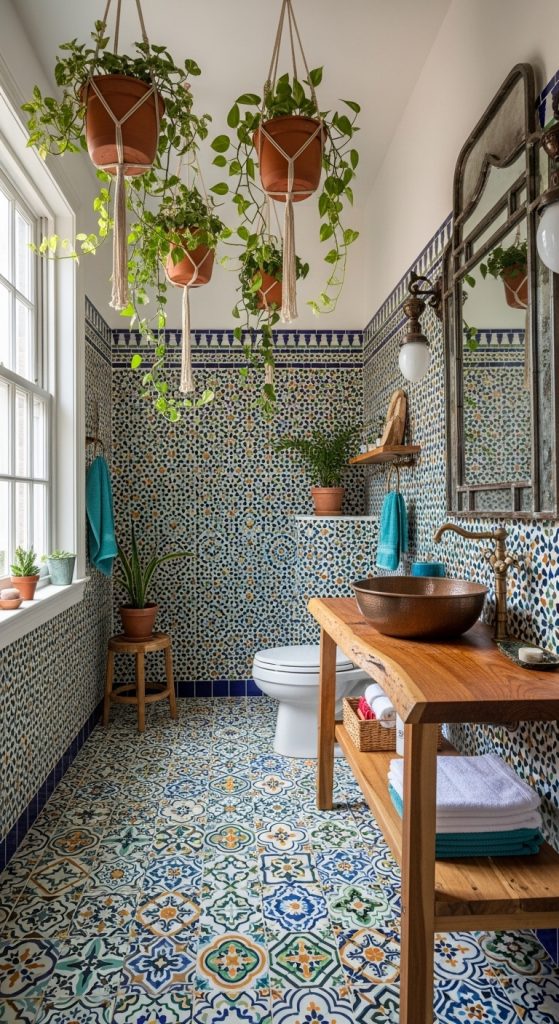
Coloured patterned tiles are the boho shortcut: one wall of them and the bathroom has a personality, no styling required. I tiled the wall behind our sink in a blue-and-terracotta pattern and left everything else white, and it is still my favourite decision in that room. Practical notes from living with it: patterned tile is forgiving of limescale and soap marks, which plain white is not. Use a grout colour pulled from the pattern — I used a warm grey — so the grout lines disappear into the design. And seal patterned tiles if they are not glazed porcelain; the encaustic-look ones are porous and will drink up hair dye. Ask me how I know.
8. Contemporary Black & White Tiles
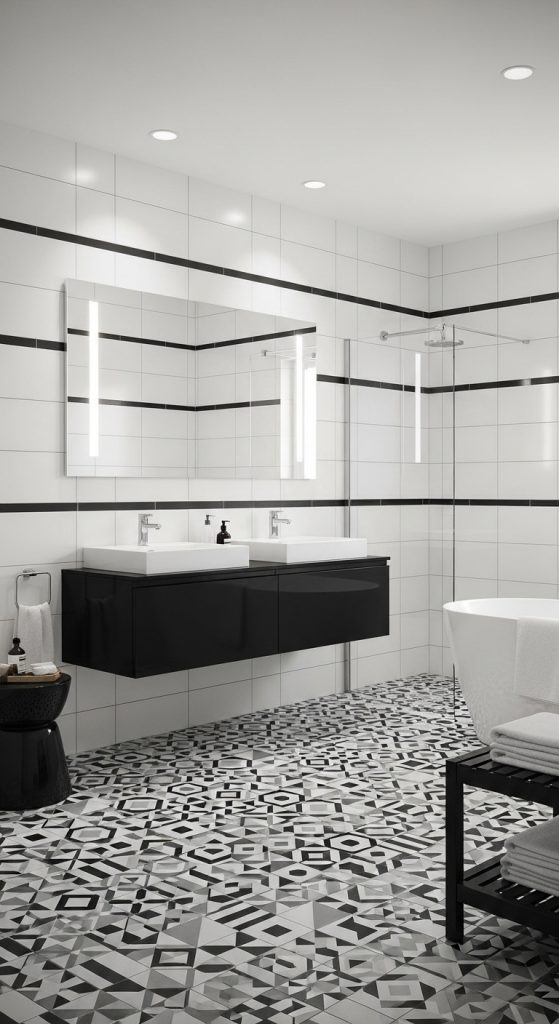
White subway tile with a black accent stripe is a classic for a reason — it looks sharp in photos and it looks sharp in person, five years later. The black stripe here runs at picture-rail height, which is the detail that makes it feel designed rather than default. I would run the stripe all the way around the room, including behind the door, or it looks unfinished where it stops. The patterned monochrome floor keeps it from feeling stark. One warning from experience: black grout on white tile looks amazing for exactly one year, then it fades unevenly where the sun hits it. If your bathroom gets direct sun, use mid-grey grout instead. Nobody will notice, and it ages gracefully.
9. Small Bathroom with Smart Tiles
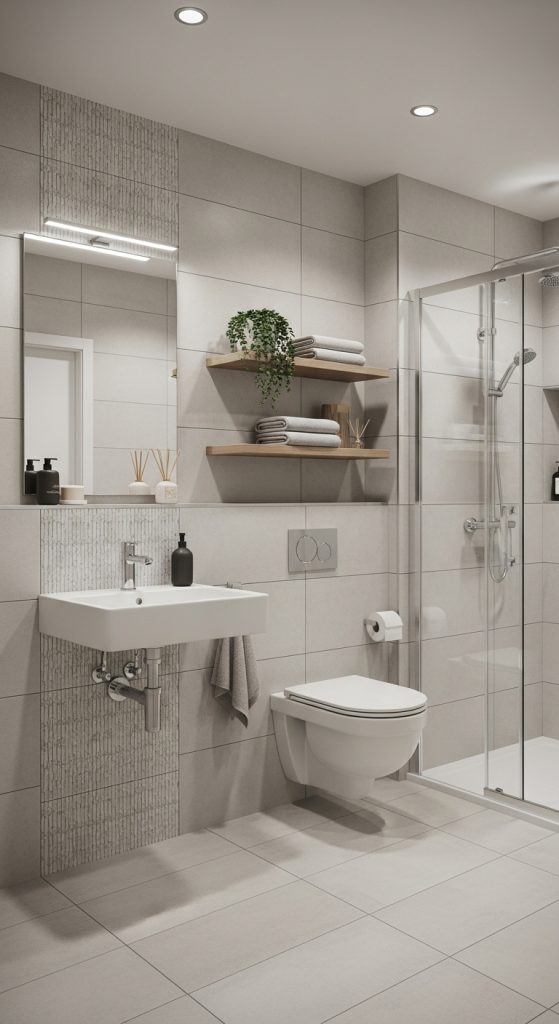
In a small bathroom, the tile layout matters more than the tile. We ran the same large light-grey tile on the floor and walls, and the room reads twice its size because your eye does not stop at any border. That is the whole trick: no border tiles, no feature strips, one continuous surface. The glass shower screen instead of a curtain saves visual space too — and a squeegee after each shower keeps it clear, twenty seconds. Wall-hung toilet and sink free up floor area, which makes cleaning easier and the room feel bigger. If you can only afford one splurge in a small bathroom, make it the large-format tile. It does more for the feeling of space than anything else.
10. Minimalist Zen Bathroom Tiles
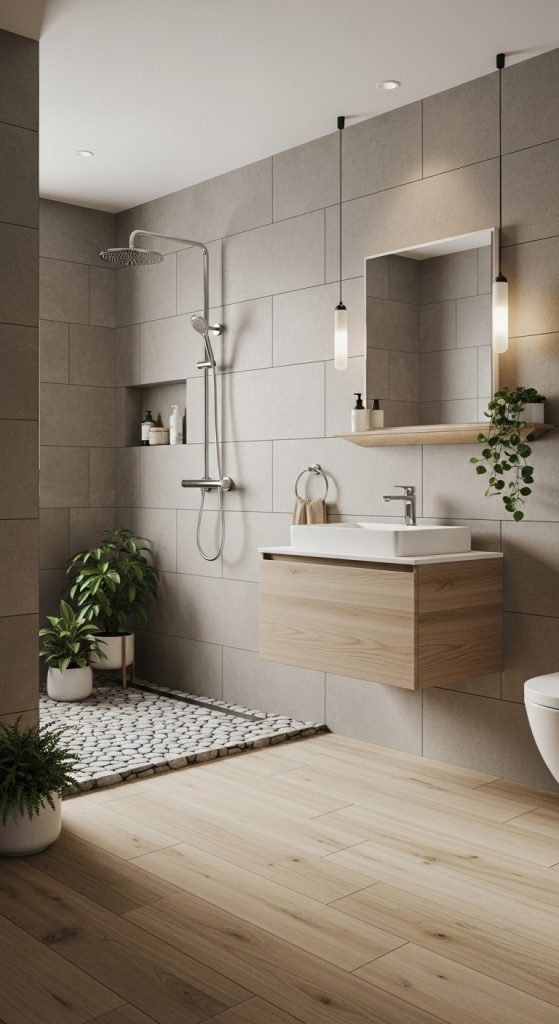
Wood-look porcelain floor tiles are the unsung hero of calm bathrooms. They give you the warmth of wood with the waterproofing of tile — I would never put real wood on a bathroom floor again after watching a friend’s bamboo floor cup around the shower. Pair it with plain grey wall tiles and one plant, and you are done. The pebble-look shower mat in this photo is a nice touch, but I replaced mine with a teak bath mat that goes in the shower to dry; the fabric ones stay damp and get musty. Keep the palette to two tile types maximum. Zen is not about owning little, it is about the eye having nowhere to snag — and that starts with the surfaces.
My tile-shop rule, learned the expensive way: take samples home and live with them for a week before you commit. Tile looks completely different under your bathroom light than under shop fluorescents, and the 30-euro sample box is the cheapest insurance in any renovation. Pick the tile you still like on day seven, seal the grout, and you will not think about your bathroom walls again for a decade — which is exactly how it should be.