
My own bedroom is in an old Munich Altbau flat with a radiator under the window and a ceiling that rattles slightly when the tram goes past on Leonrodstrasse. For years it was the most neglected room in my flat because I spent all my decorating energy on the living room. Last winter I finally gave it the attention it deserved, and I learned that a cozy bedroom is not built with one big purchase but with a dozen small, deliberate decisions — which is exactly why I keep coming back to the list below.

1. Layered Textiles That Make the Bed Irresistible

I used to think a duvet and a pillow were enough, until I stayed at a friend’s guest room in Augsburg and could not stop touching the bedding. She had stacked cotton sheets under a washed-linen duvet, added a knitted throw across the foot, and piled on five pillows of different sizes. I copied the formula the following weekend for about 90 EUR, mixing what I owned with one new linen cover, and the difference was ridiculous. The bed went from a place I slept to a place I wanted to linger. Three textures are the minimum — cotton, linen, and something warm like wool or velvet — so the eye and the hand both have something to do. Fold the throw rather than draping it; it reads calmer and stays put. Keep the palette tied to the room and let one patterned pillow do the talking — that single pattern makes it look designed rather than uniform.
2. Warm Lighting That Makes Evenings Slow Down

The single biggest mistake I made was relying on one ceiling lamp with a cold white bulb. Reading in bed felt like sitting under office lighting, and I could not understand why the room never felt restful. I swapped the bulb for a warm 2700K one for under 5 EUR, added a small bedside lamp with a linen shade, and evenings changed completely. Now I use two low light sources and never switch on the ceiling light after dinner. Dimmable bulbs are worth the small extra cost because you can go from getting-dressed bright to nearly-dark without touching a shade. I also strung warm fairy lights along my bookshelf, which sounds childish until you see how they soften the whole corner. Avoid anything above 3000K in the bedroom, and place lamps at different heights so the light pools instead of flooding. Honestly, it beats new bedding as the cheapest cozy fix I know.
3. A Neutral Palette with Warm Accents

When I painted my bedroom walls a warm greige two years ago, I worried it would look boring, but it became the best backdrop decision I ever made. Neutrals like cream, oat beige, and soft taupe let everything else do the talking, and they make a small bedroom feel calmer and somehow larger. The neutrals need warm accents to keep them from going flat — I used rust-colored cushions, a terracotta pot, and one mustard throw, all picked up for very little money. Natural materials help enormously: a rattan basket, a wooden frame, a jute rug bring warmth paint alone cannot. I keep transitions smooth, never placing a stark white next to a dark brown without a mid-tone in between. Two years on, I still have not repainted — a record for me.
4. Rustic Warmth Without the Kitsch

I love the feeling of a farmhouse bedroom but I am terrified of it tipping into theme-park territory, all distressed signs and fake barns. My solution was to borrow the warmth and leave the clichés behind. I found a solid pine bed frame secondhand for 120 EUR, sanded it lightly, and oiled it matte — no distressing, just honest wood. Then I layered a chunky knitted throw, two wool cushions, and a small faux-fur rug beside the bed, which together cost less than a new duvet. One vintage-style lantern on the nightstand and a basket for spare blankets finished the look. The real secret is restraint: pick reclaimed or natural wood for one or two pieces, then keep everything else soft and simple. A sprig of eucalyptus in a plain glass adds freshness without turning the room into a flower shop. It feels warm, a bit nostalgic, and completely grown-up — exactly the balance I was after.
5. Cozy Minimalism That Doesn’t Feel Bare

Minimalism and coziness sound like opposites until you see them done well. I tested this on my guest corner, a small space I wanted to keep simple but not cold. The approach that worked was choosing fewer pieces and letting each one be genuinely good: a low solid-wood bed frame, one high-quality cotton duvet, two pillows, and a single textured rug under the bed. That is it for the big items. Warmth comes from the materials rather than from stuff — linen feels warmer than percale, and a wool rug under bare feet beats any amount of decor. I added one framed print and a small ceramic dish on the nightstand, and stopped there. Lighting does the rest: a warm bedside lamp and a candle make a minimal room feel intentional instead of empty. The room reads calm because nothing competes for attention, and guests keep telling me they sleep better in it.
6. Bohemian Layers That Feel Collected, Not Cluttered

Boho is the style where most people, me included, go one cushion too far and end up with a flea market. What finally made it work in my bedroom was giving the layers a backbone: I kept the walls and bedding in warm neutrals and let the bohemian spirit live in the textiles and objects. A patterned Moroccan-style rug, two embroidered cushions from a market trip, a macramé wall hanging I bought at a craft fair in Vienna for 25 EUR — each piece has a story, and that is what separates collected from cluttered. I mixed earthy tones like ochre and rust with one deep teal cushion so the color has somewhere to land. Plants are non-negotiable for this look; my monstera in the corner does more for the room than any lamp. For lighting I use a paper lantern and warm fairy lights, which keep everything soft and forgiving. My rule now: every object has to earn its place, and if two things fight for attention, one of them leaves.
7. Small-Bedroom Hacks That Actually Work

My bedroom is about 12 square meters, so every idea on this list had to survive a small room first. The changes that genuinely helped were almost embarrassingly practical. First, a bed with drawers swallowed all my winter bedding and freed the wardrobe. Second, wall-mounted nightstands instead of a bulky table gave me back the floor beside the bed, which sounds minor until you stop bruising your shin. I kept the walls light and hung one large mirror opposite the window, which doubles the daylight. A soft rug and textured bedding add warmth without taking up a centimeter of floor — that is the whole point, since comfort in a small room has to come from surfaces, not furniture. I keep every piece minimal, and each one earns its spot by doing two jobs. Visitors always assume the room is bigger than it is.
8. Nature-Inspired Calm with Wood and Green

There is a reason I sleep best in rooms with wood and plants: natural materials calm the nervous system in a way plastic and chrome never will. I swapped the metal bedside table for a small solid oak stool from a flea market, brought up a rattan chair from the cellar, and put three plants on the windowsill. Bedding went to soft greens and warm browns, and I replaced my synthetic duvet with a linen one. Linen, cotton, and wool are the textiles that make this look feel real rather than staged. I also hung one botanical print instead of my old abstract poster, and the whole room exhaled. If you worry about keeping plants alive in a bedroom, pick a snake plant or a ZZ plant — both survive my forgetful watering schedule with dignity. The goal is not a greenhouse; it is to let nature soften the room’s edges.
9. A Romantic Corner Without the Fuss

Romantic does not have to mean pink and frilly — I am far too practical for that. For me it means softness and a little ceremony. I hung sheer linen curtains in front of my blackout blinds, so on weekend mornings the light filters in like a watercolor while I can still block it out at night. I layered the bed with an extra throw and a second set of pillows, nothing expensive, just plush. A small cluster of candles on the windowsill and a eucalyptus stem in a vase do the decorating. The one thing I would not skip is scent: a simple lavender or sandalwood diffuser makes the room feel cared-for for almost nothing. I also keep a small stack of books and a carafe of water on the nightstand, because romance in a bedroom is mostly about treating yourself well. A grown-up version of romantic — soft fabrics, gentle light, zero ruffles.
10. Personal Corners That Tell Your Story

The coziest bedrooms I have walked into all had one thing in common: they belonged to someone specific. Mine finally started feeling like mine when I stopped styling it like a catalog and put my actual life in it. There is a small shelf with framed photos from a road trip through Portugal, a ceramic bowl from a pottery workshop I took with my sister, and a stack of novels I genuinely read instead of display. I sewed one cushion cover myself from a fabric remnant — it is slightly crooked and I love it more than the perfect ones. The key is balance: I kept the overall palette calm so the personal pieces pop instead of clash. Books, candles, and small collectibles all count, as long as every item means something to you. A bedroom full of your own stories is warmer than any designer room, and it costs nothing at all.
11. Tone-on-Tone Neutrals That Feel Like a Deep Breath
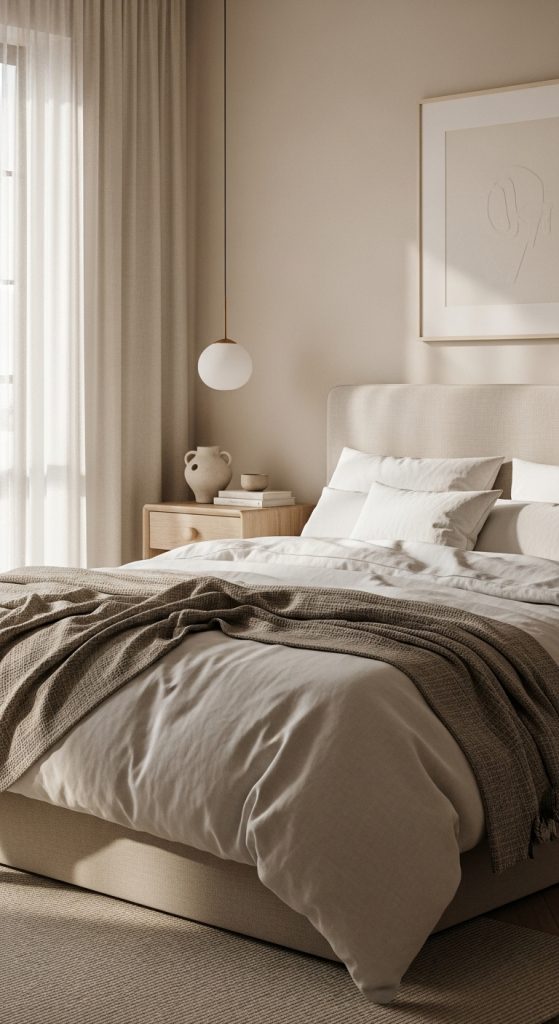
This idea differs from a basic neutral palette because it works with variation instead of contrast — oat beige against warm sand against soft taupe, all whispering to each other. I tried it after seeing a photo that made me exhale just looking at it. I started with warm greige walls, never stark white, and chose a bed with a simple upholstered headboard that anchors the room softly. For bedding I layered crisp cotton sheets, a washed-linen duvet, and a lightweight quilt at the foot, with at least three textures so nothing looked flat. A wooden nightstand with rounded edges replaced my sharp-cornered one, and I added a soft rug extending past the bed so my feet land on warmth every morning. Lighting stays layered and dim: one ambient source, one warm bedside lamp, no overhead glare. I finished with quiet details — a ceramic vase, sheer curtains softening the daylight — and deliberately left things slightly imperfect, a wrinkled throw, a leaning book stack, because slight imperfection makes the space feel human instead of staged.
12. Warm Wood for Instant Groundedness
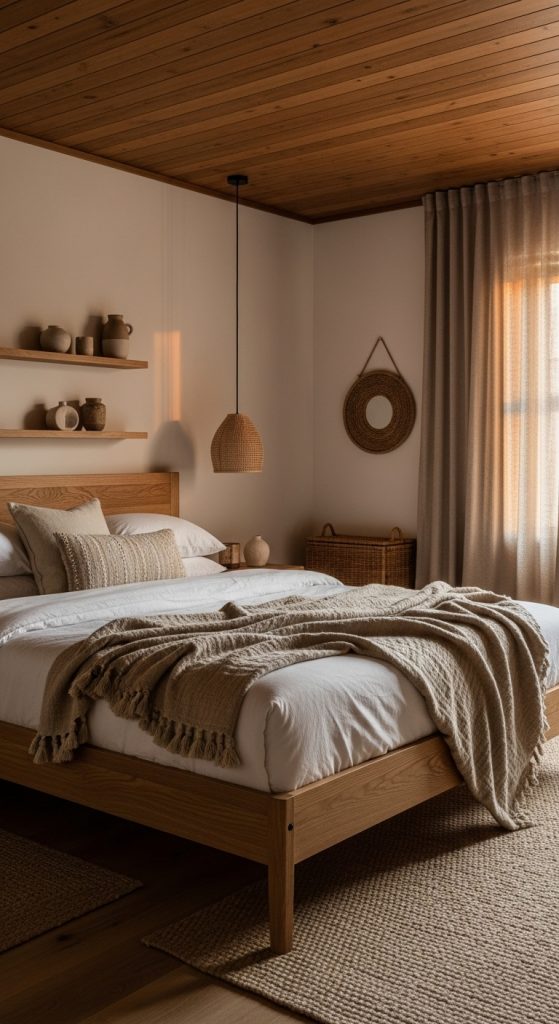
Wood settles a room the way a deep breath settles a person. I leaned into this after noticing how much calmer my kitchen felt with its old wooden table. I let one main piece lead — the bed frame — in a warm oak tone rather than anything gray or overly dark, which drags a room down. Then I balanced it with light bedding so the wood did not visually weigh everything down. A few sparing accents followed: floating shelves, a bench at the foot of the bed, a small side table. Softness came from the textiles: linen curtains, cotton bedding, a wool rug keeping the wood from feeling hard. I switched to soft yellow bulbs because cool white light fights wood tones, and on sunny days the natural light brings out the grain beautifully. Decor stayed minimal and organic — handmade ceramics, a woven basket, dried branches in a tall vase. The room now feels grounded without a hint of rustic cliché, like a modern cabin that still belongs in the city.
13. Low-Light Moody Corners for Slow Evenings
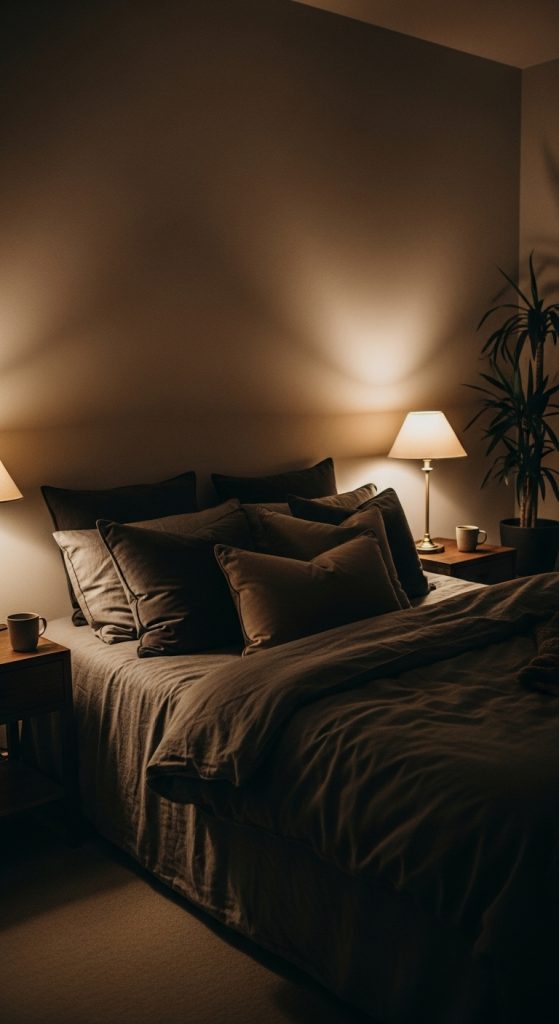
I used to assume a cozy bedroom had to be bright and airy, but some of my favorite evenings happen in the dimmest corner of my flat. A low-light bedroom is not gloomy if you build it right — it is protective, like the room is holding you. I painted one wall a deep warm taupe and kept the bedding in muted earthy shades, steering clear of cold blacks or blues that turn depressing. The real work is the lighting: instead of one overhead lamp, I use a bedside lamp, a small wall sconce, and a hidden LED strip behind the headboard, all warm. The goal is glow, not brightness. Matte finishes help enormously because they absorb light softly instead of bouncing it back harshly, so I chose matte frames and a low-profile bed. Velvet cushions and a thick throw add the plushness a moody room needs to feel inviting rather than severe. Even in the darker tones, every texture stays soft to the touch. It is the room I head to when I want to read, think, or simply switch off the day.
14. One Personal Corner Is Enough
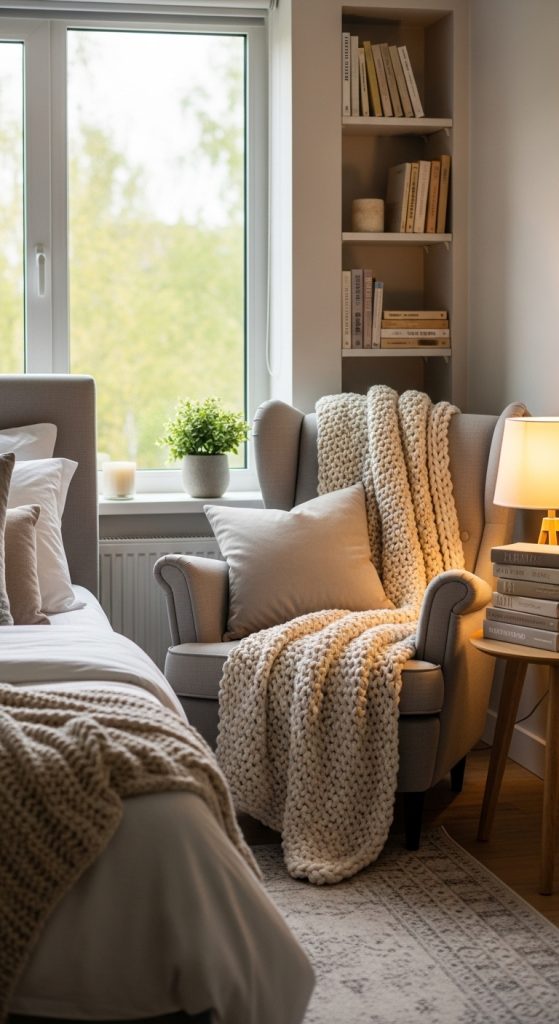
You do not need to personalize the entire bedroom — one meaningful corner can carry the whole room’s character. I learned this when I rearranged my reading chair and realized the rest of the room could stay calm and simple as long as that one spot told my story. My corner is small: an armchair I rescued from my grandmother, a floor cushion, a warm lamp, and a side table stacked with the books I am actually reading. Above it hang two framed photos and a small print from a holiday. That is the entire statement. I keep the lighting warm and the textures soft, and resist the urge to keep adding things — every item has to feel chosen, not accumulated. The rest of the bedroom stays neutral, which makes the corner stand out emotionally rather than visually. It has become my favorite spot for journaling and slow Sunday mornings, proof that a bedroom should reflect a life, not a catalogue.
15. Less Stuff, More Rest: Warm Minimalism
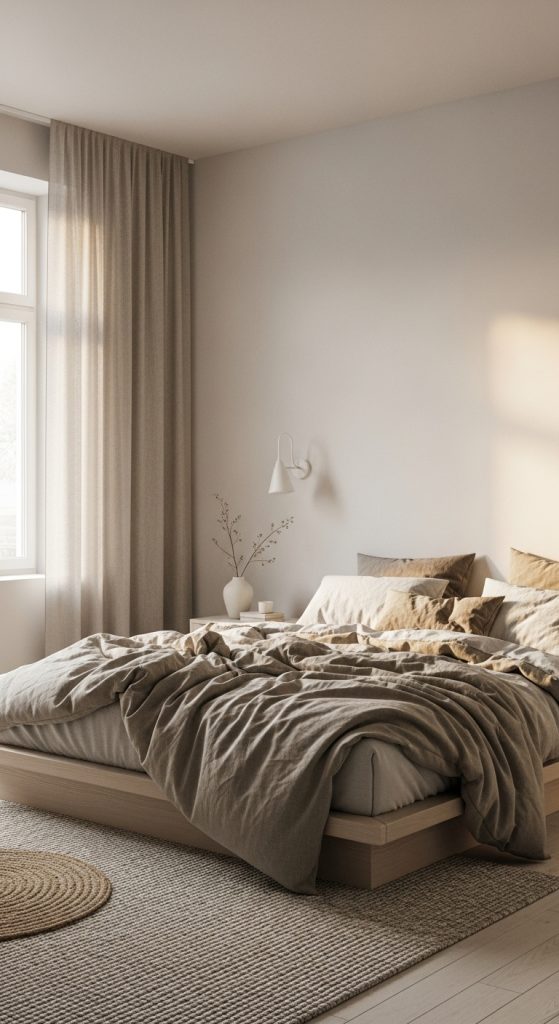
This last idea is the emotional cousin of the minimalist bedroom from earlier, but it comes from a different place: not aesthetics, but exhaustion. I tried it during a month when my brain would not switch off at night, and decided the room had to do some of the calming work for me. I decluttered ruthlessly — anything that did not help me sleep or make me happy left the room. What stayed was simple and good: a clean bed frame, high-quality bedding, one soft rug, two nightstands, warm lighting. I allowed myself exactly two textures so nothing felt visually noisy, and treated the empty space around the bed as part of the design rather than something to fill. The result was immediate: fewer things to look at meant fewer things to think about. I fall asleep faster now, and waking up feels calmer too. It is not about owning nothing — it is about owning less on purpose, and letting rest take up the freed space.
Conclusion
If I had to give you one piece of advice from all of this, it would be to start with the lighting and the bedding before you buy a single piece of furniture. Those two changes transformed my bedroom more than anything else I have done, and they cost less than a nice dinner out. Pick the ideas that suit your life, try them one weekend at a time, and let the room grow around you. Your bedroom should feel like it belongs to you — and once it does, you will wonder why you waited so long.