I came to filet crochet sideways, through my grandmother’s tablecloths rather than through any fashion magazine. For years I thought of it as something that belonged on a dining table, folded neatly under a vase, and I never imagined I would one day be wearing it to the market. Then one hot July afternoon in Munich I saw a woman at the Viktualienmarkt in a cream filet top with a diamond pattern across the chest, and I stood there staring at it like a fool because the open grid let the breeze through while the solid blocks made the shape readable from ten paces away. I went home, dug out a ball of mercerized cotton I had bought for a doily I never made, and started charting. What follows are the ten filet crochet tops I have actually made, worn, frogged, or finished for friends since that afternoon, with everything I learned along the way.
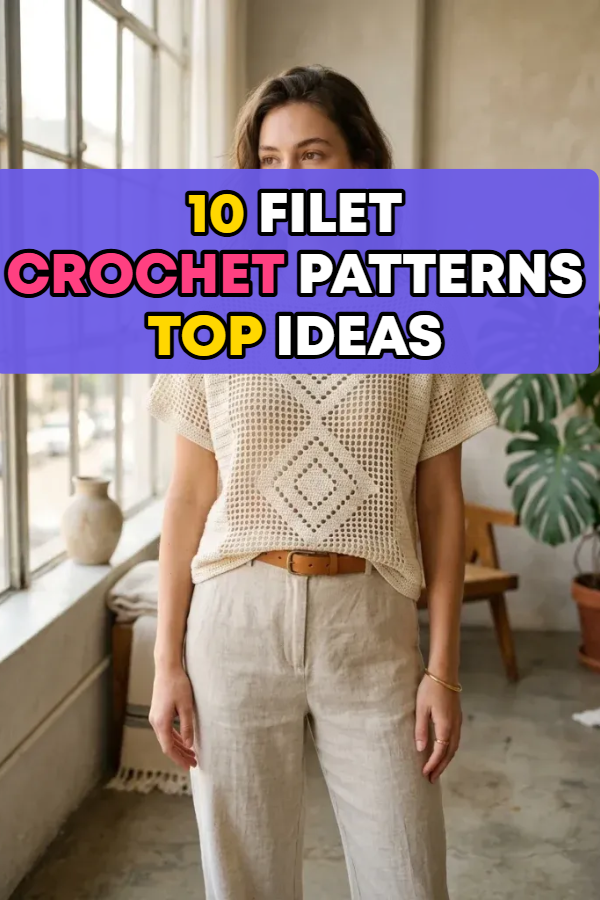
1. The Geometric Diamond Summer Boxy Tee
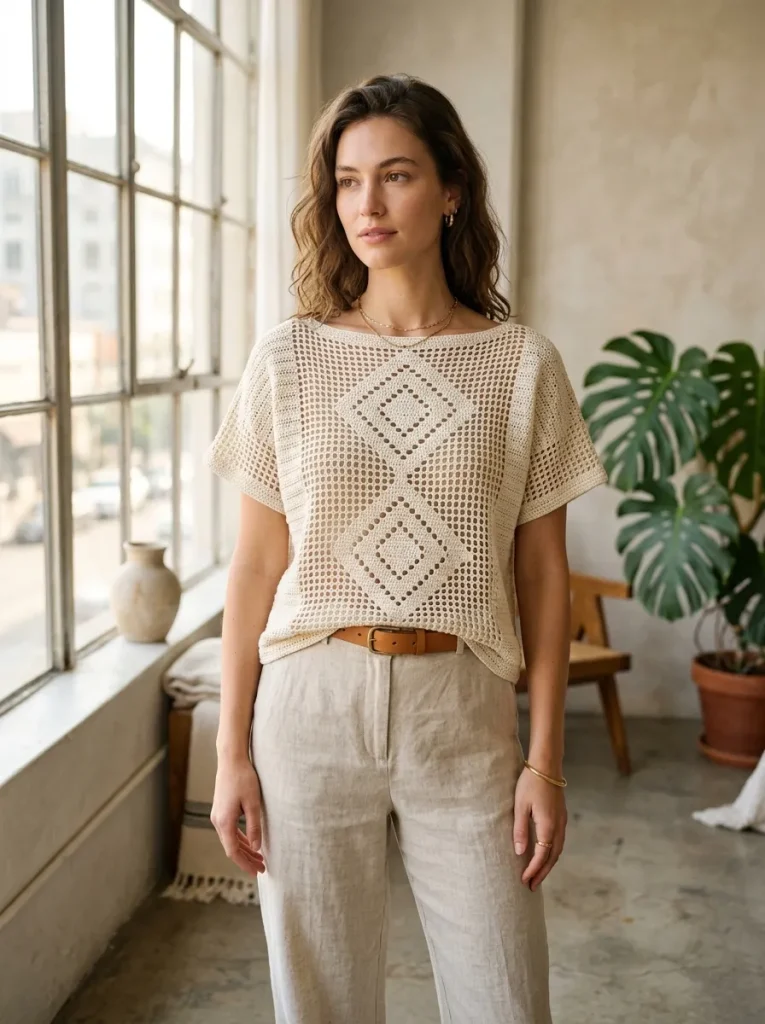
This was my first wearable filet top and still the one I reach for most often, because the drop-shoulder boxy shape forgives almost every fitting mistake a beginner can make. I worked it in a soft ecru mercerized cotton, fingering weight, with a 3 mm hook, and the nested diamond motifs in solid double-crochet blocks came out crisp against the open mesh because I finally learned to keep my double crochets the same height all the way across a row. My first attempt went wrong in a way I now recognise instantly: my grid boxes stretched into tall rectangles because I was yanking each double crochet a little taller than the last, so the diamonds looked like stretched-out kites. I frogged three rows, slowed down, and counted my chains out loud until the squares were genuinely square. The wide boat neckline sits beautifully over a plain vest top, and after a proper wet block the whole tee relaxed by about two centimetres in length, which was exactly what it needed. If you make one thing from this list, make this one, and work your foundation chain with a hook half a millimetre larger than the rest of the project so the hem never pulls in.
2. The Botanical Palm Leaf Beach Cover-Up Tunic
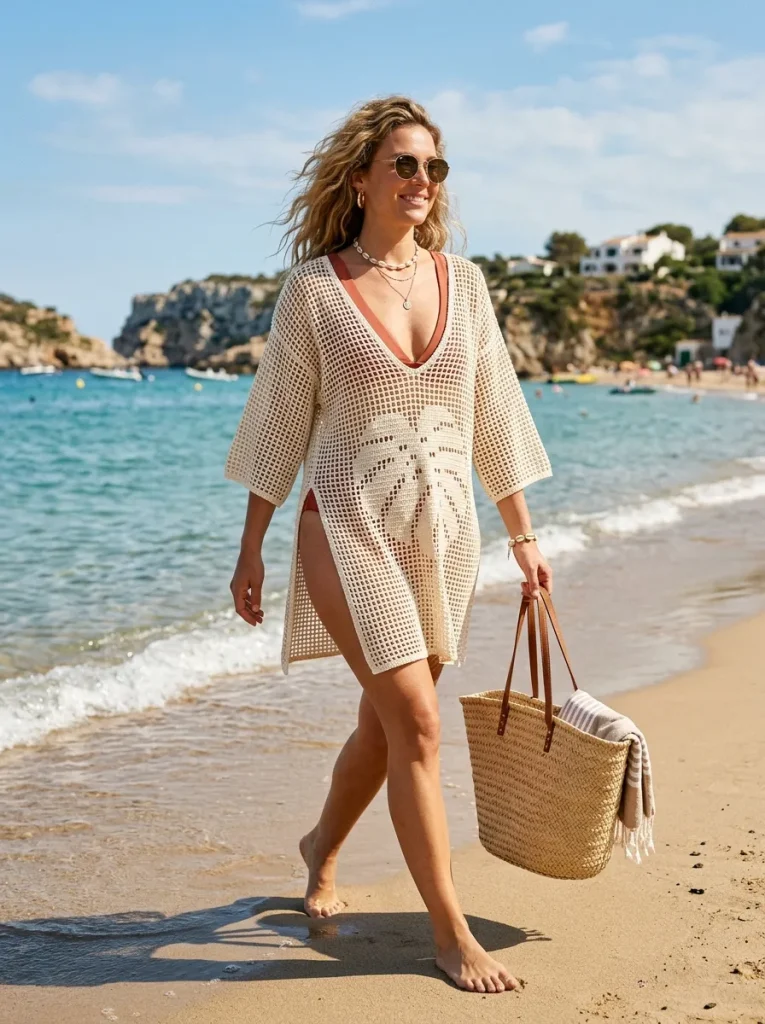
I made this tunic for a week at the Adriatic in late August, and it spent most of that holiday thrown over a swimsuit on the walk between the beach and the little café by the harbour. The big palm frond across the front is charted in solid blocks, and I miscounted on row eleven and the frond leaned to one side like a tree in a strong wind. I caught it after four more rows, pulled it back, and learned to mark every tenth row with a scrap of contrasting yarn so I can check the chart against the work before a mistake gets buried. The mid-thigh length with high side vents is practical rather than decorative, because it lets you actually sit down on a sun lounger without the whole thing riding up around your waist. I used a bamboo-cotton blend here, and the drape is softer and more fluid than plain cotton, which suits the sweeping leaf shape.
3. The Vintage Rose Yoke Romantic Blouse
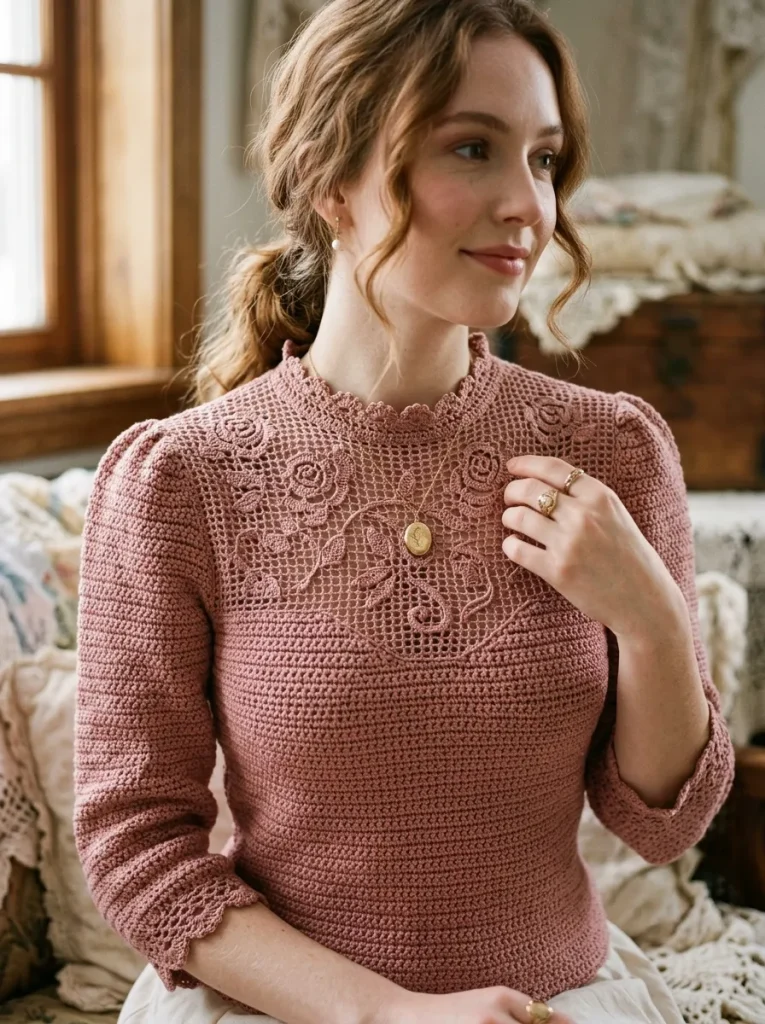
This blouse is the closest thing in my wardrobe to my grandmother’s lace, and it is the one I wear when I want to look like I tried harder than I actually did. The trick with this design is the split construction: the lower bodice is worked in solid double crochet so nothing shows through where it matters, while the rose and vine pattern lives only across the yoke, shoulders, and upper back, where the sheer lace reads as intentional rather than accidental. I chose a pale dusty-rose cotton and worked the yoke with a 2.75 mm hook so the roses came out delicate and clearly defined, and I blocked the yoke flat on a towel with the petals pinned out one by one, which took an evening and was worth every minute. My one regret is that I sewed the short sleeves on before trying the blouse on with the camisole I actually wear underneath it, and the sleeve seam sits about a centimetre higher than I would like. Even so, this is the top people ask me about at the market, and it pairs with everything from wide-leg linen trousers to a plain denim skirt.
4. The Modern Minimalist Grid Halter Crop
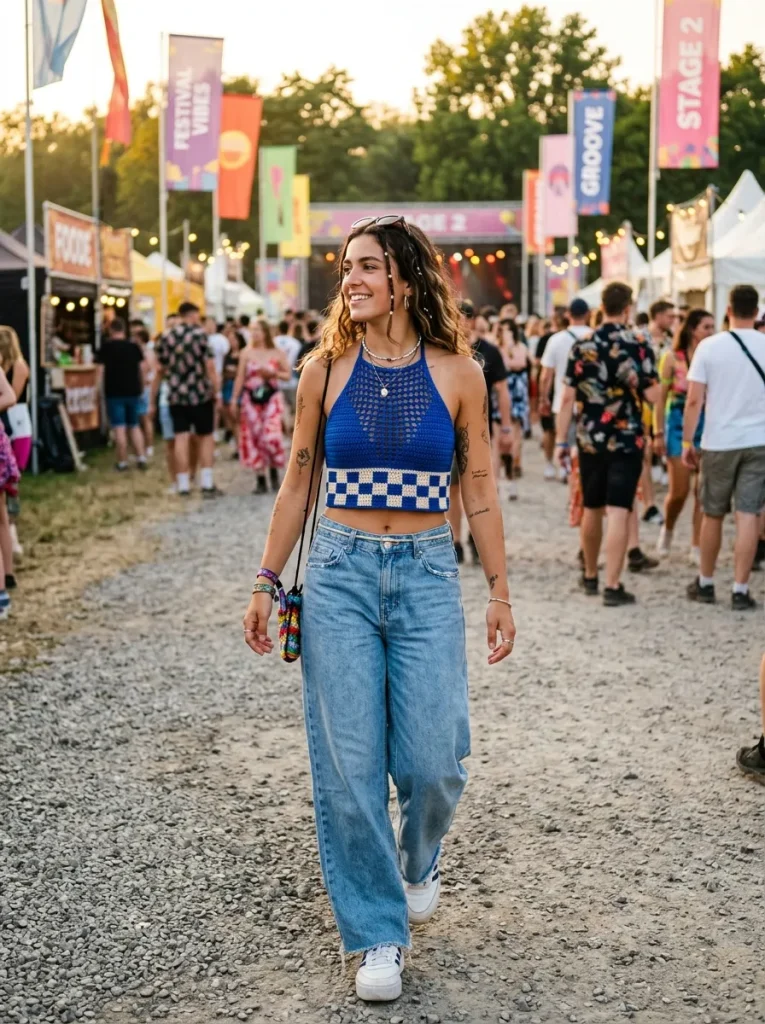
I made this halter for a summer street festival, and it is the simplest pattern on this list once you stop being intimidated by the chart. The whole design is just a checkerboard grid along the hem that opens into plain mesh across the bodice, with corset-style ties at the back so the fit is adjustable rather than guessed. I worked it in a crisp white cotton-linen blend, and the linen content gives the grid a slightly slubby, handmade texture that plain cotton never quite manages. The part that took me longest was not the crochet at all but getting the ties right: my first set was too short to knot properly, so I made them twice as long and threaded them through the last row of mesh like a shoelace, which holds the top in place without any sewing. One warning from experience: a halter in open mesh shows your bra straps unless you plan for it, so I wear mine over a strapless top or a bralette in the same colour. It took me a weekend, start to finish, and it cost less than twelve euros in yarn.
5. The Celestial Sunburst & Moon Festival Vest
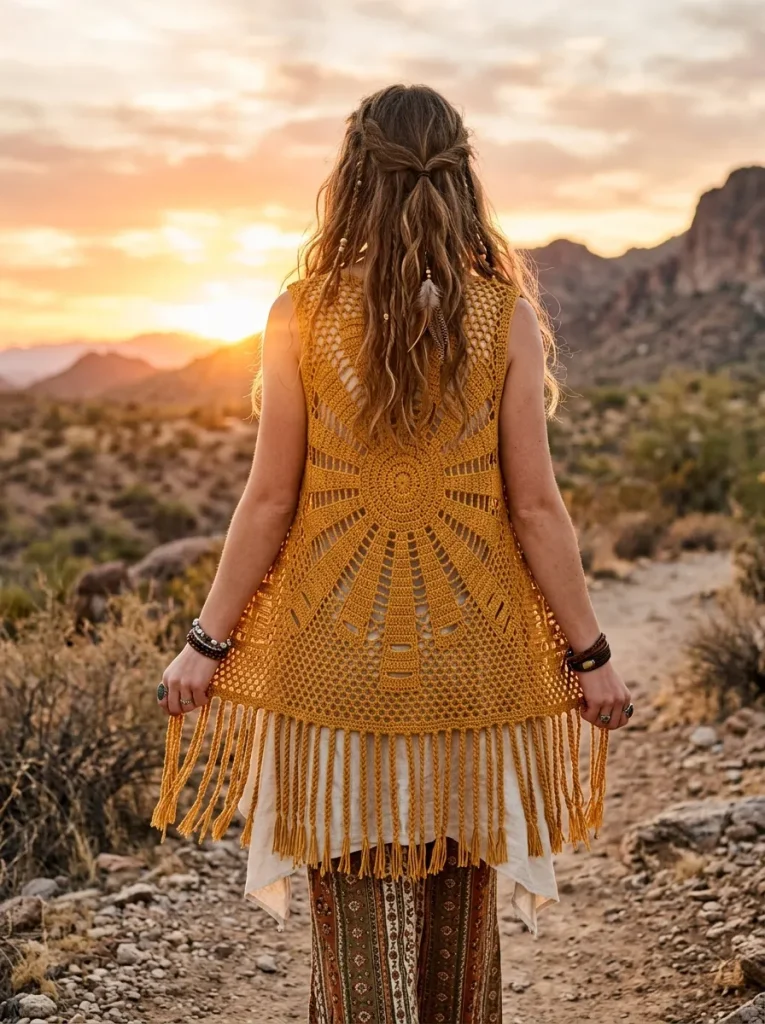
This open-front vest is the most dramatic thing I have crocheted, and also the one that taught me the most about reading a chart properly. The back panel carries a huge sunburst with diagonal rays in solid blocks, and the two front panels each hold a crescent moon, so the whole piece only makes sense when it is worn open and the three motifs sit together. I made it in a warm mustard cotton for a friend who wears it to every outdoor concert she goes to, and she tells me strangers stop her to ask where she bought it, which is the best compliment a handmade thing can get. The rays are the hard part: a single missed chain space on an early row shifts every row after it by one square, and I had to frog the entire sunburst once before I started ticking off each row on the printed chart with a pencil. Once the chart discipline was in place, the rest flowed quickly, and the vest needs no shaping at all because the open front does all the work. I blocked it on my bed with the rays pinned straight, and it has held its shape through a whole summer of wear.
6. The 70s Retro Chevron Wave Sleeveless Tank
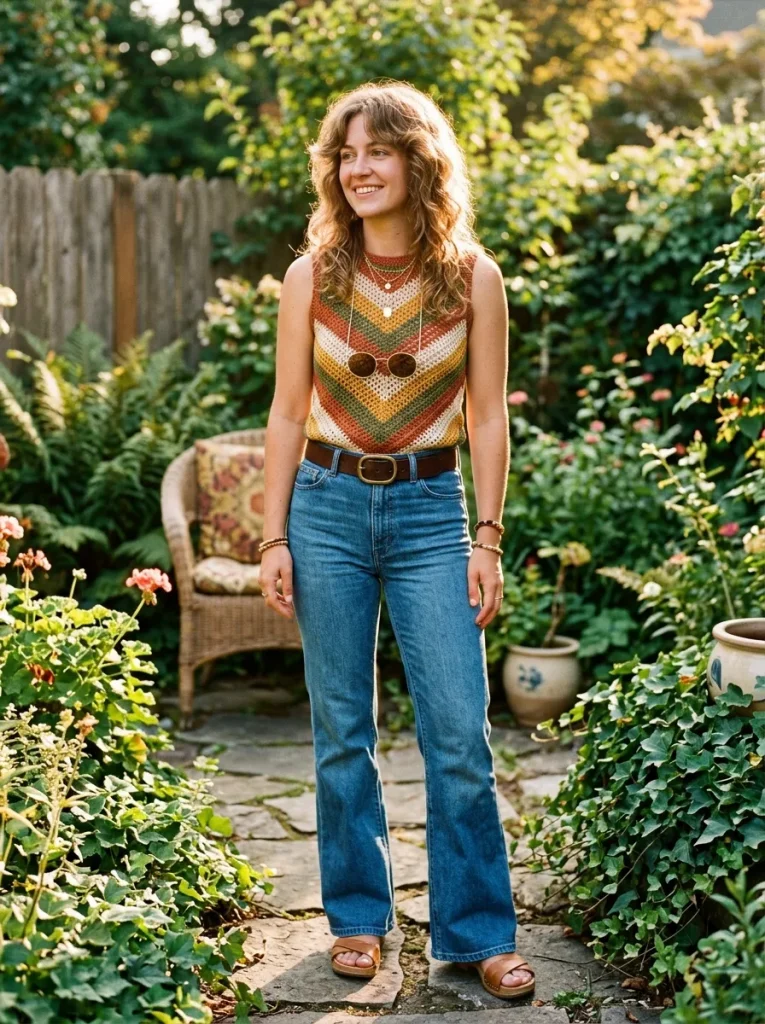
This tank is pure seventies energy, and the zigzag chevron pattern does something genuinely flattering that I did not expect until I tried it on: the diagonal lines draw the eye up and down instead of across, so the whole silhouette looks longer and leaner than a straight-striped top would. I worked it in alternating bands of solid blocks and open mesh, using a terracotta cotton with a cream stripe running through the middle, and the colour change happens at the chevron peaks so the waves look sharp rather than muddy. The crew neckline and deep armholes make it easy to wear, though I would suggest trying it on before you finish the armhole edging, because I bound mine off a touch too tight the first time and had to redo the border with a looser hand. It is a body-skimming fit rather than a boxy one, so gauge matters more here than in the first idea on this list, and I made a proper swatch this time instead of skipping straight to the real thing. That swatch saved me from a top that would have come out two sizes too small.
7. The Gothic Spiderweb Bell-Sleeve Pullover
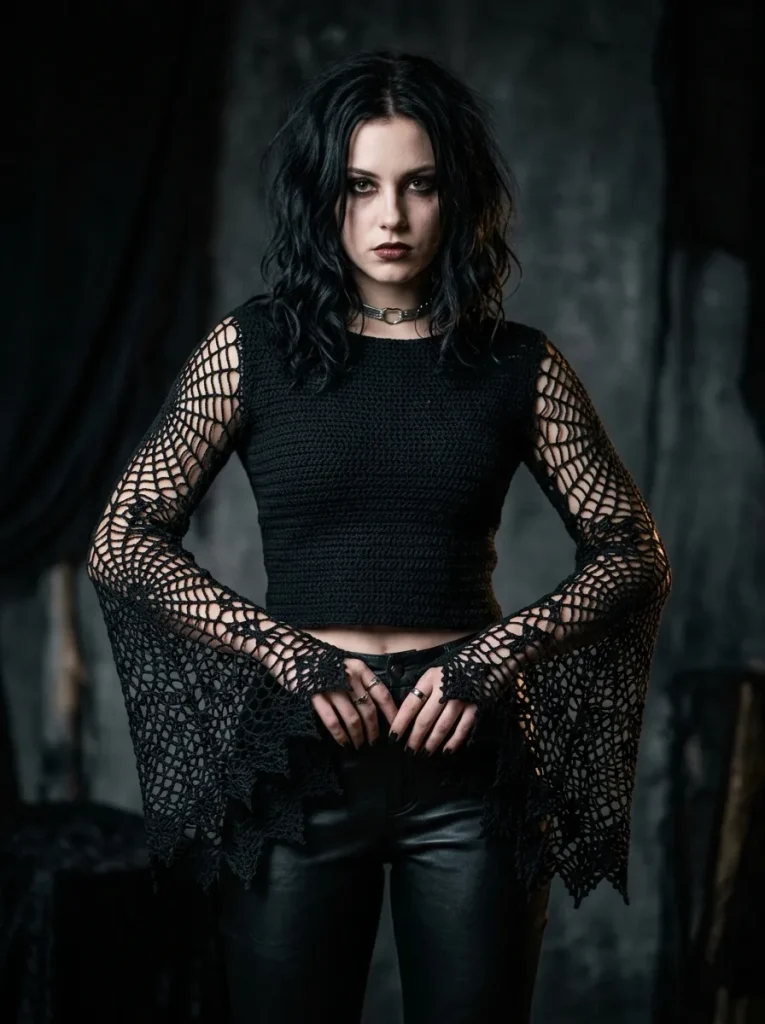
This is the pullover I wear in October, when the light goes thin and a black lacy sleeve feels exactly right. The bodice is worked in dense, solid stitching so it is genuinely warm, and the drama lives entirely in the bell sleeves, where a spiderweb filet pattern runs from the bicep down past the wrist. I made it in a soft black cotton-acrylic blend, and I chose the blend deliberately here because pure cotton would have made those long sleeves heavy enough to stretch the shoulders out of shape by the end of the day. The spiderweb chart looks complicated on paper but repeats every eight rows, so once I had the first repeat memorised I could work the second sleeve while watching a film. My mistake was skipping the blocking step on the first sleeve because I was impatient, and it came out puckered and curled at the cuff while the blocked one lay flat and crisp. I blocked it properly the next evening, pinned the web open on a towel, and the two sleeves finally matched. Wear it with plain black jeans and let the sleeves do all the talking.
8. The Scandinavian Folkloric Star Boxy Sweater
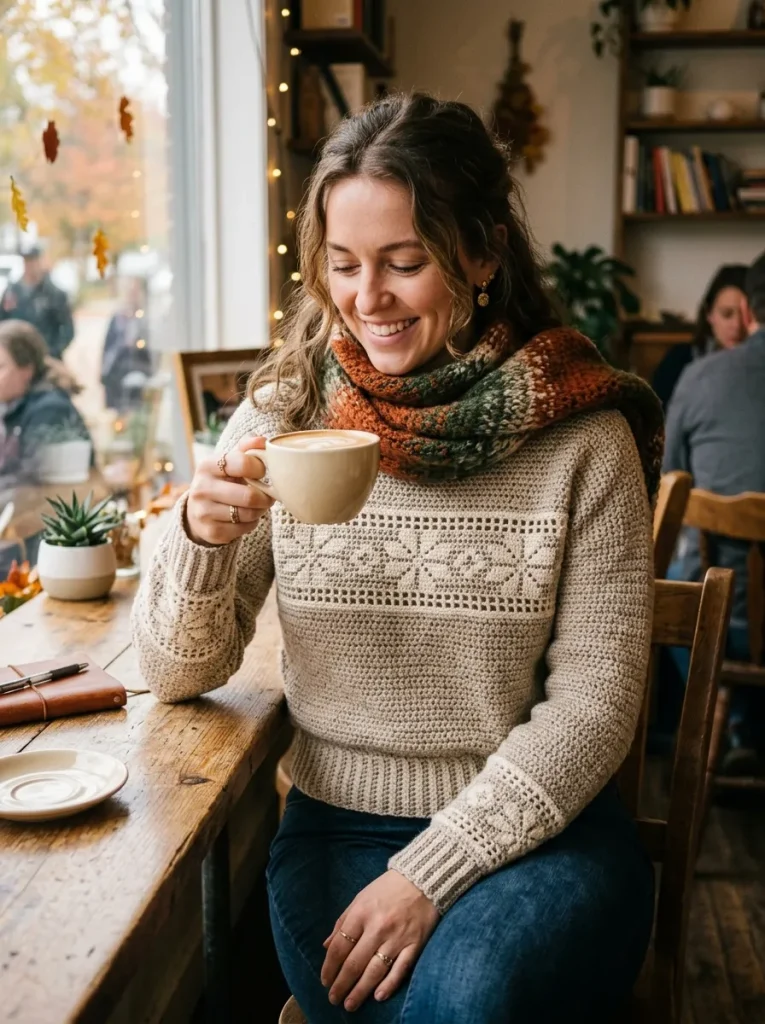
This boxy sweater is my cold-weather answer to filet crochet, and it borrows its eight-point Selbu stars from the traditional Nordic patterns I grew up seeing on my aunt’s knitted jumpers. The stars and folkloric crosses run in horizontal bands across the chest, back, and cuffs, and the long sleeves make it a proper sweater rather than a summer top. I worked it in a natural undyed wool-cotton blend in cream with the stars in a deep forest green, and the colour contrast is what makes the motif readable from across a room. Because this one is heavier than the summer tops, I was careful about yarn choice: a heavy worsted acrylic would have dragged the open mesh down and blurred the stars, so the lighter blend was worth the extra few euros. The boxy shape means there is no waist shaping to worry about, and the whole thing came together in about three weeks of evening work.
9. The Butterfly Silhouette Backless Summer Camisole
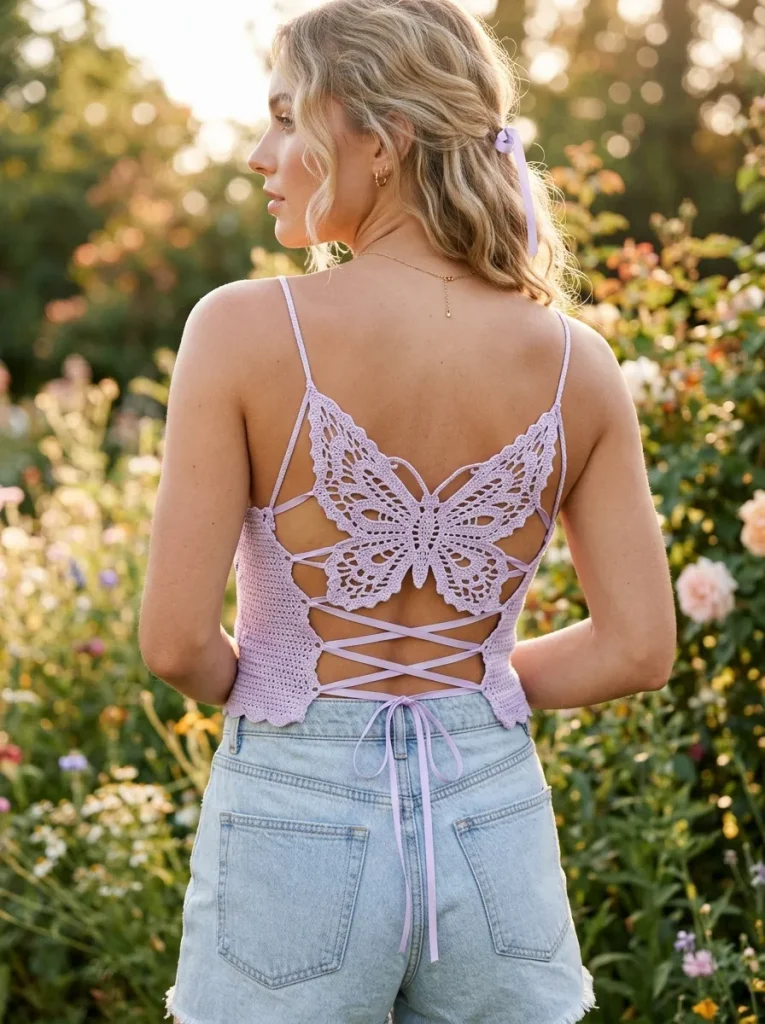
This camisole is the lightest, prettiest thing on this list, and it is also the one I would hand to a confident beginner who wants a quick win. The front is a simple scoop with thin spaghetti straps, and the whole back is one large symmetrical butterfly worked in filet blocks, so the design is all in one place and there is nowhere for a mistake to hide. I made mine in a pale lilac mercerized cotton, and the sheen of the mercerized yarn makes the butterfly wings catch the light in a way matte cotton never does. The backless shape means the fit lives or dies on the strap length, so I tried it on three times before I fastened the straps for good, and I am glad I did because the first length would have pulled the butterfly up too high. It is a warm-weather piece through and through, and I wear it over a plain camisole when I want the butterfly visible without the breeze going straight through. The whole camisole took less than two balls of yarn and a single long weekend.
10. The Striped Filet Mesh Resort Button-Down Shirt
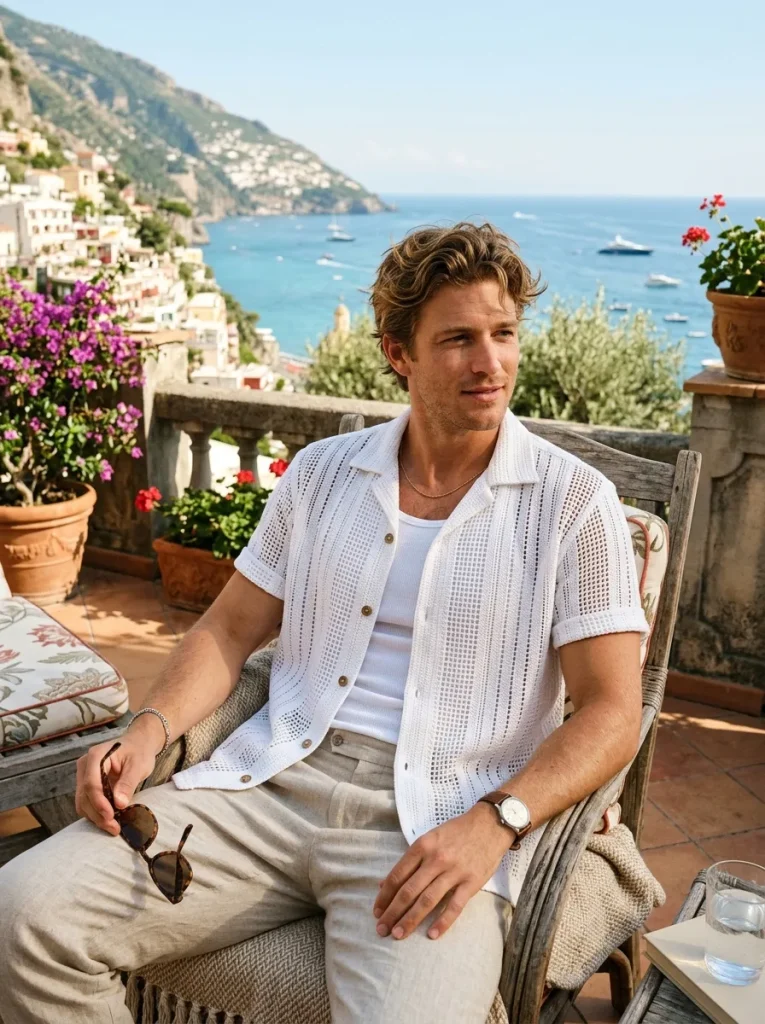
This button-down is the most tailored piece in the collection, and it is the one that surprises people most when I tell them I crocheted it. The vertical pinstripes come from alternating two rows of solid double crochet with two rows of open mesh across the whole body, and the spread Cuban collar plus coconut shell buttons give it a proper resort-shirt finish. I worked it in a sand-coloured linen-cotton blend because linen keeps the stripes crisp and breathable in real heat, and I made it deliberately unisex in a relaxed fit so my husband has borrowed it more than once. The collar was the fiddly part: I worked it separately and sewed it on with a mattress stitch, unpicking it twice before the points sat evenly on both sides. The buttons are the finishing touch that makes it look like a shop-bought shirt rather than a craft project, and I sewed them on with a double thread after the first one popped off in the wash.
Conclusion
Filet crochet tops look complicated from the outside, but every single one of these started the same way: a ball of cotton, a hook, and a chart I checked twice before I trusted it. My advice is to start with the diamond boxy tee, swatch first, block everything before you judge it, and let the first top be a little imperfect, because the second one always comes out better. I still wear the very first tee I made, stretched diamonds and all, and it reminds me every time that the best part of making your own clothes is wearing something nobody else in the room owns.