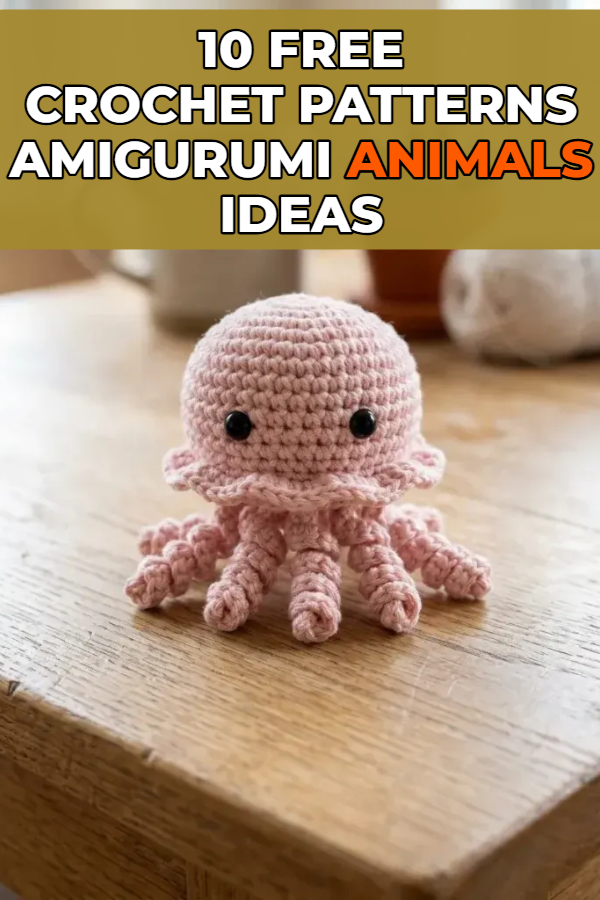
I started crocheting amigurumi on a grey Munich weekend with half a ball of pink cotton left over from a blanket and nothing better to do with it. Three hours later I had a slightly lopsided jellyfish on my windowsill, and I was completely hooked. Since then I have made dozens of these little animals, I keep coming back to the same ten patterns because they actually work: they are quick, they use very little yarn, and they look like the animal they are supposed to be. Every pattern below is one I have made at least twice, with the sizes, hooks and yarn I really used, plus the mistakes I made the first time so you do not have to.
1. The Chubby No-Sew Jellyfish
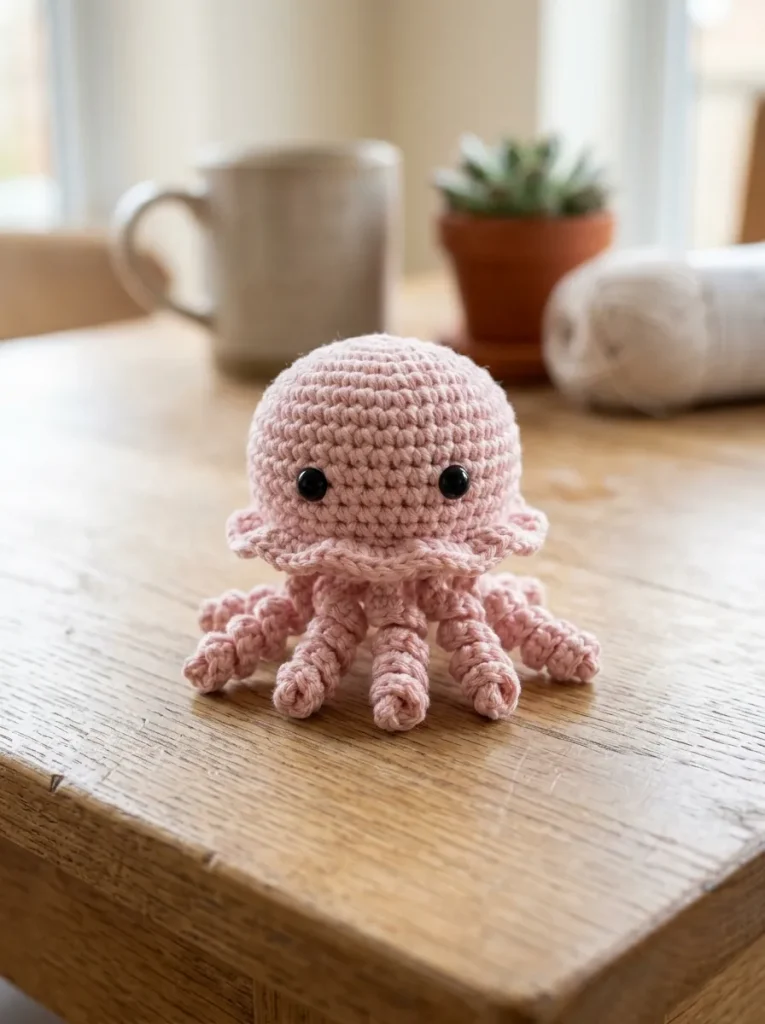
This was my very first amigurumi, and I still recommend it to anyone who has never made a stuffed animal before. The whole thing is worked in one piece, so there is almost nothing to sew on afterwards, and the wavy skirt and curly tentacles hide a multitude of uneven stitches. I used a 3.5 mm hook with worsted weight yarn in a soft pastel pink, and the finished jellyfish came out about 8 cm wide without the tentacles. My first attempt went wrong because I placed the 8 mm safety eyes too close together, which made it look permanently cross-eyed, so now I count four stitches between the eyes and attach them between rounds seven and eight before I stuff the body.
Absolute beginner. About 8 cm wide. 3.5 mm hook, worsted yarn, 8 mm safety eyes. Magic ring, increase to 24 stitches, rounds 5 to 9 straight, skirt in the front loops only, close and stuff firmly, add four curled tentacles.
2. The Sleepy Pocket Bear
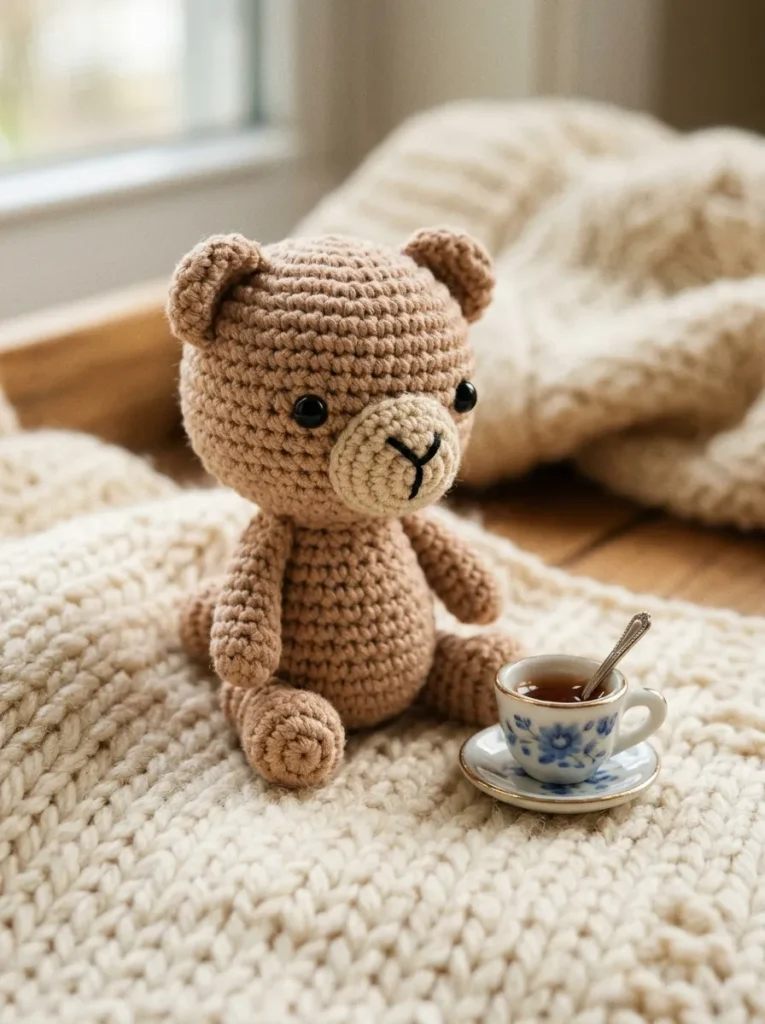
The pocket bear is the one I make most often when I need a quick gift, because it fits in a coat pocket and takes me about an hour from the first stitch to the last knot. I crochet it in light brown with a beige snout, using a 3.0 mm hook so the stitches stay tight enough that no stuffing shows through, and the finished bear is roughly 9 cm tall. The head and body are worked as one seamless piece, which I love, because sewing a head onto a body straight is the part I always got wrong when I started. I attach the 6 mm safety eyes between rounds six and seven, and I embroider the little Y-shaped nose and mouth with black thread before I sew the snout on.
Easy. About 9 cm tall. 3.0 mm hook, light brown and beige worsted yarn, 6 mm safety eyes. One-piece head and body to 24 stitches, narrow at the neck, stuff and close. Snout: 6 sc in a magic ring; ears: 6 sc in a magic ring, sewn on as semi-circles.
3. The Mini Frog Prince
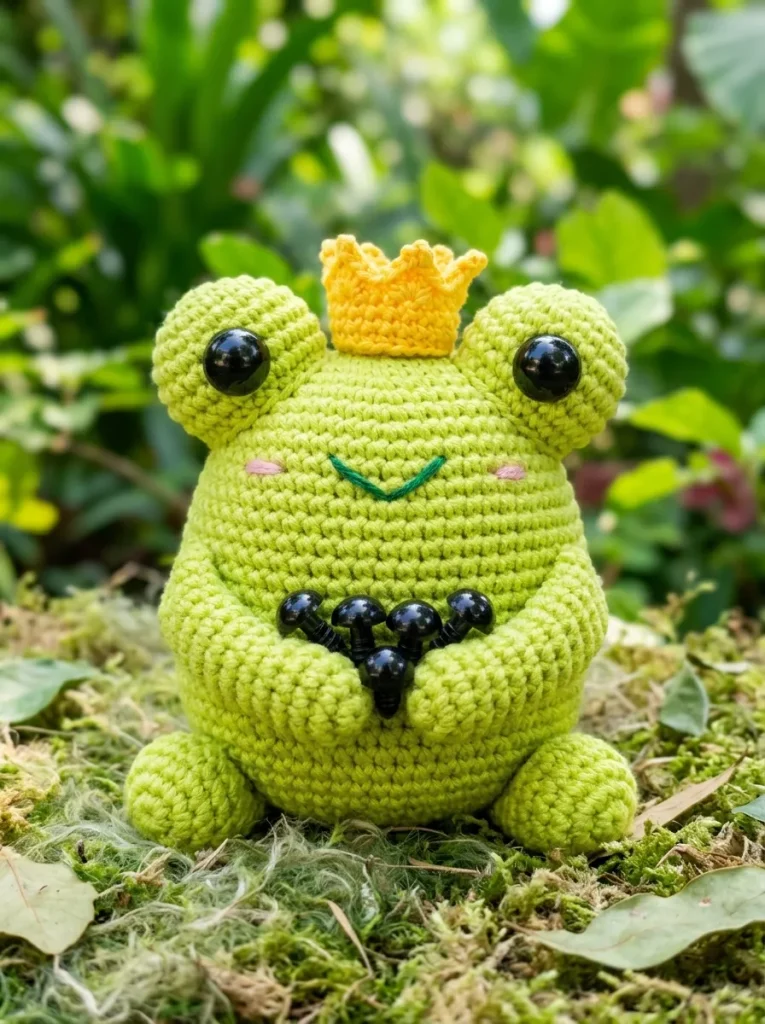
This little frog makes me smile every time I finish one, mostly because of the tiny yellow crown perched between his eyes. I made the first one in bright lime green for a friend’s daughter, and she carried it around for weeks, so now it is my go-to pattern for children’s birthdays. The clever part of the construction is that the two eye mounds are crocheted first and then joined together, which gives the frog that wide-eyed, slightly startled look without any extra shaping. I use a 3.0 mm hook and 8 mm safety eyes, and the finished frog stands about 6 cm tall. The crown is the fiddliest bit: a chain of ten joined into a ring, with five little peaks, and I sew it on with a few neat stitches so it sits straight.
Easy. About 6 cm tall. 3.0 mm hook, lime green and yellow yarn, 8 mm safety eyes. Two eye mounds of 12 stitches joined together, rounds 5 to 9 straight, decrease and close, stuffing firmly. Crown: chain 10 ring with five peaks.
4. The Fluffy Bunny with Floppy Ears
The bunny is the softest animal in this whole list, and that is entirely down to the yarn. I made mine in a white chenille yarn with a 3.5 mm hook, and the finished bunny is about 13 cm tall including the ears, which makes it feel like a proper little companion rather than a keychain. Chenille is lovely to hold but it hides your stitches, so I count out loud and keep a locking stitch marker in the first stitch of every round, because losing your place in fluffy yarn is a miserable way to spend an evening. The ears are the heart of this pattern: long tubes of nine stitches worked for eight rounds, left unstuffed, flattened and sewn to the sides of the head so they flop down naturally.
Easy to intermediate. About 13 cm tall including ears. 3.5 mm hook, white or grey chenille yarn, 10 mm safety eyes. Sphere to 30 stitches, six rounds straight, decrease and close. Ears: 9 stitches, eight rounds, unstuffed, flattened and sewn on.
5. The Little Penguin
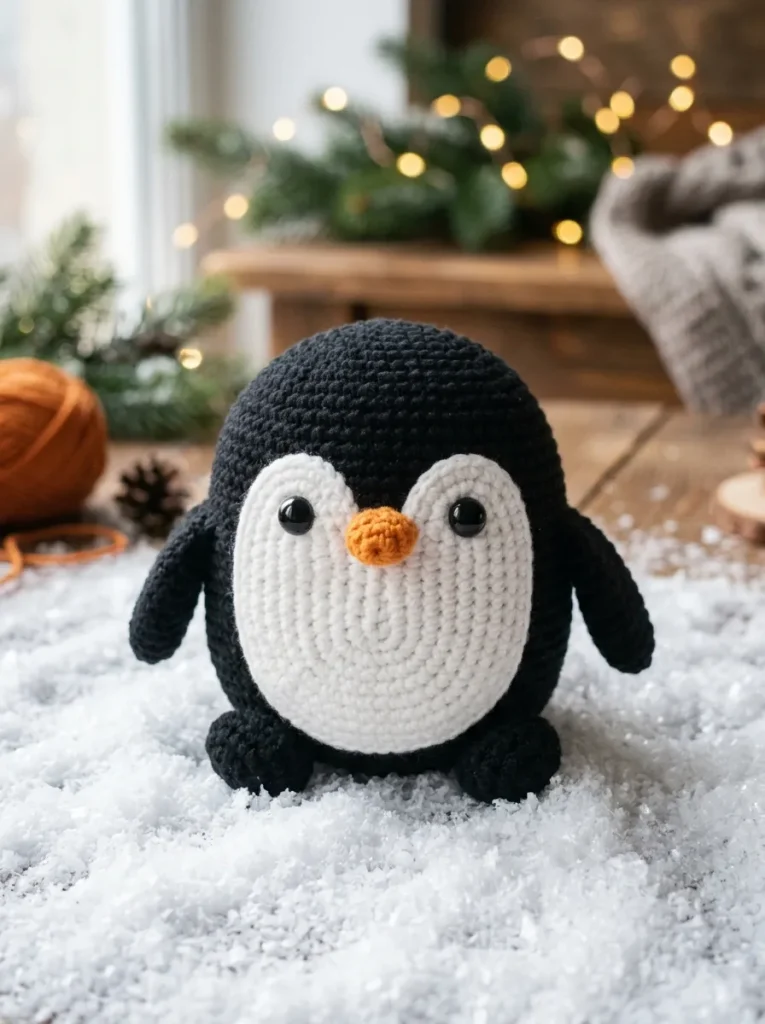
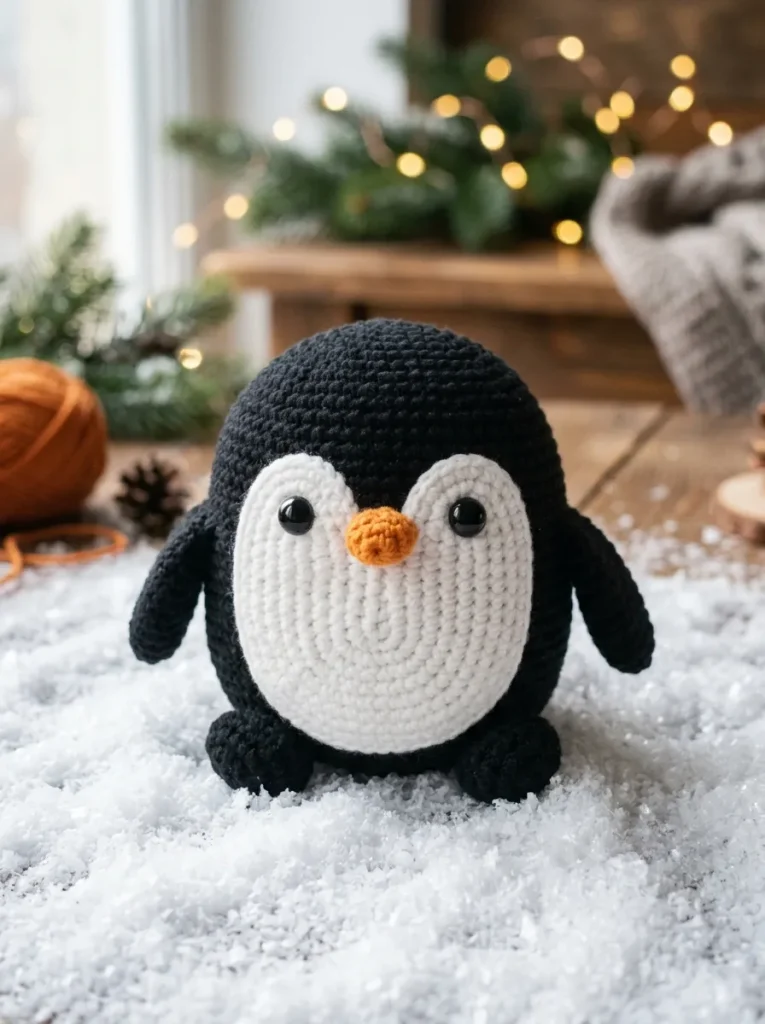
I crocheted this penguin in the middle of January when it was snowing outside my Munich window, and it felt like the right animal for the weather. The trickiest part is the white tummy patch, which is made by switching between black and white yarn across six to eight stitches on the front of the body for rounds five to ten, and my first attempt had a wobbly oval. What fixed it was carrying the unused yarn loosely behind the work and keeping the tension even, so the colour change stays smooth and the patch comes out as a tidy oval. I use a 3.0 mm hook, black, white and orange yarn, and 6 mm safety eyes placed right on the edge of the white patch. I always stuff the base extra firmly and flatten the bottom slightly, because that is what lets the penguin stand upright on a shelf.
Easy. About 8 cm tall. 3.0 mm hook, black, white and orange yarn, 6 mm safety eyes. Black sphere, white tummy patch across the front stitches for rounds 5 to 10. Beak: chain 2; feet: 5 sc in a magic ring; flippers sewn to the sides.
6. The Cute Little Kitty Cat
The kitty is the pattern I reach for when I want something that looks impressive but is secretly just the pocket bear with ears and a tail, and I have made it in orange, grey and calico. I follow the same seamless body as the bear, with a 3.0 mm hook, and the finished cat is about 9 cm tall. The pointed ears are what make it a cat: four single crochets in a magic ring, increased to eight over three rounds, then sewn onto the top corners of the head, and I pin them in place first and look at the cat from the front before I sew, because ears that lean in different directions are very hard to unsee. The tail is a simple chain of sixteen with slip stitches worked back along it, sewn to the lower back so it curls slightly, and the whiskers are two straight lines of black embroidery floss on each side of the nose.
Easy. About 9 cm tall. 3.0 mm hook, orange or calico worsted yarn, black embroidery floss. Same seamless body as the pocket bear. Ears: 4 sc in a magic ring, increased to 8, sewn to the top corners. Tail: chain 16, slip stitch back; whiskers embroidered.
7. The Pocket Whale
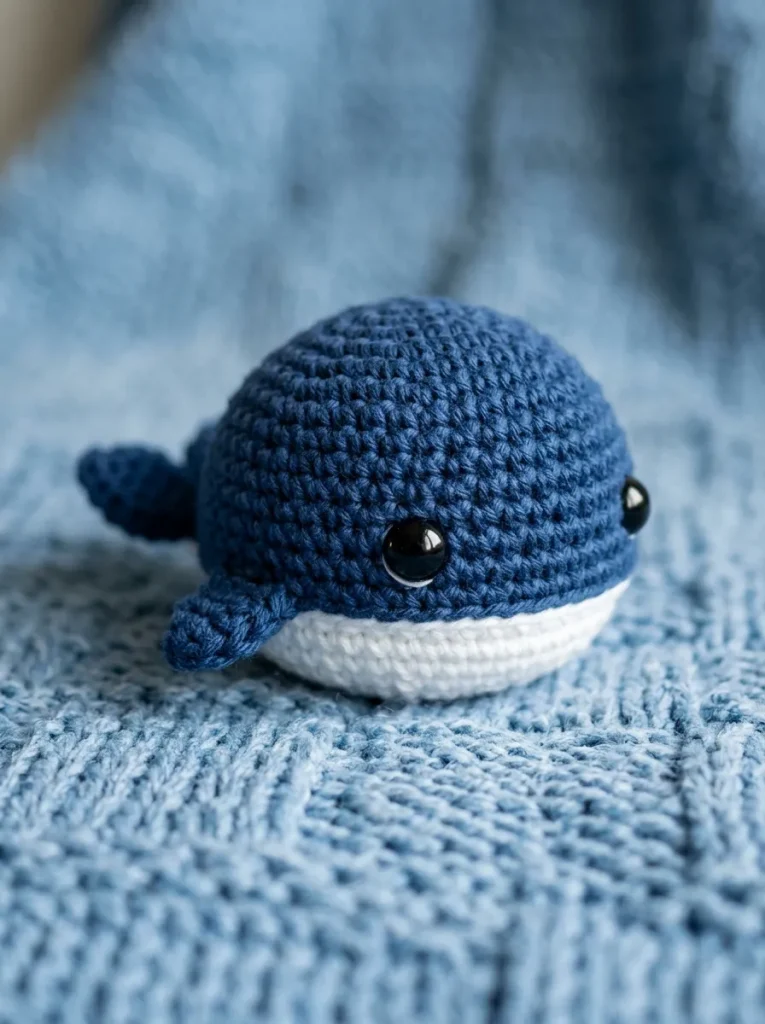
The whale is the fastest animal in this collection, and I mean that literally: I can finish one in under forty-five minutes, which makes it perfect for a last-minute gift or a market stall filler. I use a 3.5 mm hook with blue and white worsted yarn, and the finished whale is about 6 cm long, small enough to sit in the palm of your hand. The body starts in blue and switches to white for the belly in the last few rounds, worked in the back loops only for round eight, which gives a clean line between the two colours. I attach the 8 mm eyes on round six, while the piece is still open enough to reach inside and press the washers on properly, because trying to fasten a safety eye after stuffing is a battle I have lost more than once.
Absolute beginner. About 6 cm long. 3.5 mm hook, blue and white worsted yarn, 8 mm safety eyes. Blue body to 24 stitches, eyes on round 6, white belly from round 8 in the back loops only, decreasing to 6. Tail fin and side fins worked at the back and sides.
8. The Baby Piglet

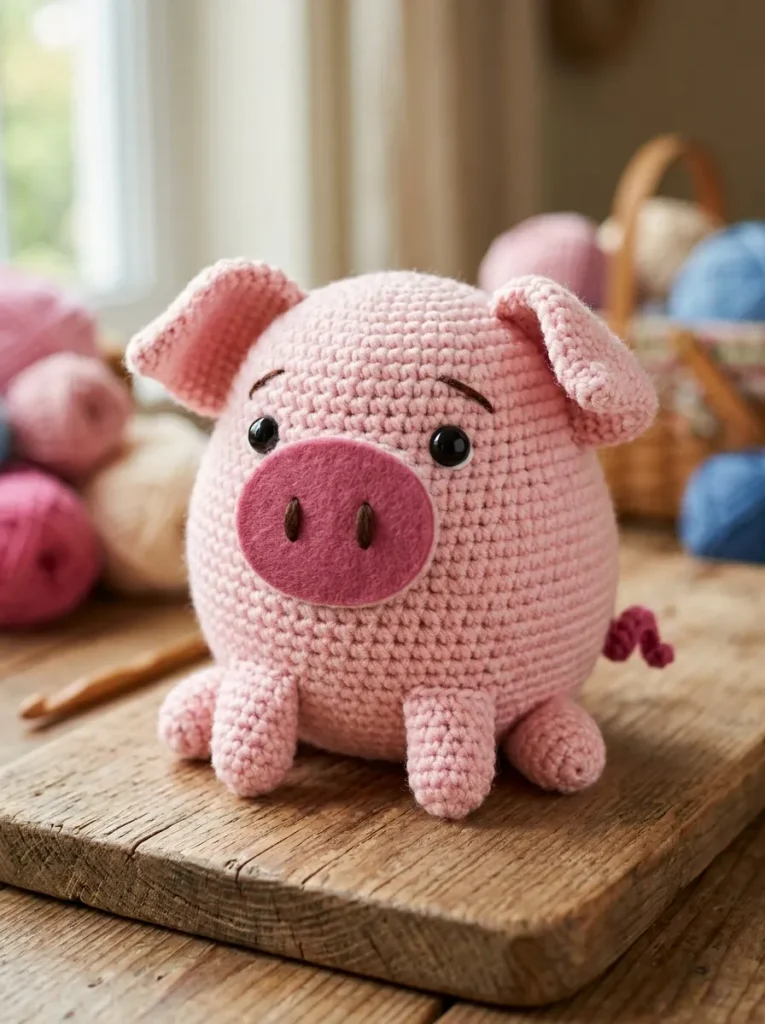
The piglet is the roundest, pinkest thing I have ever crocheted, and it is impossible to make one without smiling at least once. I used light pink yarn for the body and a darker pink for the snout, with a 3.0 mm hook, and the finished piglet is about 8 cm tall. The body is a simple 24-stitch sphere, the same base as the jellyfish, so if you have already made that one you will fly through this. The snout is the detail that makes it a pig: a small oval worked from a chain of four, with two little dark vertical stitches embroidered on for nostrils, sewn right in the centre between the eyes. The curly tail is my favourite part: a chain of seven with two single crochets in each chain, which makes it spiral on its own.
Easy. About 8 cm tall. 3.0 mm hook, light pink and dark pink yarn. Body: standard 24-stitch pink sphere. Snout: chain 4 oval of 8 stitches, embroidered nostrils, sewn between the eyes. Curly tail: chain 7, 2 sc in each chain.
9. The Chubby Bumblebee
The bumblebee is the one pattern in this list that always sells first at a market, probably because the yellow and black stripes are so cheerful on a grey day. I made my first one with a 3.5 mm hook in yellow, black and white yarn, and it came out about 6 cm long, just the right size for a keychain or a bag charm. The stripes are made by changing colour every two rounds, and the thing I learned the hard way is to carry the yarn up the inside of the work instead of cutting it each time, because all those loose ends are a nightmare to weave in on a piece this small. I attach the safety eyes on the yellow third round, before the first black stripe, so they sit on the face and not on a stripe. The wings are two small white circles of six single crochets in a magic ring, sewn side by side on top, and the stinger is a tiny chain of three, sewn to the back tip.
Absolute beginner. About 6 cm long. 3.5 mm hook, yellow, black and white yarn. Yellow rounds 1 to 3 to 18 stitches, alternate black and yellow every two rounds to round 9, eyes on yellow round 3, decrease to 6 and close. Wings: 6 sc in a magic ring.
10. The Cozy Little Turtle
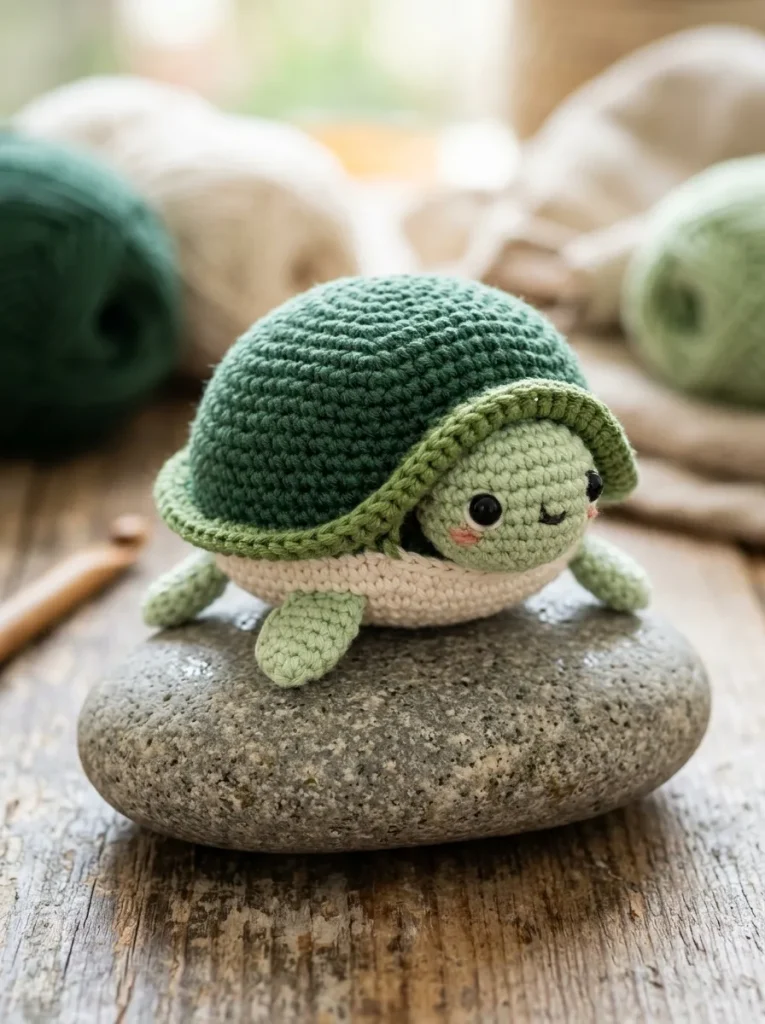
The turtle is the most involved pattern in this list, and it is also the one I am proudest of, because the domed shell with its ridged rim actually looks like a real turtle shell when it is finished. I made mine in dark green for the shell, light green for the head and legs, and cream for the belly plate, using a 3.0 mm hook, and the finished turtle is about 9 cm long. The shell is a dome increased to 24 stitches, with a final round worked in the front loops only to form the ridged lip, and the belly plate is a flat 24-stitch circle that gets whipstitched to the leftover back loops, trapping the head and four little legs between the two layers as you sew. My first turtle went wrong because I sewed the head on after joining the shell and belly, and it ended up pointing sideways, so now I pin everything in place and check the alignment from above before I stitch a single seam.
Easy to intermediate. About 9 cm long. 3.0 mm hook, dark green, light green and cream yarn. Shell: dome to 24 stitches, round 7 in front loops only for the rim. Belly plate: flat 24-stitch circle. Head: 12-stitch sphere; legs: 6 sc in a magic ring.
Conclusion
Ten animals, one small basket of leftover yarn and a hook that cost me less than a coffee: that is really all amigurumi needs. If you are just starting out, make the jellyfish or the whale first and enjoy how quickly something cute appears in your hands, then try the turtle when you feel ready for a little sewing. I keep a basket of my finished animals by the front door now, and whenever someone visits, one of them usually goes home with them. I hope yours do the same.