
Our Munich flat came with a perfectly fine chimney breast, and by fine I mean perfectly boring: flat white plaster, a thin shelf pretending to be a mantle, and a firebox nobody had lit in years. I spent one grey February evening staring at it with a mug of tea and decided the room deserved better. Over the next few months I researched, priced, and argued with two masons before settling on the combination that kept winning me over — rough stone, one honest chunk of wood, and a hearth you can actually sit on. These are the ten versions I kept coming back to, each one a real build I either tried, priced, or watched a friend live with.
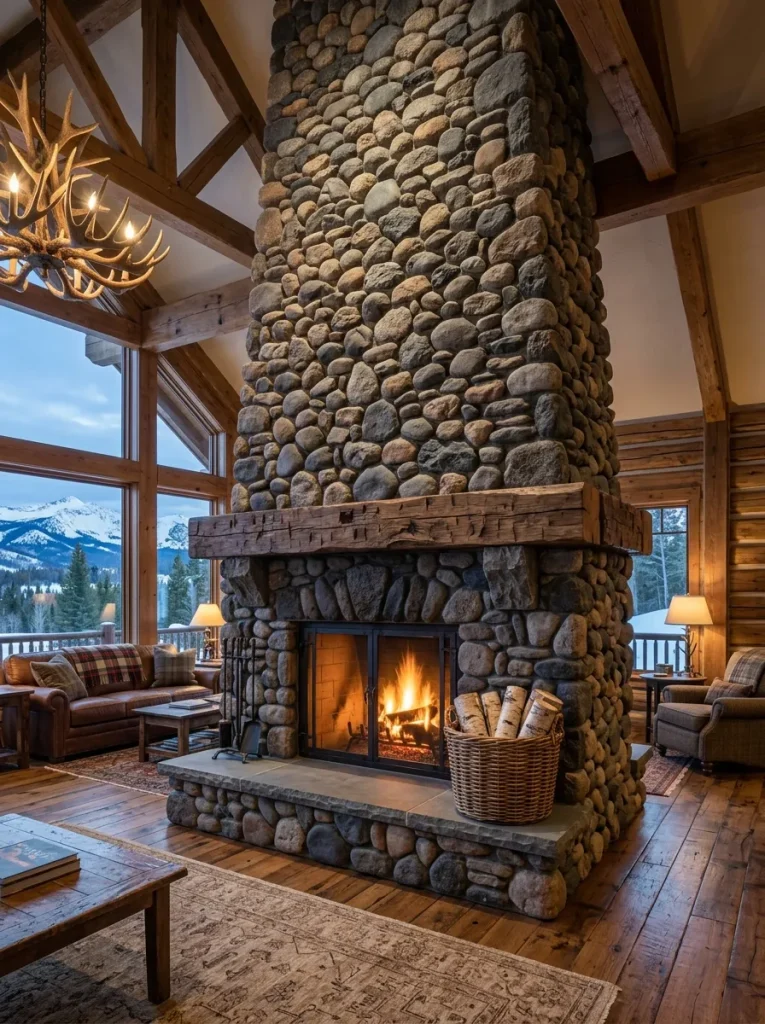
1. Rough-Hewn River Rock and Reclaimed Timber Hearth
This is the one I fell for first, and honestly the one that taught me the most about patience. Smooth river stones in slate grey, moss green and warm tan, set with deep-raked joints so every stone reads on its own, and a hand-hewn oak beam that came out of a barn near Rosenheim. I sorted the stones by size before a single trowel of mortar went down, biggest at the bottom, and I am glad I did, because once you start setting you cannot stop to reshuffle. The raised flagstone bench in front turned out to be the best seat in the flat. My one mistake was underestimating the weight: full river rock is heavy, so check the floor can carry it before you fall in love with the look.
2. Floor-to-Ceiling Dry-Stack Slate with a Floating Walnut Mantle
If the river rock look is a mountain lodge, this one is its city cousin. Tight horizontal slate panels in charcoal and ash grey, no visible mortar at all, running all the way to the ceiling, with a slim black walnut beam floating above the firebox. I helped a friend install this in her Altbau living room and the trick we learned was to start from the floor and work up in strict courses, staggering the seams so no vertical line ever forms. The hearth is a single slab of honed black granite set flush with the floorboards, which means no tripping and no dust-collecting lip. A warm LED strip tucked under the mantle washes the stone at night and honestly does more for the room than any lamp we own.
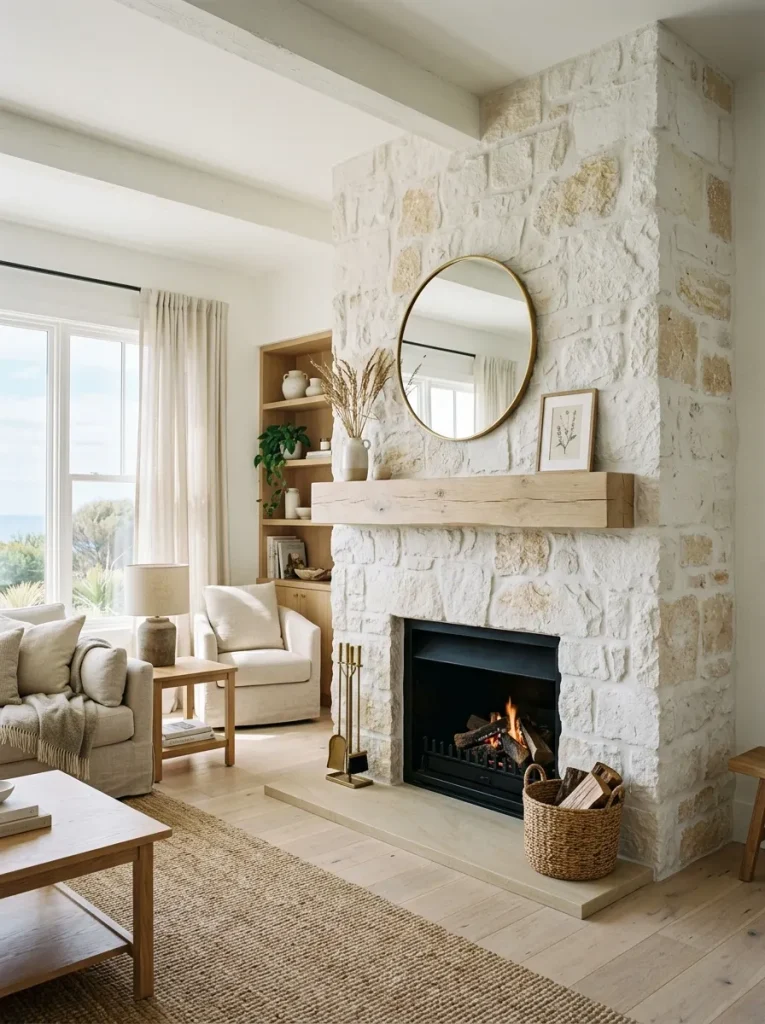
3. Whitewashed Limestone with a Bleached Oak Beam
This is the bright one, and it works beautifully in rooms that never get much sun. Large limestone blocks softened with a lime wash, wiped back so the warm beige underneath shows through in patches, topped with a bleached white oak beam. I tried the wash on a test stone first and nearly talked myself out of it because the first coat looked chalky and wrong, but a second pass with a damp sponge changed everything. Keep the mantle pale and matte, and whatever you do, do not varnish it glossy or the whole soft look collapses. A round brass-framed mirror above the beam bounces light around the room, and a low sandstone hearth keeps the whole thing grounded instead of floating away into white.
4. Classic Ashlar Fieldstone with a Dark Stained Cherry Mantle
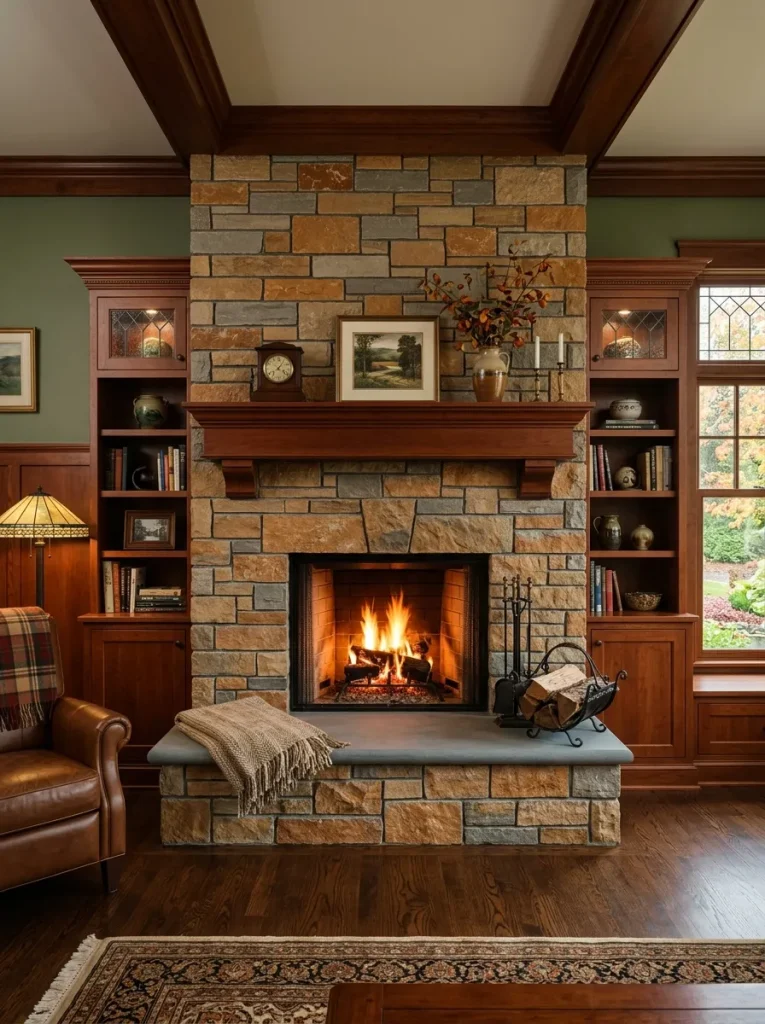
This is the traditional one, the fireplace that looks like it has always been there. Squared fieldstone in ochre, charcoal and copper, laid in level courses with recessed joints, and a dark cherry box beam with proper crown moulding that matches the skirting boards. I love how forgiving this style is: the stone pattern is regular enough to look intentional but varied enough to hide the odd imperfect cut. The beam is hollow, built from solid cherry boards, which kept the weight manageable and the price sane. Brass candlesticks and a stack of old books do the styling here, and I would not change a thing. If your house has any period details at all, this is the version that respects them.
5. Over-Grouted Cottage Rubble Stone with a Weathered Driftwood Beam
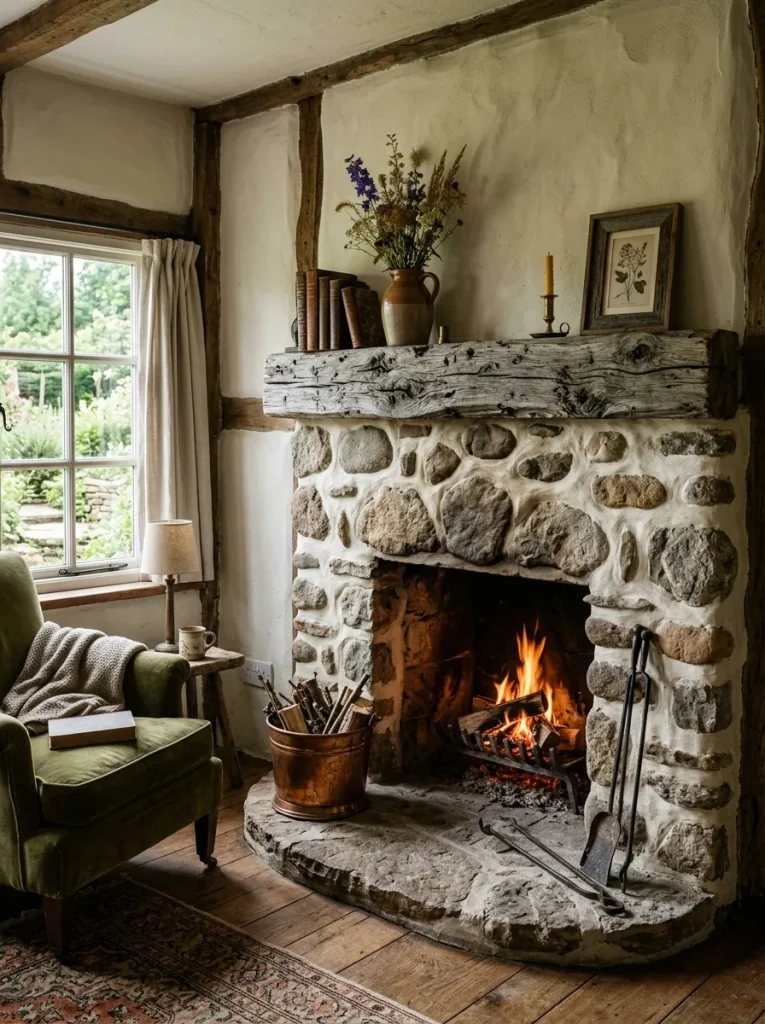
This one feels like a cottage in the Cotswolds, even in the middle of a German city. Irregular rubble stones buried in thick creamy mortar that spills over their faces, softening every edge, and a silver-grey driftwood beam full of cracks and character. The over-grout technique is messy work and I will not pretend otherwise: you pipe mortar in with a grout bag and smear it with a damp brush before it sets, and you will get it on your sleeves. But the result is a wall that looks two hundred years old in the best way. Keep the styling simple and a bit worn — amber glass bottles, a stoneware jug, a copper bucket of kindling — and let the wall do the talking.
6. Monolithic Cut Flagstone with a Live-Edge Cedar Mantle
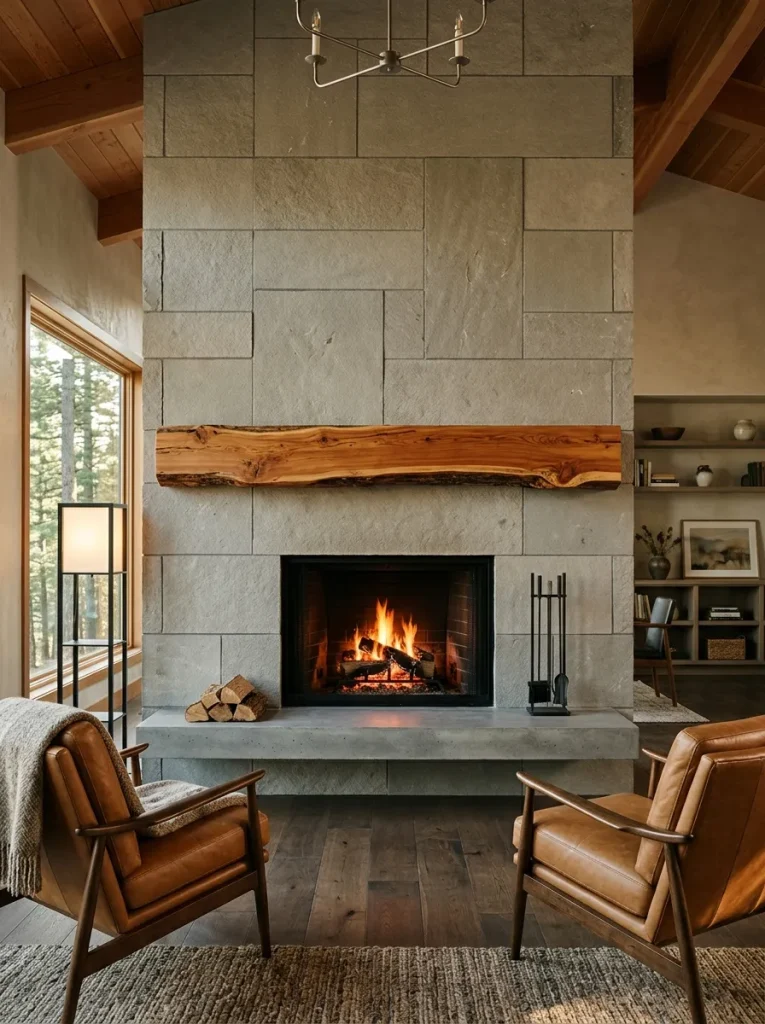
Big slabs, clean grid, one wild piece of wood cutting across it: this is the boldest look on the list and the one guests always ask about first. The flagstone panels are large, twenty-four by thirty-six inches in the version I priced, with tight joints and a natural cleft surface that catches light beautifully. The live-edge cedar slab is the star, so I left it mostly bare, just a clear matte finish to bring out the amber grain. One practical warning from the mason who quoted it: big panels are heavy and unforgiving, so the wall behind needs proper plywood and cement board, not just plasterboard. Done right, it is a piece of sculpture you can light a fire under.
7. Ledgestone Accent Wall with an Integrated Deep Espresso Mantle
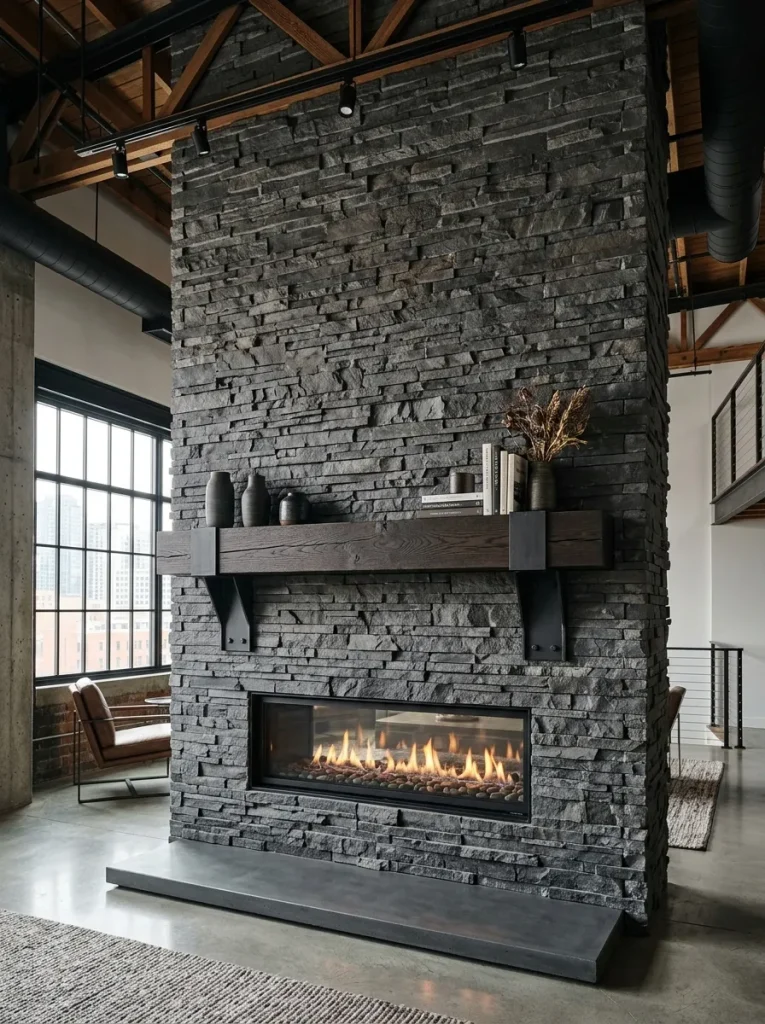
This is the industrial one, and it suits lofts and modern flats better than any other version here. Charcoal ledgestone in thin strips, each at a slightly different depth so the shadows move through the day, and a deep espresso oak beam held up by visible matte black steel brackets. I like that the brackets are part of the design instead of something to hide. The hearth is a poured concrete pad, polished and sealed, which sounds cold but feels surprisingly warm once a fire is going and a wool rug is in front of it. A linear gas insert fits this style perfectly, and a couple of black iron lanterns on the mantle are all the decoration it needs.
8. Warm Sandstone Hearth with a Hand-Carved Pine Beam
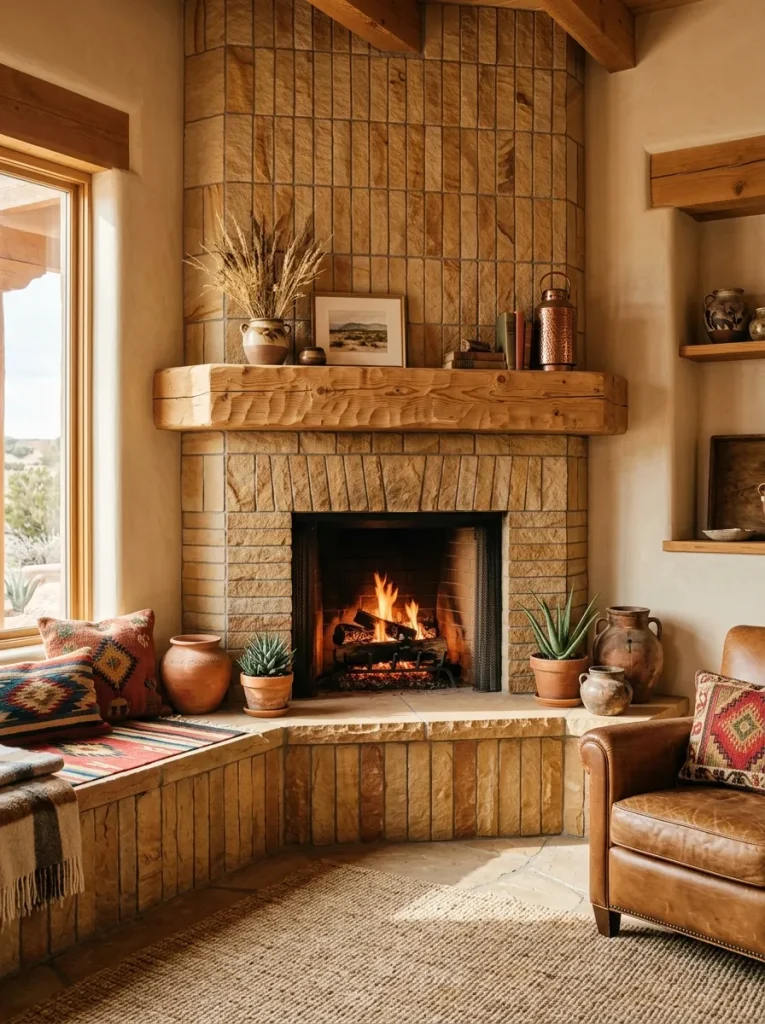
Golden sandstone and honey pine make this the warmest fireplace on the list, and it is the one I would pick for a room that needs cheering up. The sandstone blocks go up in a simple running bond with tight joints, and the pine beam is hand-adzed, which means someone stood there with a curved axe and carved rhythmic scallops into the wood. You can see the tool marks, and that is the whole point. The hearth bench wraps around the corner into an L shape, which turned out to be the most practical thing in the room: extra seating, a place for firewood, a shelf for the cat. Terracotta pots and a hand-woven kilim on the bench finish it off.
9. Contemporary Light Gray Quartzite with a Floating Natural Maple Mantle
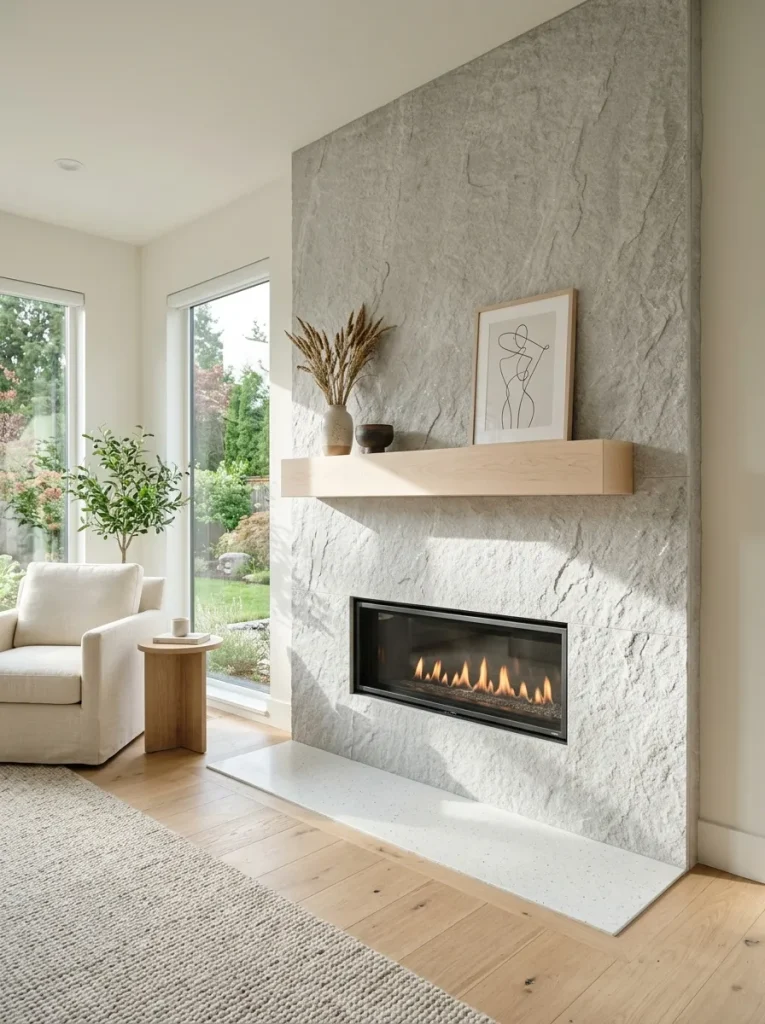
If you love Scandinavian interiors, this is your fireplace. Split-face quartzite in pale grey and white that catches daylight and throws it back into the room, with a floating maple beam so pale it almost disappears until you look closely. I used white mortar behind the quartzite for a reason: dark mortar shows through the translucent crystals and muddies the colour, something I only learned because a tiler warned me in time. The hearth is white terrazzo set flush with the oak floor, so the whole wall reads as one calm, bright surface. Style it lightly — white ceramic vases, a botanical print, nothing heavy — and let the stone and the fire do the work.
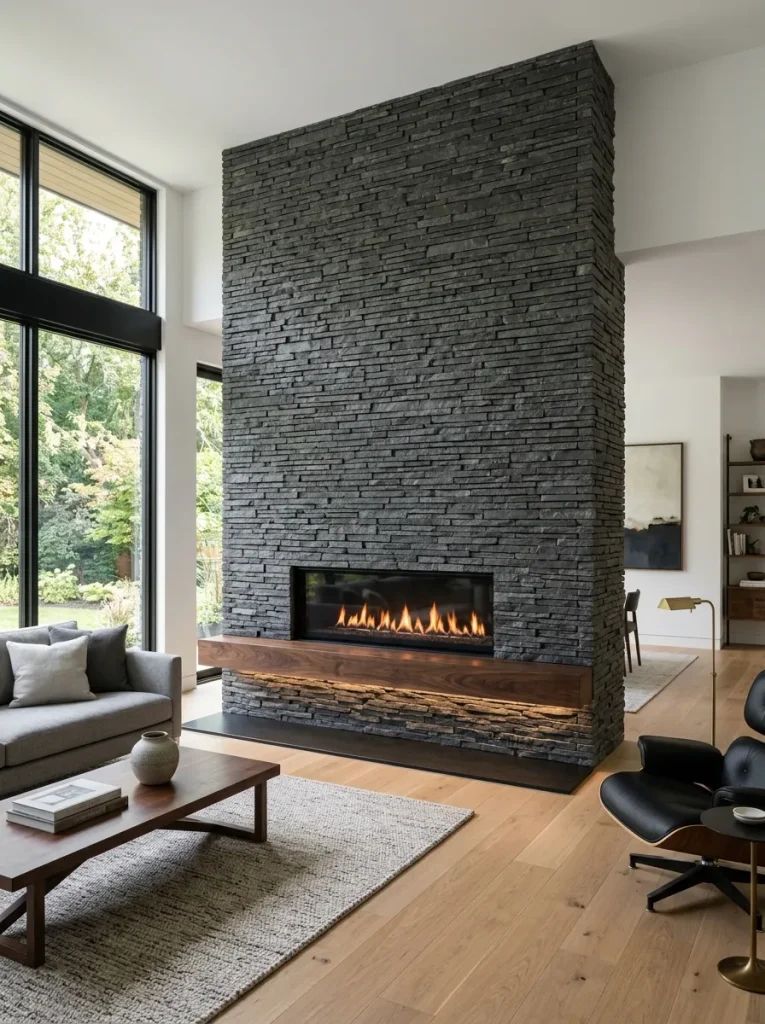
10. Dramatic Black Basalt Stone with an Antiqued Chestnut Mantle
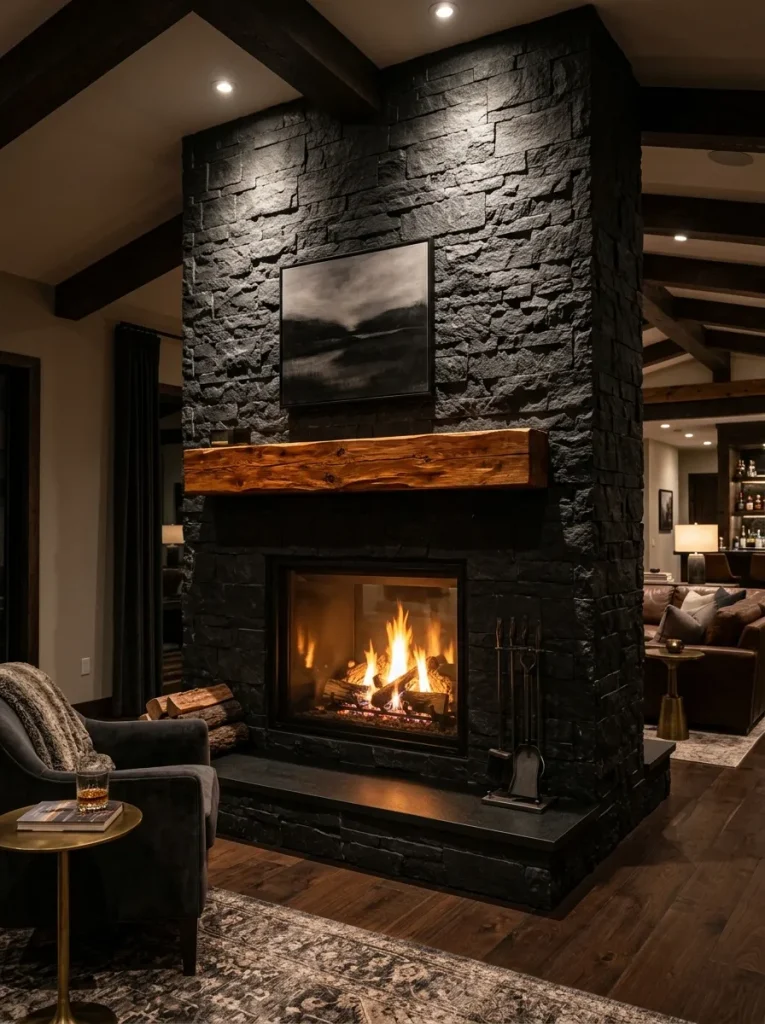
This is the moody one, and it is not for the faint-hearted. Jet-black basalt running floor to ceiling, with a reclaimed chestnut beam cutting across it in warm reddish gold. The contrast is the whole idea: dark stone makes the flames look bigger and the wood look richer. I sealed the chestnut with tung oil, which brought out the old saw marks and nail holes instead of hiding them, and that is exactly what you want from reclaimed timber. Two warm spotlights aimed down the stone at night are worth every cent, and the matte black granite hearth ties it all together. If your room can handle a bit of drama, this fireplace will reward you every single evening.
Conclusion
Ten fireplaces, one lesson I keep relearning: the stone does the heavy lifting and the wood does the talking, and the hearth is where you actually live. Pick the combination that fits the room you have, not the room in the photo, check the clearances and the floor load before you order anything, and leave enough of the budget for a good sealer and a decent fire toolset. My flat still has its river rock wall, its oak beam, and its flagstone bench, and on cold evenings it is still the best seat in the house.