When my parents asked me to help redo the fireplace in their old house outside Munich, I said yes before I had any idea what I was agreeing to, and then I spent the next three months learning more about flagstone, mortar, and carved mantles than I ever expected to know. Their living room had a tired 1970s brick surround that made the whole room feel dated, and a flagstone fireplace with a proper vintage carved mantle was the one change that made everything else in the room suddenly make sense. These ten ideas are the ones I studied, priced, and in several cases helped build, with the costs, the drying times, and the mistakes I would not repeat.
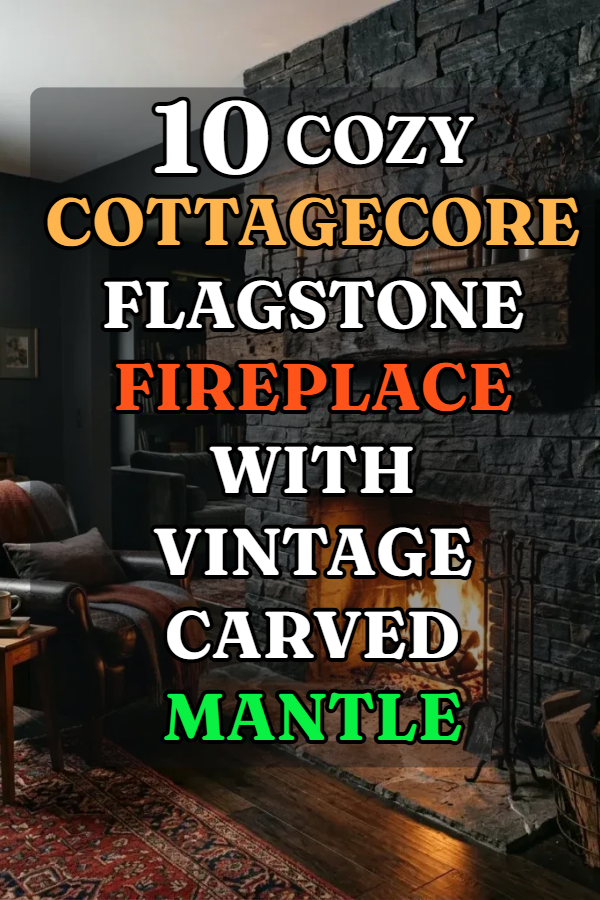
1. The English Countryside Dry-Stack Flagstone Fireplace
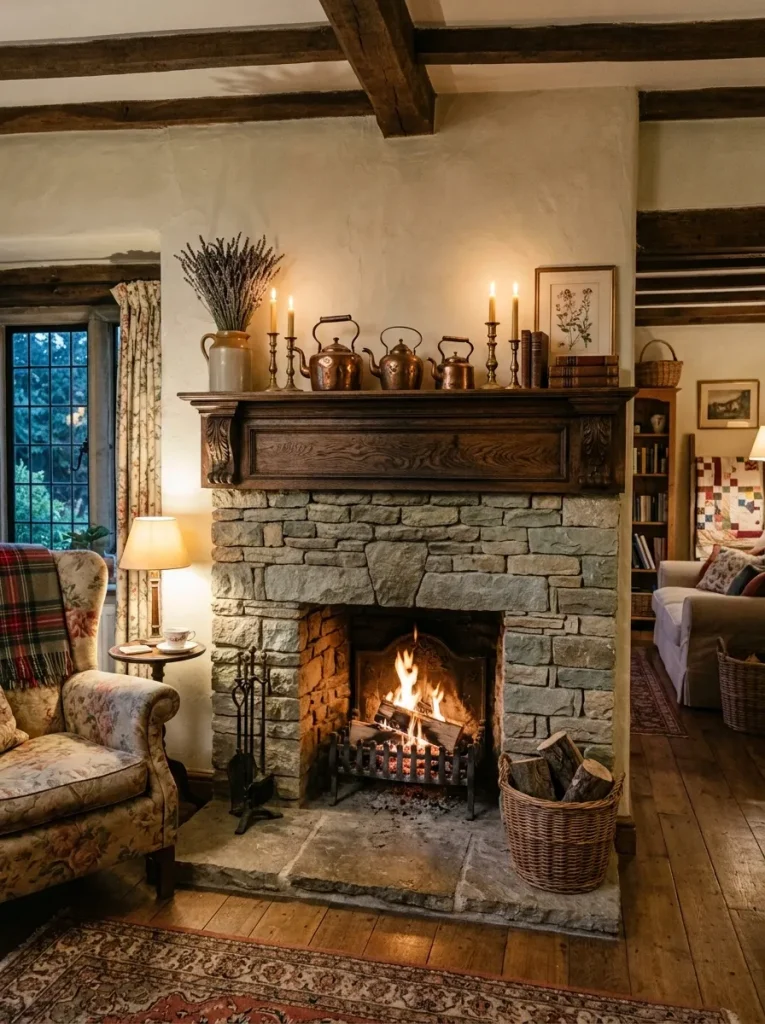
The dry-stack look was my first love, because it reminded me of the stone cottages I had seen walking in the Cotswolds, all tightly fitted stone with barely a visible joint. What surprises most people is that it is not actually mortarless: the stones are set on a mortar bed and the joints are kept so tight that the wall reads as dry-stacked, which means you need a mason who is patient and a stone supplier who will let you sort through the pallets. We chose flagstone in soft grey with green and tan undertones, and the heavy Victorian carved oak mantle on top cost more than the stone itself, about 900 euros from a reclamation yard near Augsburg. The mantle is genuinely heavy, so we fixed it with steel brackets into the wall studs and let the mortar cure for a full 48 hours before anyone leaned anything on it.
2. The French Farmhouse Whitewashed Flagstone & Floral Mantle
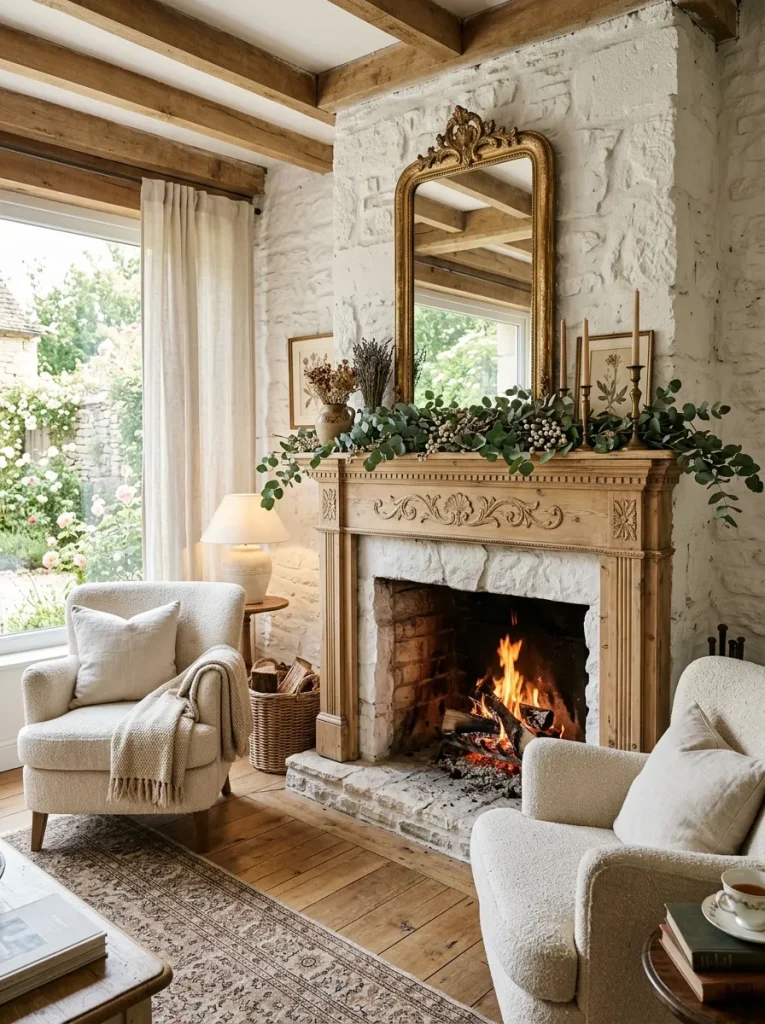
The whitewashed version is the one I would choose for a darker room, because it takes a heavy stone fireplace and makes it feel light and airy instead of looming. We laid irregular flagstones with half-inch mortar joints, let them cure for two days, and then brushed on a limewash made from hydrated lime, water, and a pinch of salt, diluted roughly fifty-fifty with water. The first coat looked alarming, all streaky and thin, but the second coat settled into a soft chalky white that still lets the shape of each stone show through. The mantle is a distressed vintage piece with hand-carved floral scrolls and acanthus leaves, and I waxed it rather than varnishing it, so it keeps a soft matte finish. My one piece of advice is to test the limewash on a spare stone first, because it dries much lighter than it looks wet, and a mix that looks perfect in the bucket can dry almost invisible. Pair it with pale wood and dried flowers and the room feels like a farmhouse in Provence.
3. The Dark Academia Forest-Moss Flagstone Hearth
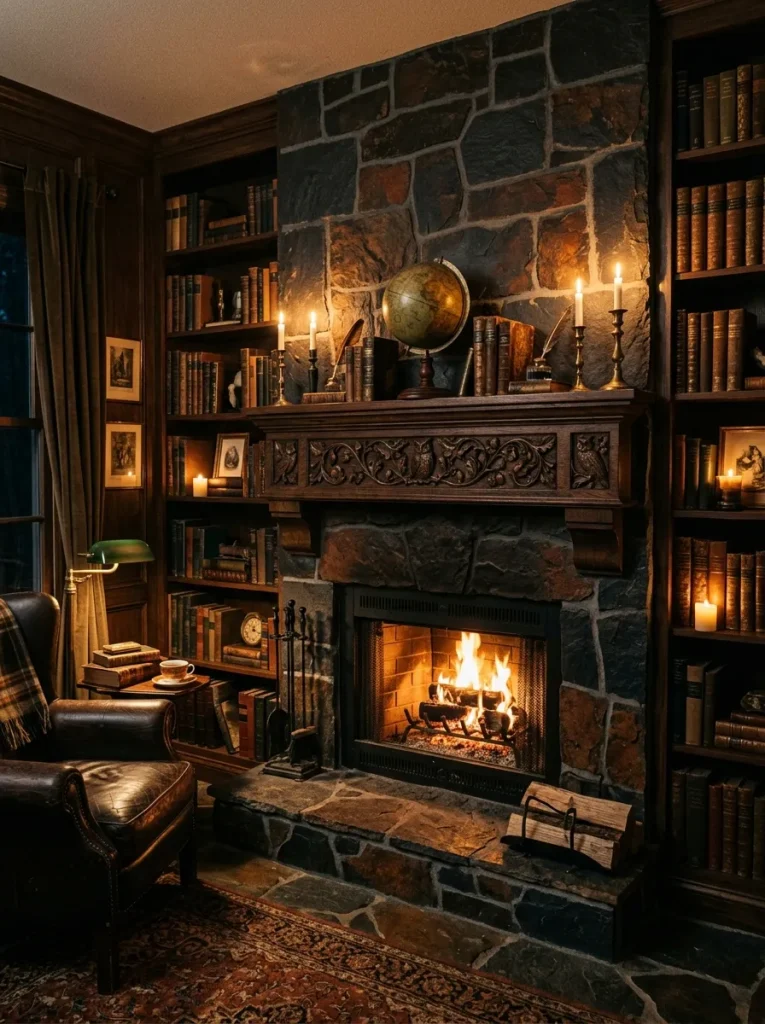
Not every cottagecore fireplace needs to be bright, and this moodier version is the one my brother chose for his own flat, which has dark green walls and tall bookshelves. The flagstone here is deep charcoal with rust and iron tones, laid floor to ceiling, and the walnut mantel is stained almost black and carved with woodland motifs, vines and leaves and a small owl tucked near one corner that took me a week to notice. Dark stone shows soot faster than pale stone, so we sealed the hearth with a matte stone sealer and I told him to keep a small brush and dustpan beside the firebox, which he ignores and then complains about. The lighting matters more here than with any other version: a pair of warm brass sconces on either side keeps the stone from reading as a black hole in the evening.
4. The Wild Fieldstone & Reclaimed Beam Fusion
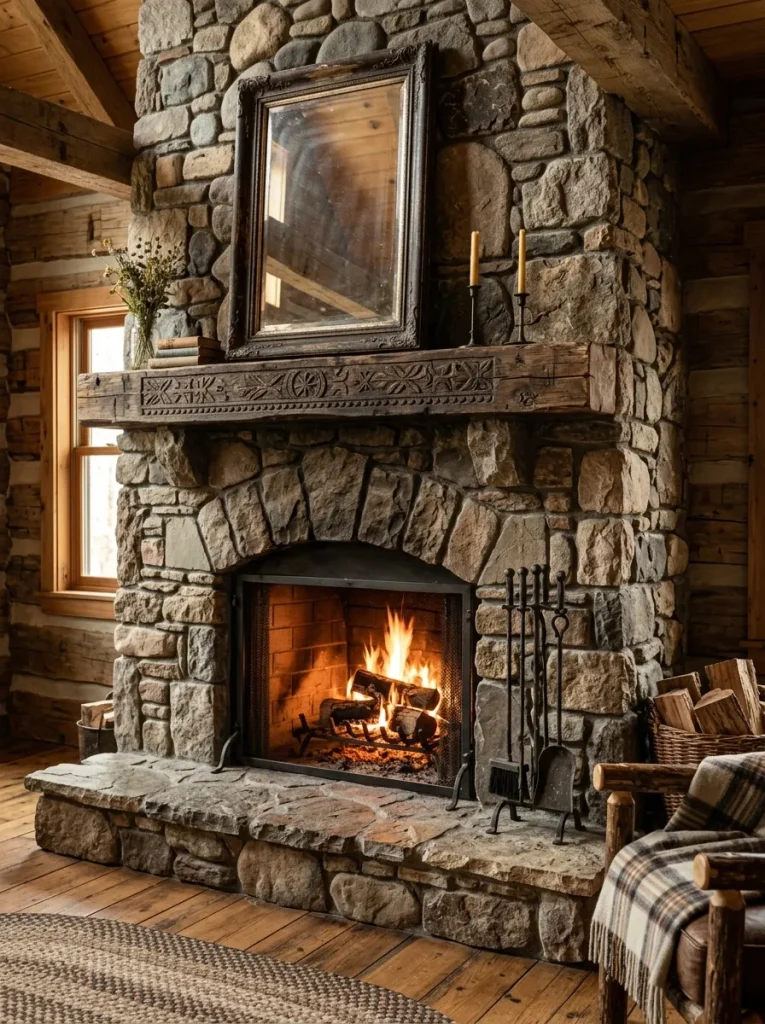
No fireplace in this list forgives a beginner more, which is exactly why it suited us, because it celebrates imperfection instead of punishing it. We laid out every flagstone slab on the living room floor first and spent a whole Saturday afternoon fitting the irregular shapes together like a mosaic, balancing big stones against small ones and spreading the colours evenly before a single trowel of mortar was mixed. The mantle is a reclaimed barn beam, probably a hundred years old, with saw marks and nail holes still visible, and we simply cleaned it, oiled it, and set it on hidden steel brackets. Because the stones are random and uncut, nobody can tell where one piece ends and the next begins, which hides every small mistake a first-timer makes. The beam cost 250 euros from a demolition dealer, the stone was about 40 euros per square metre, and the whole surround took two weekends. Seal the stone once a year and it will outlast all of us.
5. The Storybook Cottage Arc Fireplace
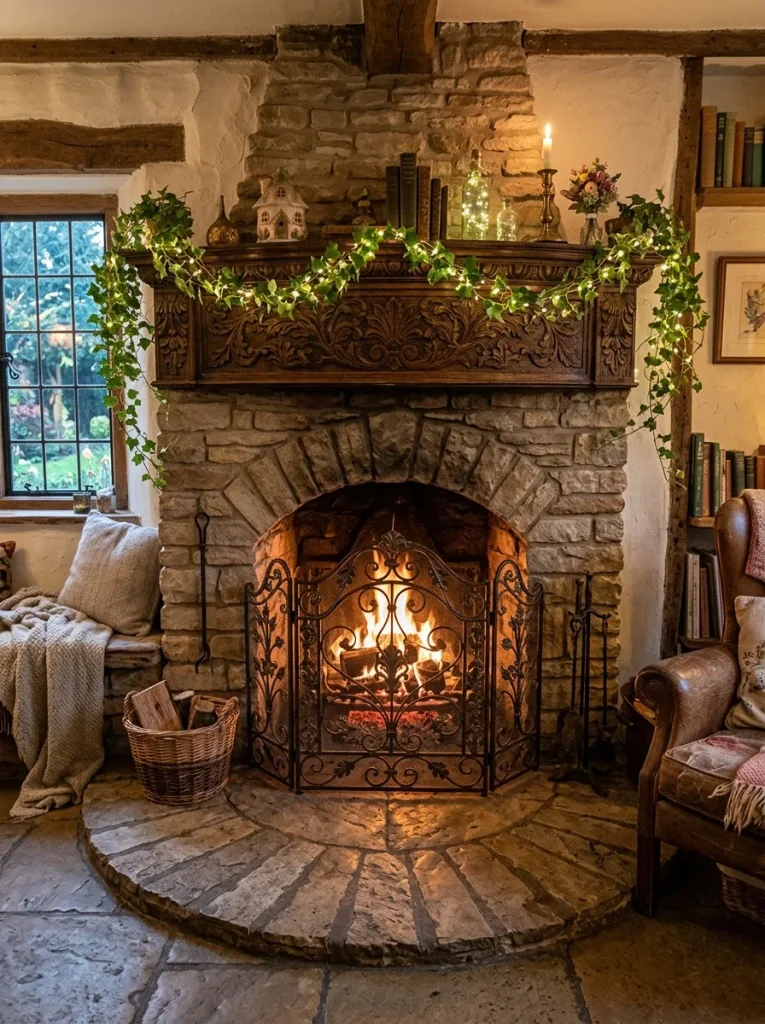
The arched fireplace is the one that makes visitors stop and smile, because it looks like something from a fairytale, all soft curves and fan-patterned stone. Building the arch is the hard part, and our mason built a temporary plywood form inside the firebox opening, then laid wedge-shaped flagstones over it with heat-resistant mortar, leaving the form in place for three full days while the mortar cured. The stones fan out from the arch in a sweeping pattern, and the curved bow-front carved mantle on top echoes the shape, which is what makes the whole thing feel coherent rather than fussy. We found the mantle at an antique market for 600 euros, and it needed two people and a van to move, plus a careful afternoon of shimming it level. I would not attempt the arch without a professional, because a sagging arch is a structural problem, not a cosmetic one. Done properly, though, it turns an ordinary living room into the cosiest room in the house.
6. The Coastal Cottage Slate & Driftwood-Tone Flagstone
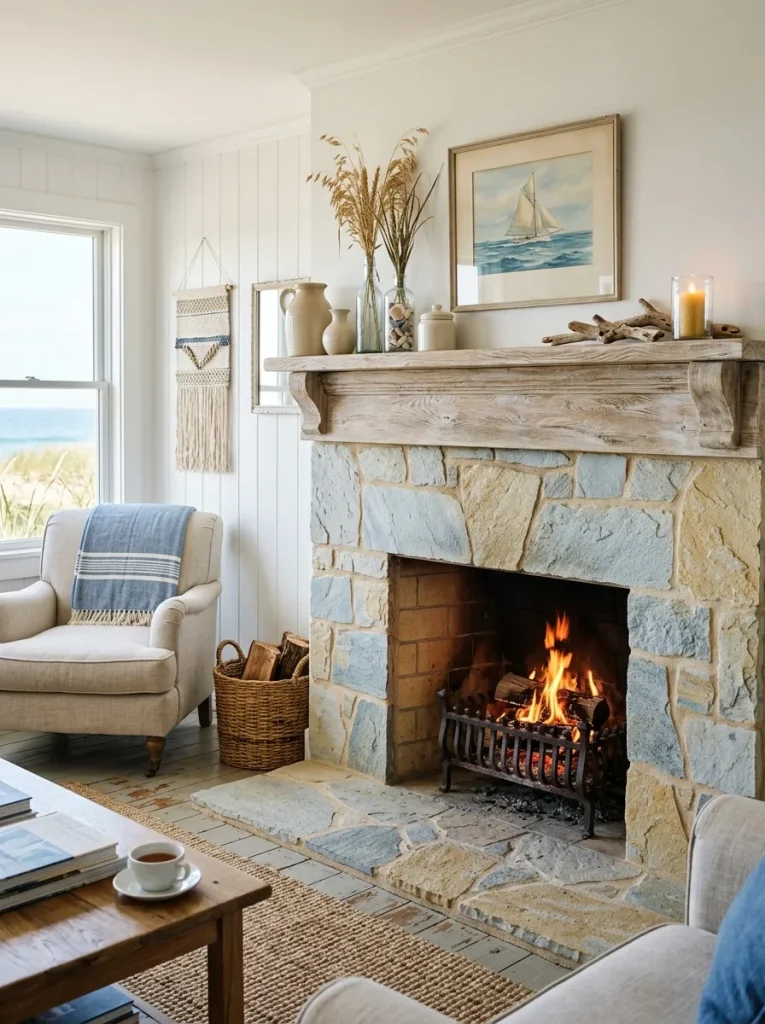
I first saw this breezy version in a holiday cottage on the North Sea coast, where the fireplace had to feel relaxed enough for sandy feet and wet dogs, and I have wanted one ever since. The flagstones are sea-grey, slate, and sand coloured, laid with light beige mortar that keeps the whole surround bright, and the mantle is a bleached, washed vintage piece that looks like driftwood, all pale and weathered. We finished the mantle with a white wax that lets the grain show through, and we chose a matte sealer for the stone because a glossy finish would have looked wrong against the soft colours. The palette is deliberately quiet, so the room can take blue linen cushions, woven baskets, and shells on the mantle without clashing. My practical note is that pale mortar shows soot marks, so keep the firebox swept and the wood dry, because damp wood smokes and smoky fires stain.
7. The Over-Grouted Bavarian Cottage Surround
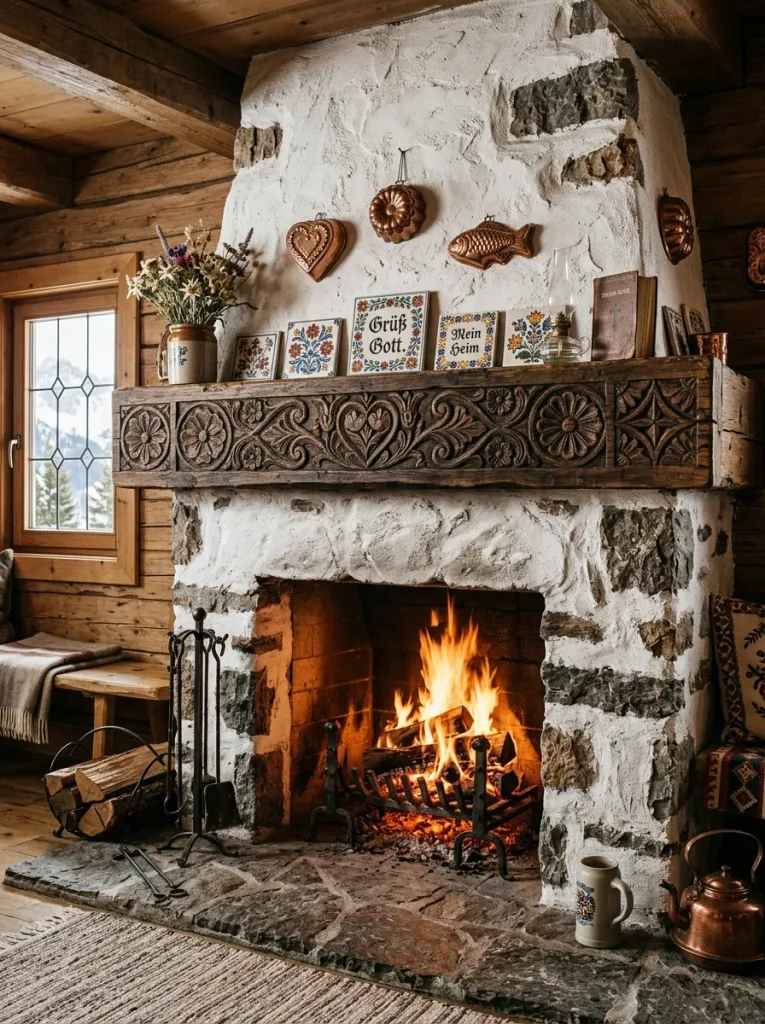
The over-grouted look, sometimes called German smear, is the one that feels most like home to me, because I grew up seeing it in Alpine farmhouses all over Bavaria. The stones are set with wide gaps, three quarters of an inch to an inch, and then heavy white mortar is squeezed between the joints and smeared partly across the face of the stones, so only the corners and edges peek through. We used a grout bag to pipe the mortar in, then a damp sponge to smear it, and the whole wall took one long day plus a day of curing before we could clean the haze off the stone faces. The effect is wonderfully textured and old-looking, and it hides uneven stone beautifully, which is a gift if your flagstones are not perfectly flat. The carved mantle on top is a simple pine piece with a chippy white finish, and it cost almost nothing from a secondhand shop. Wear gloves and old clothes, because the mortar gets everywhere, and keep a bucket of clean water close for the sponge.
8. The Raised Hearth & Corner Flagstone Nook
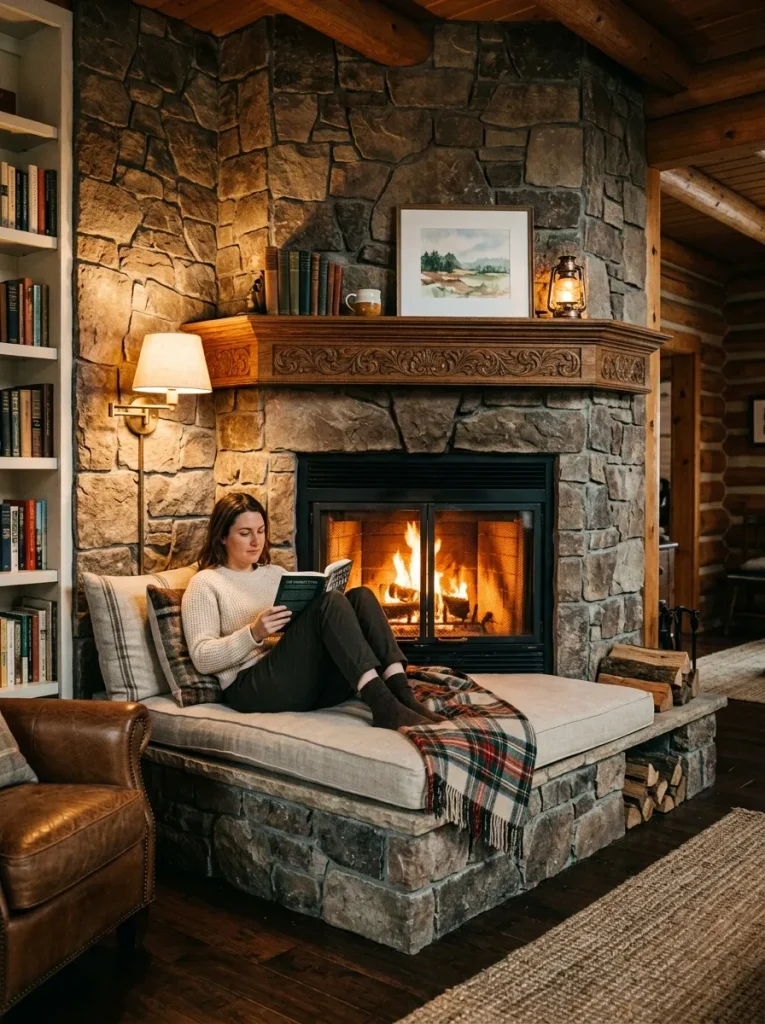
Small rooms need clever fireplaces, and this raised corner hearth is the solution I sketched for a friend whose living room is barely twelve square metres and had no good wall for a fireplace at all. The hearth is a bench built from cinder block, sixteen to eighteen inches off the floor, capped with smooth flat flagstone slabs, and it doubles as extra seating when the fire is not lit, which in a small flat is genuinely useful. The surround runs up the corner in a neat triangle, and the vintage carved mantle is corner-fitted, which sounds complicated but mostly means the mantel shelf is cut at an angle and the brackets are set into both walls. We left the mortar to cure for 48 hours before loading the hearth with logs, and we sealed the cap stones twice because a hearth seat takes more wear than a vertical wall. The corner placement leaves the rest of the room free for a sofa and a bookshelf, and the raised seat means you can sit beside the fire with a book and a cup of tea without crouching on the floor.
9. The Scandinavian Hygge Earth-Tone Hearth
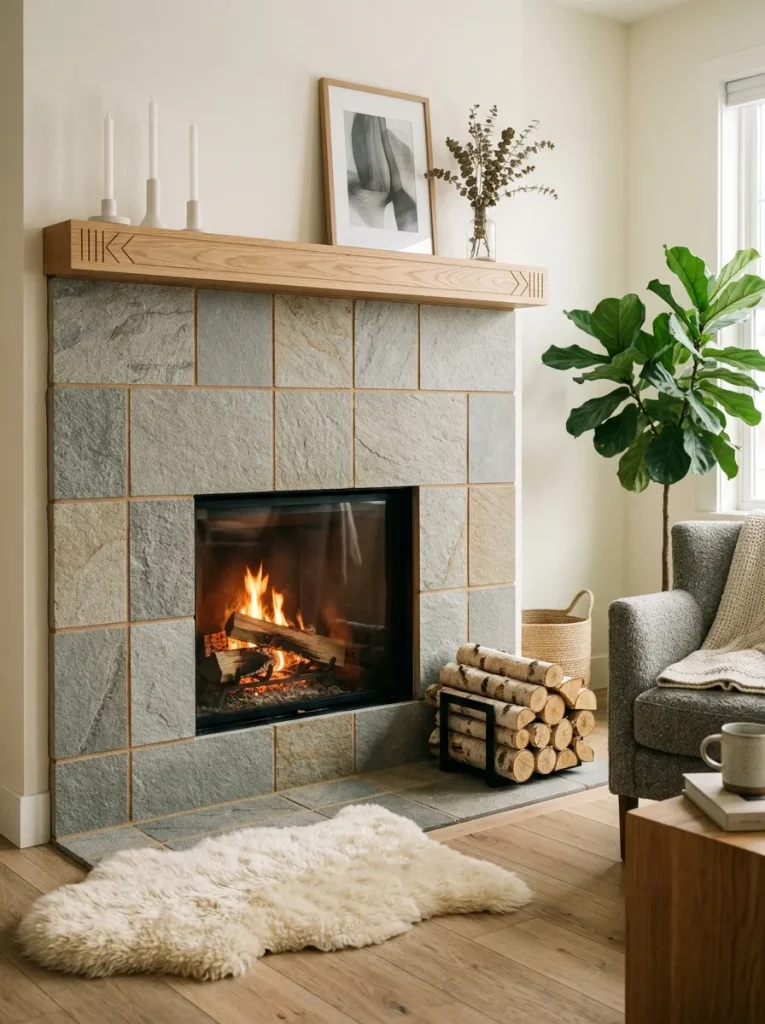
After the drama of arches and dark walnut, I found this fireplace’s simplicity genuinely restful, the quietest in the whole list. The flagstones are cut into uniform rectangles and laid in a neat grid with flush, colour-matched tan mortar, so the wall reads as calm and orderly, and the mantle is a minimalist carved Nordic oak piece with almost no ornament, just a clean edge and a soft oil finish. The whole point is the atmosphere rather than the stone: candles on the mantle, a sheepskin over the armchair beside it, and a stack of birch logs in a basket, because hygge is about the feeling of the room as much as the fireplace itself. Cutting the stone into rectangles takes longer and costs more than laying random slabs, about 55 euros per square metre fitted, but the grid pattern is what makes it look Scandinavian rather than rustic.
10. The Heritage Rose & Terracotta Cottage Surround
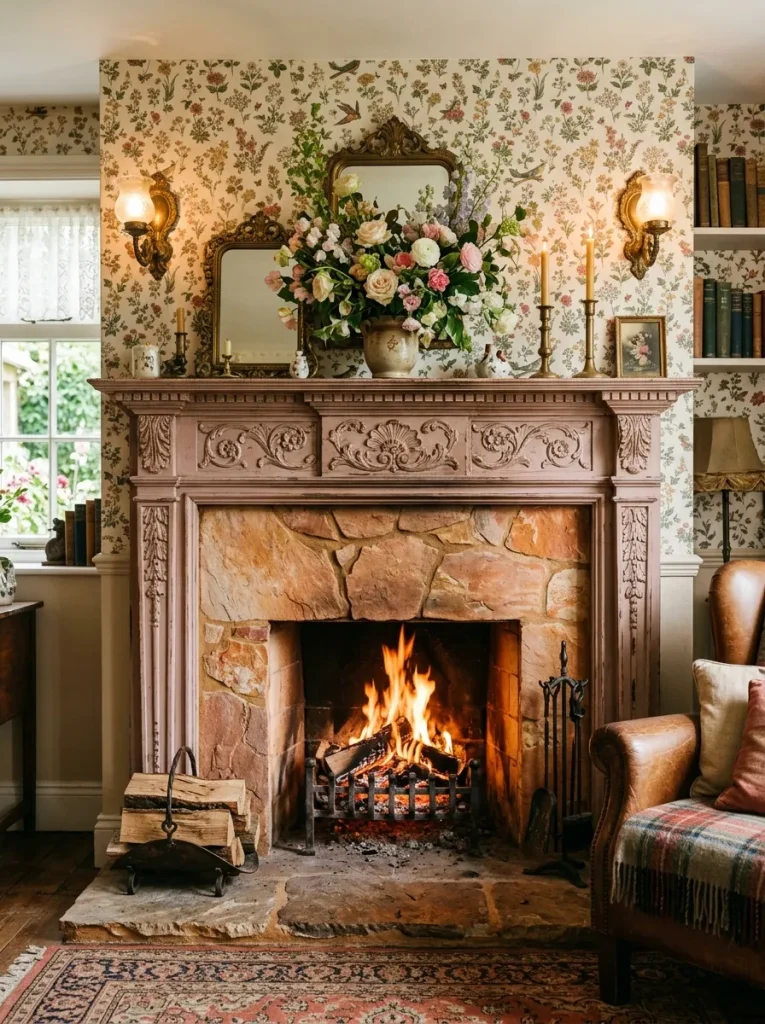
The last fireplace in this list is the warmest and most romantic, and it is the one my mother fell in love with the moment she saw the sample stones. The flagstones are rich in iron oxide, all peach, copper, and terracotta tones, laid in a random broken-tile pattern with warm sand-coloured mortar, and the vintage carved mantle is painted in a soft muted rose with just a hint of sage on the inner edge. We used a historic buttermilk paint that dries chalky and soft, and we sealed the stone with a matte finish so the colours stay warm rather than turning glossy and orange. The rose paint needs a gentle hand: one thin coat, left to dry overnight, then a light wax, because a thick coat of paint would fill in the carving and ruin the detail that makes a vintage mantle worth having. Brass candlesticks and dried roses on the mantle finish it, and in the evening light the whole wall glows like the inside of a terracotta pot.
Conclusion
Three months after we started, my parents light their fireplace most evenings, and the living room that used to feel dated is now the room everyone drifts into without thinking about it. A flagstone fireplace is slow work and dusty work, and the mortar gets everywhere no matter how careful you are, but the result is the kind of thing that stays with a house for decades. Pick the version that fits your room and your patience, and give the mortar the full curing time it asks for.