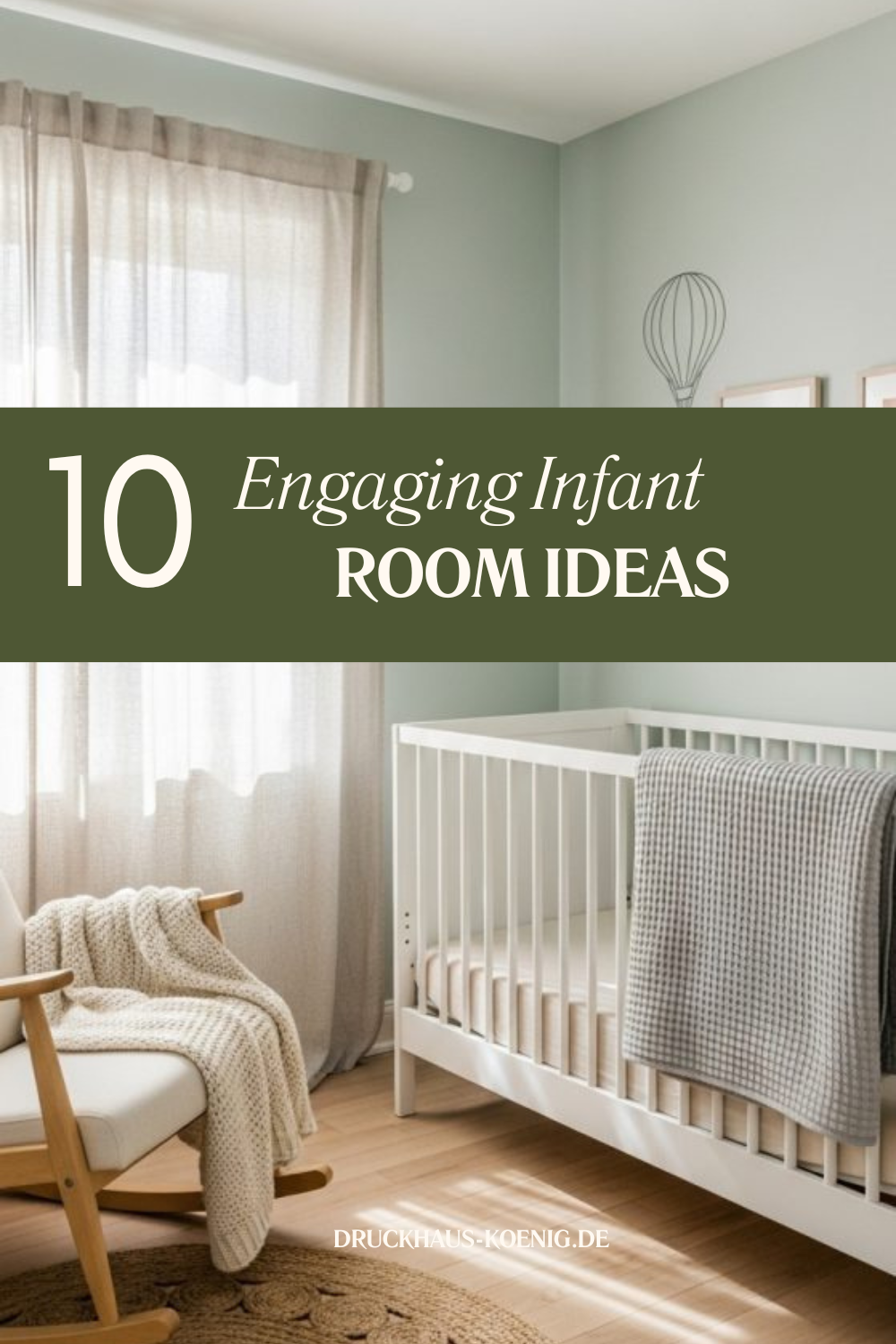
Setting up our first nursery, I went completely overboard — I bought everything, arranged it perfectly, and then the baby arrived and ignored about half of it. Second time around I was ruthless: only what we’d actually use at 3am, everything washable, nothing fussy. A nursery isn’t a showroom; it’s a workstation for exhausted people and a safe cocoon for a tiny human. Here’s what I kept, what I ditched, and what I’d tell any new parent.

1. Calming Color Palettes for Serenity
I painted the nursery a soft sage green and it was the best decision in the room. Muted, nature-inspired tones — sage, warm beige, pale gray — keep the room restful at 2am when you’re rocking a crying baby under a dim light. Bright colors might look cheerful in photos, but they’re the last thing you want bouncing off the walls during the fourth night waking. I kept the palette to two colors plus white, and brought interest through texture instead: linen curtains, a knitted throw, a woven rug. The room still looks good now that it’s a toddler room, because the colors never screamed “baby.”

2. Functional Layout and Safety-Centered Design
Map your 3am route before you arrange furniture — I’m serious. Crib, changing station, feeding chair: you should be able to move between them half-asleep without tripping. I put the glider in the corner furthest from the door (so the hallway light wouldn’t hit the baby’s eyes), the changing dresser next to the crib, and everything needed for a change within one arm’s reach. Anchor every tall piece to the wall; my toddler started pulling up at seven months and tested every single one. Low-VOC paint and washable everything — the first blowout will teach you why.

3. Interactive Wall Décor and Visual Stimulation
Newborns see high contrast best, so I started with black-and-white framed prints — the baby stared at them for ages, genuinely mesmerized. As she grew I swapped in softer art: fabric letters spelling her name, a felt animal garland, a removable woodland mural. Everything went up with damage-free strips, not nails, because I rearranged constantly in the first year. One rule I kept: nothing within grab’s reach of the crib. If little fingers can reach it at 2am, it will be chewed — plan accordingly.

4. Cozy and Supportive Sleeping Space
The crib is where you should not economize on safety or the mattress — everything else can be budget. I bought a convertible crib that became a toddler bed, which paid for itself twice over. Bare is best inside: firm mattress, fitted sheet, nothing else — no bumpers, no blankets, no toys, however cute they look in photos. A simple wooden mobile with muted colors hung well out of reach gave visual interest without clutter. A soft rug beside the crib saved my knees during the months of crib-side rocking, and a white-noise machine did more for sleep than any gadget I bought.

5. Multi-Purpose Furniture for Growing Needs
Babies outgrow everything in months, so I bought furniture with second lives. The changing top came off the dresser and it’s still her clothes dresser. The crib converted to a toddler bed. A storage ottoman held diapers, then toys, and now it’s where she sits to put on shoes. The glider with side pockets was my command center for night feeds — burp cloths, water bottle, phone, all within reach. If a piece only serves the baby phase, I bought it secondhand or skipped it. The room evolved without a single big rebuy.

6. Gentle Lighting Layers for Comfort and Safety
Overhead light on a dimmer, a warm nightlight near the changing area, blackout curtains — that’s the whole lighting plan and it’s perfect. The dimmer was the single most-used feature in the room: bright for cleaning and play, near-dark for the bedtime wind-down. I made the mistake first of a cute but harsh nursery lamp that fully woke the baby at every night change; replaced it with a 5-euro amber nightlight and night feeds got dramatically easier. Blackout curtains are non-negotiable for naps — the afternoon sun doesn’t care about your schedule.

7. Themed Decor for Visual Consistency
I chose a soft woodland theme — muted greens, little animal prints, a fox cushion — and kept it to textiles and wall art only. That’s my big theme advice: never theme the furniture or the walls permanently. Bedding, a rug, prints, and one stuffed mascot carry a theme completely, and when your toddler develops fierce opinions (mine switched to “only dinosaurs” at two), you swap 80 euros of textiles instead of repainting. A light touch reads as charming; a full themed bedroom set reads as a hotel lobby and dates fast.

8. Sensory Stimulation Through Textures and Materials
Babies learn through touch, so I layered textures everywhere: a nubby wool rug for tummy time, crinkly fabric books, smooth wooden rings, a soft knit blanket. The seagrass baskets I bought for storage became fascinating objects in their own right — different weave, interesting smell, fun to bang. I avoided anything synthetic and scratchy after noticing she pushed those away. A small sensory corner with a floor mat and three or four textured toys kept her happily occupied while I folded laundry nearby. Simple, cheap, and genuinely developmental.

9. Creative Storage Solutions for Clutter-Free Spaces
Nursery clutter multiplies overnight — tiny clothes, diapers, creams, toys appearing from nowhere. My system: labeled baskets on the changing dresser (diapers, wipes, creams, spare clothes — grab without looking at 3am), stackable cubes in the wardrobe for outgrown sizes, and one big basket for the daily toy explosion that gets scooped up each evening. Floating shelves held the pretty things out of reach. The rule that kept me sane: every new baby item had to have a designated home before it entered the room. No home, no purchase.

10. Personal Touches for Warmth and Connection
The things I love most in the nursery cost nothing: the framed photo of her grandparents holding her on day one, the quilt my mother made, her name in wooden letters above the dresser, the little shelf with the footprint art from her first month. I added a reading corner with our battered armchair and a basket of board books — some of my favourite memories are the 6am feeds with a book in my lap. A lavender diffuser made the room smell like calm (to me, anyway). These personal layers are what turned a well-planned room into her room.

Second time around, my nursery shopping list fit on an index card: safe crib, good mattress, glider, dresser with changing top, blackout curtains, dimmer, baskets. Everything else was love, not logistics. Start with the 3am essentials, keep it washable, and let the room grow with your baby — the best nurseries are the ones that still work when the baby becomes a opinionated toddler.