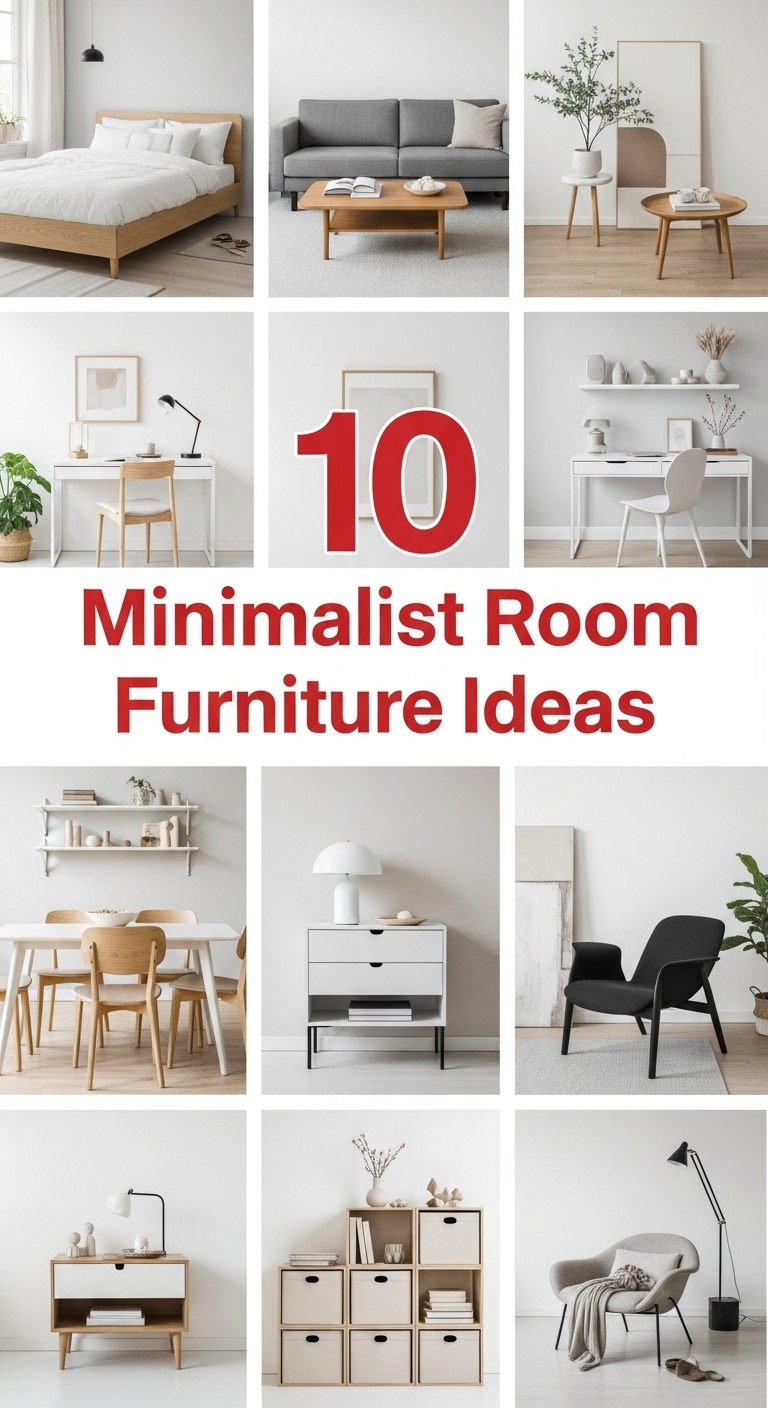
Our living room used to hold a three-seater sofa, a loveseat, two armchairs and a coffee table I barely liked, and somehow the room still felt empty — crowded but cold. Three years ago I started pulling pieces out one by one, and every time something left, the room got warmer. That sounds backwards, but I have lived it: fewer, better pieces make a home feel calmer than any amount of stuff ever did. These are the ten minimalist furniture pieces I actually bought, tested and kept, with the mistakes included.
1. Modular Sofas for Flexible Seating
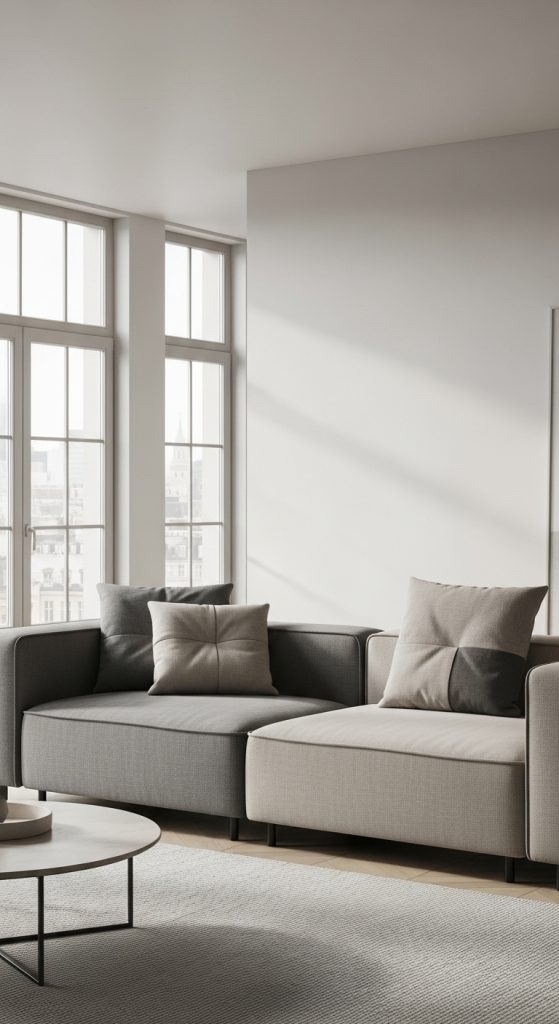
When I first suggested a modular sofa, my husband said it sounded like something that belonged in an office lobby. Eighteen months later he rearranges ours every few weeks without thinking about it. We bought a four-module set in grey for about 900 euros, and the real test happened the first Christmas: we split it into an L-shape around the tree for the family, then back into two straight sofas the next weekend for a film night with friends. The connectors are simple metal clips underneath, and I check them twice a year because one clip went loose once and a module drifted three centimetres overnight — noticeable only when you sat on the gap, but annoying. Measure your doorframes before you buy; the modules come flat-packed at roughly 90 by 90 centimetres each, and one of ours only just cleared the hallway corner. The beauty is that a modular sofa never fights the room, because when the room changes, the sofa changes with it.
2. Floating Beds for a Sleek, Spacious Feel
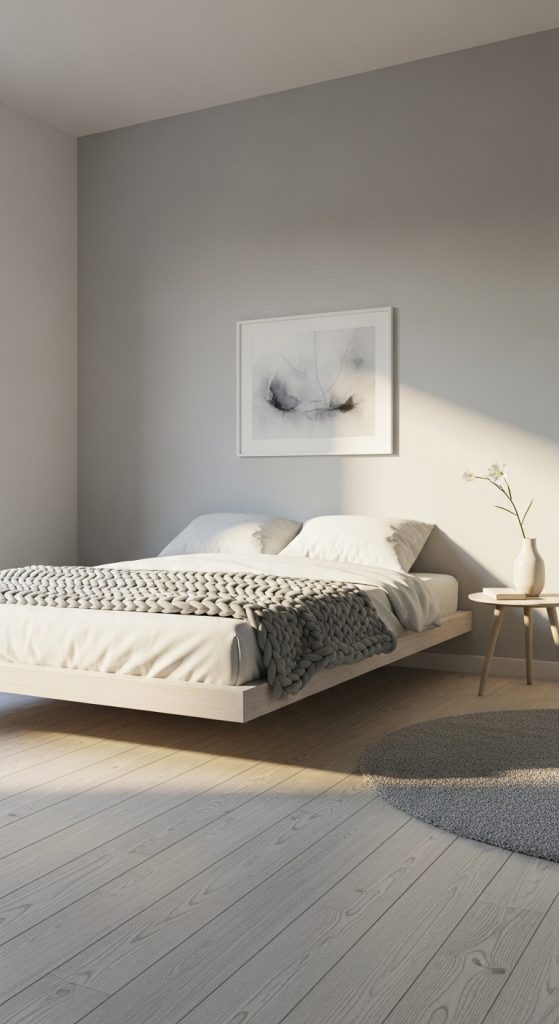
A bed that hovers looks like a magic trick until you try to bolt it to the wall, at which point it becomes an engineering project. I nearly bought a cantilever frame online before my father-in-law talked me out of it over Sunday cake — he pointed out that a floating bed puts enormous force on the wall anchors, and our 1970s plasterboard walls would not have held it. So I was honest about the structure instead: I built the platform bed on a recessed base set back about 30 centimetres from the edges, which creates the exact same floating look from any standing viewpoint. Underneath I ran a simple warm-white LED strip on a timer, and at night the whole bed seems to hover an inch off the floor. The bonus nobody mentions: the robot vacuum glides straight under the recessed base, so there is no dusty void to clean. Total cost was under 200 euros in lumber and lights, versus 800 for the real cantilever frame.
3. Minimalist Dining Tables with Clean Lines

Our old dining table had turned legs, a carved apron and four extra leaves I used twice in five years. I sold it on Kleinanzeigen and bought the opposite: a solid oak table, 180 centimetres long, just a thick top and four straight legs, no apron, no leaves, no fuss. It cost about 450 euros from a small German maker, and I have not regretted the simplicity for a single day. Without an apron, taller chairs tuck fully underneath, which saves nearly half a metre of floor space when the table is pushed against the wall. Wood care is simpler than I feared: I oil it twice a year with food-safe oil, wipe spills immediately, and the inevitable small marks just become part of the surface. The one mistake I made was choosing white chairs first — they looked great in the shop and grubby in three months with our habits. Grey washable-cushion chairs now, problem solved.
4. Scandinavian-Inspired Storage Units
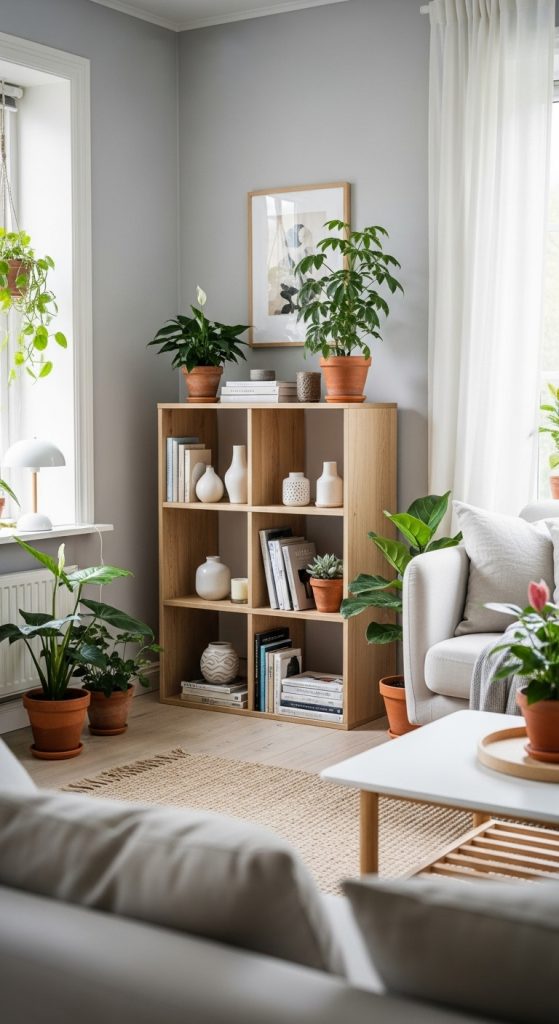
Every storage unit I ever owned became a shelf for things I was too lazy to put away, until I changed the furniture instead of my habits. I replaced our dark, looming bookcase with a low light-oak cube shelf — five cubes wide, two high, about 150 by 75 centimetres — and it sits against the wall like a bench rather than a tower. The lower height means it never dominates the room, and I put a cushion on top so it doubles as a window-side seat. My rule for the cubes: at least two of the ten stay empty or hold a plant, always. That breathing room is what keeps it Scandinavian rather than just small. Baskets hold the mess — one for chargers, one for board games, one for the knitting I keep meaning to finish. I learned to label nothing and just remember which basket is which, because labels turn a calm shelf into an office supply list.
5. Simple, Low-Profile Armchairs
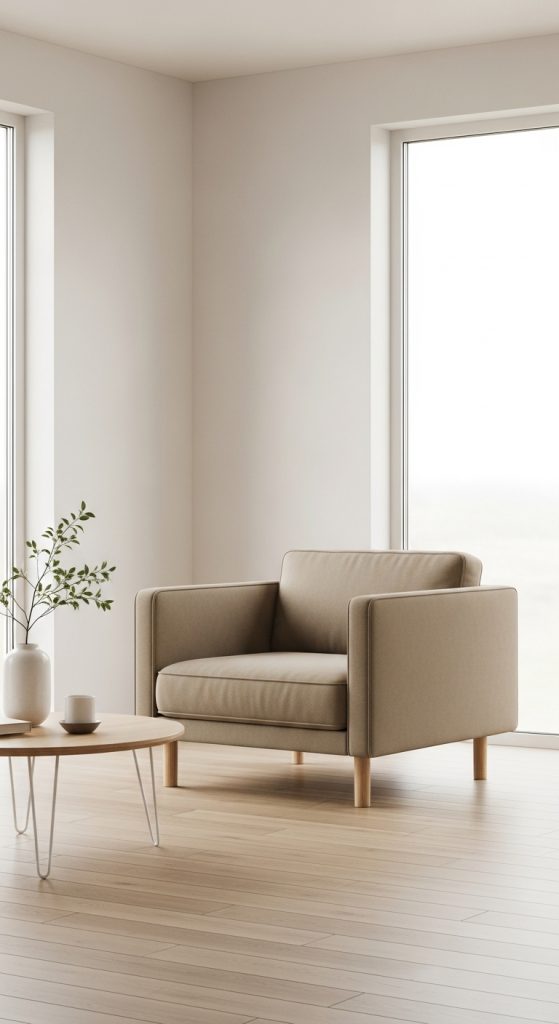
For two years my reading chair was a bulky recliner with more levers than a cockpit, and it swallowed a quarter of our living room. I replaced it with a low-profile armchair in beige — simple wooden legs, a seat about 40 centimetres off the floor, and a seat depth of 55 centimetres that lets me curl sideways with a book. The low back is the key detail: at only 65 centimetres high it never blocks sightlines across the room, so the chair feels present without being heavy. I bought the floor model for 180 euros because I sat in it for twenty minutes in the shop and nearly fell asleep, which is my entire testing method for chairs. One practical note: a light beige chair next to a window needs a washable cover, and I keep a spare that goes on in two minutes when friends bring red wine. Small room, small chair, big difference.
6. Hidden Storage Solutions in Furniture
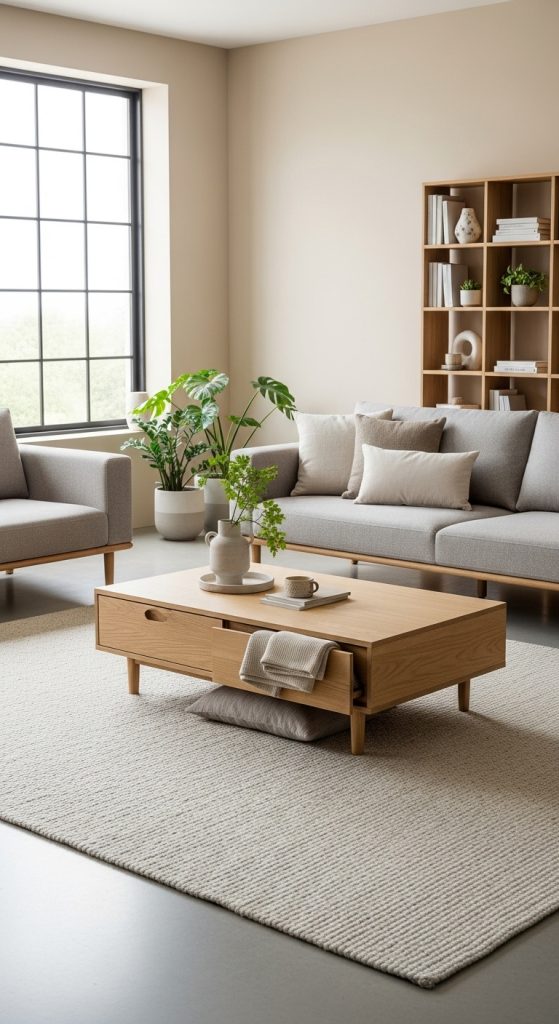
Our coffee table has a lift-top, and I would defend that purchase with my life. From above it is a plain oak rectangle, 110 by 60 centimetres, sitting about 45 centimetres high. But the top hinges upward to become a work surface at elbow height, and underneath there is a compartment that swallows two laptops, three chargers, the TV remotes, and the blanket I am supposedly not allowed to keep on the sofa. That hidden belly is what keeps our living room looking minimal without requiring anyone to be tidy. The mechanism matters more than the looks: I tested three tables in the shop, and one wobbled at full height while another needed two hands to open. The one I bought for 250 euros lifts smoothly with one finger and locks level. Just be careful with hot drinks on the lifted top — it is a desk pretending to be a table, and it tips its hat a little if you lean on the far edge.
7. Multifunctional Sofa Beds
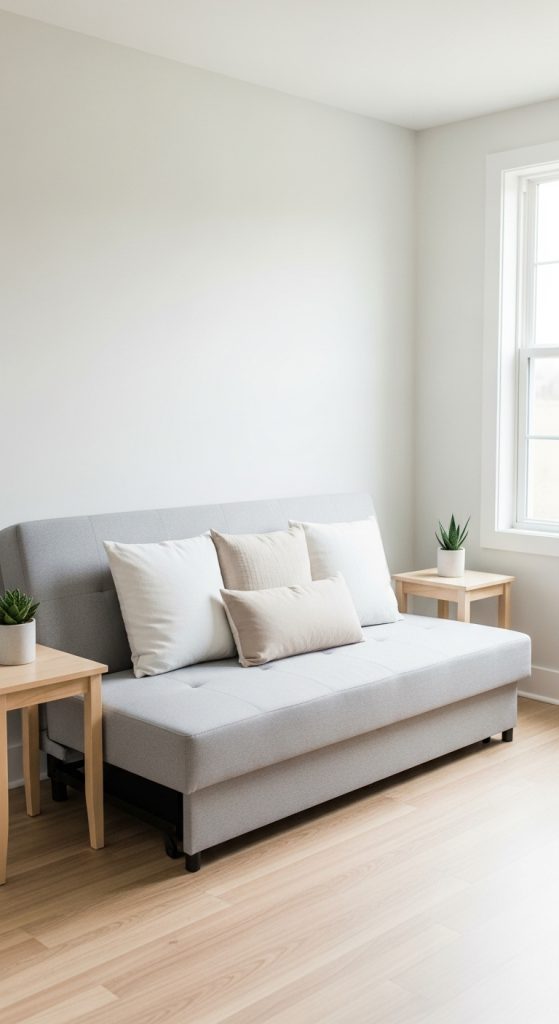
We do not have a guest room, and for years that meant an air mattress on the living room floor whenever my sister visited — great for nobody, least of all my sister’s back. The grey sofa bed in our study fixed that, but only after I learned the one rule that matters: buy it as a sofa first and a bed second. I sat on five in the showroom and pulled out two, and the differences were enormous — one converted in seconds with a click, another required wrestling the base like a folding caravan bed. Ours cost about 600 euros and genuinely converts in under thirty seconds, which matters at midnight. My sister sleeps on it four or five times a year and says the mattress, at 14 centimetres thick, is better than the air mattress by approximately a country mile. During the week it is a proper deep-seated sofa for reading, and nobody walking in would guess it unfolds.
8. Minimalist Bed Frames with Built-in Storage
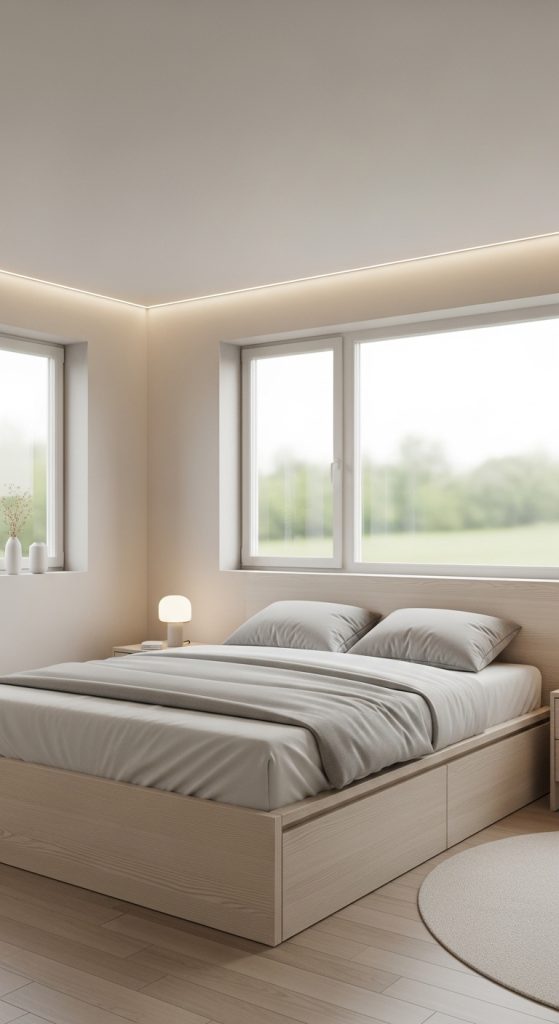
Our bedroom is 14 square metres, and the dresser we used to have there stole a full metre of wall. It went to the hallway, and the bed took over its job. The platform bed frame we chose has four deep drawers — two each side, full extension, soft-close — and they hold all of our off-season clothes plus the spare bedding. That replaced the dresser entirely. When you shop for a storage bed, pull the drawers out fully in the shop and check two things: that they glide without sticking when loaded, and that they do not scrape the floor on carpet, because ours sits on laminate and I had to stick felt pads under the drawer fronts to stop them catching on a slightly uneven board. The frame itself is simple lacquered white, 160 by 200 for the mattress, with a low footboard that keeps the whole thing visually light. Sleep above, storage below, no dresser hogging the wall.
9. Scandinavian-Inspired TV Stand
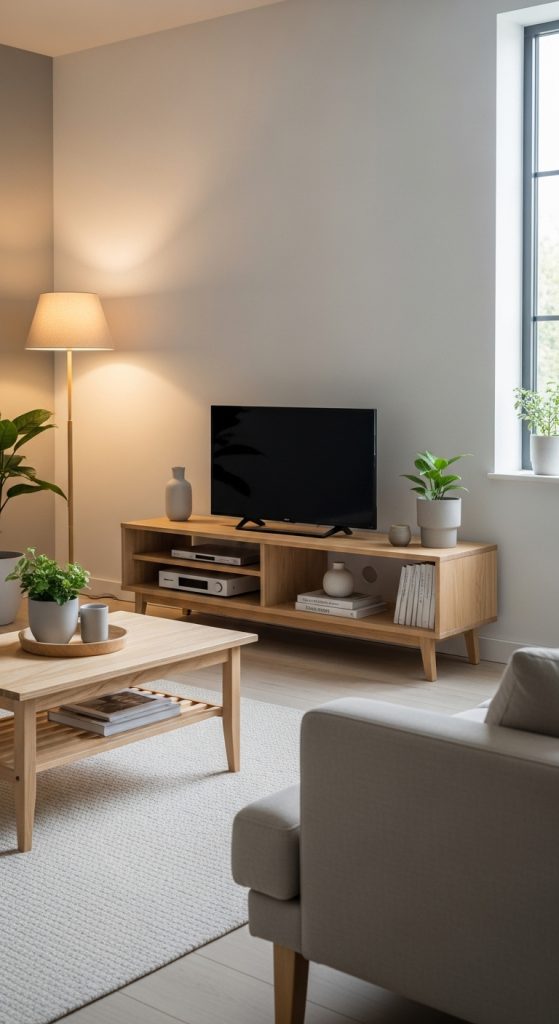
The old TV cabinet was a black tower with glass doors that showed off every cable and remote we owned — technology displayed like a trophy, and I hated looking at it. Its replacement is a low oak stand, 160 centimetres wide and only 40 high, and the TV now sits at proper seated eye level instead of looming. The minimalist part is really about cables: I drilled one hole in the back panel, routed the power strip, the streaming box and the router inside the left compartment, and clipped the excess cable to the back with adhesive ties. From the front you see wood, one remote, and nothing else. Ventilation mattered more than I expected — the streaming box overheated twice in the closed compartment during its first summer, so I leave the back panel slightly open and it has been fine since. A low stand changed the room’s proportions too: the wall above the TV finally has space to breathe.
10. Minimalist Accent Chairs
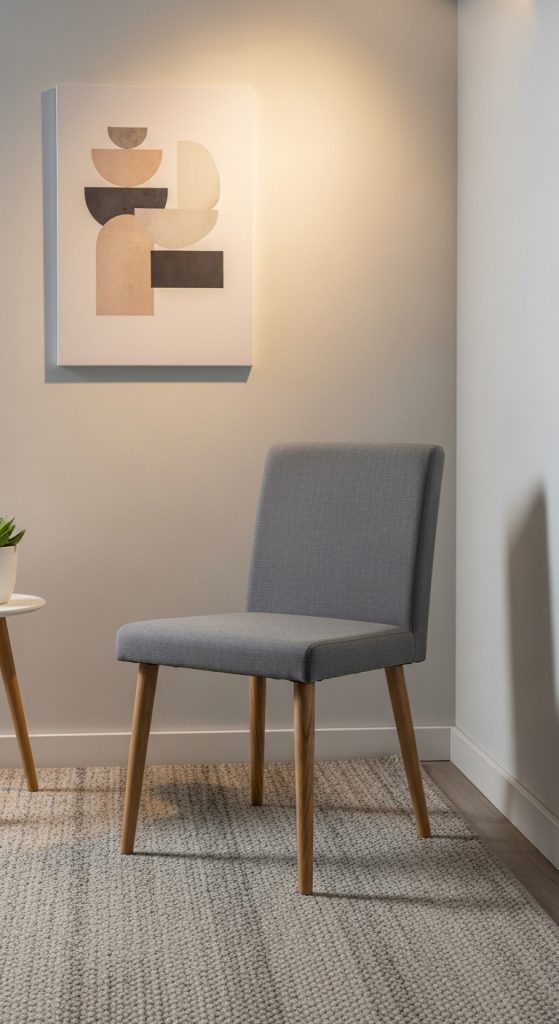
For a long time I believed every living room needed a matched pair of armchairs, so ours had two — and one of them was always the chair nobody chose. When I admitted that, I sold the pair and bought a single sculptural chair in grey instead, and the room instantly felt intentional rather than furnished by default. The chair I chose has a curved plywood shell and slim legs, and it is genuinely comfortable for about an hour, which is exactly what an accent chair needs to be. It sits in the corner by the bookshelf, holding a throw and usually a cat, and guests always ask about it. The discipline is one: one accent chair, not a collection, and let the space around it stay empty so the shape reads as a piece of sculpture. I paid 220 euros for it second-hand, and it is the only thing in the room I would rescue first.
Conclusion
Minimalist furniture is not about owning less for the sake of it — it is about every piece earning the floor space it takes. Buy the sofa you sit in for twenty minutes first, the table that fits your real chairs, the bed that hides your winter jumpers. The calm that follows is worth every careful choice.