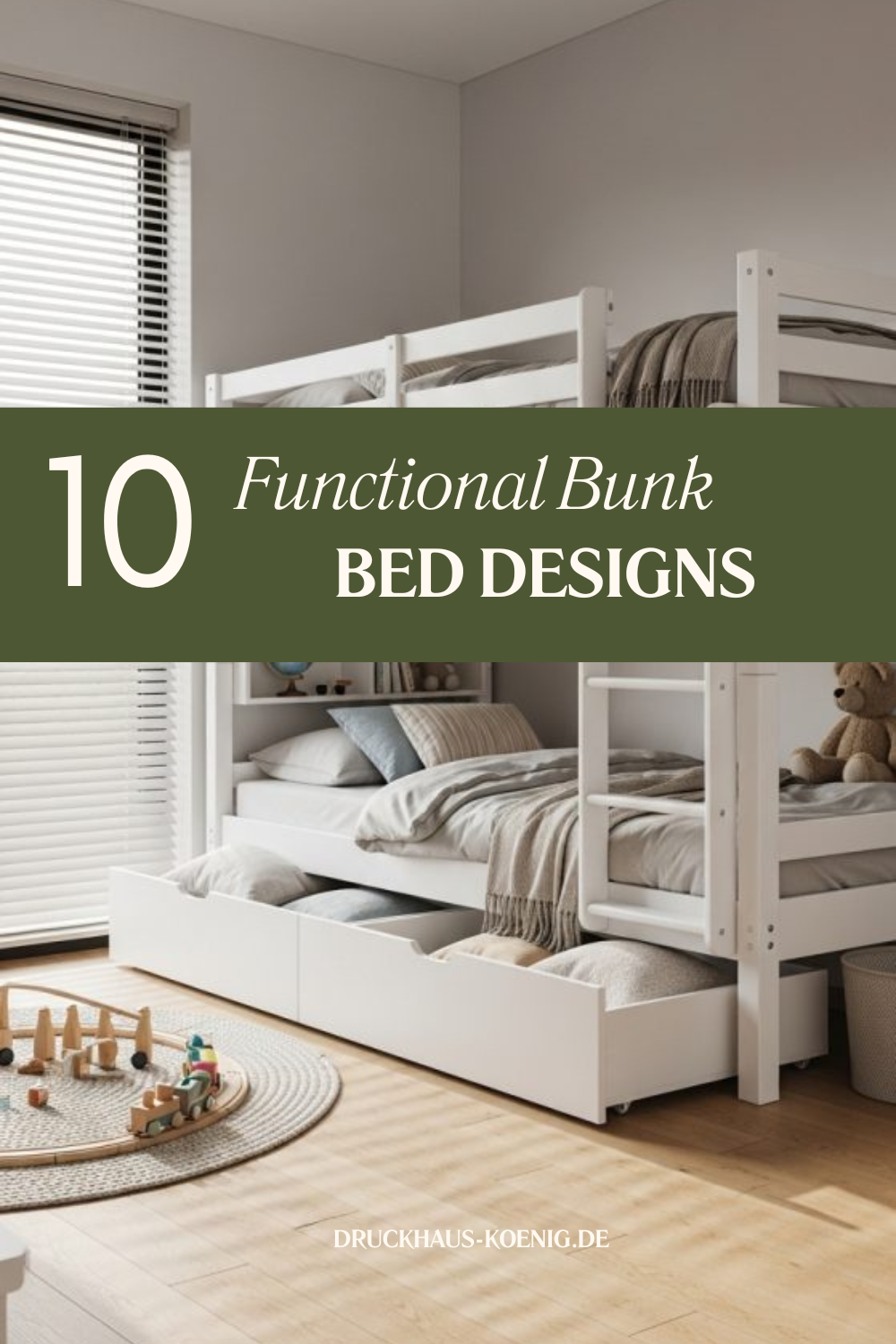
When my two kids had to share one small bedroom, a bunk bed wasn’t a style choice — it was survival. I spent weeks researching, measured the room six times, and bought one that I then lived with for four years. Since then I’ve helped two friends choose theirs, and I’ve developed strong opinions. A good bunk bed is the hardest-working piece of furniture you’ll ever buy; a bad one is a daily regret. Here’s what I learned about the ten designs actually worth considering.

1. Built-In Storage Bunk Beds
This is what I bought: a solid pine bunk with deep drawers under the lower bed and shelves built into the side. The drawers swallowed two kids’ worth of clothes, which meant we didn’t need a dresser at all in that room. My advice: check the drawer glide quality in person — cheap glides jam within a year under kid use, and you’ll be fixing them forever. Light wood finishes show less dust and scratches than dark ones, a lesson I learned from our dark-stained first choice. Storage bunks cost more upfront but they replace another piece of furniture, so do the maths honestly.

2. L-Shaped Corner Bunk Beds
My friend chose an L-shape for her twins’ room and I was jealous immediately. The perpendicular layout means neither child is staring at the underside of a mattress, and the corner footprint leaves a genuinely usable play area in the middle of the room. Each bunk feels like its own territory, which matters enormously for siblings. The space under the raised section became a reading nook with a beanbag. Measure carefully, though — L-shapes need more floor area than standard bunks, so they’re for medium rooms, not tiny ones.

3. Loft Bunk Beds with Workstations
When my eldest hit twelve, we converted to a loft with a full desk underneath, and it bought us two more years before she demanded her own room. The desk zone needs proper task lighting — I mounted an LED strip under the bed frame and it made homework down there genuinely pleasant rather than cave-like. This setup is ideal for teens and for anyone working from a small flat; I’ve seen the same design in studio apartments. Check the weight rating and the desk depth: 60 cm minimum, or a laptop plus schoolbooks won’t fit.

4. Triple Bunk Bed Designs for Big Families
Three kids, one room — my cousin’s reality, and the triple bunk saved them. They went with a staggered design rather than three straight up, which kept the ceiling height manageable and gave each child a slightly different sleeping position. Non-negotiable here: serious guard rails on every level and a rock-solid ladder, because the middle bunk is the tricky one for climbing. Bright bedding kept it cheerful rather than barracks-like. If your ceilings are under 2.5 metres, think twice; the top sleeper needs sitting-up clearance.

5. Convertible Bunk Beds
The smartest money in bunk beds: a design that splits into two separate twin beds. We did this when the kids eventually got their own rooms — one Saturday with an Allen key and we had two proper single beds instead of a redundant bunk. Look for symmetrical headboards and footboards so both configurations look intentional, not like half a bunk. This is also the answer for guest rooms: bunked for the grandkids’ visit, separated into twins for adult guests. Flexibility you only appreciate when you need it, which you will.

6. Bunk Beds with Integrated Play Areas
I’ll be honest: the slide bunk bed was the most fun purchase of my parenting life and the most impractical. The kids adored it for eighteen months, then the slide became a laundry rack. If you go this route, choose play features that convert — a lower bunk that becomes a reading nook, curtains that come off, a playhouse frame that disassembles. Durable solid pine survives the play phase; particle board doesn’t. My verdict: wonderful for ages 4–8, but buy it knowing the play features have an expiry date and the bed underneath needs to stand alone.

7. Space-Saving Bunk Beds with Stairs
I wish I’d bought stairs instead of a ladder. Stairs are safer for small kids, easier for midnight bathroom trips, and every step is a drawer — that’s four to five extra drawers hiding in the staircase. Yes, stairs eat more floor space than a ladder, but the storage payback is enormous. My neighbour’s stair bunk holds all her son’s clothes in the steps alone. Wide, sturdy steps with a handrail are also much kinder to parents who end up climbing up for bedtime stories, which is all of us.

8. Bunk Beds with Built-In Desks and Storage
The all-in-one: sleep up top, desk and wardrobes below, everything in one footprint. My friend’s daughter has this in a 10-square-metre room and it works because every centimetre was planned — desk with cable management, shelves at arm’s reach, wardrobe rail underneath. The risk is that it dominates a small room visually, so choose light finishes and keep the styling minimal. This is the maximum-function option; if the room is truly tiny, it’s this or nothing. Measure twice, and check that the desk chair actually fits in the allocated space.

9. Guest-Ready Bunk Beds with Trundle Options
For the guest room I went with bunks plus a pull-out trundle — three sleepers when the whole family visits, two bunks’ footprint the rest of the year. The trundle also works as deep storage when no one’s visiting; ours holds the guest bedding, which is pleasingly circular. Choose a trundle on proper castors, not plastic glides — you’ll pull it out on a rug and cheap glides shred. Upholstered frames look softer for adult guests, but wood wears better. This setup has hosted everyone from toddlers to grandparents without complaint.

10. Modern Metal and Wood Hybrid Bunk Beds
Black steel frame, oak accents — the hybrid look is what I’d choose today for a teen room or a studio flat. The metal keeps it visually light (you can see through the frame, so the room feels bigger) while the wood warms it up. It’s also the sturdiest construction type I encountered; steel doesn’t wobble the way cheap pine does. Style it minimally — industrial lighting, simple bedding — and let the frame be the design statement. Not the cosiest choice for small children, but for teens and adults it’s the best-looking bunk on this list.

Design Tips for Choosing the Right Bunk Bed
- Measure everything twice: Ceiling height, floor footprint, and sitting-up clearance on the top bunk — I taped the outline on the floor before ordering.
- Safety first, always: Guard rails on both sides of the top bunk, a sturdy ladder or stairs, solid joints with no wobble. Shake the display model hard in the shop.
- Think in years, not months: Convertible designs and neutral finishes outlast every kids’ phase. The bed should work at 6 and at 16.
- Storage is the real luxury: In a small room, drawers and shelves built into the bed beat any standalone furniture.
- Light each bunk: A clip-on reading light per sleeper prevents 90% of bedtime arguments and makes the top bunk actually usable.
- Don’t skip the mattress: Bunk mattresses need to be thin enough for the guard rails to work — measure the rail height above the mattress, minimum 16 cm.
Four years with a bunk bed taught me this: buy for the space you have, the kids you have, and the next five years — not the showroom fantasy. Solid construction, real storage, and a design that can change as they grow. Get those three right and the bunk bed stops being a compromise and becomes the best piece of furniture in the house.