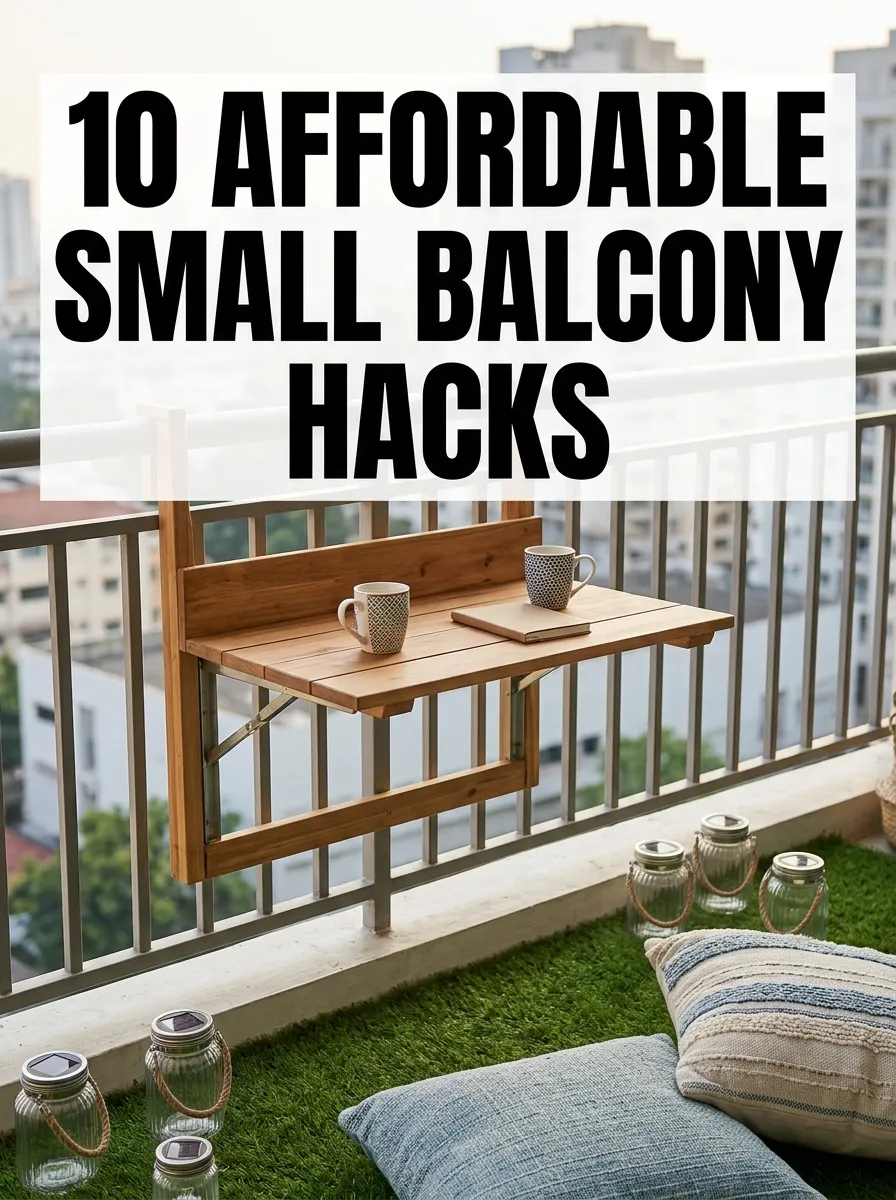
When I moved into my apartment, the balcony was a concrete slab with a railing and nothing else — the kind of space you walk past, not a place you sit. I had just spent most of my savings on the move, so the makeover had to cost almost nothing, and I gave myself a rule: nothing over thirty euros per piece, everything renter-friendly, nothing I could not take with me when I left. Two years later that balcony is where I have breakfast every morning from April to October, and the whole transformation cost less than one restaurant dinner. These are the ten budget ideas that actually made the difference.
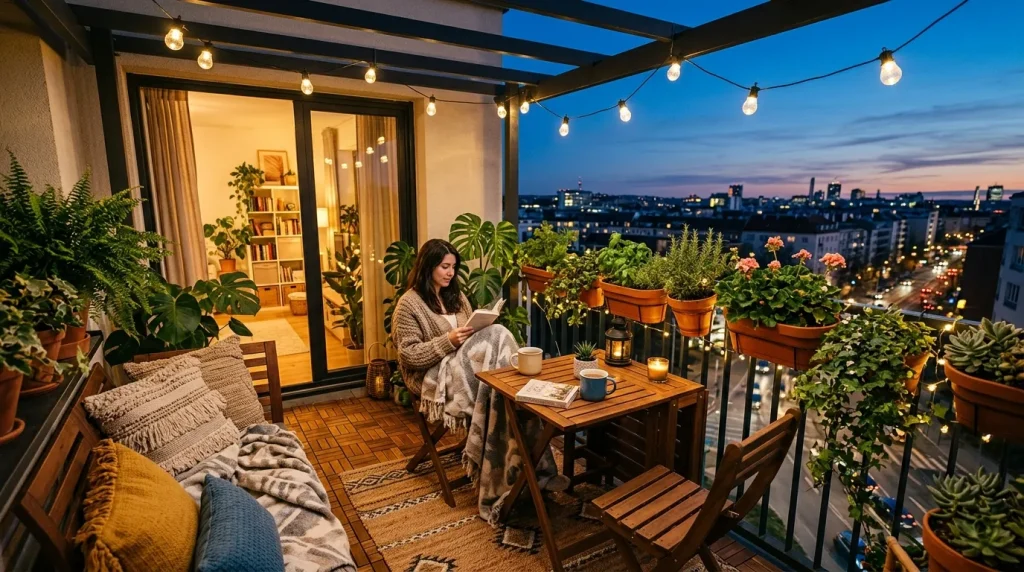
1. Interlocking Deck Tile Flooring & Layered Outdoor Rugs
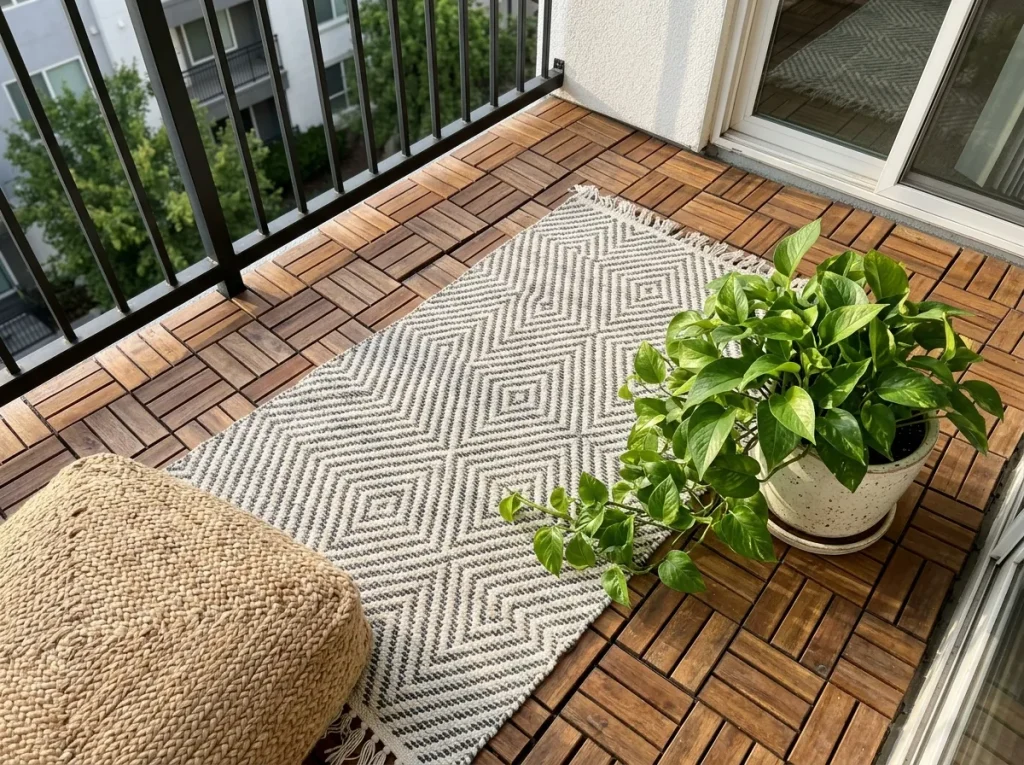
The deck tiles were the single best money I spent on the balcony. A pack of ten interlocking wood-look tiles cost me twenty-two euros at a discount store, and they clicked together in ten minutes over the grey concrete, instantly making the floor look like a deck instead of a slab. I layered a flat outdoor rug on top — a nine-euro one from a home store — which softened the tiles and stopped my chair from scraping. The tiles lift up for cleaning and come with me when I move, which is the whole point of a budget balcony: nothing permanent, everything portable. If your balcony floor is ugly, start here, because the floor changes the whole feeling of the space more than any decoration.
2. Railing-Mounted Fold-Down Bistro Table
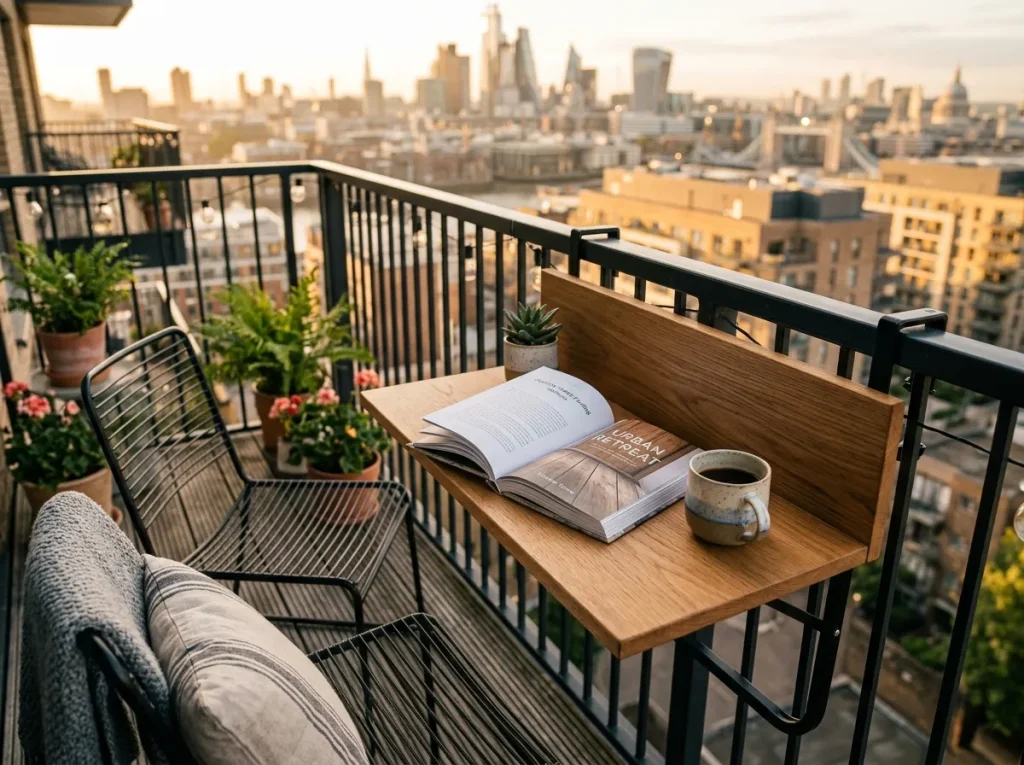
My balcony is too narrow for a table and chairs, so the railing-mounted table saved the whole project. It hooks over the railing and folds down into a shelf just big enough for a coffee and a book, and it cost eighteen euros. I mounted it in five minutes with no drilling, which mattered because my landlord bans holes in the railing, and I fold it up when I need the space for watering plants. The first one I bought wobbled, so I added a strip of rubber under the hook, and now it holds a full mug without shaking. If you have a narrow balcony, this is the piece that turns it from a corridor into a café table.
3. DIY Reclaimed Wooden Pallet Lounge Bench
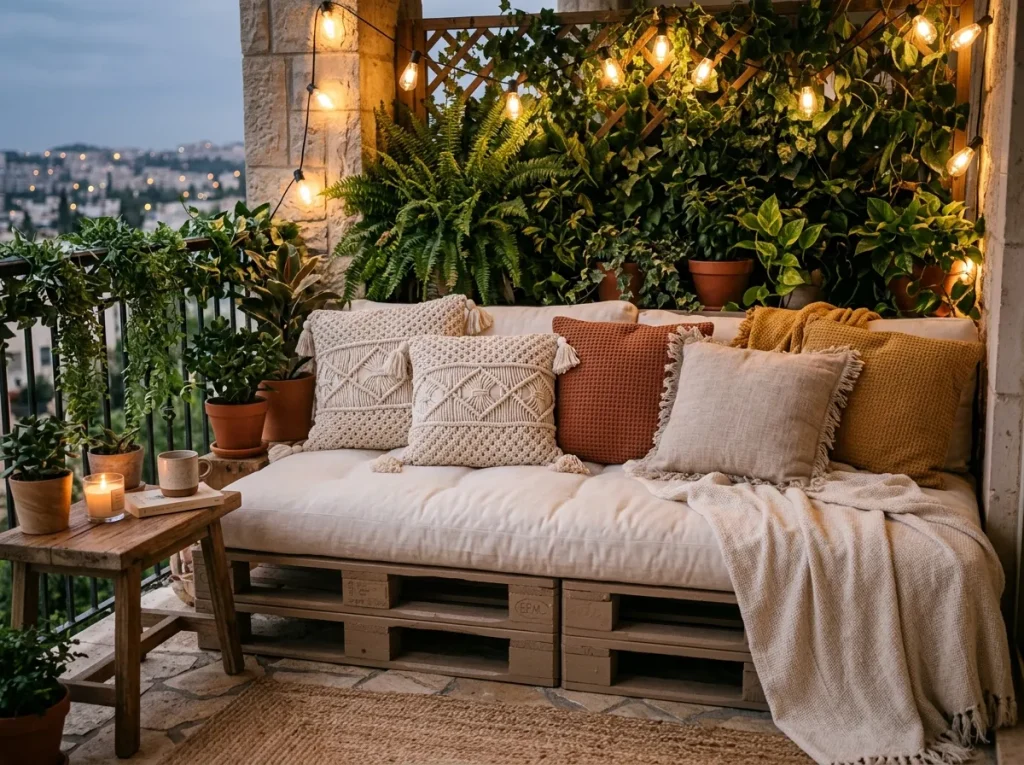
The pallet bench was my weekend project, and it cost nothing but sandpaper and cushions. I got two free pallets from a local shop that was throwing them out, sanded them smooth — which took an afternoon and is the step you must not skip, because pallet wood splinters — and stacked them into a low bench with a backrest made from a third pallet. I painted them white with leftover paint and added cushions from an old indoor chair, and suddenly I had a lounge bench for the price of a bag of screws. It is heavy, so it stays put in wind, and it is the piece guests always ask about. Check that your pallets are heat-treated, not chemically treated, before you bring them home — the stamp on the side tells you.
4. Vertical Bamboo & Wooden Plant Trellis
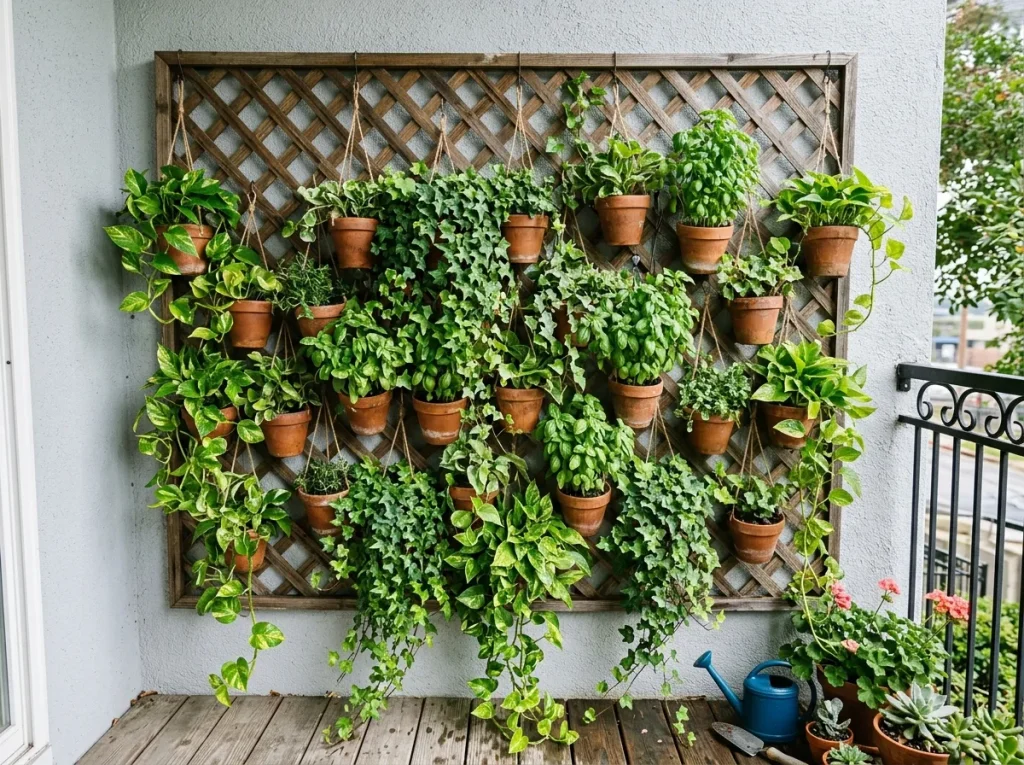
With no floor space for pots, I went vertical: a bamboo trellis zip-tied to the railing, with climbing jasmine and a few hanging pots hooked onto it. The trellis itself was twelve euros, the jasmine was a gift from a friend’s garden, and within one summer the green wall gave me privacy from the neighbours and shade in the afternoon. I water the climbers with a long-spout can from inside, leaning over the railing, which is awkward but works. The trellis also hides the ugly concrete wall of the building next door, which was half the point. If your balcony feels exposed, a green wall is cheaper than a privacy screen and prettier too.
5. Over-the-Railing Planter Boxes
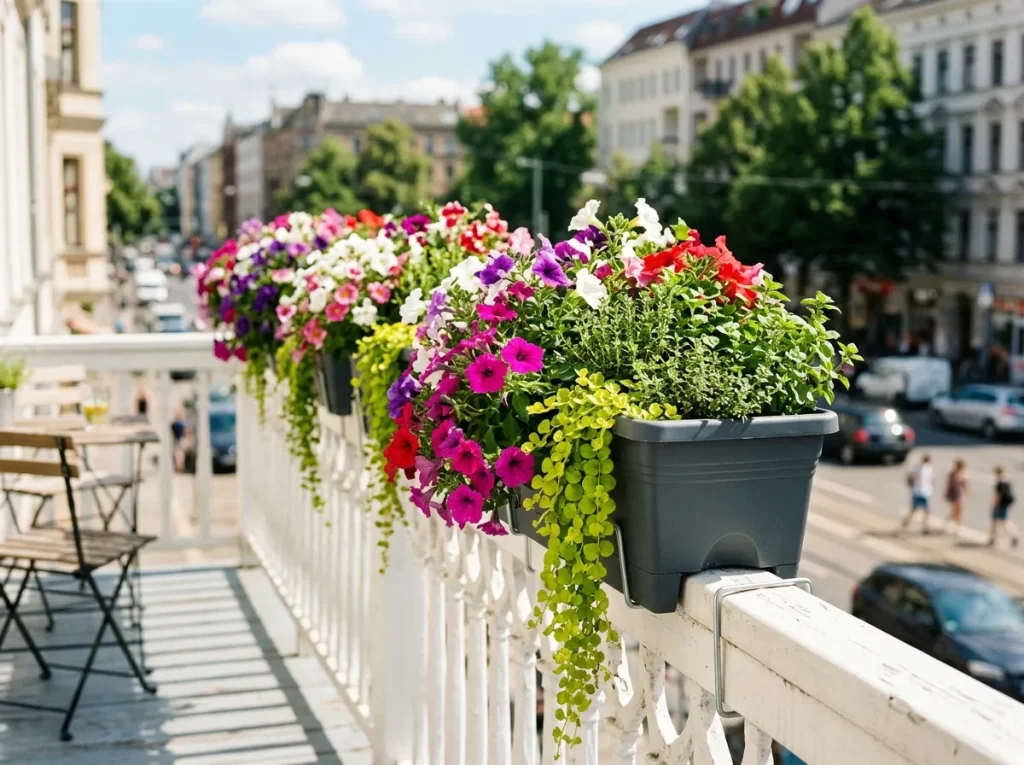
Railing planters are the easiest way to add plants without losing floor space, and I grow herbs in mine all summer. I bought two metal planters that hook over the railing for eight euros each, filled them with basil, mint, and parsley, and I cook with them constantly — there is nothing like stepping outside to pick basil for pasta. The trick is drainage: I put a layer of gravel at the bottom and drilled extra holes, because the first summer I lost a whole crop of mint to root rot from standing water. I also secure the planters with zip ties, because a gust of wind once sent a planter onto the balcony below, and I never want that phone call again.
6. Bamboo Reed or Faux Ivy Privacy Screening
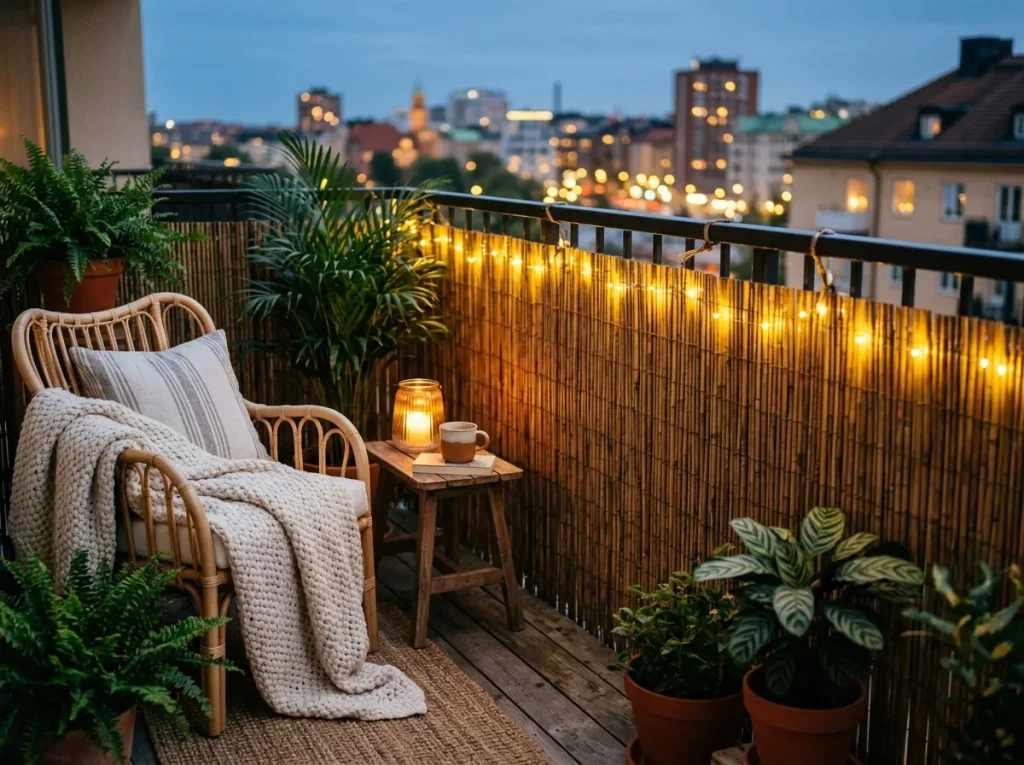
Privacy was my biggest problem — my balcony faces four other balconies — and a bamboo reed screen solved it for fifteen euros. I zip-tied a roll of reed screening to the railing, and instantly I could sit outside without feeling watched. Real reed looks better than plastic, but it weathers in two seasons, so I switched to a faux ivy screen the second year, which still looks green in February and cost only a little more. The screen also cuts wind, which means my candles stay lit and my plants do not get battered. If you buy one, measure your railing first and buy a roll slightly longer than you need, because trimming is easy and a gap at the end defeats the purpose.
7. Overhead LED String Lights & Solar Flame Lantern Canopy
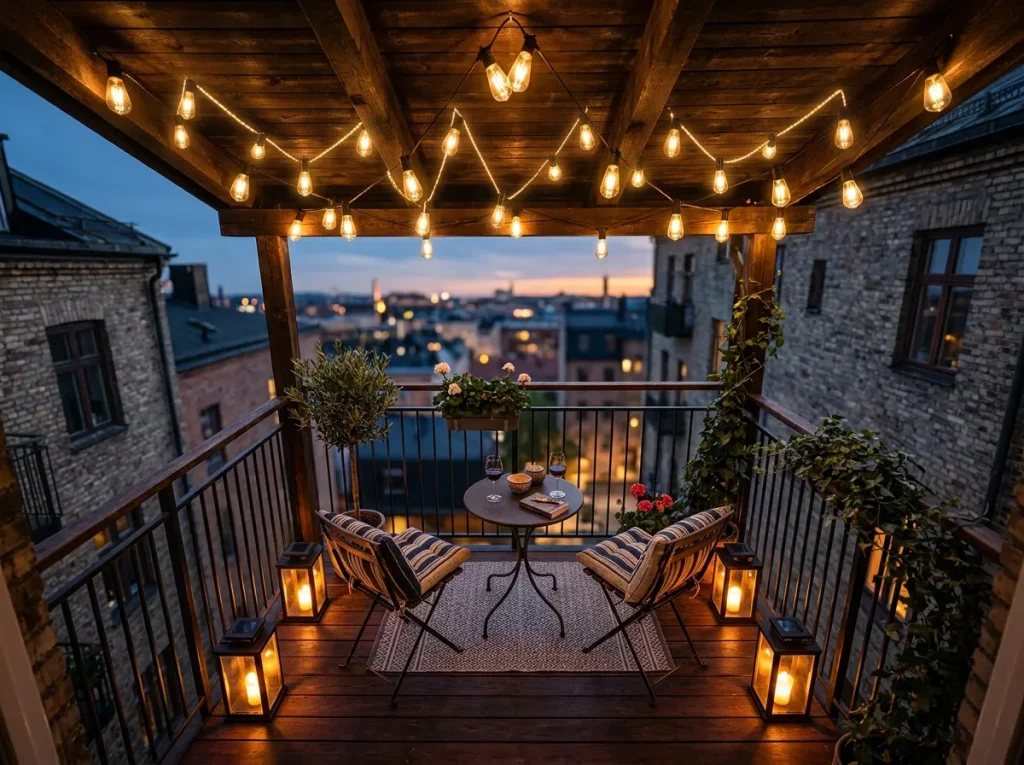
The string lights are what turned my balcony from a daytime space into an evening one. I strung a ten-metre warm-white LED set across the top of the railing for eleven euros, and added two solar flame lanterns that flicker like candles without any fire risk. The solar lanterns charge all day and switch on by themselves at dusk, which means the balcony glows every evening whether I remember to switch anything on or not. I ran the string lights along the ceiling of the balcony above, using adhesive hooks that peel off cleanly, so there are no holes and no landlord issues. On summer evenings I eat dinner out there under the lights, and it feels like a restaurant terrace that costs nothing.
8. No-Drill Tension Rod Outdoor Sheer Curtains
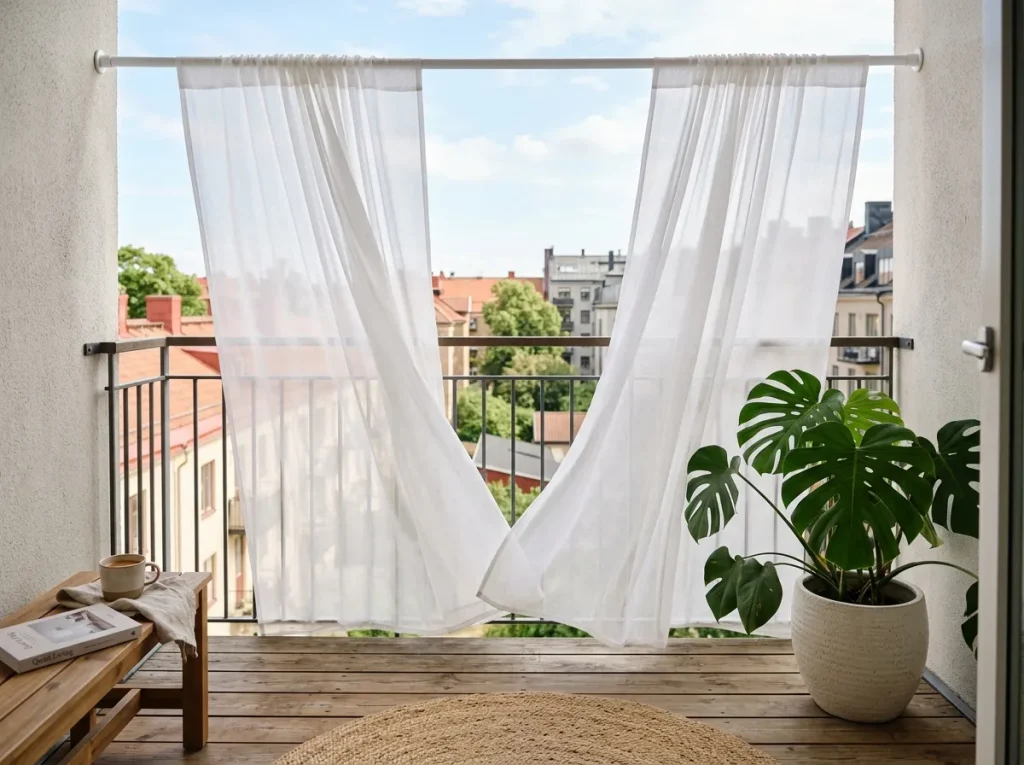
Sheer curtains were the touch I did not know I needed until I tried them. I wedged a tension rod between the balcony ceiling and the railing posts — no drilling, no screws — and hung two sheer outdoor curtains that billow in the breeze and soften the whole space. They give privacy without blocking light, and on hot days they cut the sun enough that I can sit out at noon. The curtains were six euros each from a discount home store, and the tension rod was four. They do blow around in strong wind, so I clip the bottoms to the railing with small clips on stormy days. It is the cheapest way I found to make a concrete balcony feel like a room.
9. Multi-Tiered Leaning Wooden Ladder Plant Stand
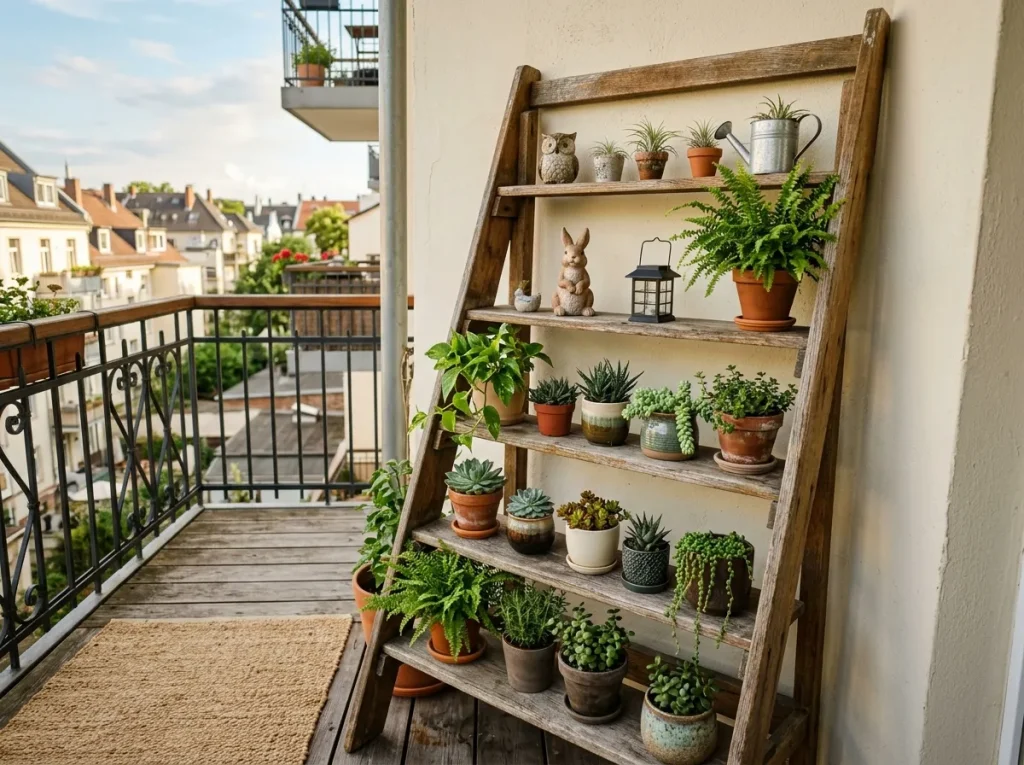
The ladder plant stand holds twelve pots in the footprint of one, which is why it is the best plant solution for a small balcony. I found an old wooden ladder at a flea market for five euros, leaned it against the wall, and put a board across each rung to make shelves for pots. The plants cascade down the ladder, which looks intentional and a bit wild at the same time, and I can reach every pot for watering without moving anything. I sealed the wood with outdoor varnish so it survives rain, and I put the heaviest pots on the bottom rungs so the whole thing stays stable. If you love plants but have no floor space, a ladder is the answer, and it costs less than a single shop-bought plant stand.
10. Multi-Functional Storage Ottoman with Wooden Serving Tray
The storage ottoman is the piece that keeps my balcony tidy: it holds cushions, watering cans, and sunscreen inside, and with a wooden tray on top it becomes a coffee table. I bought a weatherproof ottoman for twenty-five euros in a sale, and the tray was a chopping board I already owned, which is the kind of budget improvisation this whole balcony runs on. When guests come, I lift the tray, pull out the cushions, and suddenly there is seating for three where there was a table. It is the most practical thing on the balcony, and the one I would replace first if it broke, because without storage a small balcony fills with clutter in a week.
Conclusion
A budget balcony is not a compromise — it is a design constraint that forces you to choose only what you will actually use, and my balcony gets used every single day because of it. Start with the floor, add one seat and one plant, and build from there as your budget allows. The best balcony is not the most expensive one; it is the one you sit on, and mine cost less than a hundred euros all in.