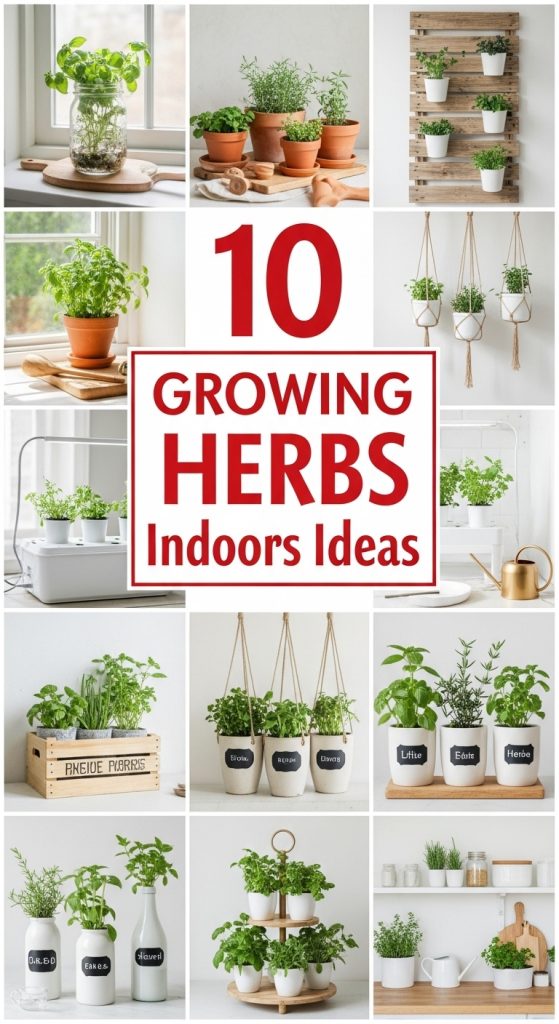
10 Growing Herbs Indoors Ideas
I spent years buying those sad little supermarket basil pots, watching them collapse within a week, and telling myself I just did not have the hands for indoor plants. Then one February, halfway through a grey Munich winter, I spent 12 euros on a bag of potting soil and three herb plants from the garden centre, and put them on the kitchen windowsill above the radiator. Eight months later I was snipping my own thyme into Sunday roast potatoes. These are the ten herbs that actually earned their place in my flat, with everything I got wrong along the way so you do not have to.
1. Basil (Ocimum basilicum)
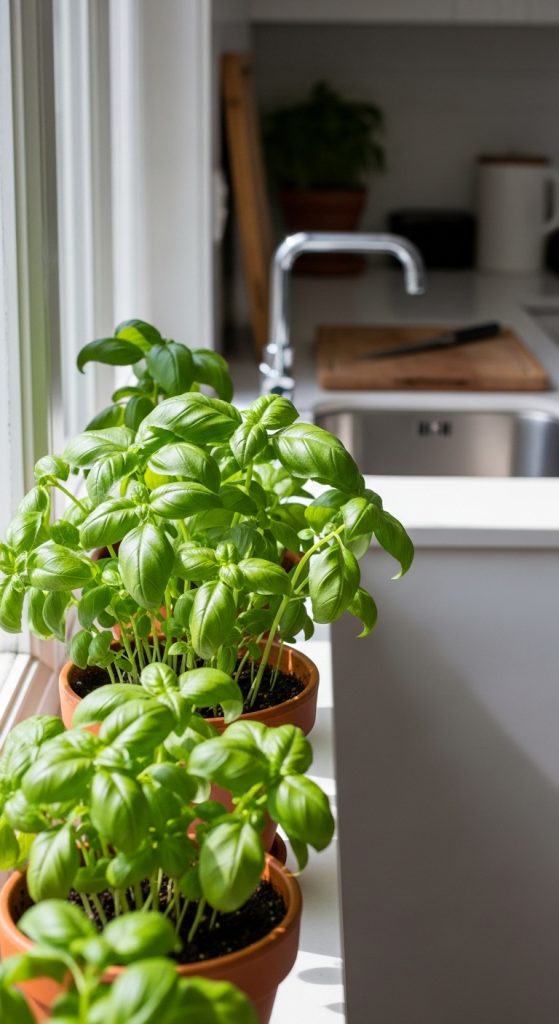
Basil was my first indoor herb and my first indoor herb funeral. I bought a lush supermarket pot, put it in a dark corner, watered it whenever I remembered, and watched it give up within ten days. The second attempt worked because I finally listened to what basil actually wants: at least six hours of sun on my south-facing kitchen windowsill, consistently moist soil, and ruthless pinching. I pinch the top leaves off every few days, which forces it to grow bushy instead of tall and leggy, and I never let it flower because the leaves turn bitter the moment it does. A terracotta pot with a saucer cost me about 4 euros, the plant itself 3, and it produced pesto ingredients all summer. Harvest from the top down and it just keeps coming back.
2. Mint (Mentha)
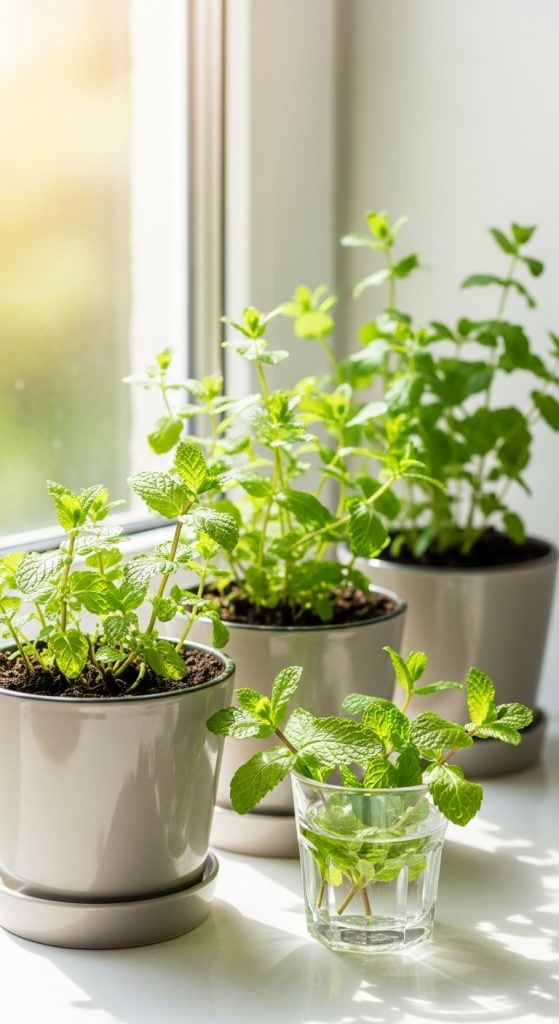
I grow mint for summer evenings on the balcony, when a handful of leaves turns sparkling water into something that feels like a holiday. Mint is nearly indestructible indoors, which is both its charm and its danger: I once planted it in a shared trough with parsley and it strangled everything within two months. Now it gets its own pot, always, no exceptions. It is happy with bright indirect light rather than blazing sun, and it likes its soil evenly moist, so I water it a little every other day in summer. I trim it hard every few weeks, which keeps it from going leggy and gives me more than I can use. A small pot on the kitchen counter means fresh leaves are always within arm’s reach when I need them.
3. Rosemary (Rosmarinus officinalis)
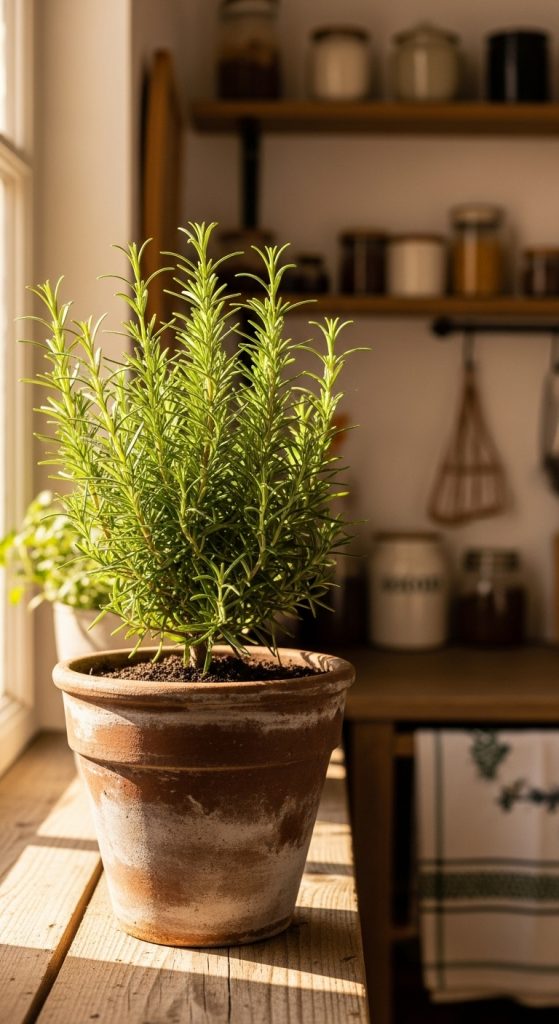
Rosemary taught me the most expensive lesson on this list: I drowned my first plant with kindness. It sat in a pot with no drainage hole, in rich wet soil, and rotted from the roots up while I wondered why it looked so sad. Rosemary is a Mediterranean plant that wants sun, grit, and to be left alone. Mine now lives in a terracotta pot with sandy, fast-draining soil, on the sunniest sill I have, and I let the soil dry out completely between waterings. It needs six hours of light a day minimum, which is doable even in a Munich winter if the window faces south. The payoff is enormous: woody sprigs for roast chicken, focaccia, and potatoes, from a plant that cost 5 euros and asks for almost nothing. Underwater it slightly and it thrives; overwater it once and you will know.
4. Thyme (Thymus vulgaris)
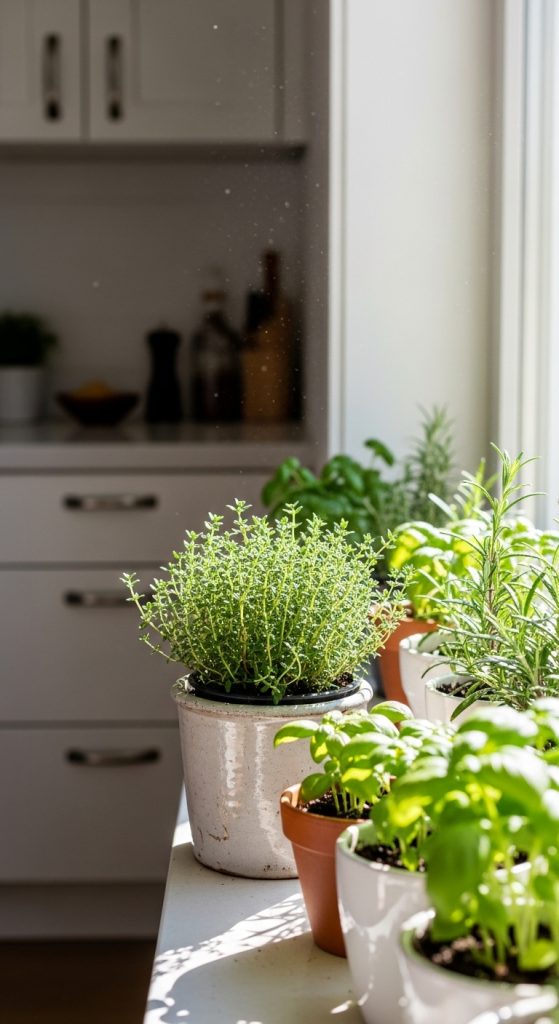
Thyme lives on the narrowest windowsill in my flat, in a shallow pot barely 12 centimetres wide, and it has never once complained. This is the herb for people who forget to water, because it genuinely prefers it that way. I give it four to six hours of sun, gritty well-draining soil, and water only when the top feels properly dry. Every few weeks I snip whole sprigs for stews and roasts, stripping the tiny leaves off with my fingers, and the plant responds by growing denser. My one mistake was letting it get woody and bare in the middle; now I prune it back by a third each spring and it stays lush. A 3-euro plant has flavoured more Sunday dinners than I can count, and it looks pretty doing it.
5. Parsley (Petroselinum crispum)
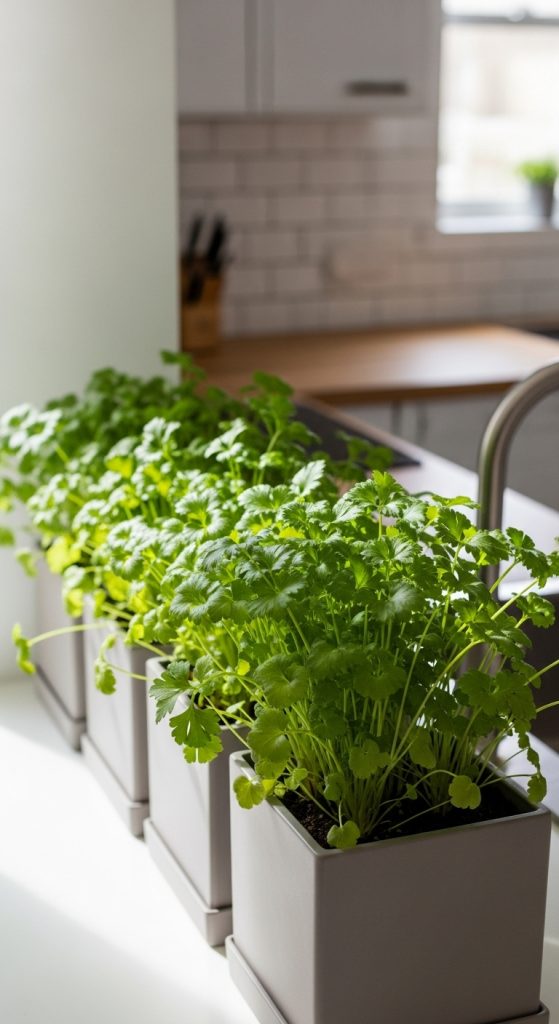
Parsley is the workhorse of my kitchen, chopped into salads, scattered over soups, blitzed into tabbouleh, and I go through astonishing quantities of it. Growing it from seed indoors tested my patience badly, because parsley germinates slowly, sometimes taking three weeks just to show a sprout. Now I buy a young plant for a few euros and skip the waiting entirely. It wants bright indirect light, about four to six hours, and soil that stays consistently moist but never soggy; I water mine every two to three days. I harvest the outer stems first, cutting near the base, which keeps new growth coming from the centre. Flat-leaf has more flavour than curly in my experience, so that is what I grow, and the extra freezes beautifully in a zip bag for winter.
6. Cilantro (Coriandrum sativum)
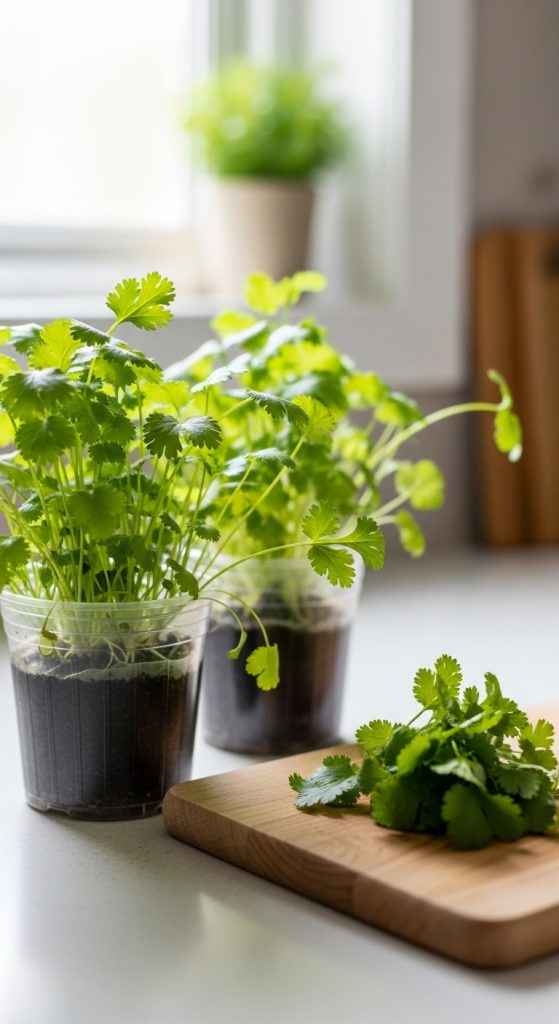
Cilantro is the diva of my windowsill: spectacular, short-lived, and gone before you have really appreciated it. It bolts, sending up flowers and turning bitter, the moment it gets too warm, which in my kitchen means about six weeks per plant in summer. I stopped fighting this and started succession sowing instead: a pinch of seeds in a fresh pot every two to three weeks, and there is always a young plant coming up behind the old one. It prefers a cooler spot away from the radiator, with four to five hours of sun, and it hates being transplanted, so I sow directly into the pot it will live in. The reward is worth the rhythm: fresh leaves for tacos, curries, and noodle bowls that taste nothing like the dried stuff.
7. Sage (Salvia officinalis)
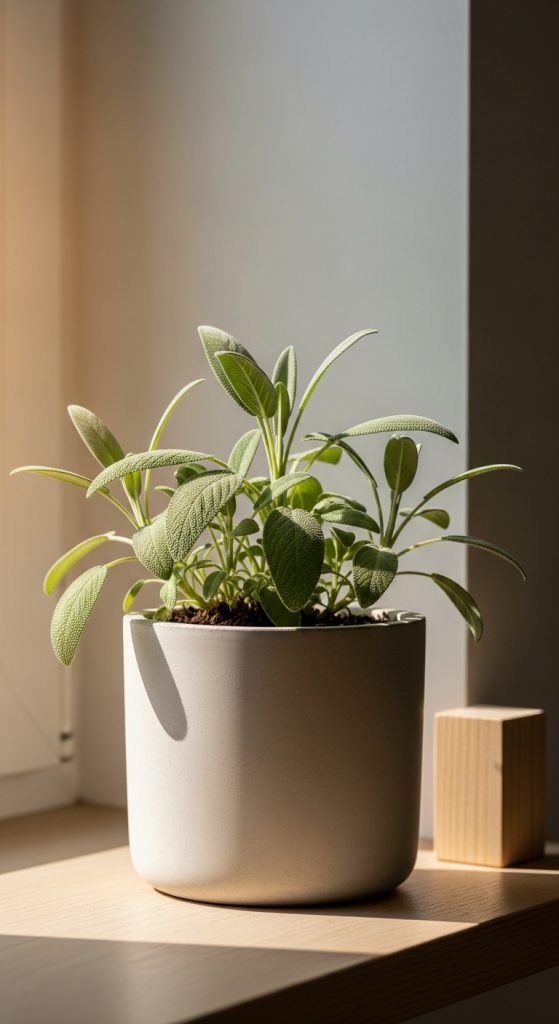
Sage earned its place the night I made brown butter gnocchi with crispy sage leaves and realised I had been buying dried sage like a fool for years. Fresh sage is a different ingredient entirely, earthy and almost meaty, and the plant itself is beautiful with its soft silvery-green leaves. Like rosemary it wants sun, at least six hours, and soil on the dry side; I water mine sparingly and it has never sulked. I prune it regularly, pinching back the tips, because an unpruned sage gets leggy and woody fast. In autumn I cut generous handfuls and hang them in small bundles in the kitchen to dry, which gives me homegrown dried sage for winter roasts. One plant, bought for 4 euros two years ago, is still going strong.
8. Oregano (Origanum vulgare)
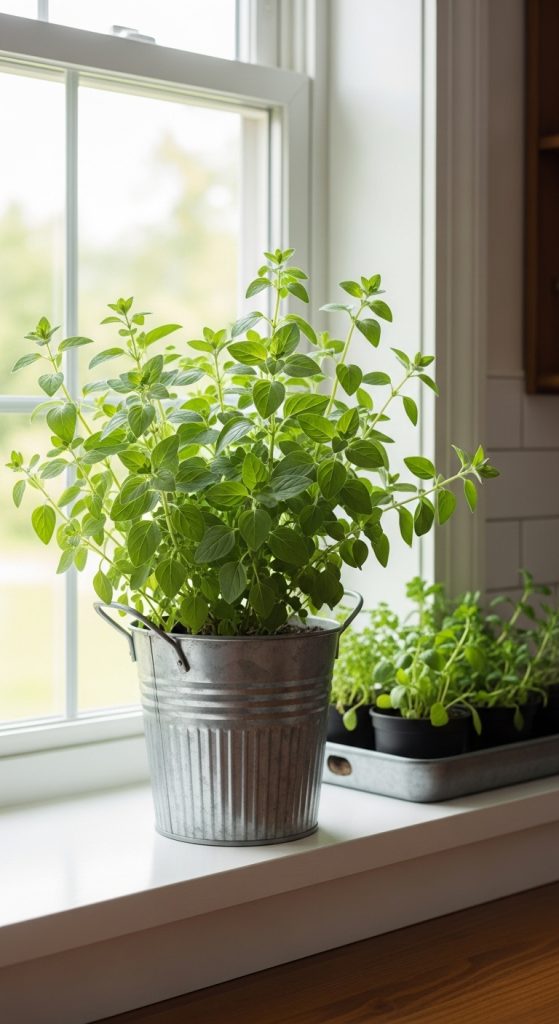
Oregano is my pizza herb, and growing it indoors means I finally stopped buying those little jars of dust that taste of nothing. It is a sun-lover, happiest with six hours of direct light on a south-facing sill, in ordinary potting soil that drains well. I let the soil dry out between waterings, which suits its Mediterranean roots, and I cut stems regularly to keep it bushy rather than straggly. Here is the thing nobody tells you: oregano is actually more pungent dried than fresh, so I harvest big handfuls in late summer, tie them in bunches, and hang them upside down in the kitchen for two weeks. The dried leaves go into a jar and flavour sauces all winter. Fresh sprigs go on roasted vegetables and Greek salads all summer.
9. Chives (Allium schoenoprasum)
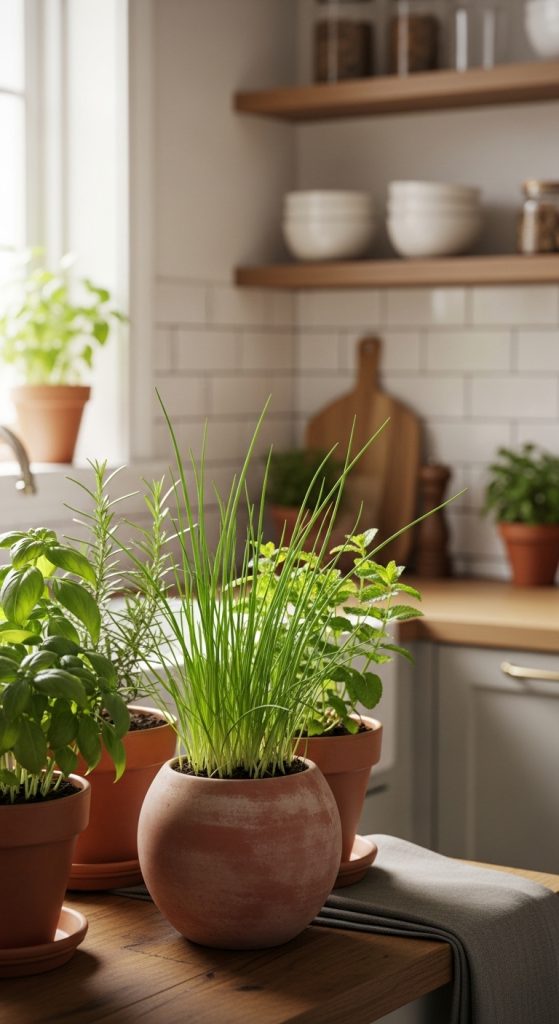
If you have never grown anything indoors, start with chives, because they make you feel like a gardener within weeks. I keep a pot on the kitchen counter where it gets bright indirect light, water it regularly, and snip the hollow green stalks with kitchen scissors whenever I need them. Cut them about two centimetres above the soil and they regrow with almost insulting speed; I harvest from the same pot three or four times a month. In late spring mine sends up round purple pom-pom flowers, which are edible and gorgeous scattered over salads, though I snip most of them off to keep the leaves coming. Every spring I divide the clump, tease it into two pots, and give one to a friend. Baked potatoes have never been the same.
10. Lemon Balm (Melissa officinalis)
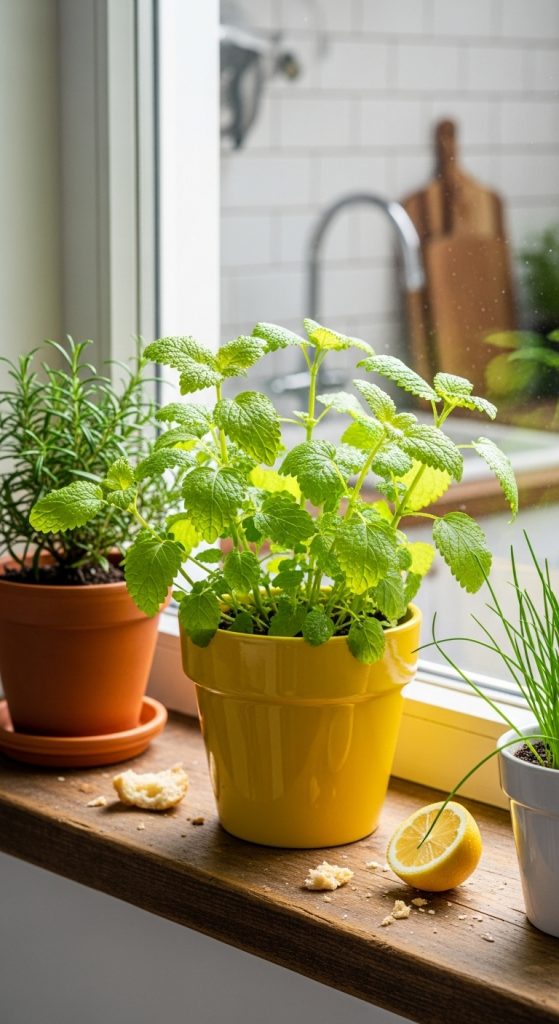
Lemon balm is not much of a cooking herb, and I grow it anyway, because a pot of it on the windowsill means fresh lemony tea whenever I want it. I bruise a handful of leaves, pour over hot water, add honey, and it tastes like the calmest part of the evening. It is easy indoors with four to six hours of sun and evenly moist soil, and it grows fast enough that I trim it hard every month to keep it bushy. One warning from experience: like mint, it spreads aggressively, so it lives in its own pot and never in a shared planter. In summer I make big jugs of iced lemon balm tea that disappear within hours when friends visit. The leaves also dry well, so I keep a jar of dried for the months the plant rests.
Conclusion
Two years after that first bag of soil, my kitchen windowsill holds eight pots and my cooking genuinely tastes different. Start with chives and mint for quick wins, add basil when you have the sun for it, and give rosemary the neglect it secretly wants. The herbs will teach you the rest as you go, usually by surviving your mistakes.