
My plant count officially crossed forty last spring, which is when my husband stopped calling them “the green things” and started calling them “your flatmates.” I am not even slightly ashamed. What started as one rescue spider plant from a Munich flea market turned into a full-blown obsession — and along the way I learned that a well-placed monstera does more for a room than almost any piece of furniture I have ever bought. This is not a styling guide written from a catalog. Everything below is something I have actually tried in my own flat, including the mistakes that cost me plants, money, and once a perfectly good ceiling hook.
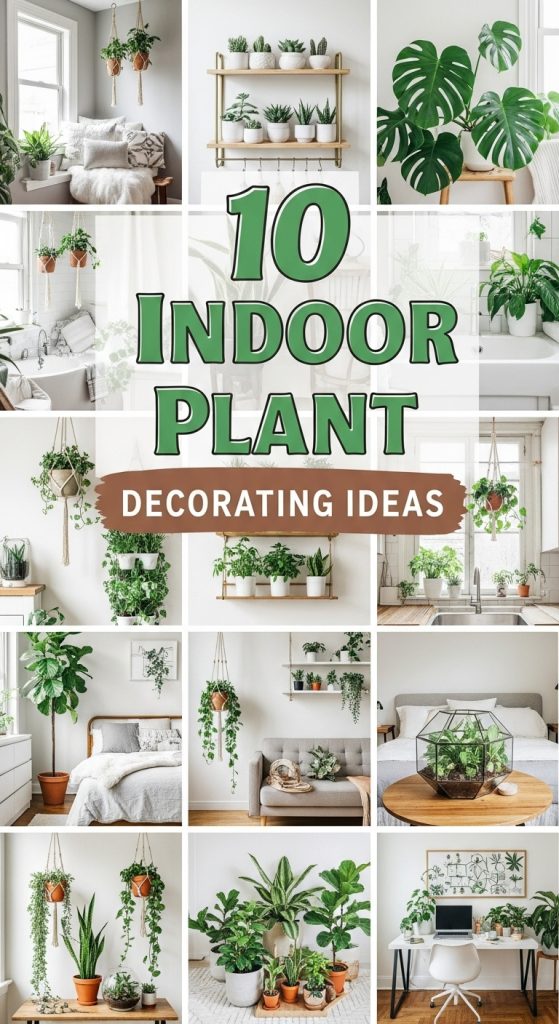
1. Create a Plant Corner
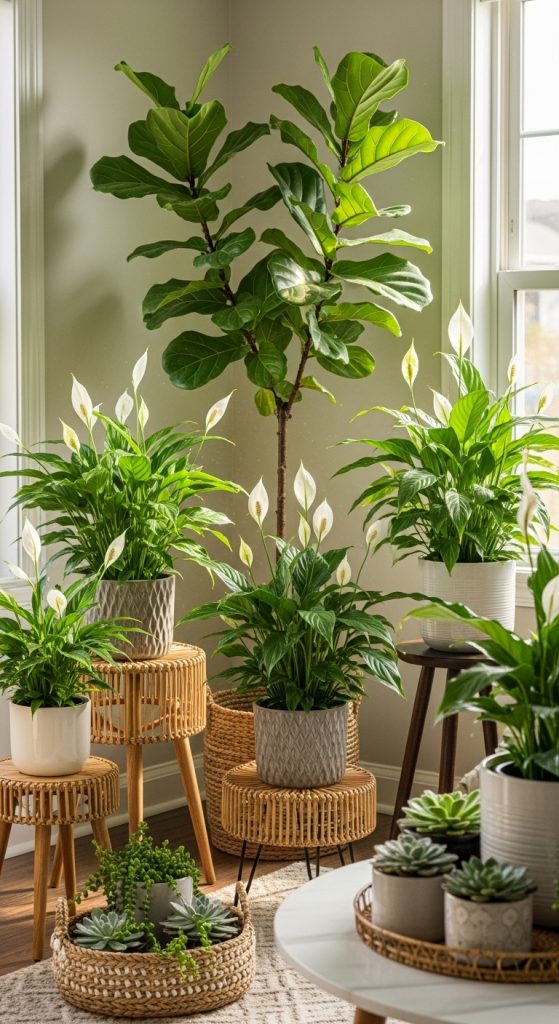
My first plant corner happened by accident in the living room, in that awkward dead space next to the bookshelf where nothing else would fit. I dragged in my rubber plant (about 1.2 meters tall in a 35 cm clay pot from the Gärtnerei, roughly 12 euros), set my calathea in front of it on a low wooden stool, and tucked a few small succulents around the base. Suddenly the corner looked intentional, layered, almost like a tiny greenhouse. What worked for me was mixing heights deliberately: one tall anchor plant, two medium ones, and three small ones at the front — that triangle of heights makes the eye move and gives the jungle feeling without any actual jungle maintenance. I group mine on a large round tray so watering day is one trip instead of twelve, and I rotate the pots a quarter turn every two weeks so nobody grows lopsided toward the window. My honest mistake: I put a peace lily in the back once where I forgot it entirely, and it dried out in three weeks. Corners are wonderful for display but terrible for attention, so keep your thirstiest plants where you will actually see them daily.
2. Hanging Plants for Vertical Greenery
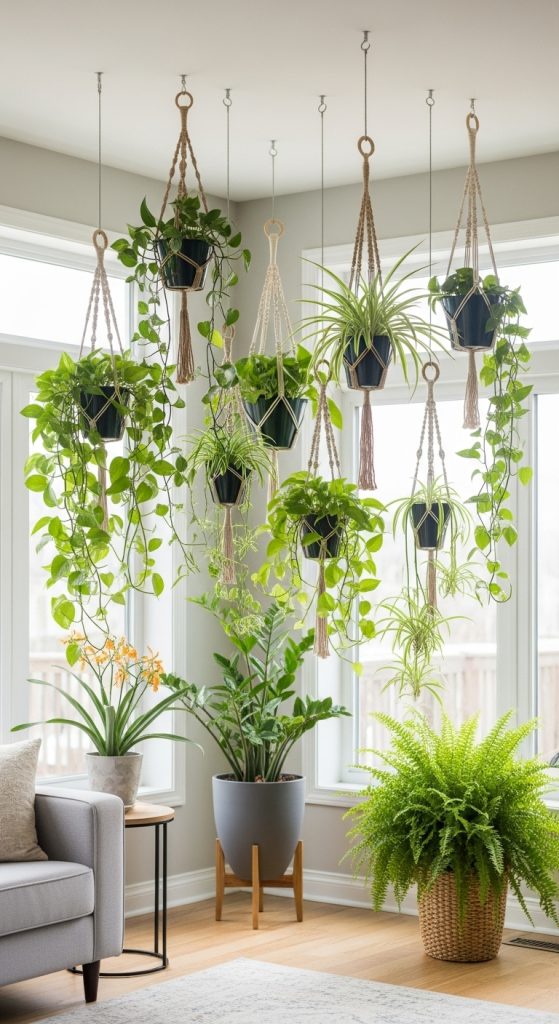
When the floor ran out of room, I looked up — and hanging plants genuinely changed how big my small flat feels. I screwed three ceiling hooks into the hallway (proper Fischer anchors, not the sticky kind, because a wet pot weighs more than you think) and hung a golden pothos, a spider plant, and a Boston fern at staggered heights. The trailing vines soften all the hard lines of the doorway and draw your gaze upward, which makes the ceiling feel a good 20 centimeters higher than it is. My top tip is a plastic saucer inside every hanging pot: drips on a wooden floor are a disaster you only have to clean once before you become religious about saucers. I learned the hard way that fern fronds need misting in winter when the heating dries everything out, so now I keep a spray bottle right by the front door and give them a quick mist whenever I leave for work. Two of my hangers came from a secondhand market for 3 euros each, and nobody has ever guessed.
3. Indoor Herb Garden in the Kitchen
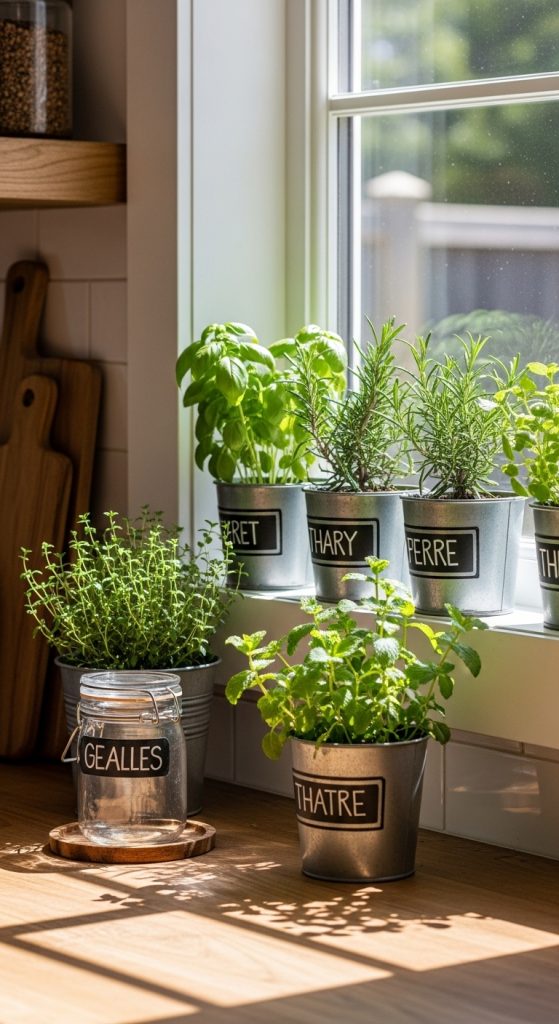
The kitchen windowsill is the one plant project I use literally every single day. I lined up six small terracotta pots — basil, thyme, rosemary, chives, mint, and parsley — each labeled with a wooden plant marker I burned the names into with a borrowed pyrography pen. Fresh basil on a Caprese in January feels like a small personal luxury, and the smell when I brush past the rosemary while cooking is worth the whole setup alone. My south-facing window gets strong afternoon sun, so the basil is gloriously happy, but here is what nobody tells you: mint is a bully that will colonize every pot nearby, so it gets its own pot with no neighbors, period. I water mine every second morning, about a shot glass per pot, and I pinch the basil tops weekly to keep it bushy instead of leggy. A friend killed hers by overwatering rosemary, which wants to be nearly dry between waterings — herbs are not all thirsty the same way, and treating them identically is the fastest route to a sad windowsill.
4. Terrariums for Small Spaces
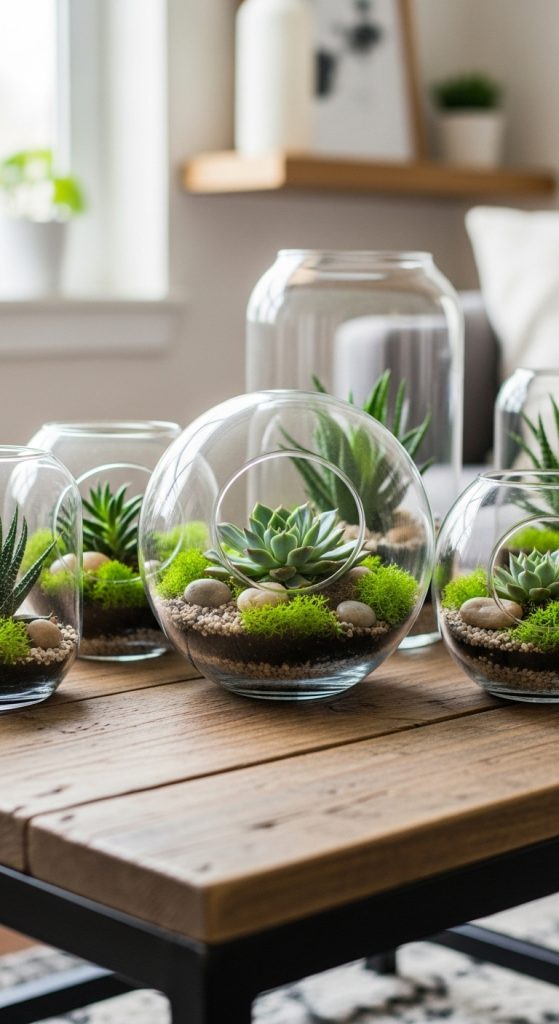
I made my first terrarium on a rainy Saturday from a 15-euro glass jar from the decoration shop, a bag of small stones, and three succulents I already owned. The layering matters more than the plants: pebbles at the bottom for drainage, a thin layer of activated charcoal to keep it fresh (this was the one ingredient I had to actually go buy), then cactus soil, then the succulents nestled in. It sits on my desk and survived three full years with almost no attention, which is saying something for a person who once forgot a cactus in the dark hallway. The biggest mistake with terrariums is kindness — overwatering. I water mine maybe once a month, a few spoonfuls at most, because the glass holds every drop of moisture like a tiny sauna. I added a small brass snail figurine my daughter picked out, and honestly that snail makes me smile every single workday. If your desk has bright indirect light but you have zero confidence in your watering habits, a terrarium is the safest plant project there is.
5. Statement Plant as Focal Point
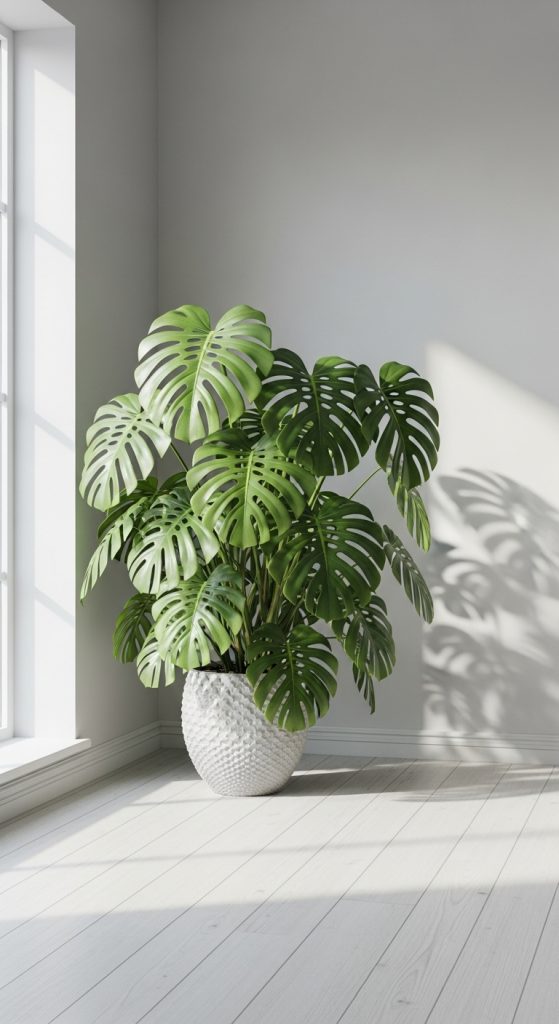
One big plant can carry an entire room, and my fiddle leaf fig has been doing exactly that in the living room corner for two years now. It is about 1.6 meters tall, sits in a simple cream ceramic pot I found at the flea market for 8 euros, and it replaced a whole styling arrangement I used to fuss over — one plant, zero fuss, better result. The catch with statement plants is that they are statement plants: everyone looks at them, so they have to look good from every angle. I rotate mine a quarter turn weekly because fiddle leafs will lean toward the window relentlessly, and I wipe the big leaves with a damp cloth once a month because dust on a hero plant is surprisingly visible. I also learned to give it a genuinely bright spot right away instead of “graduating” it from a dim corner — the six months of sulking before I moved it next to the window taught me that lesson. If you are nervous, a rubber plant is the forgiving version of this idea: same drama, half the attitude.
6. Plant Shelves and Ladders
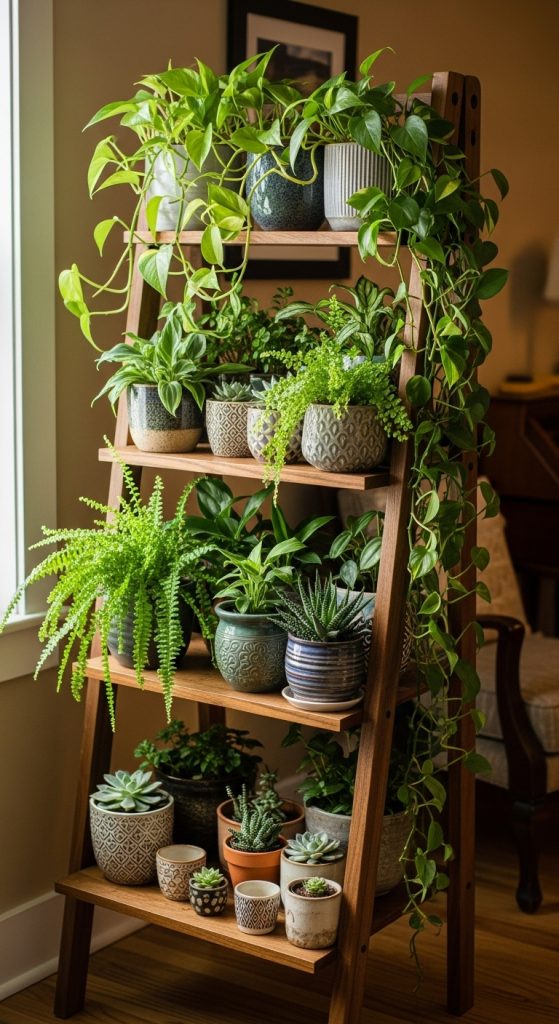
My old wooden ladder, the one that was too rickety for actual ladder duties, became my favorite plant display in the home office. I sanded it lightly, left the worn wood as it was, and balanced shallow trays across three rungs: trailing pothos up top so the vines cascade over the sides, small ferns and philodendrons in the middle, and a row of tiny succulents at the bottom where the light is weakest. The staggered heights happen naturally on a ladder, which is why it works so well — you get depth and variety without any styling talent at all. I keep watering cans nearby because watering plants on a ladder requires a steady hand and good aim, and I put the whole thing on a washable rug for exactly that reason. One rule I made after losing a begonia: check that every tray has a rim or saucer, because runoff from the top shelf lands on the plants below and some of them will not forgive that. Total cost was essentially zero, since the ladder was destined for the bulky waste pickup.
7. Window Sill Gardens
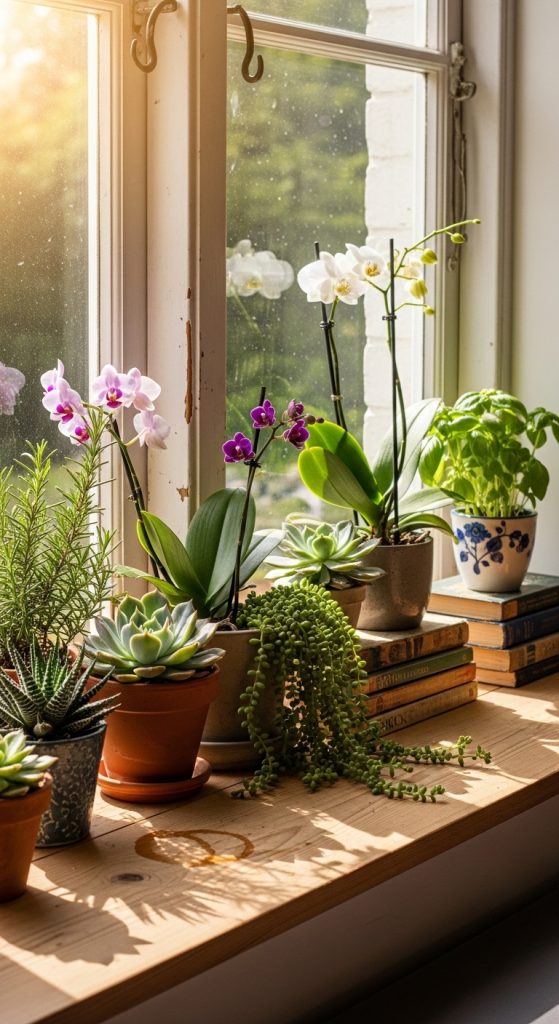
The bedroom windowsill holds my most honest plant collection — no styling, just plants I like, lined up where the morning sun hits. There is an African violet that blooms reliably, a string of pearls that is slowly taking over, two echeverias that look like stone roses, and a small orchid I bought in bud three years ago and have rebloomed twice. What I have learned is that windowsills are microclimates with attitude: the south sill is blazing by noon, the north one is gentle all day, and plants that thrive in one will fry in the other. My succulents live on the south sill in matching white pots that keep the row looking tidy, while the violet and orchid stay on the east sill where the light is softer. In winter I move everything back about 10 centimeters from the glass because cold radiates off the window and can shock leaves overnight. I also keep a cheap thermometer on the sill in January — if it reads under 12 degrees at night, the tropical plants get moved deeper into the room.
8. Hanging Wall Planters and Vertical Gardens
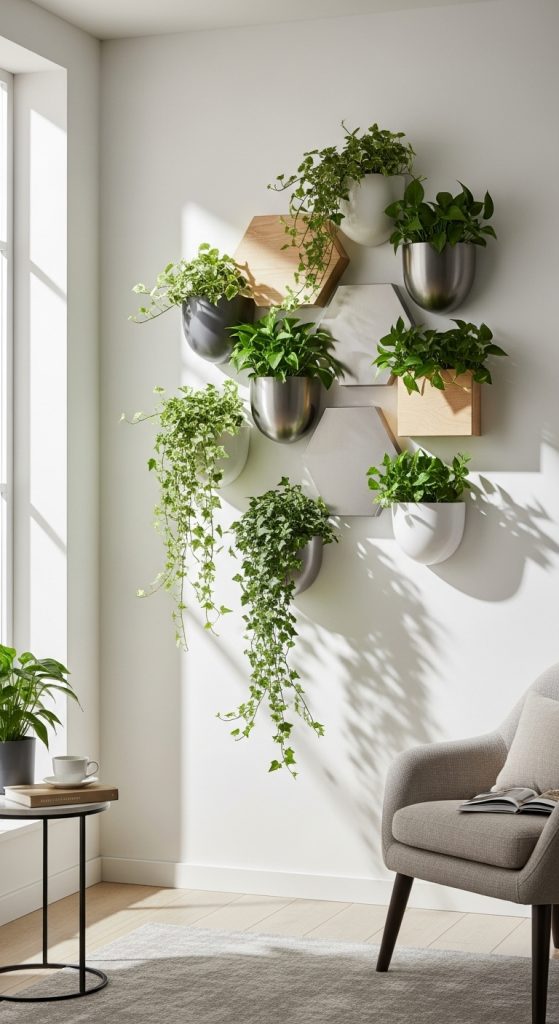
My living wall started as a single wall pocket planter I was honestly skeptical about, mounted in the dining area with a handful of pothos cuttings and one very optimistic philodendron. Eighteen months later it has grown into three connected pocket panels, and it is the first thing guests comment on when they walk in. The secret nobody mentions with vertical gardening is the mounting: I used proper wall plugs rated for the weight of wet soil, and I mounted the panels on a waterproof backing board first, because soil-stained wallpaper is a renovation project nobody wants. Watering happens with a long-spout watering can every ten days, and I check the wall behind the panels quarterly for any damp spots — none so far, but the habit is what keeps it that way. The trailing vines now reach almost to the floor, which sounds dramatic but is honestly just neglect I have chosen to call “the look.” Start with one panel and tough plants like pothos and ivy; if they thrive, you will know your wall gets enough light for the bigger project.
9. Hanging Macramé Plant Holders
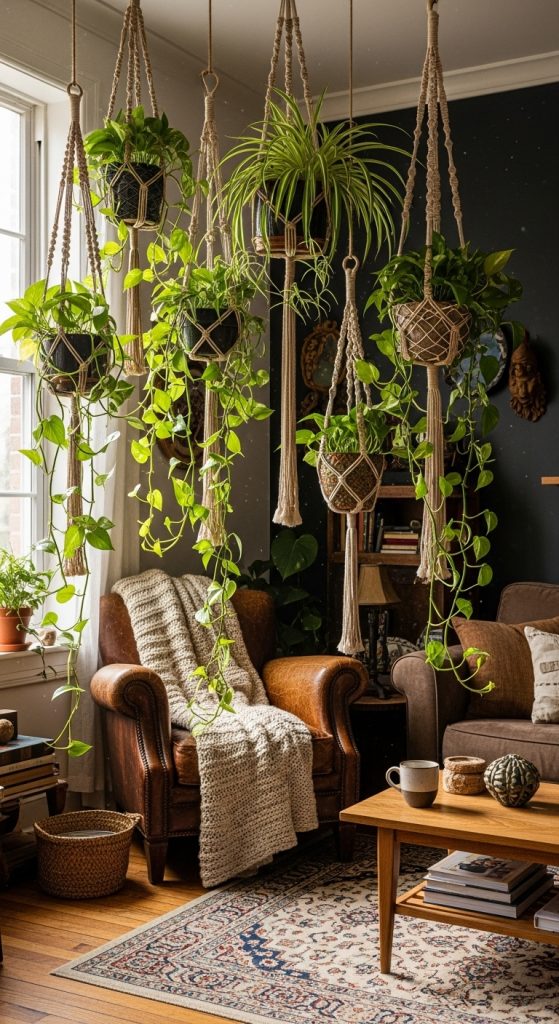
I bought my first macramé hanger on a whim at a craft market and then learned to knot my own on a long Sunday afternoon — cotton cord is about 8 euros for 50 meters, and the learning curve is gentler than it looks. Now there are five of them in the bedroom window bay, each holding a small spider plant or air plant, hung from a wooden dowel rod I mounted above the window frame. The knotted texture adds a softness that plain hangers cannot match, and the plants sway gently when I air out the room, which is one of my small daily joys. Practical warning from someone who learned it: macramé stretches when wet, so water your plants somewhere else and let them drain before rehanging, or your cord will slowly lengthen and your pot will sit lopsided. I also learned to knot the hanger slightly snug around the pot rather than loose — a snug hanger is stable, a loose one is a slow-motion accident. Three years in, my handmade ones look better than the store-bought original ever did.
10. Bathroom Plant Décor
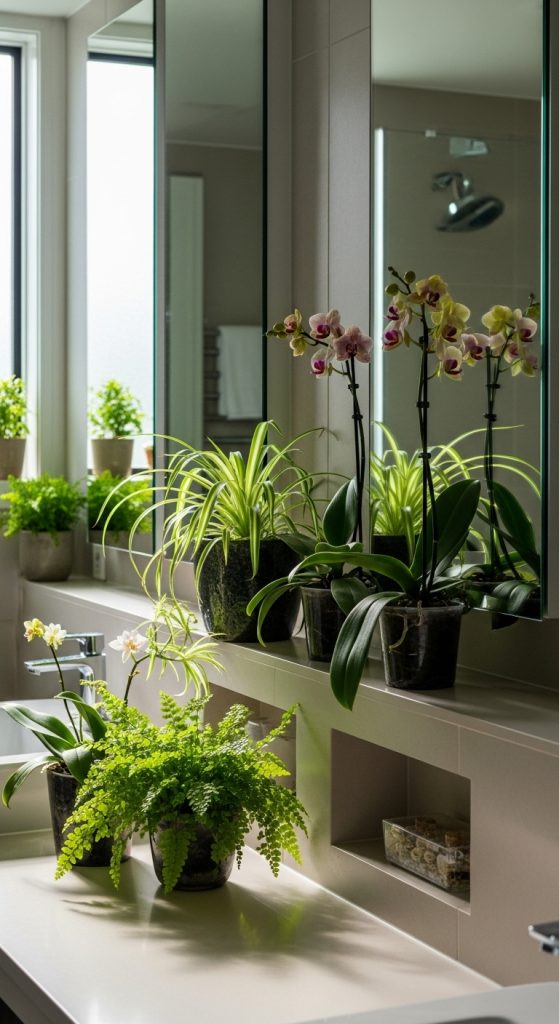
The bathroom was my last plant frontier, and it turned out to be one of the easiest wins: the shower steam creates natural humidity that tropical plants absolutely love. I started with a Boston fern on the shelf above the toilet and a small orchid on the windowsill, and both have been happier there than anywhere else in the flat. The fern practically waters itself from the steam, though I still give it a proper soak every ten days, and the orchid rebloomed for the first time in my care — I genuinely did a little victory lap. The one rule is light: our bathroom has a frosted window, which is bright enough, but a windowless bathroom needs plants that tolerate very low light, like a snake plant or a zz plant, or they will simply give up. I also keep a lucky bamboo in a tall glass vase on the counter — it lives in water alone, no soil, no fuss, and it gives that spa feeling every guest comments on. Just do not put anything that hates humidity in there; my succulents staged an immediate protest.
Conclusion
Forty plants sounds excessive until you realize each one was a small experiment that taught me something — mostly about patience, and a little about restraint. If I could give you one piece of advice, it would be to start with three plants you genuinely love, learn how they behave in your actual light and your actual habits, and then let the collection grow from there. Your flat will thank you for it, one leaf at a time.