
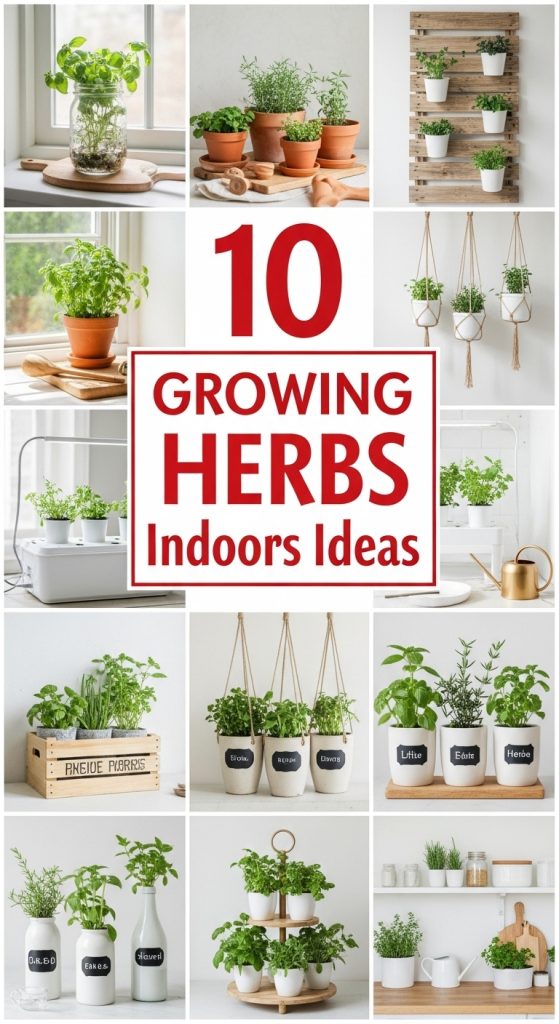
10 Growing Herbs Indoors Ideas
Growing herbs indoors is a fantastic way to have fresh, flavorful ingredients at your fingertips, regardless of the season. Whether you live in a small apartment, don’t have access to a backyard, or simply want to add a green touch to your home, cultivating herbs indoors is a practical and rewarding endeavor. Indoor herb gardens can thrive in sunny windowsills, kitchens, or even under grow lights, making them an ideal choice for people who are passionate about cooking or gardening but lack outdoor space.
In this article, we’ll explore 10 herbs that are perfect for growing indoors. From culinary herbs to aromatic plants, these herbs are easy to care for and can be used in a variety of dishes, teas, and even for medicinal purposes. Whether you’re a beginner gardener or an experienced one, growing herbs indoors can add beauty and functionality to your home.
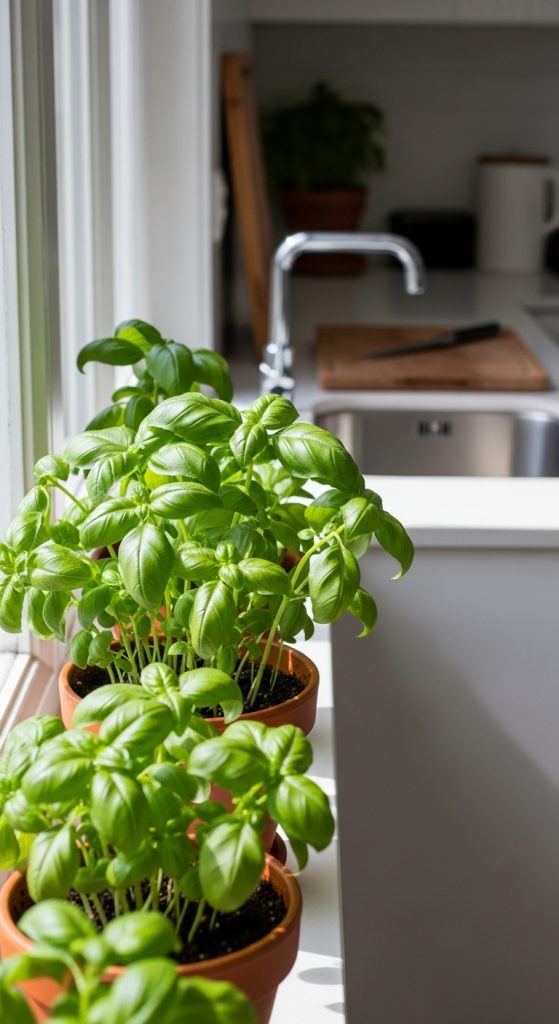
1. Basil (Ocimum basilicum)
Basil is one of the most popular herbs to grow indoors, and for good reason. It’s versatile in the kitchen, used in everything from Italian pesto to Thai curries. With its vibrant green leaves and fragrant aroma, basil can easily thrive in indoor environments.
Why It Works:
Basil loves warmth and sunlight, so it is perfect for indoor gardening. It’s also a fast grower, which makes it an excellent choice for beginners. Whether you’re growing it for culinary uses or simply to enjoy its pleasant fragrance, basil can grow in a container on a sunny windowsill or near a light source.
How to Grow It:
- Basil prefers at least 6 hours of sunlight each day. Place it near a south-facing window, or use a grow light if your natural light is limited.
- Use well-draining soil, and water regularly to keep the soil moist but not waterlogged.
- Pinch back leaves regularly to encourage bushier growth and prevent it from flowering.
Styling Tip:
Plant basil in a decorative pot or container, and place it near your kitchen to have fresh herbs ready for cooking.
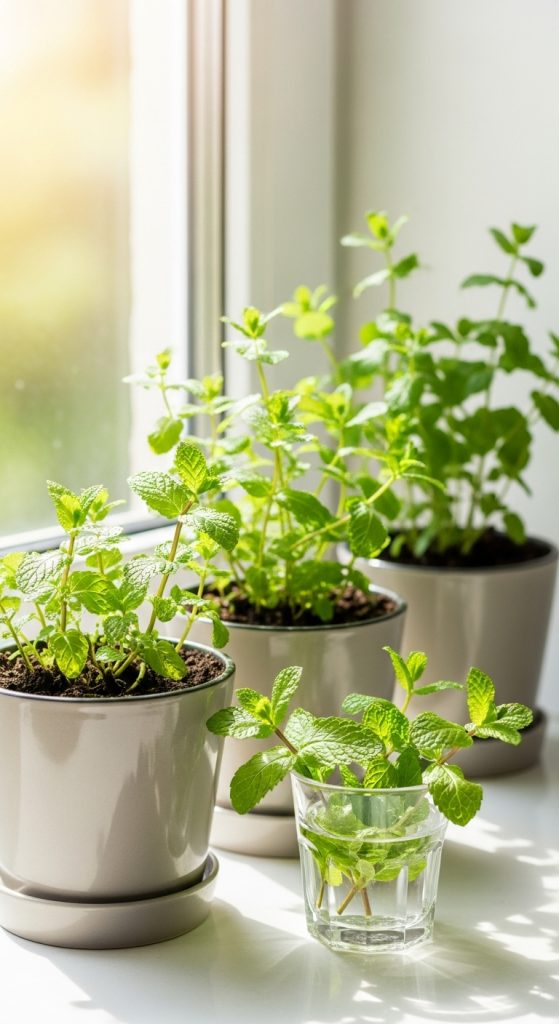
2. Mint (Mentha)
Mint is another excellent herb to grow indoors, known for its refreshing flavor and aromatic leaves. It’s used in a wide variety of dishes, teas, and even cocktails. Plus, mint is relatively low-maintenance, making it a great choice for novice gardeners.
Why It Works:
Mint thrives indoors, especially in containers. It’s a hardy herb that requires minimal care, and its pleasant scent will fill your space. However, be mindful that mint can become invasive, so it’s best to grow it in a pot to contain its spread.
How to Grow It:
- Mint prefers bright, indirect sunlight. A windowsill or kitchen counter with moderate light will work well.
- Keep the soil evenly moist and ensure the pot has good drainage.
- Trim the plant regularly to prevent it from becoming too leggy and to encourage new growth.
Styling Tip:
Mint grows beautifully in hanging baskets or small pots. Display several pots in a row on your windowsill or kitchen counter for an aromatic touch.
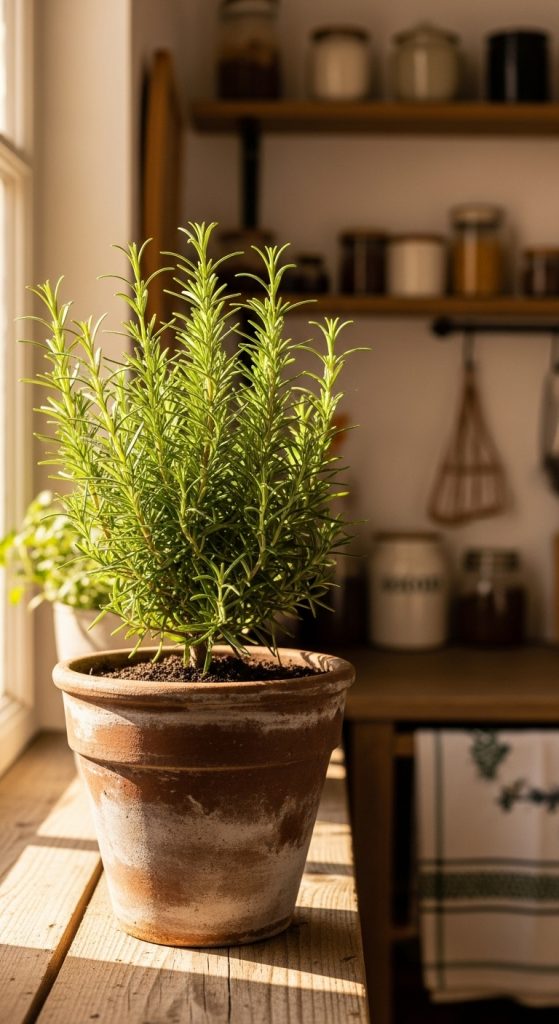
3. Rosemary (Rosmarinus officinalis)
Rosemary is an aromatic herb that adds a wonderful fragrance and flavor to many dishes, from roasted meats to Mediterranean-inspired recipes. Growing rosemary indoors can be a bit more challenging compared to other herbs, but it’s still very doable with the right care.
Why It Works:
Rosemary thrives indoors when placed in a sunny spot and is perfect for growing in containers. It has a long growing season, so you’ll be able to enjoy its leaves for months at a time.
How to Grow It:
- Rosemary requires at least 6 hours of sunlight daily, making it ideal for a sunny windowsill.
- Use a well-draining potting mix, and ensure your container has drainage holes.
- Water sparingly, as rosemary prefers slightly drier conditions compared to other herbs. Let the soil dry out between waterings.
Styling Tip:
Rosemary’s needle-like leaves and woody stems give it a unique, textured appearance. Grow it in a rustic, terra cotta pot to complement its Mediterranean heritage.
4. Thyme (Thymus vulgaris)
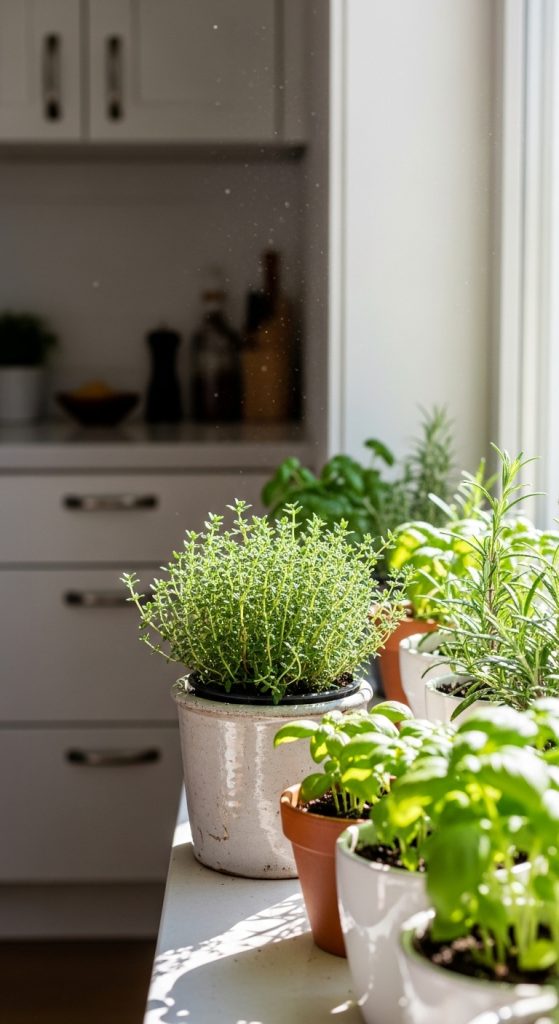
Thyme is a versatile herb that pairs well with a variety of savory dishes, especially meats, stews, and roasted vegetables. It’s small, low-growing, and well-suited to indoor gardening, making it an easy herb to grow in containers.
Why It Works:
Thyme is a hardy herb that adapts well to indoor environments. Its compact growth habit makes it an excellent choice for small spaces. Plus, its small leaves are highly fragrant and flavorful.
How to Grow It:
- Place thyme in a sunny spot with at least 4-6 hours of sunlight each day.
- Thyme prefers well-draining, slightly dry soil. Water it sparingly, as it doesn’t like soggy soil.
- Prune the plant regularly to promote fresh growth and prevent it from becoming too woody.
Styling Tip:
Thyme is perfect for growing in shallow containers or alongside other small herbs. Its tiny leaves create a lush appearance, making it a great addition to an herb garden on your windowsill.
5. Parsley (Petroselinum crispum)
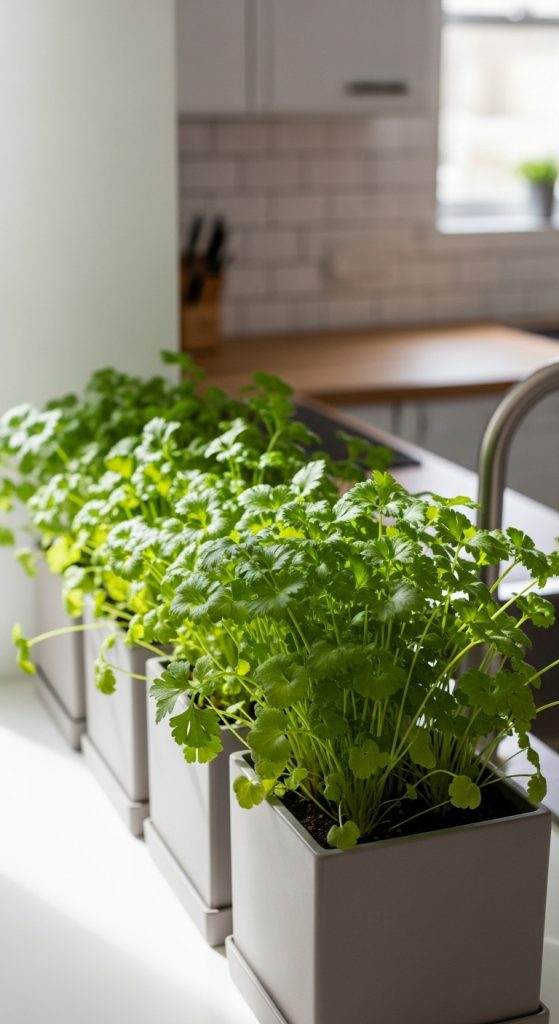
Parsley is a common culinary herb known for its fresh flavor and vibrant green leaves. It’s rich in vitamins and minerals, and it’s perfect for garnishing dishes, adding flavor, and even using in smoothies.
Why It Works:
Parsley thrives indoors, making it one of the best herbs to grow in a kitchen garden. It’s relatively easy to care for and grows well in containers.
How to Grow It:
- Parsley needs bright, indirect sunlight for about 4-6 hours a day. A windowsill that gets morning sun works well.
- Keep the soil consistently moist, but don’t let it become waterlogged.
- Harvest leaves regularly to encourage new growth and prevent it from flowering too early.
Styling Tip:
Parsley adds a pop of vibrant green to your indoor garden. Place it in a decorative pot and group it with other herbs to create a beautiful, edible display.
6. Cilantro (Coriandrum sativum)
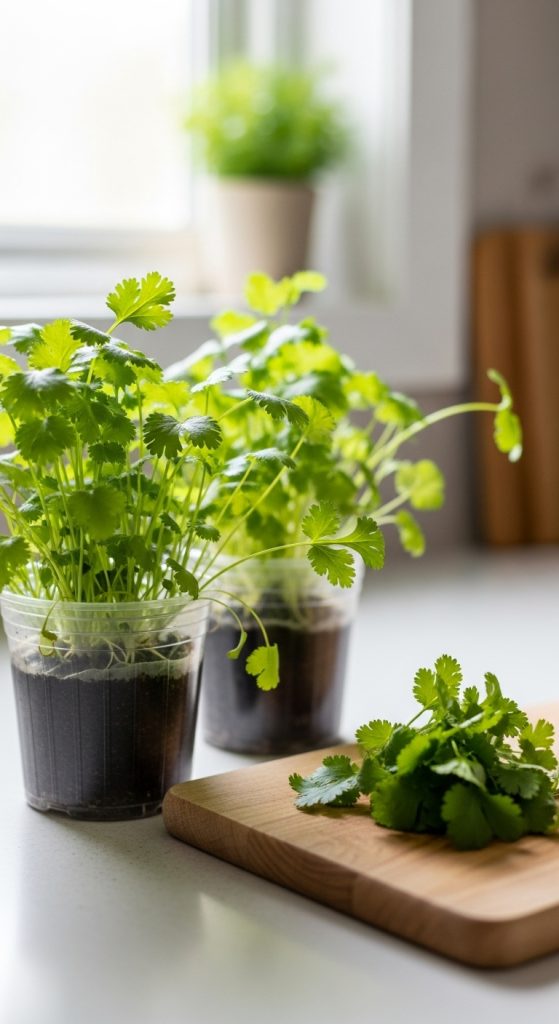
Cilantro is a flavorful herb used in a variety of cuisines, especially Mexican, Indian, and Thai dishes. While cilantro can be a bit tricky to grow indoors due to its short growing season, it’s well worth the effort for its aromatic leaves.
Why It Works:
Cilantro grows well in cooler conditions, making it perfect for indoor spaces with moderate temperatures. It’s an herb that you can grow quickly and use fresh in a wide range of dishes.
How to Grow It:
- Cilantro prefers cooler temperatures, so keep it away from heat sources and direct sunlight for long periods.
- Ensure the plant gets about 4-5 hours of sunlight each day.
- Cilantro grows quickly, so harvest it early and often to prevent it from bolting (flowering prematurely).
Styling Tip:
Cilantro’s delicate, feathery leaves create a soft texture in your indoor herb garden. Grow it in a small pot with a matching green or ceramic container for an aesthetic touch.
7. Sage (Salvia officinalis)
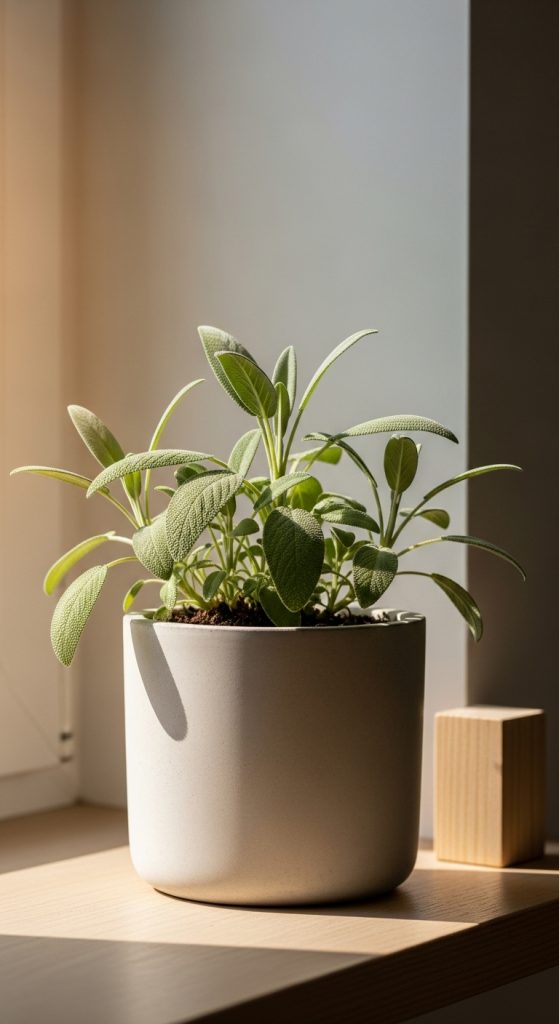
Sage is an aromatic herb with a slightly peppery, earthy flavor. It’s commonly used in savory dishes, especially in stuffing, poultry, and sauces. Sage is well-suited for indoor growing, and its silvery-green leaves make it an attractive addition to your garden.
Why It Works:
Sage is hardy and drought-tolerant, meaning it requires less attention than many other herbs. It thrives in a sunny spot and can grow well indoors in containers, especially in kitchens where it’s easy to access.
How to Grow It:
- Sage needs at least 6 hours of sunlight each day, so it’s best to place it on a sunny windowsill.
- Water sparingly, as sage prefers well-drained soil and doesn’t like overly moist conditions.
- Prune the plant regularly to keep it bushy and healthy.
Styling Tip:
Plant sage in a simple, elegant container. Its attractive silvery leaves will complement both rustic and modern decor, making it a great visual addition to your indoor garden.
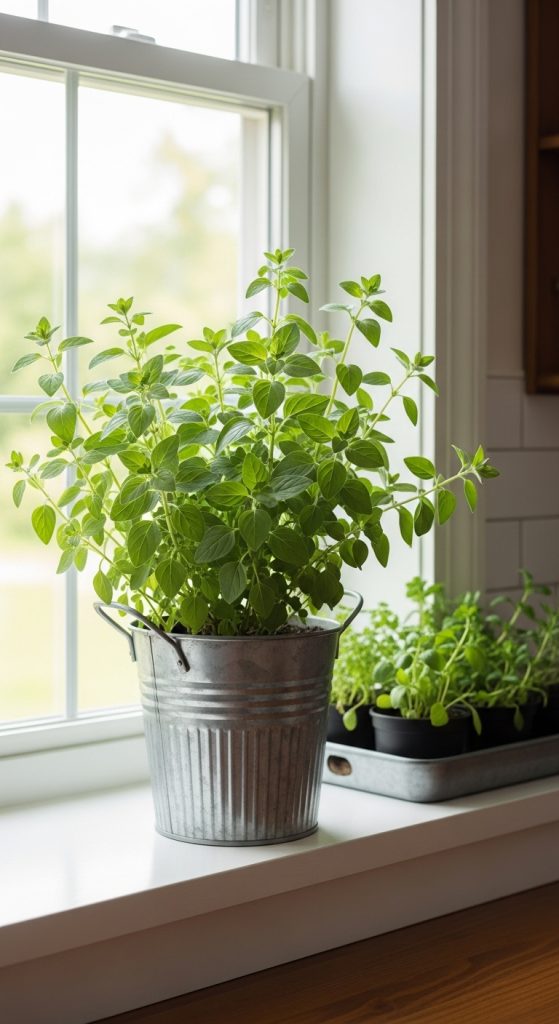
8. Oregano (Origanum vulgare)
Oregano is a robust herb with a bold flavor, often used in Mediterranean and Italian cooking. It’s relatively easy to grow indoors, and its rich aroma adds to the charm of any indoor herb garden.
Why It Works:
Oregano is an excellent indoor herb because it doesn’t need a lot of maintenance. It thrives in a sunny location and can be used in numerous dishes, from pasta sauces to roasted vegetables.
How to Grow It:
- Oregano needs about 6 hours of sunlight a day. It thrives in direct sunlight, so place it on a south-facing windowsill.
- Use well-draining soil, and water it when the soil feels dry.
- Prune oregano regularly to keep it from becoming too woody and to encourage fresh growth.
Styling Tip:
Oregano’s low, bushy growth makes it an excellent addition to window boxes or smaller pots. Its green leaves add a lovely texture to your herb collection.
9. Chives (Allium schoenoprasum)
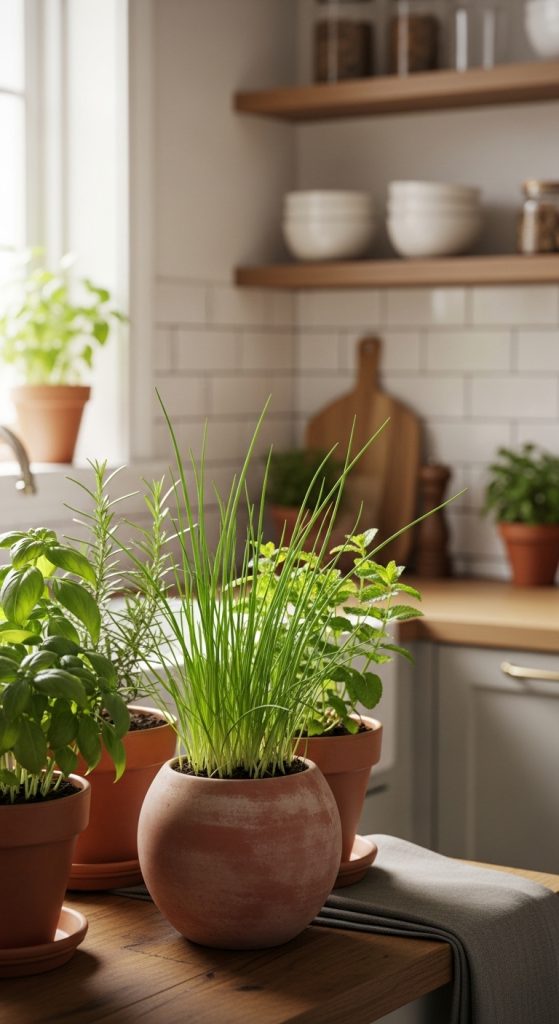
Chives are one of the easiest herbs to grow indoors. Their mild onion flavor makes them a perfect addition to salads, soups, and other savory dishes. Chives grow quickly, and their bright green stalks add visual appeal to your indoor garden.
Why It Works:
Chives are low-maintenance and thrive in most indoor environments. They’re perfect for small pots and can be harvested regularly for fresh use in the kitchen.
How to Grow It:
- Chives prefer bright, indirect sunlight. They can tolerate less sunlight than some other herbs but need at least 4 hours of light daily.
- Water them regularly, but ensure the soil doesn’t become soggy.
- Harvest the chives by cutting them just above the soil level, encouraging new growth.
Styling Tip:
Chives grow tall and thin, adding a vertical element to your herb garden. Group them in small, decorative pots along your windowsill or kitchen counter for a green touch.
10. Lemon Balm (Melissa officinalis)
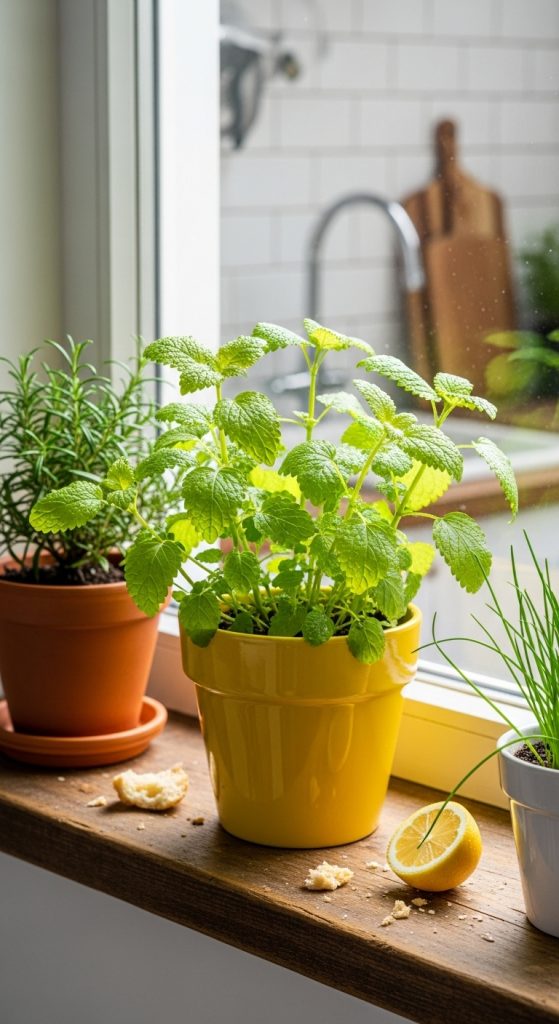
Lemon balm is a fragrant herb known for its lemony aroma and flavor. It’s commonly used in teas, desserts, and savory dishes, and it’s also known for its soothing properties. Lemon balm is easy to grow indoors and makes a lovely addition to any herb garden.
Why It Works:
Lemon balm thrives in containers and can grow well indoors with moderate sunlight. It’s perfect for creating fresh, herbal teas and for adding a citrusy flavor to dishes.
How to Grow It:
- Lemon balm requires 4-6 hours of sunlight each day. Place it on a sunny windowsill, or use a grow light for more consistent growth.
- Keep the soil moist but not waterlogged, and trim the plant regularly to encourage bushy growth.
- Harvest leaves as needed, but leave some on the plant to encourage continued growth.
Styling Tip:
Plant lemon balm in a decorative pot with a fresh, citrus-colored design to match its refreshing aroma. Display it near your kitchen or dining area for easy access.
Conclusion
Growing herbs indoors is a rewarding and practical way to enhance your cooking and enjoy fresh, flavorful ingredients right at home. Whether you’re a beginner gardener or a seasoned pro, these 10 herbs are easy to grow and require minimal effort, making them ideal for indoor gardening. From vibrant basil and fragrant rosemary to versatile chives and soothing lemon balm, you can create an indoor garden that not only beautifies your space but also elevates your meals. So, start planting and enjoy the benefits of homegrown herbs all year long!