10 Easy Beginner Abstract Paintings Ideas
My first abstract canvas was a 60 by 80 centimetre cotton canvas I bought for nine euros at the craft shop near Marienplatz, and I painted it on my kitchen table with the window open and newspaper taped over everything in reach. I had no idea what I was doing, only that I wanted something big and calm for the blank wall above my sofa, and that painting it myself felt more honest than ordering a print. That lopsided, slightly muddy first attempt still hangs in my hallway, and it taught me more than any tutorial ever did. These ten ideas are the ones I actually tried, in roughly the order I dared to try them, and every one of them works for a complete beginner.
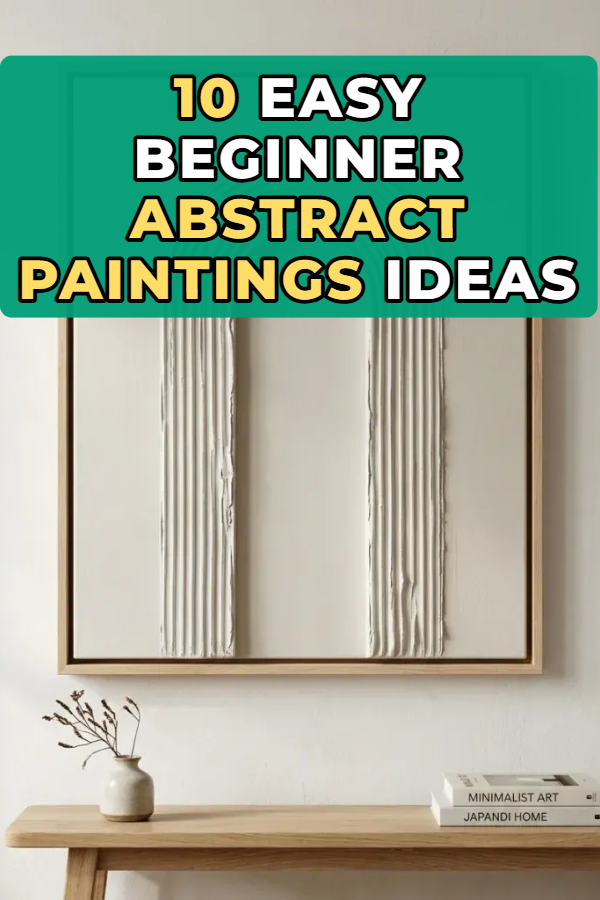
1. The Textured Plaster and Arch Minimalist Canvas
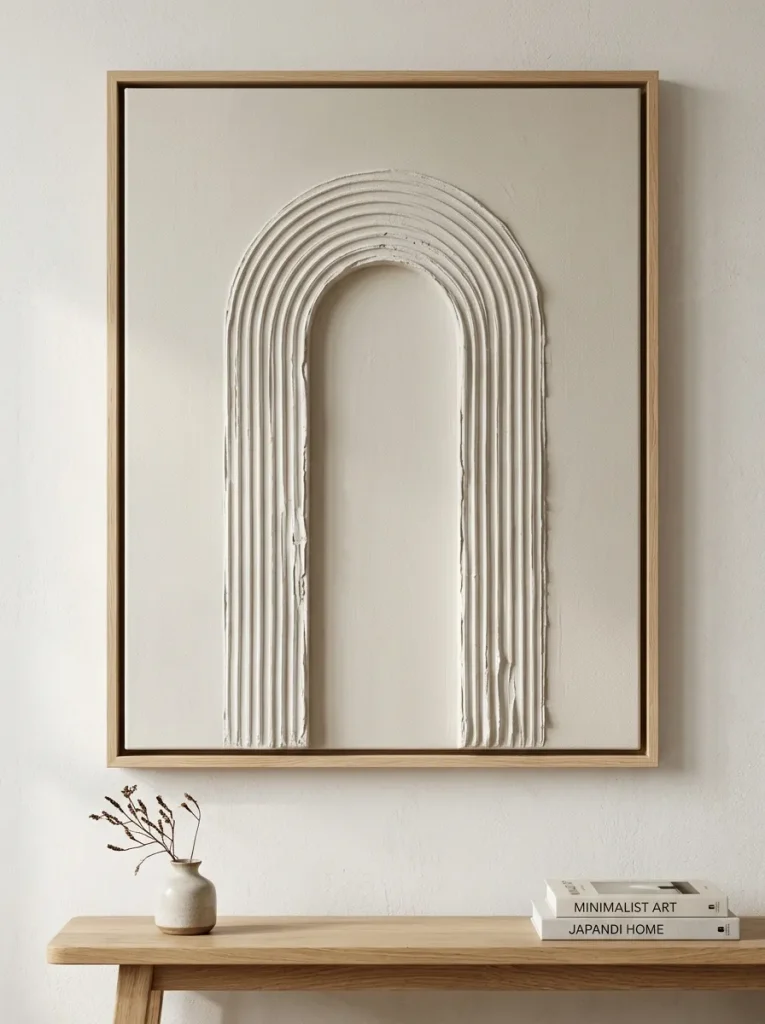
This was the piece that convinced me abstract painting was worth pursuing, because it looked like something from a gallery even though the technique is almost embarrassingly simple. I spread modelling paste over a primed canvas with a palette knife, roughly two to three millimetres thick, and shaped a wide arch in the upper half while the paste was still soft, then left it alone for a full twenty-four hours to dry. Once it was hard, I painted the whole thing in warm off-white and pale clay, so the arch only revealed itself through the shadows it cast as the daylight moved across my living room wall. My mistake the first time was rushing the drying with a hair dryer, which cracked the paste along the arch edge, so now I simply plan it for a Saturday morning and let it dry overnight. It hangs above my reading chair and guests always assume it cost far more than the fourteen euros of materials that went into it.
2. The Color Block Squeegee Sweep
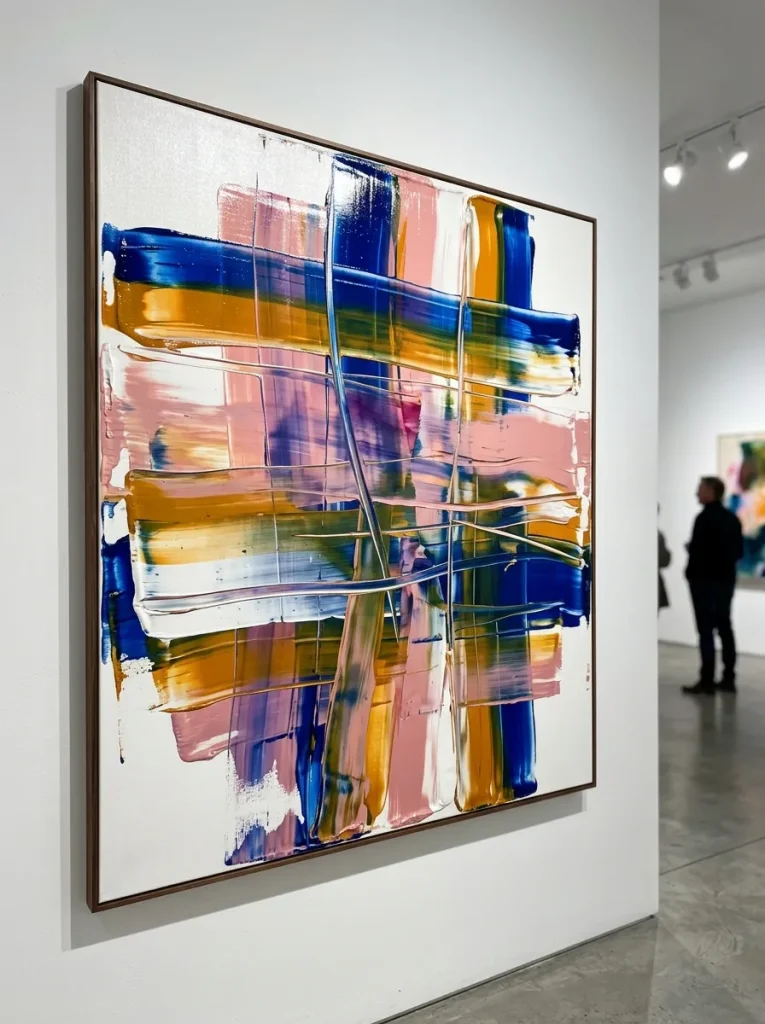
This one is pure fun and takes about twenty minutes from start to finish, which makes it the perfect painting to try on a weeknight when you only have a small window of energy. I squeeze thick lines of fluid acrylic directly onto the canvas, three colours at most plus white, and then pull a silicone squeegee across in one long, steady motion, letting the colours overlap and blend where they meet. The first sweep always looks chaotic, but the trick I learned is to stop there and let it dry, because a second pass almost always turns everything into mud. I made mine with deep teal, mustard and cream for the hallway, and the clean mechanical edge where the squeegee stopped gives it a surprisingly professional finish. If you are nervous, practise the pull on a sheet of acrylic paper first, because the pressure and speed matter more than the colours you choose.
3. The Earth-Tone Organic Fluid Wash and Line Work
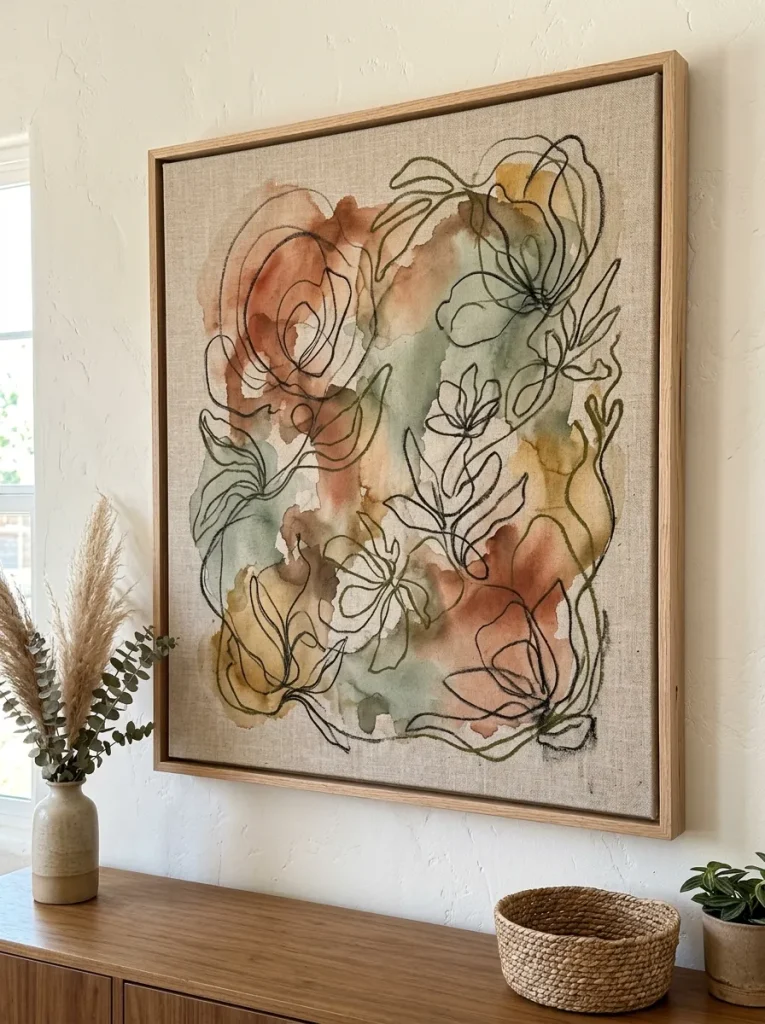
I painted this one on a rainy Sunday in October, and the slow, watery washes suited the mood of the day perfectly. I thinned terracotta, olive and ochre acrylic with plenty of water and let the paint bloom across a damp canvas in soft, uneven pools, tilting the board gently so the colours drifted into each other instead of sitting in hard-edged blocks. Once everything was fully dry, which took about two hours, I drew loose looping lines over the top with a soft graphite pencil and a brown oil pastel, following the shapes the washes had made rather than forcing a pattern onto them. The lines are what save this painting from looking like a muddy accident, because they give your eye something to follow. It now hangs in my bedroom, and the warm earthy tones work beautifully against the pale wooden furniture.
4. The Metallic Ribbon and Heavy Impasto Palette Knife
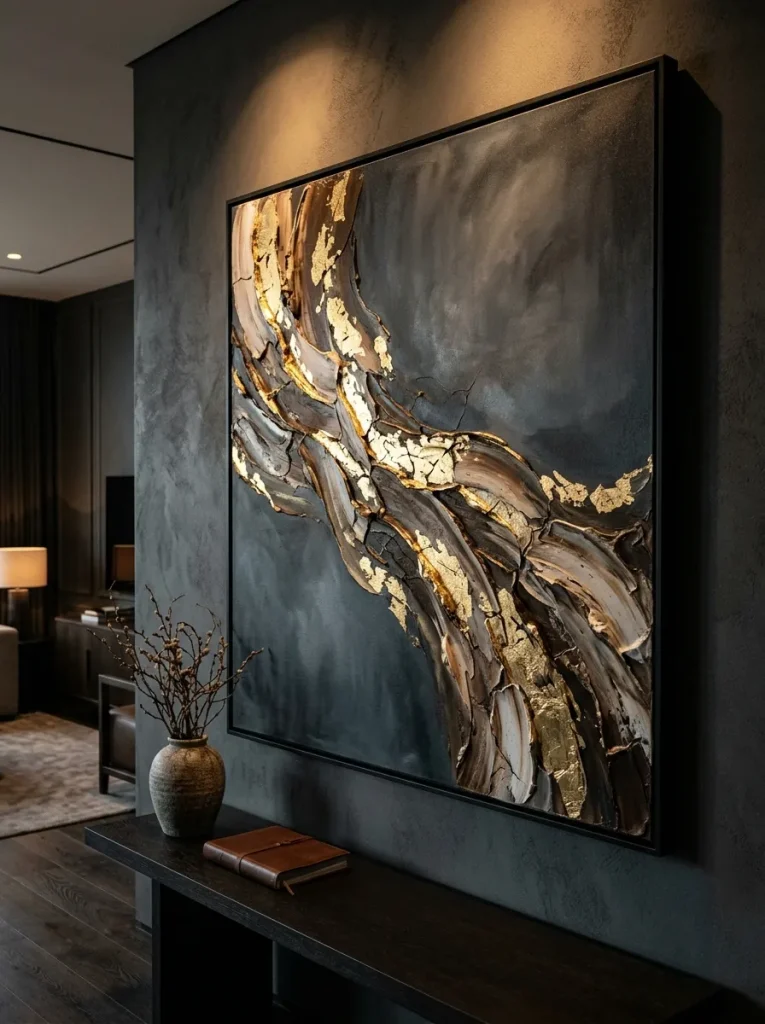
This is the most dramatic piece I have made, and it is also the one that taught me how much light matters to a painting. I started with a matte charcoal background, two thin coats of dark grey acrylic, and let it dry completely before loading a palette knife with thick gold and copper paint and dragging it across in bold ribbons. The paint stands about five millimetres proud of the surface in places, so it catches the evening light from my dining room lamp and shimmers as you walk past. I learned the hard way that cheap metallic paint looks flat and chalky, so I spent the extra four euros on a decent gold acrylic and the difference was immediately obvious. A word of warning: impasto this thick takes two full days to dry properly, so hang it somewhere the cat cannot reach it while you wait.
5. The Gradient Horizon and Atmospheric Color Field
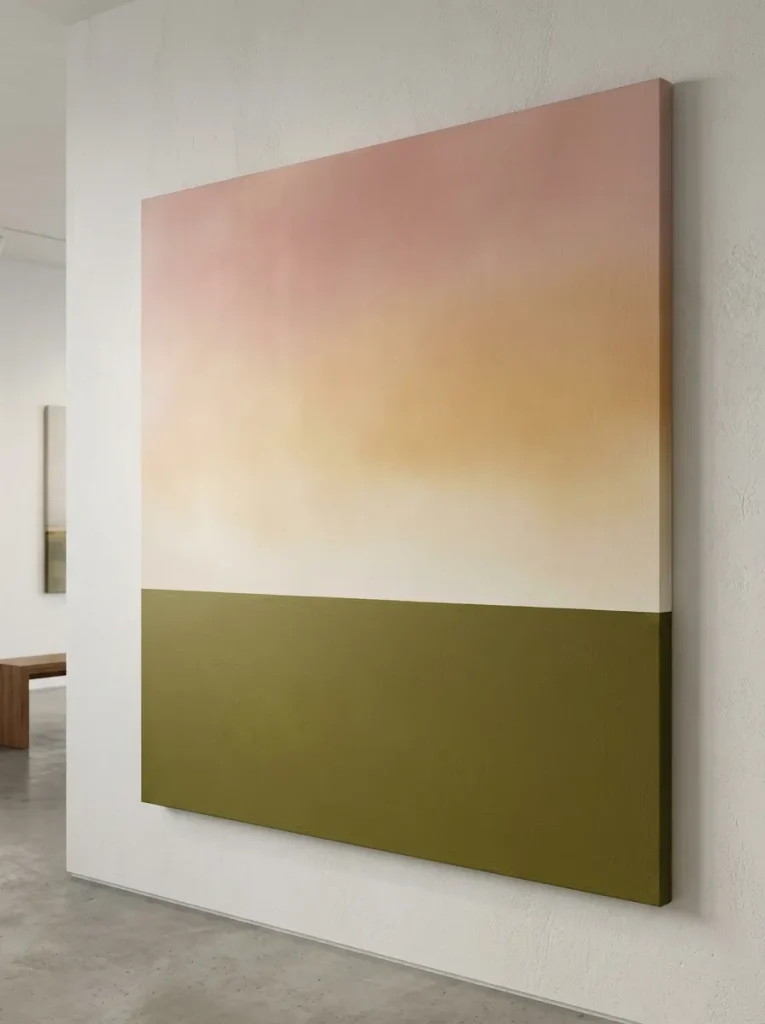
Of all ten paintings, this is the one I find most calming to look at, and it was also the most forgiving to paint. I blended blush pink into warm honey and then into soft cream, working wet into wet with a wide flat brush and keeping my strokes horizontal so the colours melted into each other without any visible seams. The key, I discovered, is to work quickly while the paint is still wet and to resist the urge to keep fixing it, because every extra stroke leaves a mark you can see once it dries. A single crisp horizontal line of painter’s tape, pulled off while the paint was still slightly tacky, gave me the clean horizon that anchors the whole piece. It hangs in my small guest room, and the soft gradient makes the room feel noticeably larger and lighter than it did with a bare wall.
6. The Grid and Deconstructed Geometric Collage
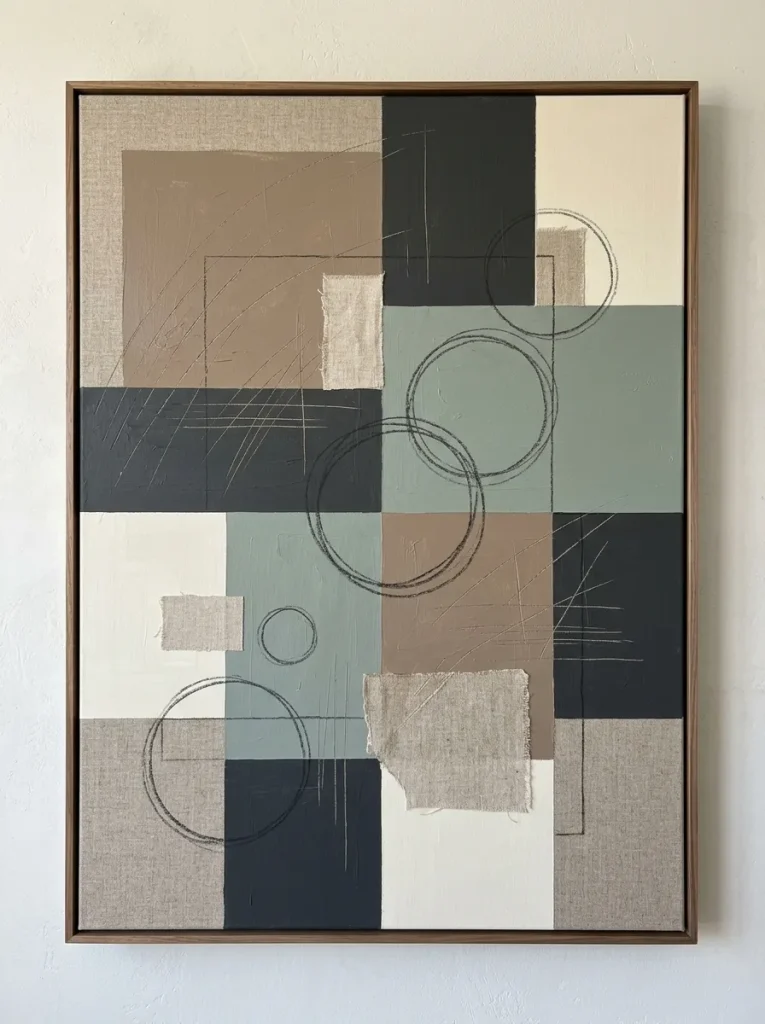
This painting started as a failed squeegee sweep that I refused to throw away, and it ended up being one of my favourites. I taped off a grid of rectangles and semicircles with painter’s tape, painted each block in a different muted colour, and then peeled the tape away to reveal the sharp geometric edges underneath. Over the top I scratched thin lines into the wet paint with the end of a brush handle and glued down two torn pieces of painted paper from an earlier experiment that had gone wrong. The collage pieces are what make it feel like a real artwork rather than a colour chart, because they break the grid and give it a handmade, slightly imperfect quality. My advice is to use low-tack tape and press the edges down firmly with a credit card, or the paint will bleed underneath and ruin your clean lines.
7. The Expressive Monochrome Gesture and Splatter
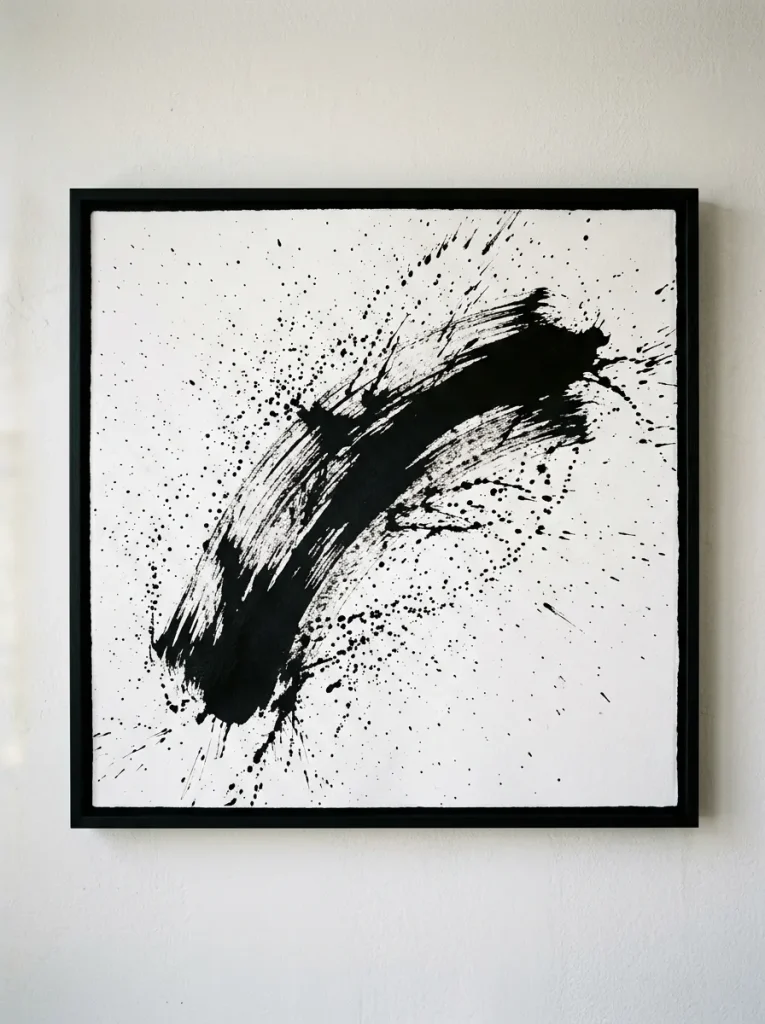
This is the painting I make when I need to shake off a stressful week, because it is fast, physical and impossible to overthink. I used a single large brush loaded with black acrylic thinned just enough to flow, and made three big sweeping strokes across a white canvas in one confident motion, then flicked fine splatters from a toothbrush for the smaller marks. The whole thing took ten minutes, and the hardest part was stopping, because the temptation to add one more stroke is enormous and one more stroke is almost always one too many. I stood back at least two metres before deciding whether it was finished, and that distance matters, because up close every mark looks like a mistake and from across the room the balance suddenly makes sense. It hangs in my studio corner and still makes me smile every time I walk past it.
8. The Soft Organic Blob and Nested Pebbles
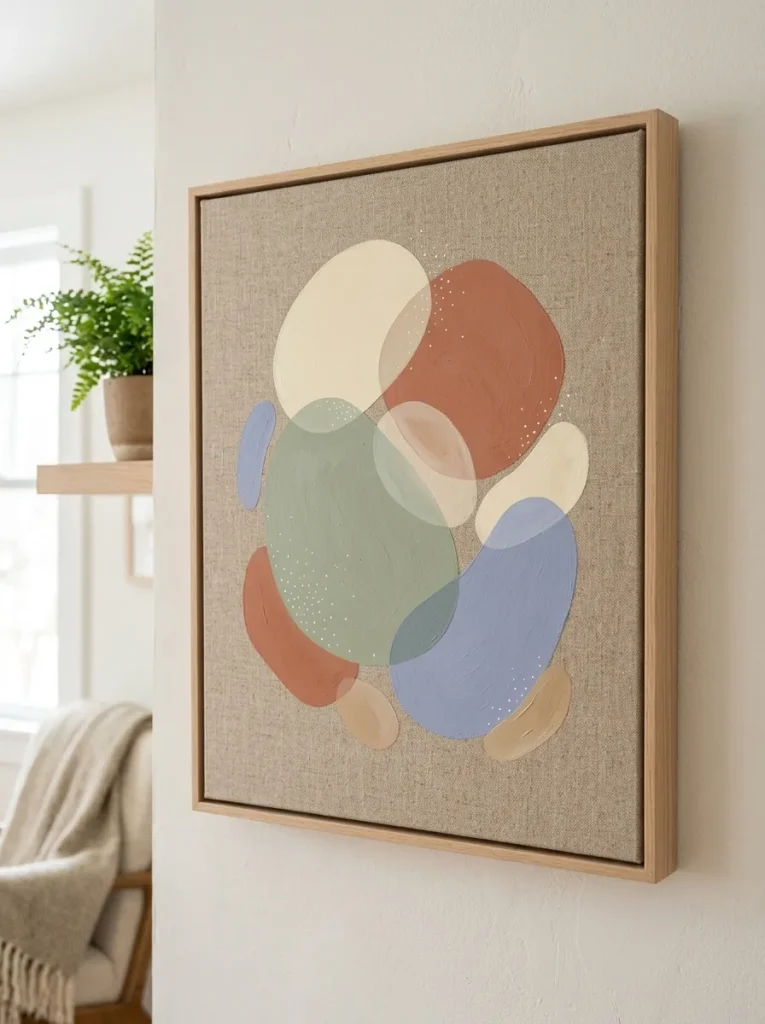
This is the gentlest painting of the ten, and the one I would hand to a friend who says they cannot draw a straight line, because there are no straight lines in it at all. I painted overlapping rounded shapes in dusty pink, sage, cream and soft ochre, like river pebbles stacked loosely on top of each other, leaving a thin gap of white canvas between some of them so the shapes breathe. I used the round end of a large brush and the bottom of a jam jar to get the curves smooth, which felt a bit silly but worked far better than trying to paint perfect circles freehand. What made it work was varying the sizes a lot, with one big shape anchoring the composition and the smaller ones clustered around it, because pebbles all the same size look like a pattern from a bathroom tile. Mine hangs in the bathroom itself, and the soft pastel palette suits the room perfectly.
9. The Layered Squeegee and Scraped Texture Field
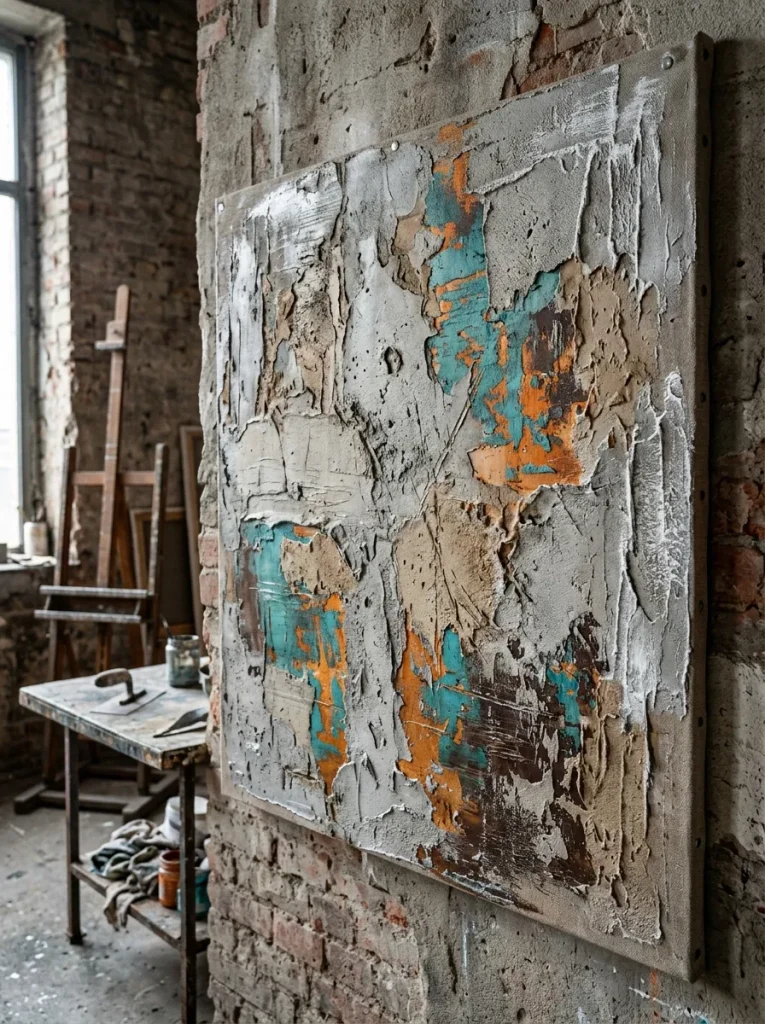
This painting looks like an old weathered wall, and building it felt more like plastering than painting, which I rather enjoyed. I worked in four thin layers, letting each one dry for at least an hour before scraping parts of it back with a metal dough scraper and painting over the exposed patches with a slightly different shade of warm grey and sand. The scraping is the important part, because it reveals glimpses of the colours underneath and gives the surface a depth that a single flat coat can never achieve. My first attempt failed because I used too much paint in each layer and it stayed tacky for days, so now I keep every layer thin and let the texture come from the scraping rather than the thickness. It hangs in the hallway next to the front door, and visitors often reach out to touch it because it looks so convincingly like old plaster.
10. The Modern Botanical Abstract Silhouette
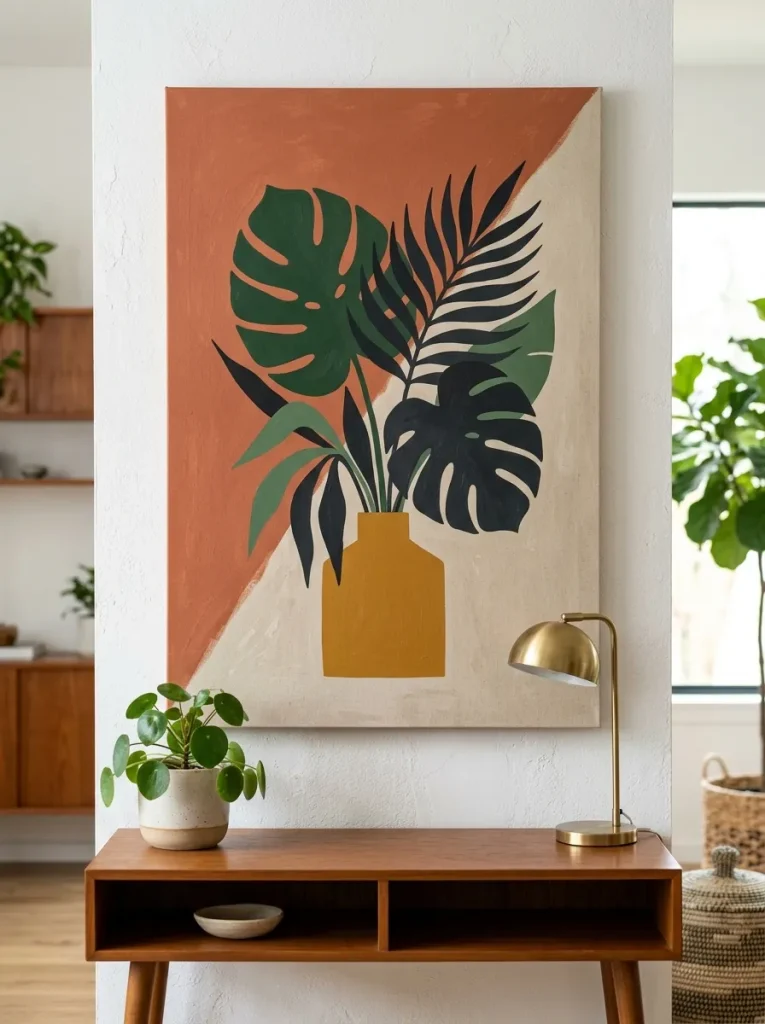
I painted this one after a trip to the botanical garden in Nymphenburg, where I had spent an afternoon sketching monstera leaves and palm fronds in a little notebook. Back home, I simplified those shapes into flat silhouettes in deep green and black against a warm terracotta background, painting each leaf as a single bold shape instead of trying to capture every detail. A thin cream line drawn with a fine brush suggests the stem, and a simple arc at the bottom hints at a vase, which is all the painting needs to read as a plant study rather than a random arrangement of blobs. My mistake the first time was adding too many leaves, which made the whole thing look busy, so I repainted it with just three large leaves and the composition instantly calmed down. It hangs in my living room next to a real monstera, and the painted leaves and the living ones make a lovely pair.
Conclusion
Looking back at these ten paintings, the thing that surprises me most is how little they cost and how much they changed the feel of my flat. Each one took an evening or less, most of them under fifteen euros in materials, and not one of them required a skill I did not already have on the day I started. If you try just one, start with the squeegee sweep or the pebbles, because both forgive almost anything, and keep your first canvas somewhere you will see it every day. Mine still hangs in the hallway, lopsided and muddy in places, and I would not trade it for a print.