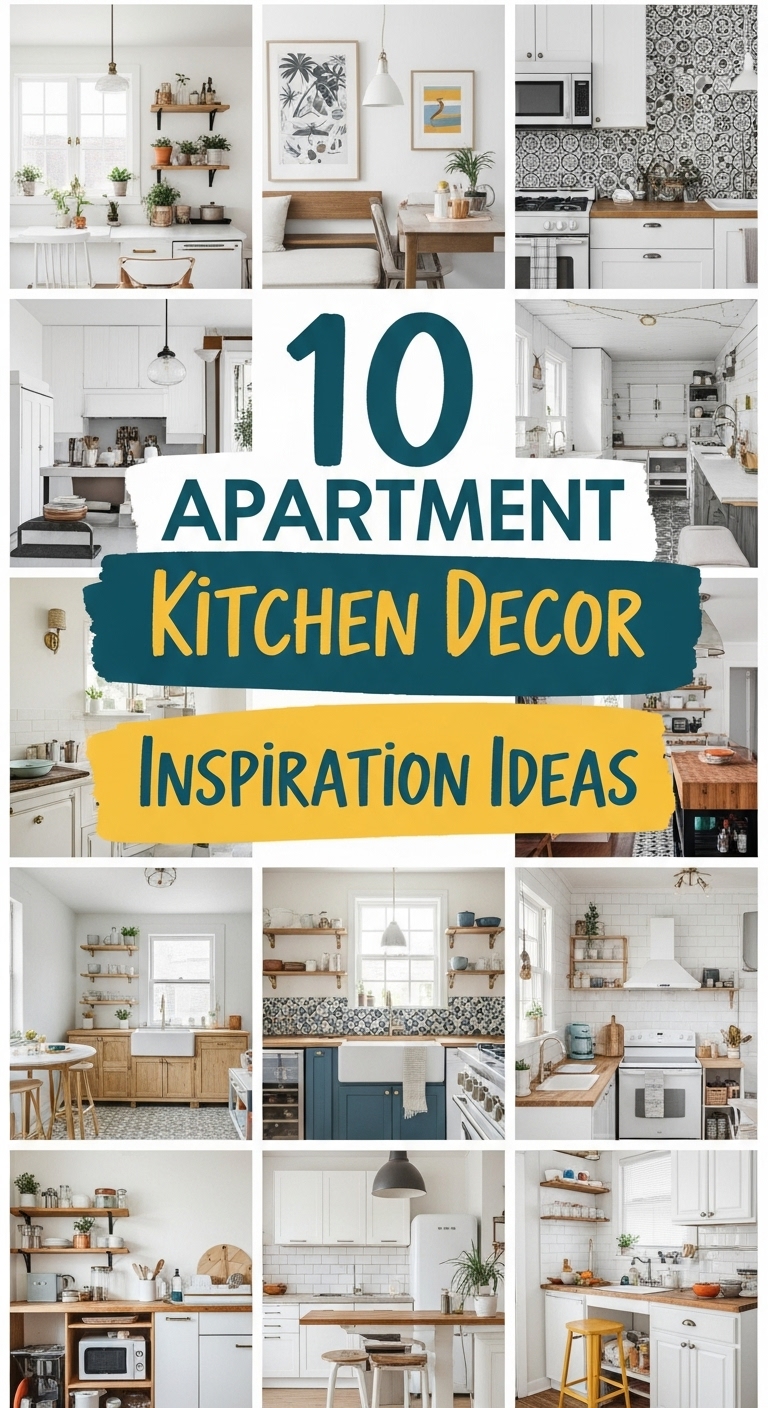
My apartment kitchen is exactly nine square metres, and for the first year I lived here I just accepted it as a corridor with a stove. Then I spent one rainy October weekend really looking at it — every dead corner, every cupboard I could never find anything in — and realised it wasn’t small, it was just neglected. These are the ten approaches I actually tried, lived with, or helped friends pull off in rental kitchens across Munich, with the measurements, mistakes and costs that came with them.

1. Minimalist Modern Kitchen

I went through a phase of clearing my counters completely, inspired by those spotless German kitchen showrooms, and I have to admit the room felt twice as big within an hour. The real work was finding homes for everything I used to leave out: the knives went on a 45 cm magnetic strip inside the upper cabinet door, the oils and vinegars onto a single small tray so they read as one tidy group instead of clutter, and the toaster moved into the lower cupboard because honestly it comes out twice a week. I learned the hard way that minimalism only works if the hidden storage is actually logical — my first attempt had everything crammed so badly I spent more time hunting than I ever did wiping counters. What worked for me in the end was the one-touch rule: anything I use daily gets a permanent spot within arm’s reach of where I use it, everything else lives behind a door. Chrome and brushed-steel details already come with most rental kitchens, so lean into them instead of fighting them, and keep a microfibre cloth in the drawer for the fingerprints that show up on every dark surface.
2. Cozy Rustic Kitchen

My sister’s place has this warm farmhouse-style kitchen that makes you want to sit down with tea immediately, and when I borrowed pieces of it for mine I understood why: wood tones forgive everything. I swapped my plastic fruit bowl for a wooden one I found at a flea market for four euros, put my utensils in a heavy ceramic jug instead of the plastic holder, and added a small runner rug (120 x 50 cm, washable cotton) in front of the sink, which sounds trivial but changed how the room felt underfoot. The mistake I made was going too far at first — a kitchen full of baskets and jars with nothing to cook with is a pantry cosplaying as decor. What worked was the 80/20 split: eighty percent functional tools that happen to be beautiful, twenty percent purely decorative, like the little enamel sign I hung next to the window. Warm honey and terracotta tones on textiles — oven mitts, tea towels, a single curtain panel — gave the whole space a glow without touching a wall I wasn’t allowed to paint.
3. Scandinavian-Inspired Kitchen

Living in Germany, I’ve absorbed enough Scandinavian design through osmosis to know its real secret: it’s not about buying pale furniture, it’s about light discipline. My kitchen faces north-east, so I started by maximising what little daylight I got — I took down the fussy roller blind that had come with the flat and replaced it with a simple white sheer, which cost me eleven euros and added what felt like an extra hour of brightness each morning. Then I decanted everything into matching glass jars, and I know that sounds like influencer nonsense, but there is a genuine visual logic to it: uniform containers read as calm, mismatched packaging reads as noise. My one big tip is restraint with the pale wood: a single light-wood tray or cutting board gives the Scandi warmth, but three or four and your rental kitchen starts to look like a display at a furniture store. I keep one soft blue tea towel and one sage one on rotation, and that’s my entire colour accent — the room stays bright and airy instead of decorated.
4. Industrial Chic Kitchen

A friend of mine rents a converted loft in the east of Munich with actual exposed brick, and helping her style the kitchen taught me that industrial style is really about honest materials doing double duty. I couldn’t replicate her brick, but I brought the same idea into my flat with black metal shelving brackets and pale pine boards — two shelves, each 80 x 25 cm, mounted with heavy-duty plasterboard anchors because rental walls are merciless. The trick was mixing: I put my everyday cast-iron pan on display (it hangs from a 30 cm S-hook rail by the stove), paired it with the wooden boards, and suddenly the stainless-steel fridge my landlord installed looked intentional instead of institutional. One caution from her experience and mine: raw concrete-look surfaces photograph beautifully and collect every speck of flour in real life, so I kept concrete to exactly one small item — a soap dish — and let wood and metal do the heavy lifting. Under-cabinet LED strips at 3000K warm white made the whole arrangement glow in the evenings.
5. Small Apartment Space Optimization

This is the section I could write a whole book about, because nine square metres forces you to be brutally honest about every centimetre. The single best change I made was a 60 cm wide wall-mounted rail above the counter with hooks for ladles, tongs and my apron — it freed an entire drawer that had been jammed with tangled utensils, and everything is visible now instead of buried. I also invested in a foldable wall table, 70 x 50 cm, that drops down when I need extra prep space or a breakfast spot and folds flat against the wall the rest of the day; it was around sixty euros and worth every cent. Vertical space is your biggest unclaimed territory in a small kitchen: I put a narrow spice rack on the inside of a cabinet door and stacked my baking trays vertically with a simple organiser instead of nesting them. My mistake era was buying gadgets first and storage later — now I won’t buy anything new until I’ve decided exactly where it will live, measured with a tape, twice.
6. Bold Color Statement Kitchen

I was nervous about bold colour in a rental because my walls have to go back to white someday, so I treated colour like jewellery instead of clothing: removable and concentrated. It started with a deep green apron and a matching kettle, and the difference was ridiculous — one strong colour against my beige cabinets made the whole room feel designed instead of default. For a friend’s flat I went further with adhesive vinyl in a dark emerald on the kick plates under the lower cabinets, which peeled off cleanly when she moved out eighteen months later. The rule I live by now: one bold anchor (a coloured appliance, painted stools, a single vivid blind), everything else neutral, and the colour appears at least twice in small doses so it looks deliberate — my green kettle plus two green tea towels, for instance. Warm-toned bulbs help enormously here; bold colours under cold blue-white light look clinical, while 2700K warmth makes them rich and inviting.
7. Modern Farmhouse Kitchen

When my parents visited from the countryside, my mother looked at my kitchen and said it needed “something warm,” which I initially resented and then realised was fair. I leaned into a modern farmhouse feel without the full shiplap commitment: white cotton café curtains (45 cm drop) on the window instead of the plastic blind, a wooden bread box that hides the half-finished baguettes I always forget about, and my mugs on a small open shelf where I can actually see them. The shelf was the part I deliberated over — open shelving with mismatched mugs can look messy — so I edited my mug collection down to six that roughly matched in white and cream, and boxed the rest. A vintage-style faucet wasn’t an option in a rental, but a simple swan-neck tap with a brushed finish gave me most of the look for the cost of one plumber visit. The room reads cosy and collected now, not country-themed, which is the line I was trying to walk.
8. Coastal-Inspired Kitchen

I know coastal decor has a reputation for being all anchors and rope, but the version I actually live with is much quieter: soft blues, warm whites, and one good plant. It started when I repainted nothing and changed everything by swapping my dark textiles for pale blue-grey ones — new hand towels, a lighter runner — and the kitchen suddenly felt like it had sea air in it. I keep a small herb pot of basil on the windowsill, which does triple duty as decor, cooking supply, and the one living thing in a room full of appliances, and a blue-grey ceramic bowl that holds lemons on the counter. My honest advice: skip the literal seashells unless you genuinely love them, because they date fast and collect grease near a stove. Instead, borrow the coastal palette — white, soft blue, sandy wood — and let a glass carafe, a linen towel, and clear countertops do the talking. It reads fresh and calm rather than themed, and it’s the easiest style here to achieve without buying much.
9. Open Shelving Display Kitchen

I replaced one upper cabinet with open shelves two years ago and I still have opinions about it, so here they are honestly. The good: I reach my everyday plates, glasses and cooking oils faster than I ever did behind doors, and the shelf forces a low-level tidiness on me that doors used to hide. The bad: everything on display needs wiping more often — cooking steam settles on shelf items in a way it never does inside cabinets, so I wash my display glasses weekly whether I’ve used them or not. What made it work was the styling discipline I learned after the first chaotic month: group by function and material, leave roughly a third of each shelf empty, and stack plates instead of lining up every single item. I display my six cream plates, the glass jars of pasta and rice, and two small cookbooks, and everything else lives behind closed doors. One shelf of display is charming; three shelves is a shop window, and nobody needs that much visual noise while cooking.
10. Smart and Functional Kitchen

I resisted the whole smart-kitchen trend for years because it felt like gadgets solving problems I didn’t have, and then a motion-sensor light under my upper cabinets changed my mind in about a week. It cost under twenty euros, sticks on with adhesive strips so the landlord can’t complain, and now I can see what I’m chopping after dark without fumbling for the switch with wet hands. That one win made me look at function properly: I added a pull-out organiser inside the lower cabinet (a 15 cm wide wire rack on rails), which means I can finally reach the pots at the back without unpacking the front ones every time. I skipped the smart fridge and touch faucet — both felt like solutions for a bigger budget and a bigger kitchen — but warm under-cabinet lighting on a timer, so the kitchen glows softly when I get home in winter, was genuinely worth it. My rule for tech in a small kitchen: if it doesn’t save space or save fumbling, it doesn’t earn a place on the counter.
Conclusion
None of these ideas required a renovation, a big budget, or my landlord’s permission beyond a few wall anchors — the most expensive change I made was that folding table at sixty euros, and most cost less than a week’s groceries. If I had to give one piece of advice from all of it, it would be this: live in your kitchen for a month before you change anything, notice where you actually stand and reach, and then fix the friction points first. The pretty part follows naturally once the room works.