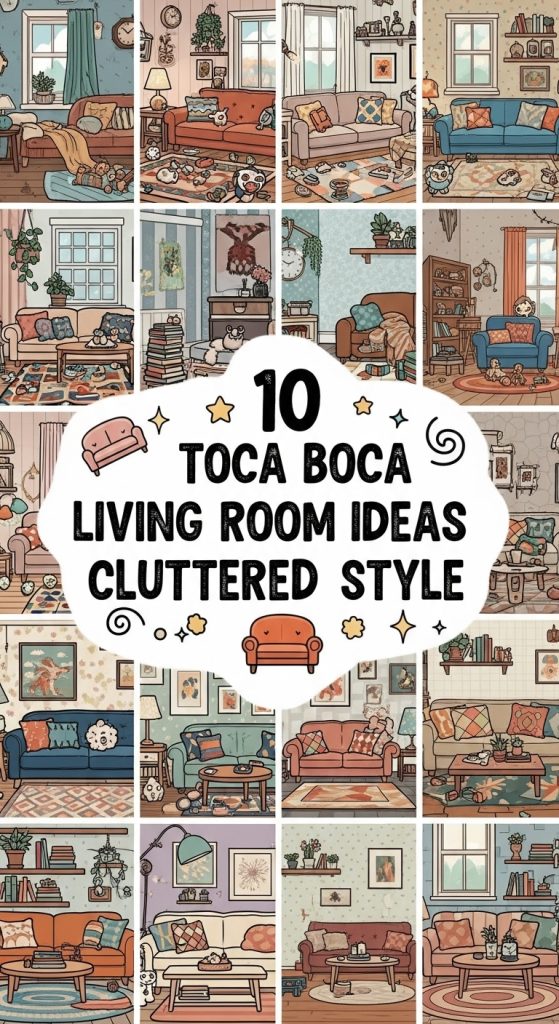
10 Toca Boca Living Room Ideas Cluttered Style
The first time my niece handed me the tablet and asked me to build a living room in Toca Boca, I did what any tidy adult would do: I lined everything up neatly, matched the cushions to the rug, and left generous empty space on every shelf. She looked at it for about three seconds, sighed, and said it looked like a waiting room. Then she took over, dragged in a second sofa, three plants, a pile of books, and a lamp shaped like a strawberry, and suddenly the room looked alive. That afternoon taught me more about this game than any guide ever could. A cluttered Toca Boca living room is not a mess you failed to clean up; it is a room that has been properly lived in, and the fun is in deciding exactly how much stuff is just enough.
4 Things Worth Knowing Before You Start
- Start with the sofa first: place the biggest piece of furniture before anything else, because every pile of cushions and books needs something solid to lean against.
- Repeat one colour three times: pick a single bright colour and use it on a rug, a cushion, and one wall decoration so the clutter reads as cheerful instead of random.
- Leave one clear path: even the busiest room needs a visible walkway for the characters, or the whole scene starts to feel cramped on screen.
- Build in layers, not all at once: add the furniture, then the textiles, then the small objects last, and pause after each layer to see what the room still needs.
1. Maximalist Color Explosion

I always start a bold room like this one by picking three colours that should not work together and then proving myself wrong. In our version, the teal wall sat next to a coral rug and a mustard armchair, and for the first five minutes I was convinced we had gone too far. Then my niece added a stack of bright cushions in pink, yellow, and blue, and the whole thing suddenly made sense, because the colours were talking to each other across the room instead of fighting in one corner. I learned to spread the loudest colours around rather than bunching them together: a yellow cushion on the sofa, a yellow book on the shelf, a yellow frame on the opposite wall. The books spilling off the shelves help too, because their spines add little stripes of colour at every height, and the patterned curtains tie the whole palette together without needing to match anything exactly. When a room has this much colour, I keep the shapes simple and let the colours do the talking, and I always step back after adding each new item to check whether the room still feels joyful or has tipped over into noise.
Try this: pick three clashing colours and repeat each one in at least three spots around the room, which works best in a main family living room where the characters gather for a noisy evening together.
2. Wall-to-Wall Gallery Chaos

This is the idea my niece loves most, and honestly it is the one I enjoy building with her because there are no wrong answers. We start with the biggest frame in the middle and then fill outwards with drawings, posters, stickers, and one very serious family portrait that looks completely out of place until you add three more silly things around it. I used to worry about lining the frames up neatly, but in Toca Boca a gallery wall looks better when the frames are different sizes and slightly uneven, the way a real child’s bedroom wall looks after a year of collecting. We mixed a smiling sun doodle with a cartoon fruit poster and a small landscape, and the contrast is what makes you want to look twice. One thing I do now is leave a little breathing room around the television or the main sofa, because if every inch of wall is covered, the eye has nowhere to rest. The trick that saved our version was putting the smallest stickers low on the wall, at the height where a small character would actually stick them, which made the whole room feel like someone real had decorated it. A cozy reading corner with a stack of picture books underneath the gallery gives the wall a purpose instead of just decoration, and it borrows nicely from the kind of cozy reading corner I would want in my own flat.
Where it works: a gallery wall suits the main living room wall behind the sofa, and it is perfect for a rainy afternoon build when the kids want to hang up every drawing they have ever made.
3. Toy-Centric Living Chaos

In a real living room I am always tidying toys away, so there is something wonderfully freeing about a game room where the toys are the decoration. We lined the plush animals up along the back of the sofa like a small audience, put the action figures on the middle shelf where they could be seen, and left a half-built LEGO creation on the coffee table exactly where a child would abandon it mid-game. I noticed that the room looked much better once we stopped trying to organise the toys by type and just let them pile up the way they do in real life: a puzzle box leaning against a toy bin, a ball tucked behind a cushion, a favourite doll sitting in the armchair as if she owned it. The shelves work best when they are full but not stacked in perfect rows, so I leave gaps and let one plush flop over sideways. My niece insisted on an oversized plush character in the corner, and she was right, because one big toy anchors the whole corner and stops the smaller ones from looking like scattered clutter. I also keep one toy bin visibly overflowing near the sofa, because that single overflowing bin tells the story of the whole room better than ten neatly labelled boxes ever could.
Budget tip: reuse the toy furniture and plush characters you already own in the game instead of buying new ones, which fits a kids’ playroom build where the budget stays small and the fun stays big.
4. Plant Jungle Madness

I am the person who forgets to water real plants, so building a jungle in Toca Boca feels like the version of plant care I can actually manage. We started with one large fern on the floor, then added smaller pots on the shelves, a hanging plant by the window, and a trailing vine across the curtain rod, and somewhere around plant number six the room stopped looking like a living room with plants and started looking like a small greenhouse that happened to have a sofa in it. That is exactly the point. I like mixing pot colours here, because bright cartoonish pots in pink, yellow, and teal keep the greenery playful instead of serious, and a big leafy plant next to a patterned cushion makes both of them look better. One thing I learned the hard way is to keep the plants off the walkway and away from the front of the television, because a plant blocking the screen is funny for about a minute and annoying after that. I also tuck a tiny succulent onto the coffee table between the books, which gives the table a bit of green without taking up the space where the snacks and games need to go. If you want the room to feel like a real home rather than a game level, a leafy cottagecore living room corner with plants and soft textiles is a good reference for how much green feels welcoming.
Good to know: place the tallest plant in a back corner first and work forwards with smaller pots, which suits a bright living room by a big window where the characters spend lazy mornings.
5. Pillow & Blanket Mountain

There is no such thing as too many cushions in this game, and I say that as someone who has tried to find the limit and failed. We piled striped cushions against floral ones, draped a checked blanket over the arm of the sofa, and folded another one over the back of the chair, and the room instantly looked softer and more inviting than any tidy arrangement I had built before. My favourite detail is a star-shaped pillow my niece placed right in the middle, slightly squashed under a bigger cushion, because it looks like someone actually sat there and forgot to fluff it back up. I try to mix sizes on purpose: two large cushions at the ends of the sofa, a row of medium ones in the middle, and one small round cushion tucked into a corner. The blankets matter just as much as the pillows, so I let one hang down to the floor and fold another into a loose roll on the seat, which reads as comfortable rather than careless. When the pile starts to hide the sofa completely, I pull one cushion away and put it on the floor as a seat for a character, which keeps the mountain looking intentional. This is the room I build when I want the characters to look like they are settling in for a film night, not posing for a photo.
Make it yours: mix one pattern you love with one plain cushion in the same colour family, which works beautifully for a family movie night setup where everyone grabs their favourite spot.
6. Bookshelf Overload

Every home I have ever lived in has had a bookshelf that quietly got out of control, so this idea feels very personal to me. We filled the shelves with books stacked upright, then sideways, then in small leaning piles, and tucked comic books, notebooks, and a few random trinkets into whatever gaps were left. I like adding one shelf that is almost empty except for a single tall book and a small plant, because that one calm shelf makes the crowded ones look deliberate instead of accidental. The animal-shaped bookends were my niece’s idea, and they do more work than I expected: they hold up a leaning row of books and add a bit of humour at the same time. I also let a few books spill onto the floor at the base of the shelf, with one open face-down as if someone was reading it and got distracted, which is exactly how books end up in my own flat. If you look closely at our version, the tallest books are on the bottom shelf and the smallest ones are up high, which keeps the whole unit from feeling top-heavy. A bookshelf like this one turns a plain wall into a story about who lives in the room, and I always spend the longest time on it because it is the detail visitors notice first.
Beginner tip: fill the bottom shelf completely before moving upwards, so the unit looks stable, which is ideal for a first build where you are still learning how much the shelves can hold.
7. Snack and Game Chaos

If the bookshelf tells you who lives in the room, the coffee table tells you what they were doing five minutes ago, and in our house the answer is usually snacks and a board game. We set the table with a bowl of popcorn, two colourful mugs, a half-finished puzzle, and a scattering of dice, and I deliberately left one corner of the table empty so a character could actually sit down and join in. The trick with a table like this is to group things in small clusters instead of spreading them evenly: the snacks together on one side, the game pieces together in the middle, and a small stack of cards leaning against a mug. My niece added a cartoon pizza box and an oversized candy jar, and while I would never put those on my real coffee table, in the game they make the whole scene look like a party is about to start. I also learned to keep the tallest items at the back of the table so they do not block the view of the characters sitting behind it. When we play with this room, the characters always end up gathered around the table, and that is how I know the clutter is working: it pulls people into the middle of the room instead of pushing them to the edges.
Watch out: do not cover the whole tabletop, because the characters need a clear spot to set things down, which matters most during a game night scene where everyone is reaching for snacks at once.
8. Mismatched Furniture Madness

This is the idea that finally cured me of trying to buy matching furniture sets in the game. We put a plaid armchair next to a polka-dot sofa, added a neon beanbag in the corner, and chose a side table that matched nothing at all, and the room looked more interesting than any coordinated set I had built before. I think the reason it works is that each piece has its own personality, the way furniture does in a real home that has been collected over years rather than bought in one afternoon. I do keep one thing consistent to stop it from falling apart: the wood tones. Most of our pieces have warm wooden legs or frames, even when the fabrics are completely different, and that quiet similarity holds the whole mix together. The beanbag is the piece my niece always claims first, so I place it near the television but slightly turned towards the sofa, so the character sitting there is part of the group instead of off on their own. I also like putting a small rug under just the armchair, which gives that corner its own little zone inside the bigger room. If you are nervous about mixing patterns, start with two pieces that share one colour and add the wild card third, and you will be surprised how quickly it starts to feel right. A room like this borrows its confidence from real homes, where the best wall art in the living room often sits above furniture that was never meant to match.
Try this: pair one patterned sofa with one plain armchair in a colour pulled from the sofa, which fits a shared family living room where every seat belongs to a different person.
9. Quirky Lighting Everywhere

Lighting is the part I used to forget completely, and now it is the part I add first when I want a room to feel warm. We strung fairy lights around the window, put a lava lamp on the shelf, hung a small neon sign on the wall, and placed two table lamps in completely different styles on opposite ends of the room. None of them match, and that is the point: each light creates its own little pool of warmth, so the room feels lit from everywhere at once instead of from one ceiling light in the middle. My favourite is a star-shaped lamp my niece tucked behind the sofa cushions, because it glows through the gap and makes the whole sofa look like it is smiling. I learned to keep the brightest light near the reading chair and the softest lights near the television, so the characters can read in one corner and watch something in the other without either side feeling wrong. The fairy lights do a surprising amount of work for such a small item, especially when they follow the shape of the window frame, because they outline the room and make the clutter behind them look intentional. At the end of a build, I always add one more small lamp somewhere unexpected, like on top of the bookshelf, and that last light is usually the one that makes the room feel finished.
Good to know: mix one warm lamp with one colourful novelty light per corner, which is perfect for an evening scene where the characters are winding down after a busy day in the game.
10. Floor Clutter Chaos

I will admit this idea made me nervous at first, because in real life I trip over things left on the floor, and my instinct is to clear it all away. In Toca Boca, though, a bit of floor clutter is what makes the room feel occupied, so we layered two rugs on top of each other, slightly off-centre, and let the top one curl up at one corner. Then we added a basket of art supplies by the sofa, a pair of shoes tucked underneath it, and a small pile of magazines next to the armchair, and the floor stopped looking empty and started looking used. The oversized floor cushions were the finishing touch: one bright round cushion near the rug and one long cushion leaning against the sofa, both placed where a character could actually sit on the floor and join a game. I am careful about one thing here, and it is the same rule from the tip block: I always leave a clear path from the door to the sofa, because a room the characters cannot walk through stops being fun to play in. Once that path is clear, the rest of the floor can be as busy as you like. This is the room I think of when someone says cluttered, because it shows that a lived-in floor is not a mistake but a sign that people actually spend time there.
Where it works: floor clutter suits a relaxed playroom-style living room best, especially for a weekend scene where the characters have spread their games out and nobody is in a hurry to tidy up.
Conclusion
Building these rooms with my niece reminded me that a cluttered living room in Toca Boca is really a portrait of the people who use it, with all their books, toys, plants, and half-finished games left exactly where they dropped them. I still tidy my real flat every Sunday, but in the game I have learned to leave the cushions squashed and the shelves full, because that is when the room starts to feel like home. Pick one idea from this list, build it slowly, and stop when the room makes you smile — that is usually the moment it is done.