10 Curtains Bedroom Ideas
Our bedroom window faces a busy Munich street, and for two years I lived with a pair of thin roller blinds that let the streetlight in all night. I woke up at every passing car, and the room always looked unfinished, as if I had moved in last week and never quite settled. Last spring I finally took the curtains seriously and tried ten different styles across our bedroom and the guest room over a few months. What follows is what actually worked in a real flat with real light and a real budget.
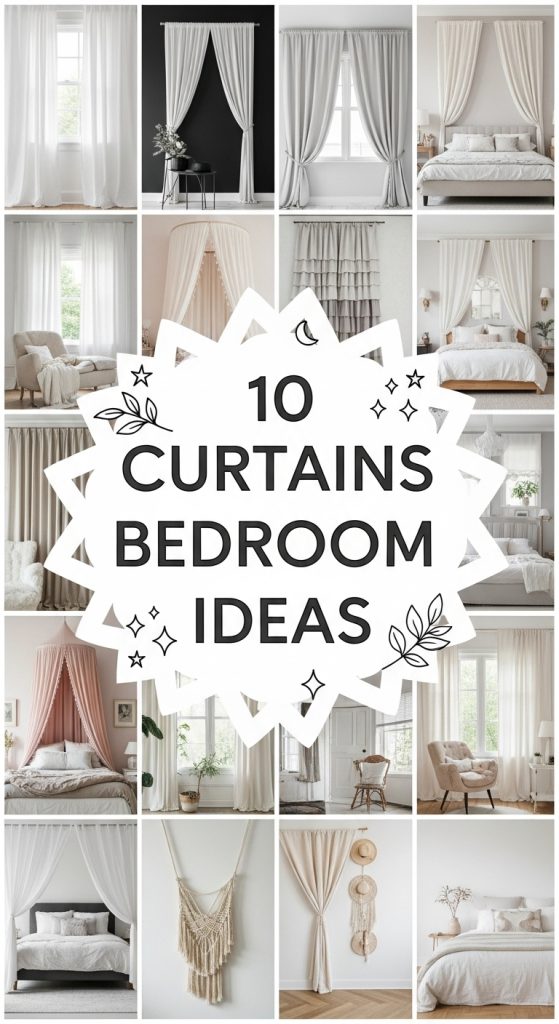
Three Things I Check Before Buying Bedroom Curtains
- Measure the drop twice: I measure from the rod to the floor in three places, because old Munich floors are never level.
- Hold the fabric up at night: A fabric that looks opaque in a shop can glow like a lampshade once the streetlight hits it, so I always test a swatch against the window after dark.
- Read the wash label first: Bedroom curtains collect dust fast, and if a panel needs dry cleaning I know I will leave it hanging for a year, so machine-washable wins in my house.
1. Sheer White Curtains for an Airy Ambience
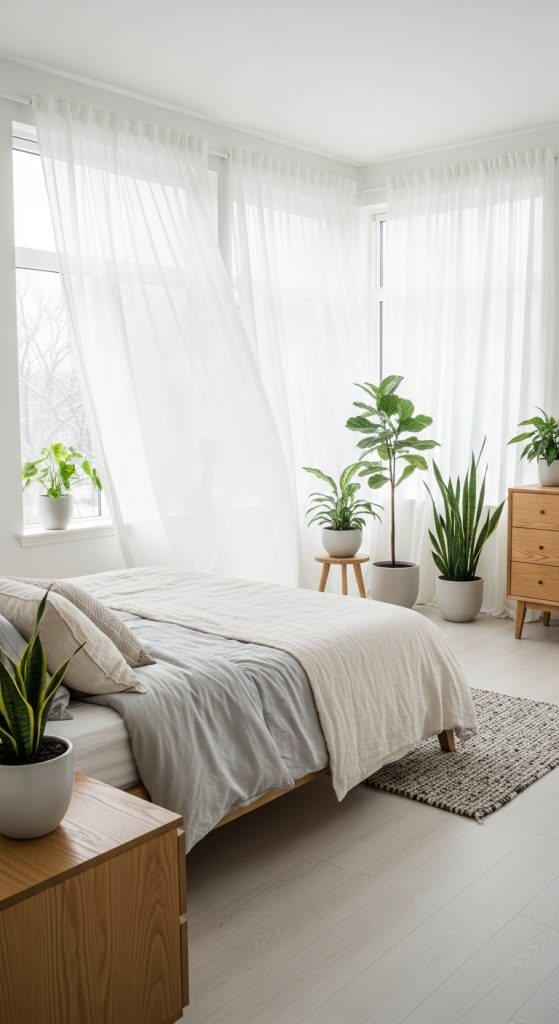
I hung sheer white voile panels in our bedroom first, because I wanted the morning light without feeling watched from the street below. I chose a simple white voile at about 18 euros a panel, hung it on a slim black rod, and the change was immediate: the room felt softer, the hard edges of the window frame disappeared, and the light that came through turned warm and diffused instead of sharp. I left the panels long enough to just brush the floor, which makes the whole window look finished. In the morning the sheers glow gently, and by evening they give just enough cover that I can change clothes without thinking about the neighbours across the courtyard.
The honest catch is privacy after dark. Once the lamps are on, sheer curtains show silhouettes, so I keep a plain roller blind behind them and pull it down at night. That pairing costs little and solves the one real weakness of sheers. I wash the panels every six weeks on a gentle cycle and hang them straight back up while still damp, which pulls most of the creases out without an iron. They suit a bright bedroom with pale walls and light wood best, and they are lovely in spring and summer with the windows open.
Watch out: Never hang sheers alone on a street-facing window; pair them with a blind or a lining, and test them with the lights on before you commit. They work best in bright bedrooms and in spring and summer, when the windows stay open and the fabric can move.
2. Velvet Curtains for a Luxurious Feel
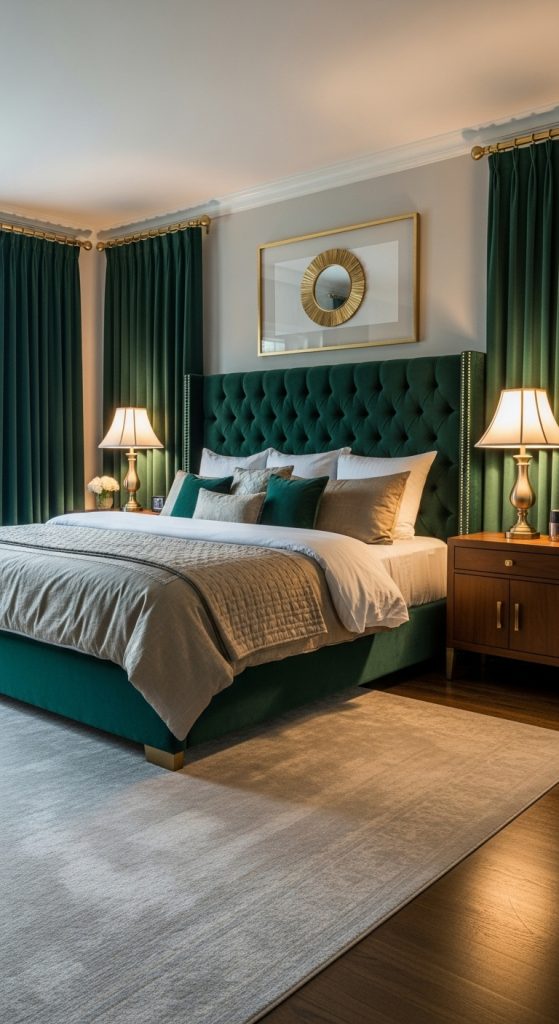
I bought deep emerald velvet panels for the guest room in November, when Munich turns grey and the flat needs all the warmth it can get. The fabric cost about 45 euros a panel, which felt like a lot until I hung them and saw how the pile catches the lamplight and makes the whole wall look richer. Velvet also does real work: it blocks draughts from our old window frames and muffles street noise more than any other fabric I tried. I hung them on a sturdy wooden rod with brass rings, because velvet is heavy and a flimsy rod will bow within a month.
Velvet needs balance, because too much of it can make a small room feel like a theatre set. I kept the walls pale, the bedding plain white, and let the curtains carry all the colour. Velvet also pairs beautifully with a mid-century modern bedroom, where the clean furniture lines stop the fabric from feeling old-fashioned. I vacuum the panels twice a month, since velvet shows dust, and steam them once a season instead of washing them. This is a winter look, at its best from October to March, when the heavy fabric warms the room before the heating comes on.
Make it yours: Add brass tiebacks or a simple tassel to pull velvet panels back during the day, which shows off the window light and stops the room from feeling closed in. Velvet suits a guest room or a main bedroom in the colder months, and it is especially good on a wall with high ceilings.
3. Linen Curtains for a Natural Look
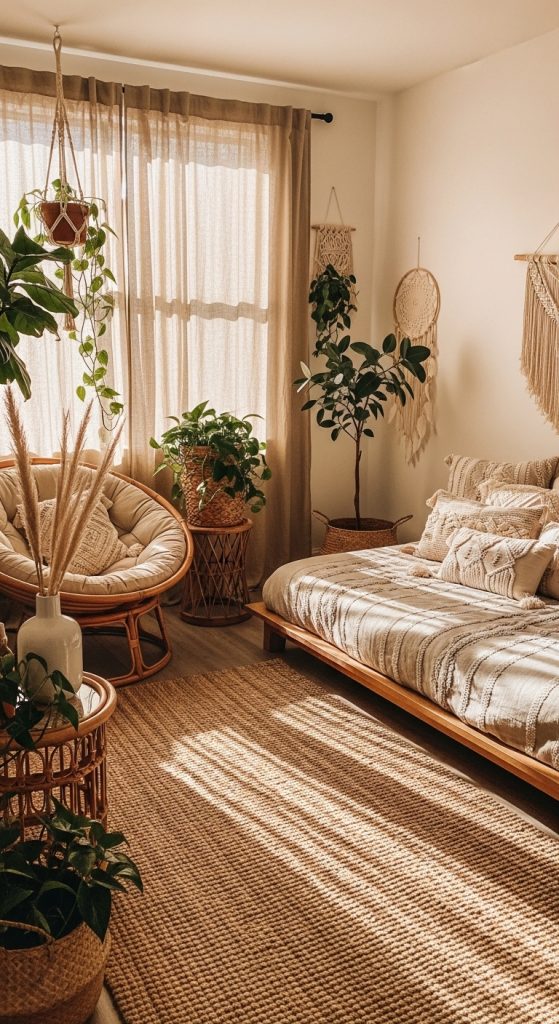
Linen is the curtain I reach for when I want a bedroom to feel calm and a little bit grown up without trying too hard. I chose sand-coloured linen panels for our bedroom, and the difference was immediate: the fabric breathes, it filters the early light into something soft, and the slight slub in the weave gives the wall texture without any pattern. I paid around 35 euros a panel and hung them on simple matte black rings, letting them fall straight to the floor with a small break at the hem. The wrinkles are part of the deal, and perfectly pressed linen looks wrong anyway.
Linen suits a bedroom full of natural materials, and in our room it sits next to a woven basket, a jute rug, and a pine bed frame, which together give the room that earthy, cosy bedroom feel I kept coming back to while I was redecorating. I wash them on a cool gentle cycle and hang them damp to dry. They are not blackout curtains, so I would not choose them for a room that faces a streetlight, but for a quiet courtyard window they are ideal. This is an all-year fabric for me, though I love it most in spring, when the pale light and the linen seem made for each other.
Good to know: Buy linen a little longer than you think you need, because it shrinks a few centimetres on the first wash, and hang it damp to keep the creases soft. Linen works in a calm main bedroom or a guest room in any season, and it suits a Scandinavian or coastal style best.
4. Blackout Curtains for Deep Sleep
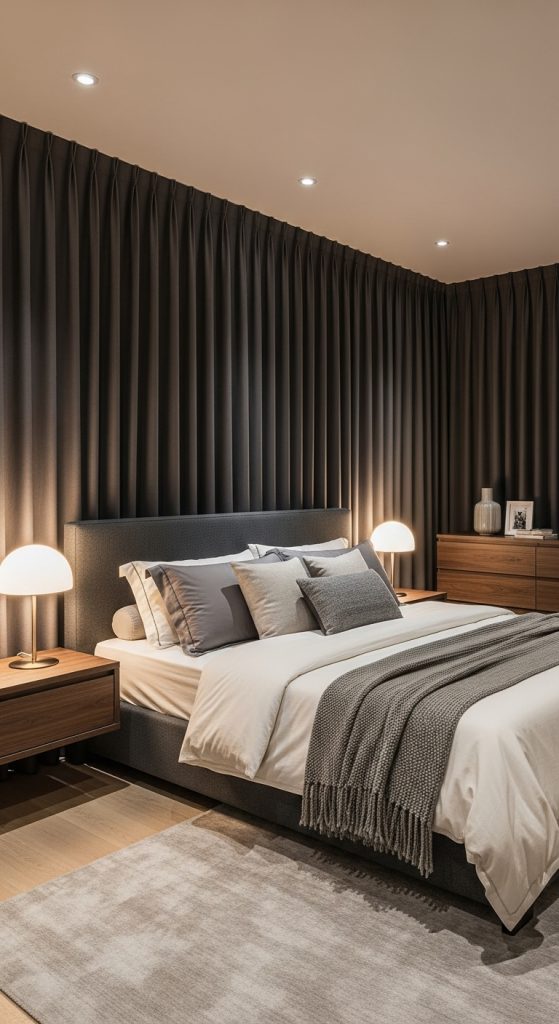
I resisted blackout curtains for years because I assumed they all looked like hotel curtains, stiff and grey and joyless. Then a summer of bright Munich mornings woke me at five every day, and I gave in. I bought matte charcoal blackout panels with a simple eyelet top for about 30 euros each, and the first night I slept through until my alarm, which had not happened in weeks. It blocks the streetlight completely and cuts the traffic noise down to a low hum. I hung them close to the wall on a wraparound rod so there is almost no light leaking in at the edges, which matters more than the fabric itself.
The mistake I made at first was buying blackout panels in a colour that fought with everything else in the room, a shiny navy that looked cheap in daylight. I swapped them for a soft taupe and suddenly the room looked calm again. I layer them too: a sheer panel on a second rod inside the blackout layer gives soft daylight by day and real darkness at night. They wash well on a gentle cycle but take a while to dry, so I wash one panel at a time. This is the right choice for anyone who sleeps lightly, works shifts, or has a bedroom facing east, and it earns its keep all year round.
Beginner tip: Hang blackout curtains on a wraparound rod or add a simple pelmet, because light leaking in at the sides undoes all the good work of the fabric. Blackout curtains suit a light sleeper’s bedroom, a nursery, or any east-facing room, and they are worth it in every season.
5. Floral Print Curtains for a Romantic Touch
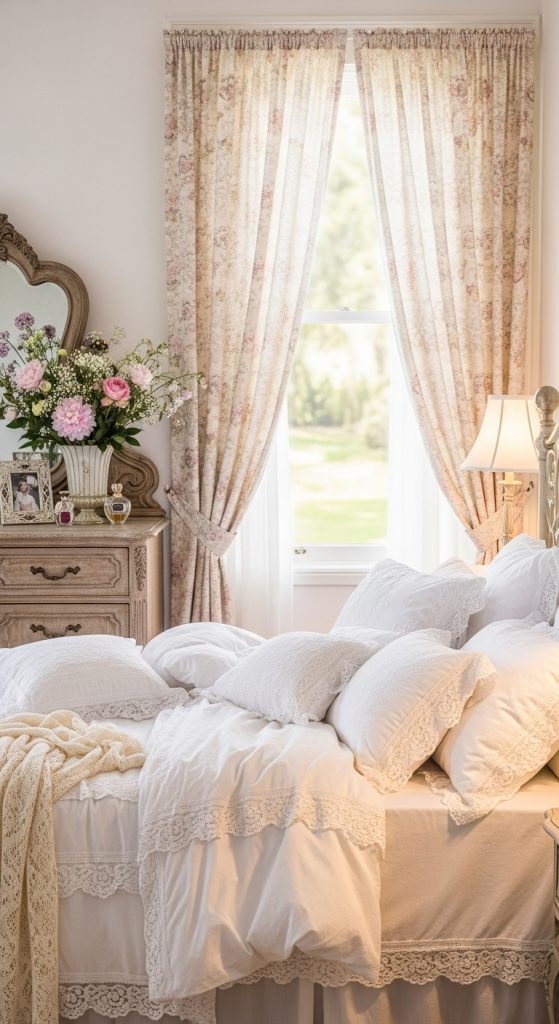
I was nervous about floral curtains, because the wrong print can make a bedroom look like a guesthouse from 1998. I found a small pastel floral on a cream ground, with soft roses and green leaves, and hung it in the guest room against plain white walls to test it. It worked better than I expected: the print gave the room a focal point, the bedding could stay plain, and the whole space felt warmer and more welcoming without any other decoration. At 28 euros a panel, the cotton washes well and irons easily, which matters for a pattern that shows every crease.
The rule I follow now is to let the curtain print be the only pattern in the room. I kept the bedding white and the rug plain, and added a single vase of fresh flowers to echo the print without competing with it. A large bold floral can work too, but only if the rest of the room stays very quiet. Small florals suit a cottage-style bedroom or a guest room, and they are at their prettiest in spring and early summer, when the real flowers outside match the ones on the fabric.
Try this: If you love a bold floral but fear it will overwhelm the room, use it on one window only and keep the second window plain, which gives you the drama without the clutter. Floral curtains suit a cottage-style bedroom or a guest room, and they shine in spring and early summer.
6. Layered Curtains for a Designer Look
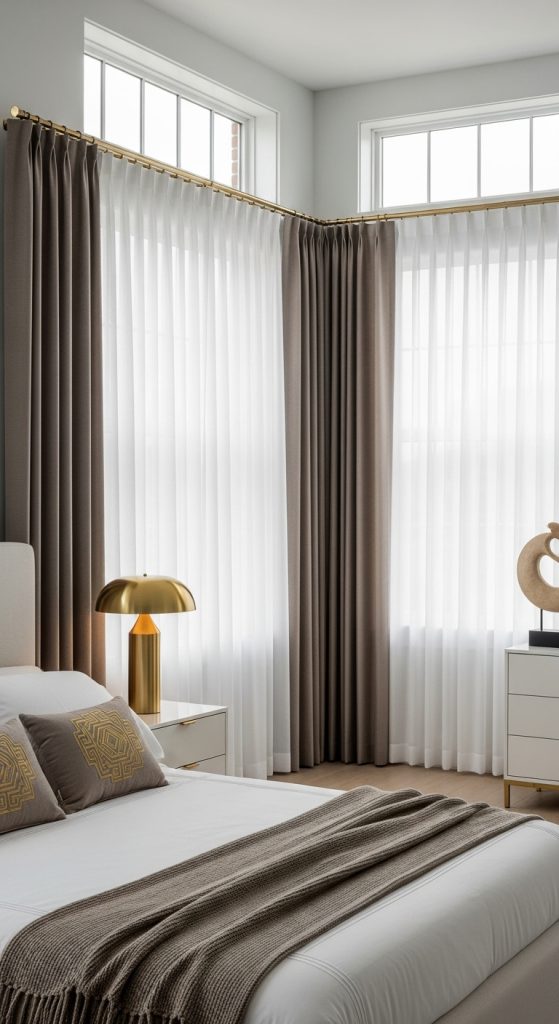
Layering curtains is the closest I have come to a designer look without hiring one. I put a slim sheer panel on an inner rod and a heavier linen-look drape on an outer rod, and suddenly I had three ways to dress the same window: sheers alone for soft daylight, drapes alone for the evening, and both together when I wanted the room to feel dressed up. The whole setup cost under 90 euros, including the double rod, which is far less than I expected for the effect it gives. I chose beige sheers with taupe drapes, a quiet combination that works with almost any bedding.
The part that takes practice is getting the two layers to hang well together. The sheer needs to be slightly shorter than the drape, or the hem peeks out, and the rods need enough distance between them that the fabrics do not bunch. I iron the sheers before hanging, because creases in a sheer catch the light. Layered curtains suit a main bedroom where you want flexibility, and they are lovely in autumn and winter, when the heavier outer layer makes the room feel warmer and more private in the evenings.
Budget tip: Use an affordable sheer on the inner rod and spend your money on the outer drape, since the sheer is mostly there for light and privacy and nobody inspects it closely. Layered curtains suit a main bedroom in any season, and they are at their best in autumn and winter evenings.
7. Bohemian Patterned Curtains
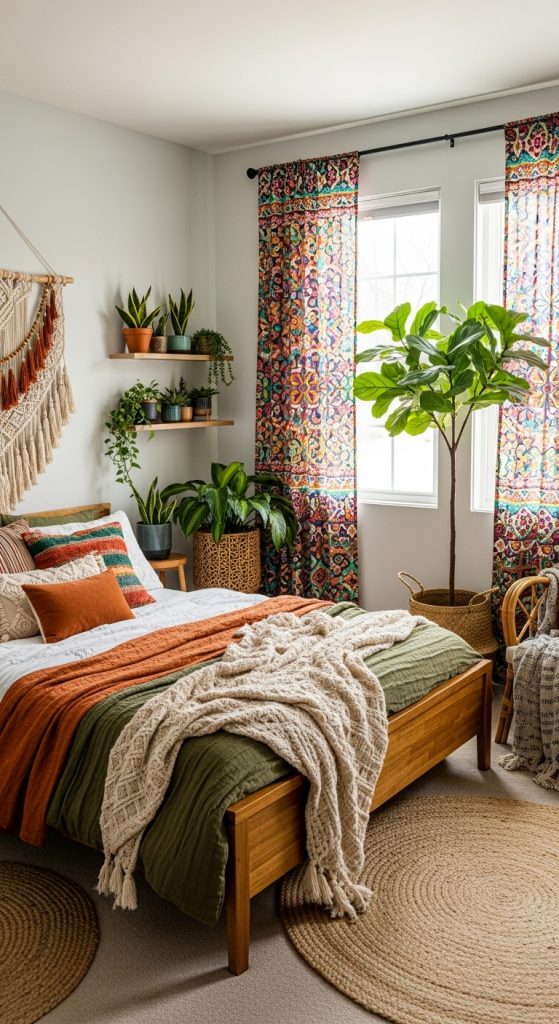
Bohemian curtains are the most forgiving style I tried, because they are supposed to look a little bit undone. I chose a cotton panel in warm terracotta with a faded block print, hung it on a simple wooden rod, and paired it with a macramé wall hanging and a woven basket by the bed. The room instantly felt more relaxed, and I stopped worrying about perfect pleats, which is a relief in a house where the iron lives at the back of a cupboard. At 22 euros a panel it was the cheapest in this project, and it washes easily and dries quickly.
The colours matter more than the pattern here. I built the room around a terracotta colour palette that pulls the whole room together, with mustard cushions, an olive throw, and plain cream bedding so the curtain print has room to breathe. Too many patterns in one small room will fight each other, so I kept the rug plain and let the curtain be the star. A patterned curtain behind the bed can even work as a backdrop, though I prefer it on the window. This is a lovely choice for a creative bedroom or a guest room, and it feels right in late summer and autumn, when the warm earthy colours match the season outside.
Where it works: Bohemian curtains are happiest in a relaxed bedroom, a guest room, or a reading corner with plants and woven textures, where their easy, lived-in feel fits the room. They suit late summer and autumn best, when warm earthy colours feel natural.
8. Minimalist Neutral Curtains
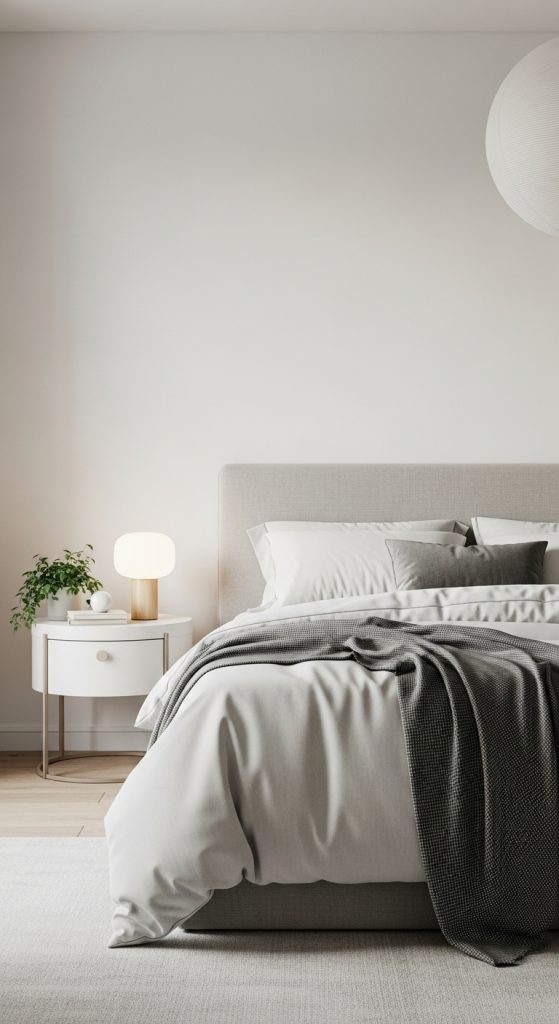
After all the patterns and colours, I gave our bedroom one window of pure calm: ivory curtains in a smooth cotton blend, hung on a slim matte rod with no tiebacks, no tassels, and no fuss. The fabric cost 25 euros a panel, and what I paid for in the end was the tailoring: clean hems, even pleats, and a length that just kisses the floor. In a minimalist room the curtain has nowhere to hide, so a wonky hem or a cheap rod shows immediately, and I measured three times before I ordered. The result is a room that feels quieter, most of all at night.
I keep the rest of the room just as simple, with white bedding and a pale grey throw, so the curtains read as part of the architecture. The fabric lets in a soft, even light, and I wash the panels every two months because pale fabric shows dust quickly. They are not the right choice if you need real darkness, since ivory lets the morning light through, but for a bedroom that faces a garden or a courtyard they are ideal. This is a year-round look, and it suits a modern bedroom or a small bedroom best, where the lack of clutter makes the room feel bigger than it is.
Try this: Spend the money you save on a plain fabric on a better rod and proper rings, because in a minimalist room the hardware is part of the look. Neutral curtains suit a modern bedroom or a small bedroom in any season, and they are ideal where you want the room to feel calm and uncluttered.
9. Two-Tone Curtains for Visual Interest
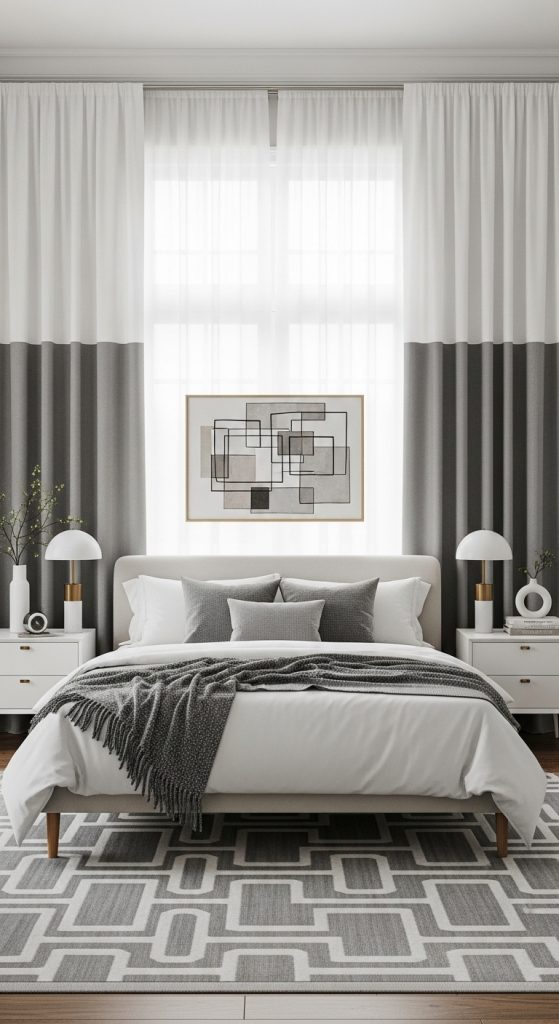
Two-tone curtains were my answer to a small bedroom that needed colour without feeling busy. I chose panels that are white on top and soft grey on the bottom, joined with a neat horizontal seam, and the effect was surprising: the pale top half keeps the room feeling light, while the darker bottom half grounds the window and hides the dust that collects near the floor. At 32 euros a panel, I hung them on a simple black rod so nothing distracts from the colour change. The seam sits just below the sill, which is where I think it looks best, high enough to feel deliberate and low enough to add real contrast.
I repeat one of the two colours somewhere else in the room, or the curtain looks like a mistake, so I used soft grey bedding and a grey cushion, which ties the whole room together without any extra effort. Two-tone panels also add height, and that helped our low-ceilinged guest room feel taller. I would avoid a very sharp contrast, like black and white, since it can feel stark in the morning; a soft pairing like beige and blush is much easier to live with. This style suits a small bedroom or a guest room, and it works well all year, especially in a room that needs a little visual lift.
Make it yours: Pick a two-tone pair that repeats a colour already in your bedding, and the whole room will look planned even though you only changed one thing. Two-tone curtains suit a small bedroom or a guest room in any season, and they are a good fix for a low ceiling.
10. Tie-Top or Eyelet Curtains for a Casual Touch
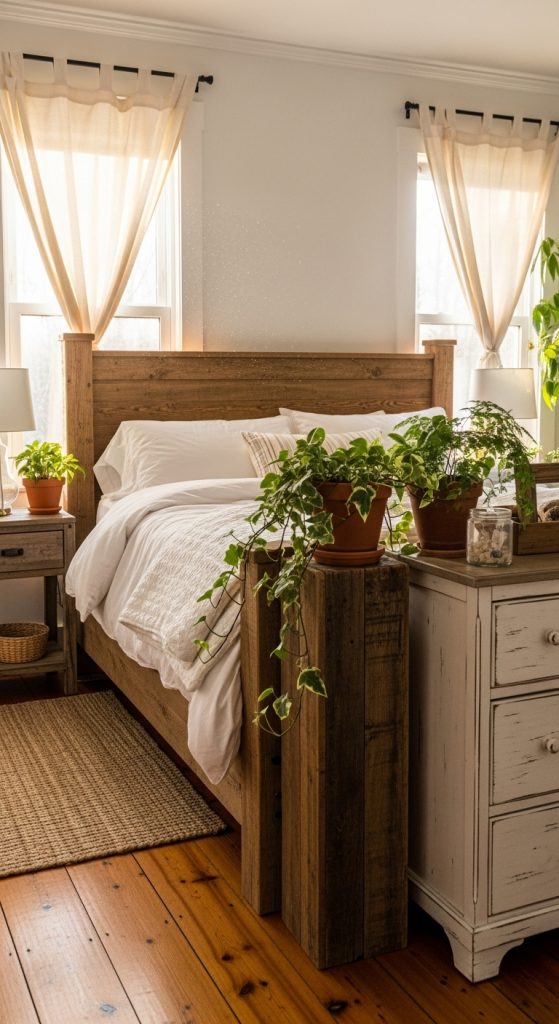
Tie-top curtains are the most relaxed style in this whole list, and I hung them in the guest room when I wanted something charming that I could also take down and wash without a fight. I chose a soft sage green cotton, tied the fabric bows loosely on a slim wooden rod, and the room immediately felt like a farmhouse bedroom, even though we live in a city flat. The ties give the window a handmade feel, and the soft folds make the whole window look gentle. Each panel cost about 20 euros, and I had them up within half an hour, which is the fastest curtain change I have ever done.
Eyelet curtains are the practical cousin of tie-tops, and I use them on the window that gets opened and closed most often, because the metal rings slide along the rod so easily. I keep the fabric light, usually cotton or linen, since heavy fabric stretches the ties and makes them sag. Both styles adjust in seconds, which makes them ideal for a room where the windows open often. They suit a rustic, farmhouse, or coastal bedroom, and they are at their best in spring and summer, when the light fabric and the open windows make the room feel easy and lived in.
Good to know: Use lightweight cotton or linen for tie-top curtains, because heavy fabric stretches the ties and the bows will sag within weeks. Tie-top and eyelet curtains suit a farmhouse or coastal bedroom, a guest room, or a child’s room, and they are lovely in spring and summer.
Conclusion
I kept a different style on each of our windows, and that is the real lesson: the right curtain is the one that fits the light, the room, and the way you actually live. I would start with one window, live with it for a month, and let the room tell you what it needs next. Our bedroom finally feels finished, and I sleep better for it, which is a better result than I expected from a pair of curtains.