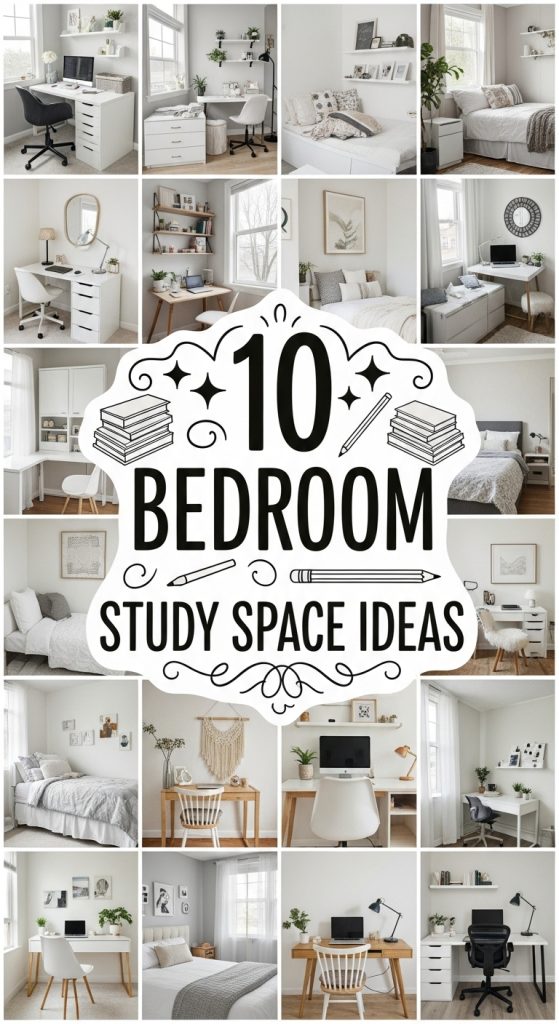
10 Bedroom Study Space Ideas
When I signed up for an evening ceramics course two years ago, I suddenly needed somewhere in my flat to actually sit and study — sketchbooks, glaze charts, a laptop full of technique videos — and my kitchen table was already doing triple duty as dining room, office, and drying rack for plates. My bedroom had one free corner, about a meter wide, next to the window, and I was convinced it was too small for anything useful. I was wrong. Over the following months I tested, rearranged, and rebuilt that corner five times, and along the way I picked up every one of these ten study-space setups from friends’ flats, my own mistakes, and one very patient carpenter. Here is what actually works when your bedroom has to be a study too.
1. Compact Desk by the Window for Natural Light
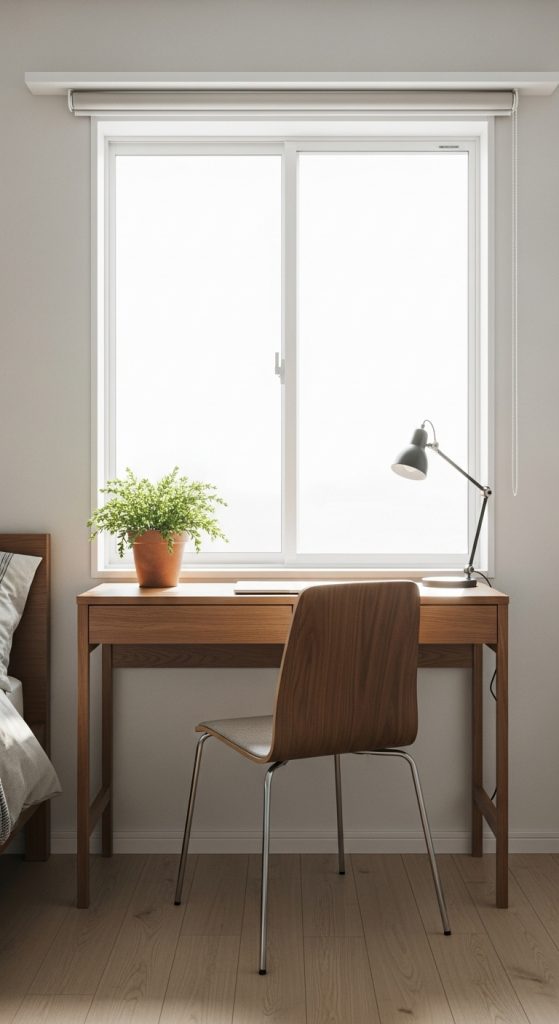
This was my first setup and honestly still my favorite, because nothing beats real daylight when you are reading or sketching. I pushed a slim 100 by 45 cm desk right up against the window — mine was a secondhand find for 40 EUR — and paired it with a chair I already owned. The morning light does half the work of keeping me awake, and I keep a small succulent and a pencil cup on the desk so it still feels like part of the bedroom rather than an office that wandered in. My one real lesson: face the desk sideways to the window, not directly into it, because I spent two weeks squinting at a backlit laptop screen before I turned the whole thing ninety degrees. If your window faces a dark courtyard like mine does in winter, a daylight desk lamp for 25 EUR fills the gap from November to February.
2. Cozy Reading Nook with a Desk and Chair Combo
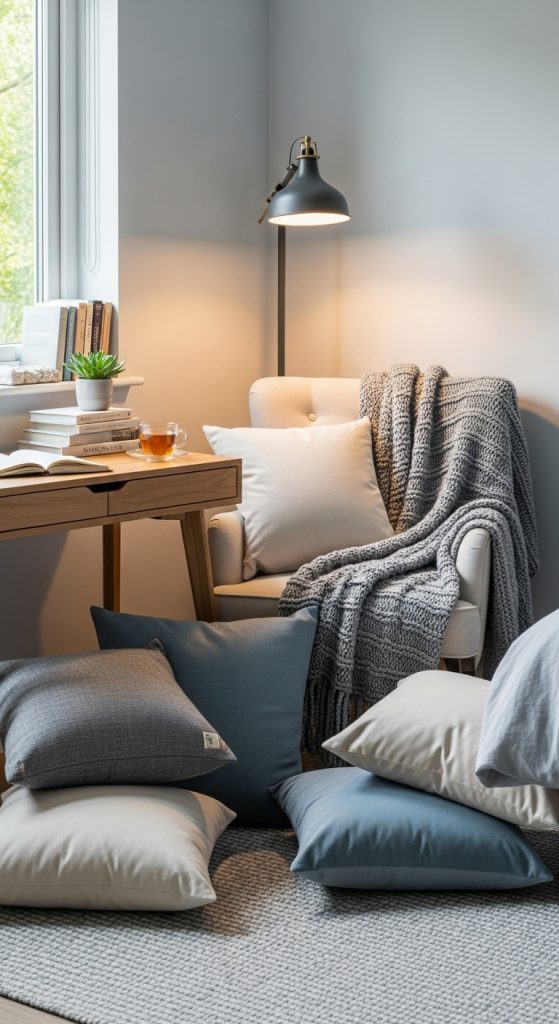
My friend Mara studies languages and swears by this setup: a small desk tucked into a corner with a genuinely comfortable armchair instead of an office chair, a soft rug underneath, and a throw blanket over the chair back. I copied it for one winter and understood the appeal immediately — when the chair is comfortable, you actually sit down to work instead of migrating to the sofa with the laptop sliding off your knees. The desk itself stays minimal: laptop, one notebook, a task lamp. Everything else lives on a small set of floating shelves above it, which cost us 18 EUR for two at the hardware store. The mistake I made first was choosing a chair that was too deep and soft; after an hour my back complained, so we swapped it for a firmer reading chair with a lumbar cushion and the problem vanished.
3. Minimalist Desk with Clean Lines and Neutral Palette
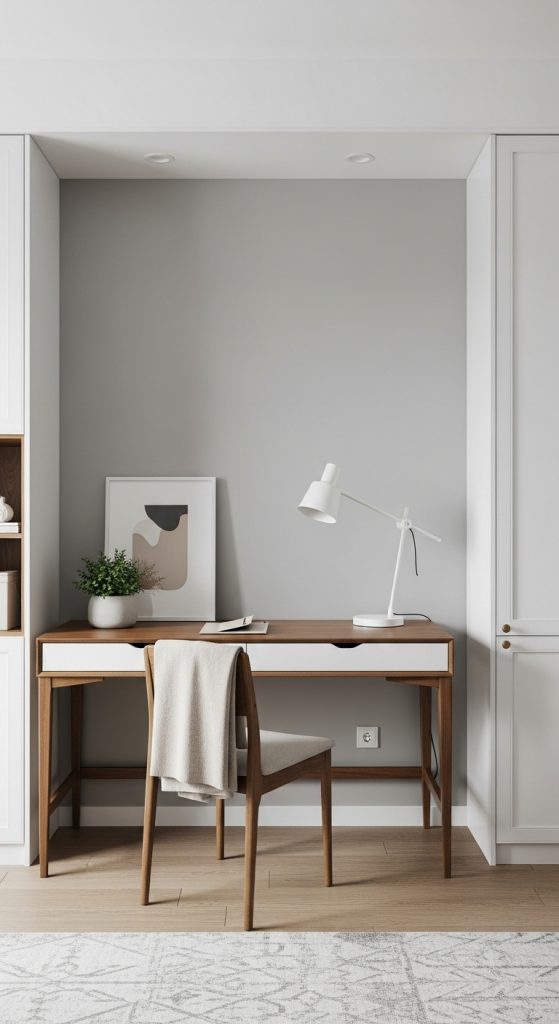
I tried the full minimalist version for three months — white desk, white walls, one lamp, one plant, nothing else on the surface — and I will admit my brain was noticeably quieter. There is something about sitting down to a completely clear desk that makes starting work feel easier; there is nowhere for your eyes to wander. My desk was a simple 120 cm white top on trestle legs, about 60 EUR new, and I kept exactly three things on it: laptop, lamp, and a small tray for pens. The discipline this taught me was the real prize — at the end of every study session I cleared the desk completely, which took two minutes and meant I never sat down to yesterday’s mess. It only failed when my ceramics course started, because glaze samples and clay tools do not fit a minimalist philosophy; for paper-and-laptop work, though, it was close to perfect.
4. Industrial-Style Study Area with Exposed Shelving
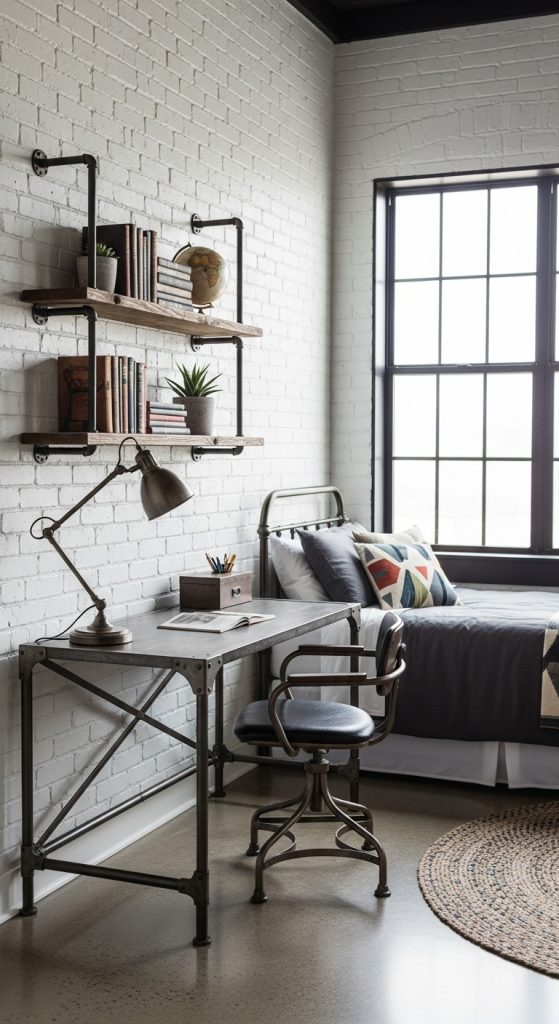
My brother has this in his Altbau bedroom and I helped him build it: a metal-frame desk with a reclaimed wood top, open shelving on black iron brackets above it, and a secondhand leather desk chair he found for 70 EUR. The shelves hold his books, a couple of plants, and all his course binders, which means the desk surface itself stays free for actual work. What I like about the industrial look for studying is that it is forgiving — scratches on the wood top, a coffee ring, a stack of papers that never quite gets filed all look intentional rather than messy. We added a string of warm Edison bulbs along the shelf for 15 EUR, and in the evenings the whole corner glows in a way that makes studying feel almost pleasant. One practical note: anchor those shelves into the wall properly, because a shelf of textbooks coming down at 2 a.m. is an experience I do not recommend.
5. Built-In Study Area Under the Stairs
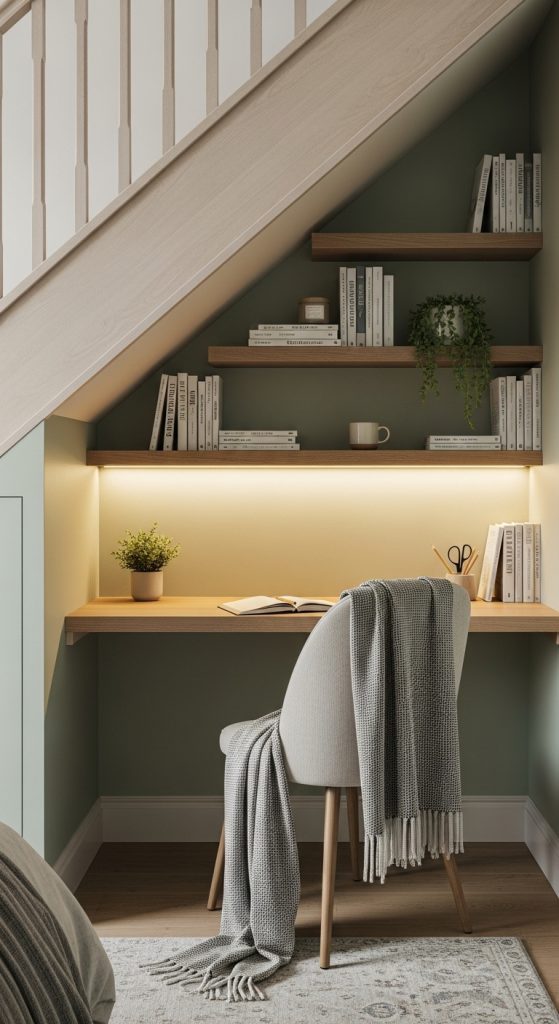
Okay, I do not have stairs in my flat, but my cousin does, and her under-stairs study nook is the cleverest use of dead space I have ever seen. Her carpenter fitted a desk into the slope — 90 cm wide at the tall end, with drawers underneath — plus two floating shelves following the angle of the stairs, all for about 350 EUR in materials and a weekend of work. A wall-mounted lamp and a chair that slides fully under the desk when she is done keep the hallway clear. The sloped ceiling sounds claustrophobic but actually works in your favor: it feels like a little cabin, and she says she concentrates better there than anywhere else in the house. If you are renting and cannot build in, the same effect comes from a narrow console desk pushed into any underused alcove — the principle is using space nobody else wants.
6. Classic Wooden Desk with Chair and Study Shelf
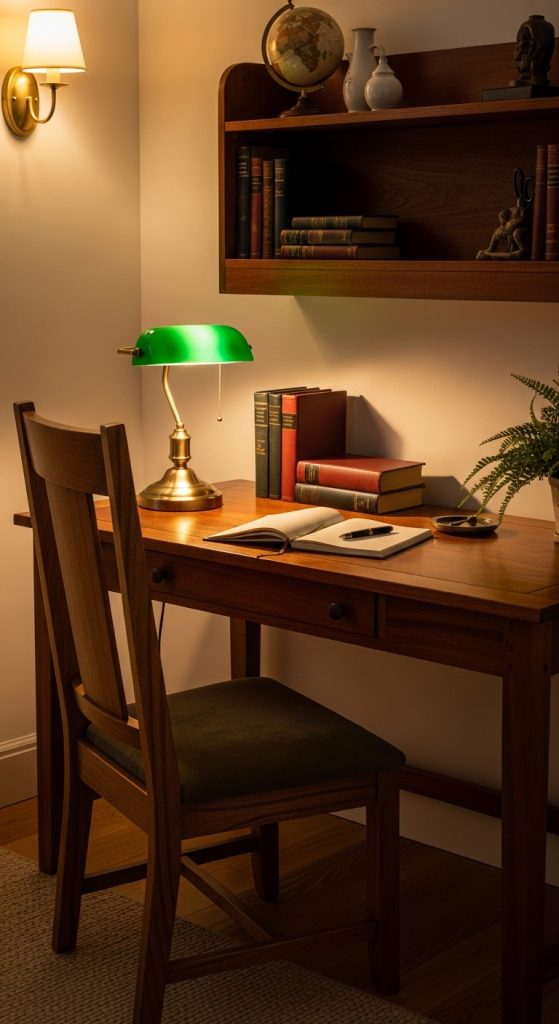
This is the setup I grew up with and the one I keep coming back to: a solid wooden desk, a matching chair, and a shelf above for books. I found my oak desk at a flea market for 85 EUR — it weighs approximately as much as a small car and will outlive me. Wood brings a warmth to the bedroom that white laminate never manages, and a desk with drawers means the chargers, notebooks, and random stationery actually have homes instead of colonizing the surface. I mounted a 100 cm shelf above it at eye level for my most-used books, which cost 12 EUR for the board and brackets. My honest advice: buy the wooden desk secondhand and spend the savings on a good chair, because you will feel a bad chair in your shoulders by day three, and no amount of beautiful oak compensates for that.
7. Boho-Chic Study Corner with a Vintage Desk
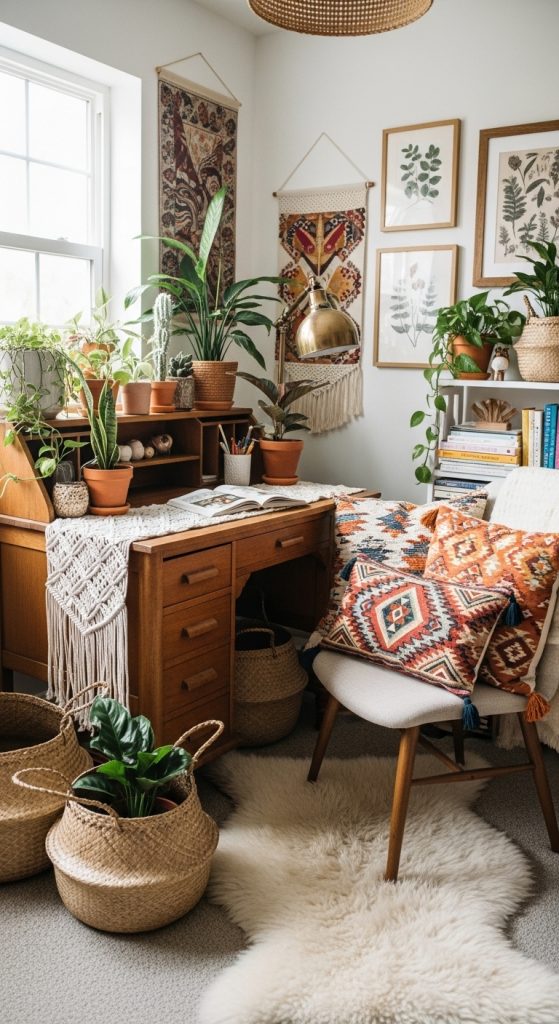
My friend Lena’s study corner looks like a film set and somehow still functions: a vintage desk with curved legs and a distressed finish, a kilim rug underneath, plants trailing from a shelf above, and a woven wall hanging she made herself. I helped her arrange it and learned that boho works for studying as long as the desk surface itself stays clear — all the personality goes on the walls, the rug, and the shelves, never on the workspace. Her desk was 60 EUR at a vintage market, the rug another 40, and the whole corner took one Saturday to put together. The plants are doing real work here, by the way: she keeps a pothos and two succulents on the shelf, and watering them has become her built-in study break ritual. My only warning is the chair — she started with a beautiful wicker one that creaked and wobbled, and replaced it with a sturdier wooden chair within a month.
8. Contemporary Glass Desk with Floating Shelves
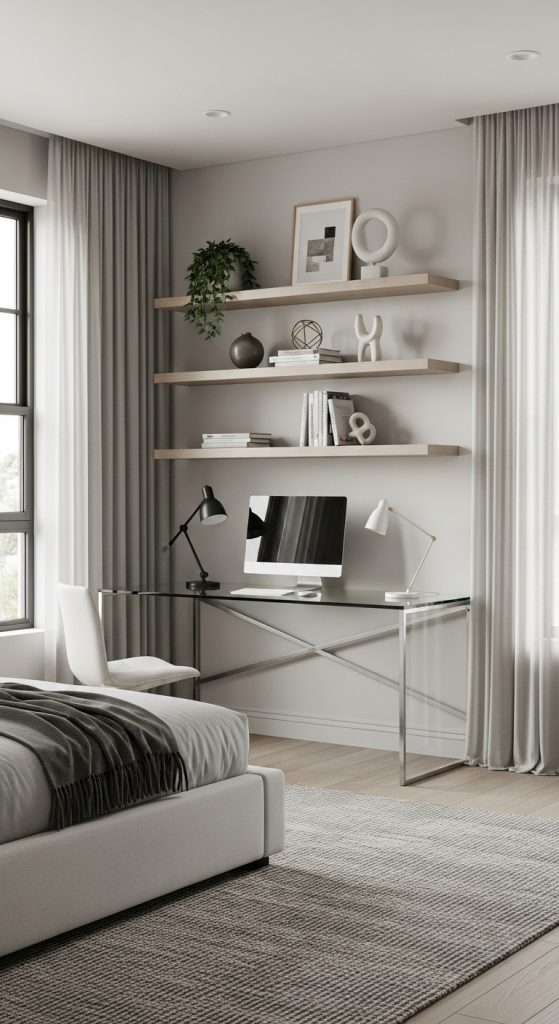
I will be honest: a glass desk was never going to survive my ceramics phase, but for my laptop-only months it was brilliant. The transparency makes a small bedroom feel bigger because your eye travels straight through to the floor, and a 110 cm glass desk takes up almost no visual space at all. Mine cost 55 EUR secondhand, and I paired it with two white floating shelves above for books and a small marble-base lamp. The discipline a glass desk enforces is real — every cable, every crumb, every coffee ring is visible, so you tidy without thinking about it. The downside I discovered: it shows fingerprints constantly, and in winter the surface is cold against your wrists until the room warms up. A desk mat solved both problems for 12 EUR. If your bedroom is tiny and light is precious, this is the least visually heavy option on the list.
9. Corner Desk with Full Wall Shelving Unit
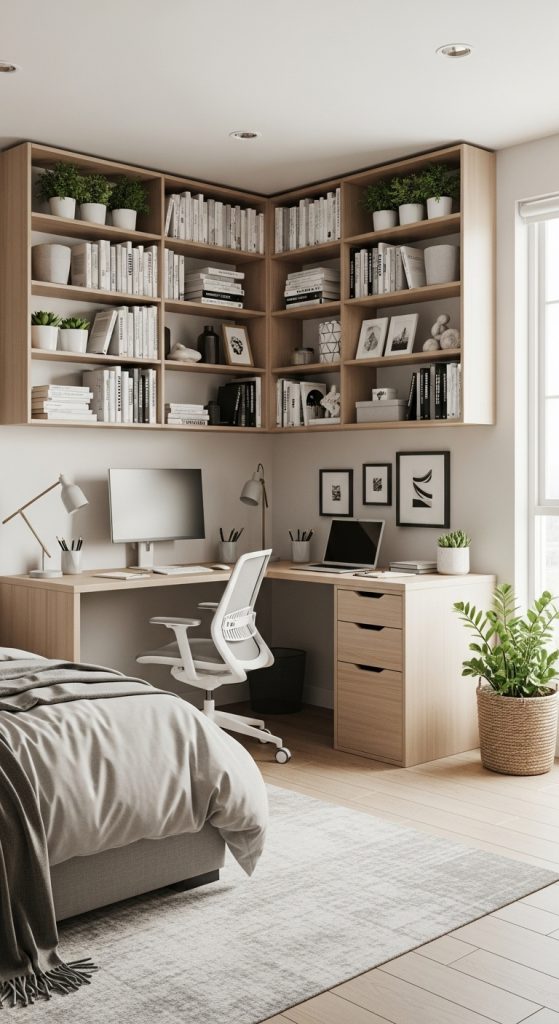
When my flatmate was writing her thesis, she took over the biggest bedroom corner with an L-shaped desk and a full wall of shelving, and watching her work there taught me the value of going big when you have the space. The corner desk gave her room for the laptop, a second monitor, and actual paper spread out at the same time — no more shuffling stacks to make room for the keyboard. The shelving wall above held two years of research in labeled boxes plus her printer on the lowest shelf, which meant she never had to leave the corner mid-flow. The whole setup was about 200 EUR: the desk from a classified ad, the shelves from the hardware store. Her one regret was lighting — the corner was the darkest part of the room, so we added an LED strip under the top shelf for 20 EUR and it changed everything. If you study with lots of materials, give yourself the corner and the wall.
10. Floating Desk with Hidden Storage
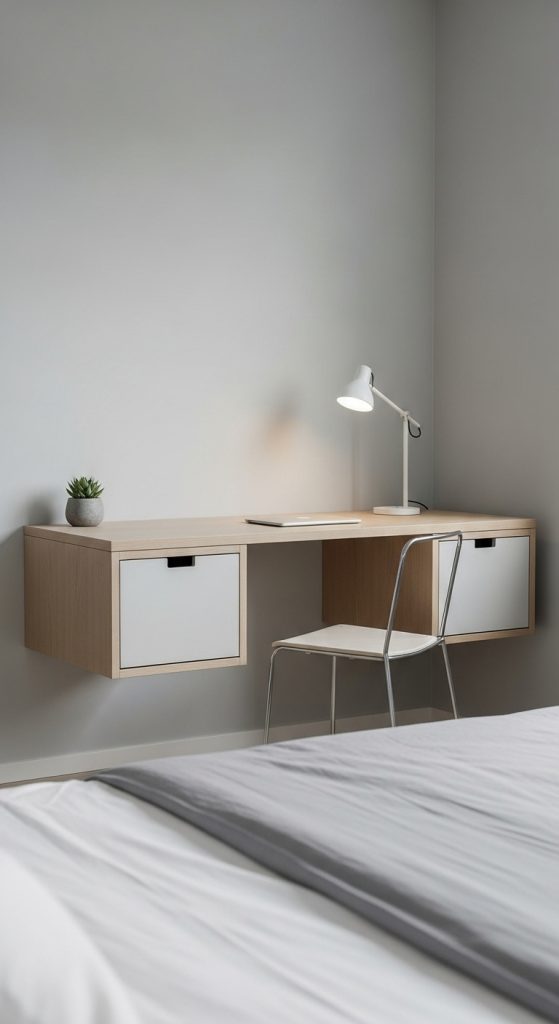
This is my current setup and the one I would recommend to any renter: a wall-mounted folding desk, 80 by 50 cm, that flips up flat against the wall when I am done. It cost 45 EUR, took twenty minutes to mount into the wall studs, and when it is folded away my bedroom is just a bedroom again — no desk staring at me while I try to sleep. The hidden storage is the clever part: shallow compartments inside the folded panel hold my notebooks, pens, and chargers, so there is nothing to clear away before folding. I added a wall-mounted lamp above it rather than a desk lamp, which saves the surface entirely. The weight limit matters — mine holds 15 kg, plenty for a laptop and books but not for leaning on — so check the specs before you buy. For anyone whose bedroom must stay a sanctuary first and a study second, this is the answer.
Conclusion
Two years and five desk arrangements later, my bedroom corner finally does both jobs: a place to sleep and a place to actually get things done. Start with the light and the chair — those two decide whether you will use the space or avoid it — and let the desk fit the room you have, not the room you wish you had. The best study space is the one you sit down at without sighing.