When I moved into my little Munich flat three years ago, the living room was a blank white box with a grey carpet I could not change and a sofa rescued from a friend’s basement. I had about eighty euros to make it feel like home, so I started with what was already around me. The first thing I tried was a painter’s drop cloth from the Baumarkt on Landsberger Straße, and the moment I draped it over that tired sofa, the whole room softened in a way I had not expected. These ten ideas are the ones that actually stuck — the cheap, forgiving, renter-friendly projects I did myself, most of them for under fifteen euros, and none of them needing a drill or a landlord’s permission. They made this flat feel like mine.

1. Canvas Drop-Cloth Slipcovers & Drapery
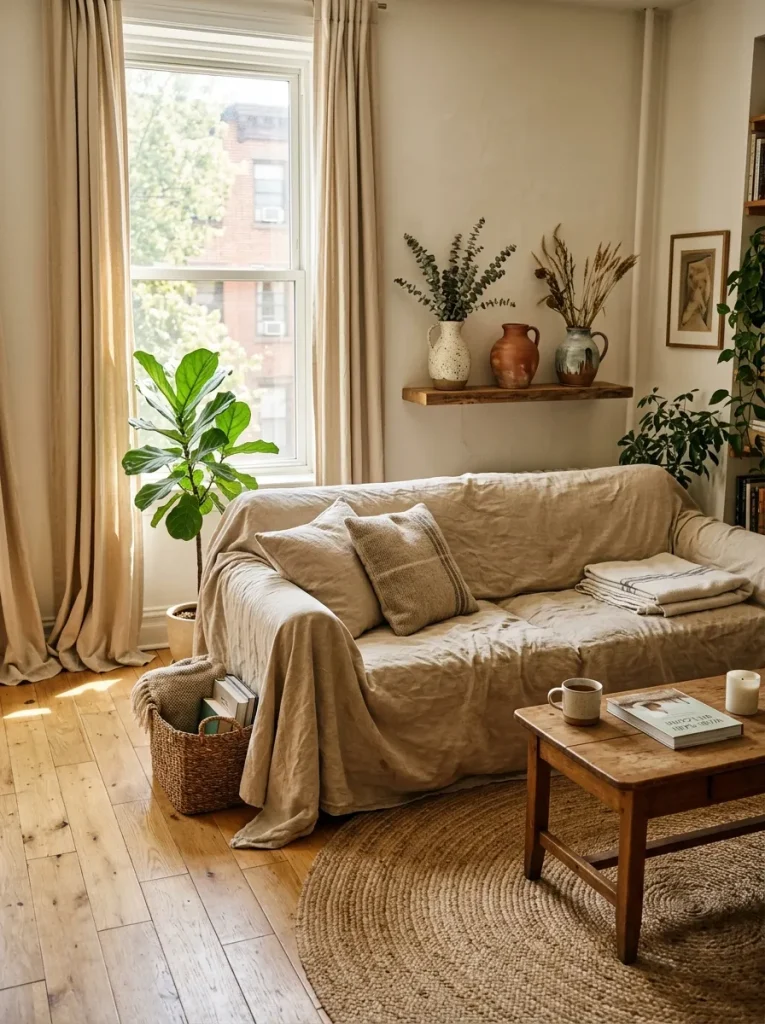
I bought a nine-by-twelve-foot cotton drop cloth for about twelve euros, washed it twice in hot water with a cup of baking soda, and tumble-dried it on high until the stiff factory finish finally gave way. The first wash barely changed it, but the second turned it soft and slubby, almost like the linen slipcovers I had admired in shop windows for ten times the price. I draped it over the sofa, tucked the extra fabric deep into the cushion creases, and pushed wooden dowels into the sides to hold it in place.
What I love most is how forgiving the fabric is. Dog hair brushes off it, coffee drips wash out, and when the bottom edge frayed after a few months I trimmed it and let the raw edge be part of the look. I also hung a second cloth as curtains on clip rings, hem pooling on the floor, and the room suddenly had the soft, sun-warmed feeling I had been chasing.
2. Upcycled Amber Glass & Foraged Botanical Displays
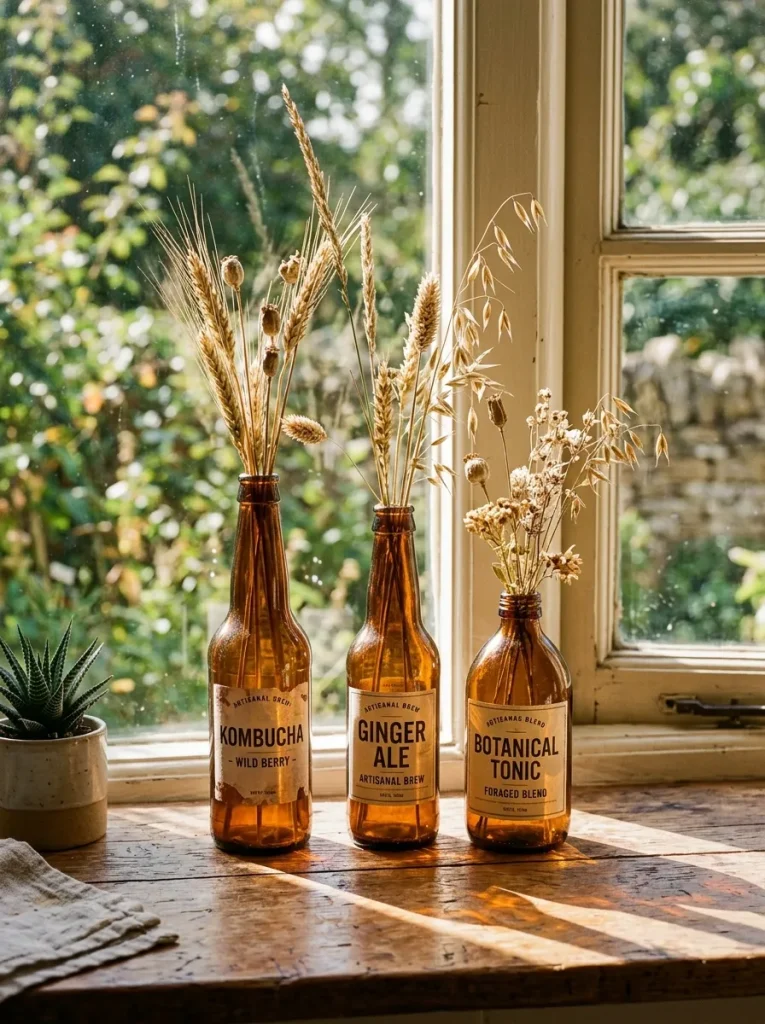
My amber glass collection started by accident, with three kombucha bottles I could not bring myself to throw away. I soaked them overnight in warm water and baking soda, the labels slid off in one piece, and the honey-coloured glass now catches the afternoon light and throws little golden patches across the wall. One tall dried stem per bottle, grouped on a thrifted wooden tray on the windowsill — that was the whole project, and it is still my favourite corner of the flat.
I forage my stems on walks through the Englischer Garten, cutting only what has already dried and fallen, and I keep each bottle to one or two stems, because a crowded bunch just looks messy. I rinse the bottles every few weeks, and I check for chips around the rim before filling them, since a chipped bottle will eventually crack. Friends always ask where I bought the set, and I still enjoy telling them it came from my recycling bin.
3. Thrifted Raw Wood & Patina Vessel Styling
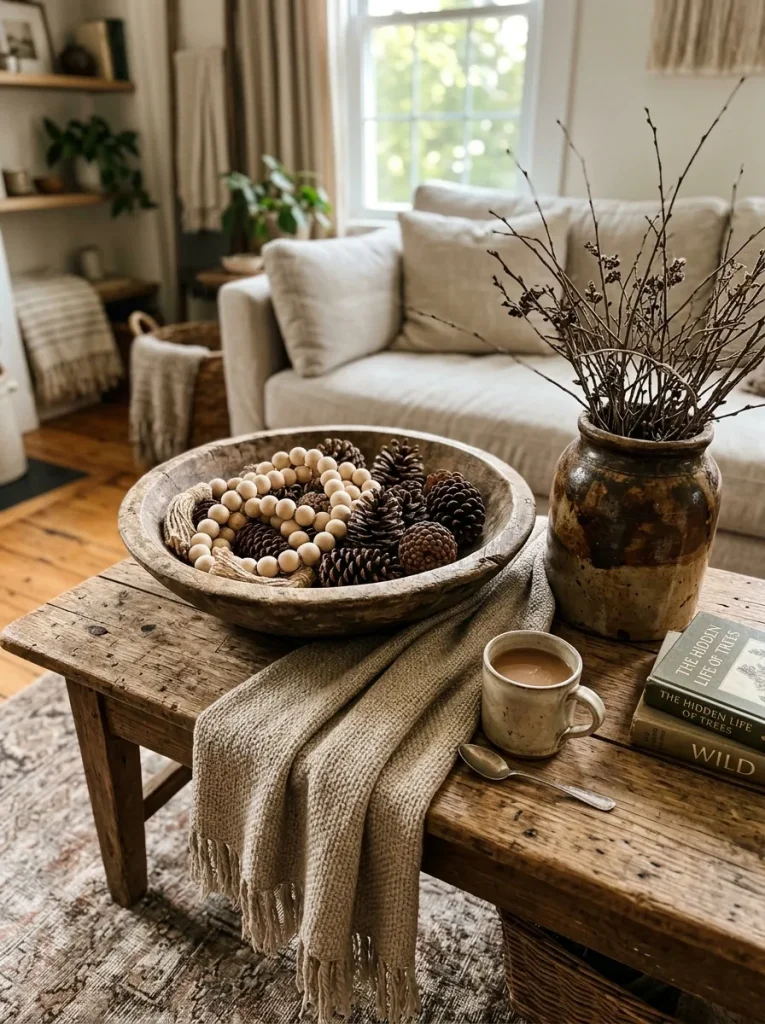
I found my big wooden bowl at a flea market near the Isar for four euros — glossy, scratched, and deeply unfashionable. I spent one slow Sunday afternoon sanding it with 150-grit paper on my balcony until the varnish was gone and the pale, matte grain showed through. Then I rubbed it with food-safe mineral oil, and the wood warmed to a honey tone without any plastic shine. It now sits on my coffee table holding pinecones from last autumn, and it grounds the whole room.
I buy for shape and ignore the finish completely, because the finish is the easiest thing to change. A solid wooden bowl with an ugly gloss is a bargain; a pretty bowl made of thin plastic is not worth carrying home. I check every piece for wobble and cracks before I pay — a cracked bowl will not survive sanding. Once a month I give my wooden pieces another thin coat of oil, and the patina keeps getting richer.
4. Thrift-Store Canvas Makeover with Baking Soda Texture Paint
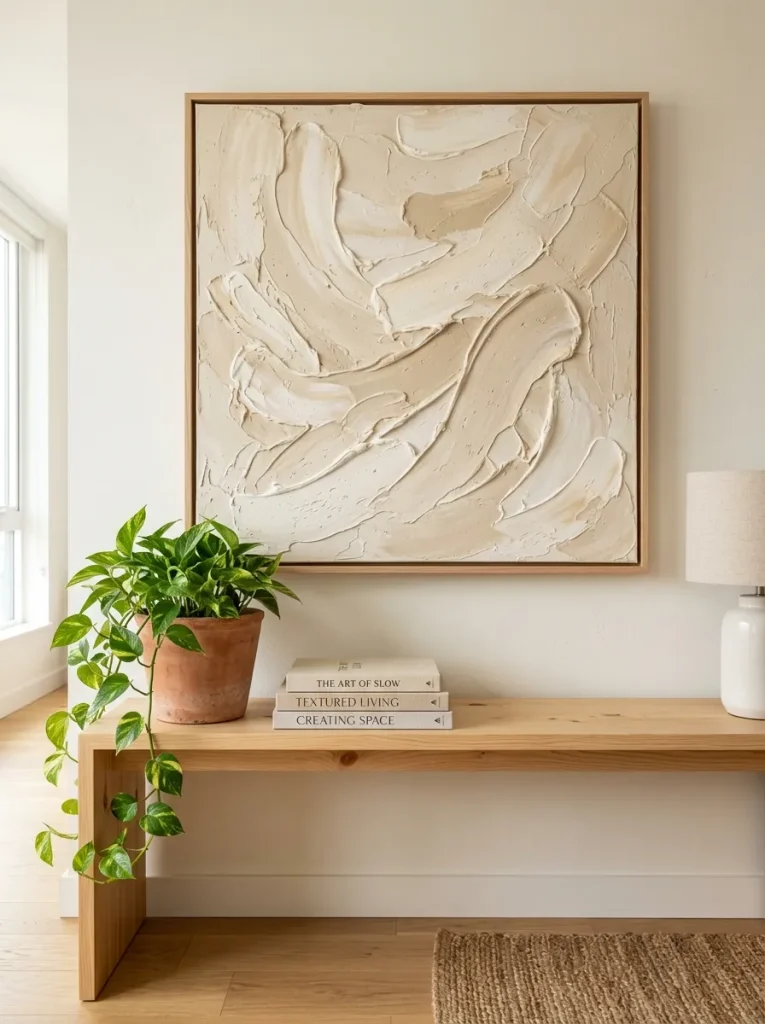
The big blank wall above my sofa bothered me for a year, and every piece of art I liked cost more than my monthly grocery budget. Then I found a huge, hideous landscape print at a second-hand shop for three euros. I mixed warm ivory acrylic with baking soda, two parts paint to one part soda, into a thick paste, and spread it over the canvas with a wide putty knife in broad, uneven sweeps. It looked awful for the first hour, lumpy and streaky, and I almost wiped it all off.
By morning it had dried into a soft, chalky surface with ridges that catch the light, and I hung it back in its original frame without spending another cent. I keep the design simple — one big arch, or just the plain textured surface — because busy patterns fight the plaster look. It dried in about six hours. Next time I would wear gloves — the soda paste dries my hands out terribly.
5. Terracotta Pot Clustering & Plant Propagation Station
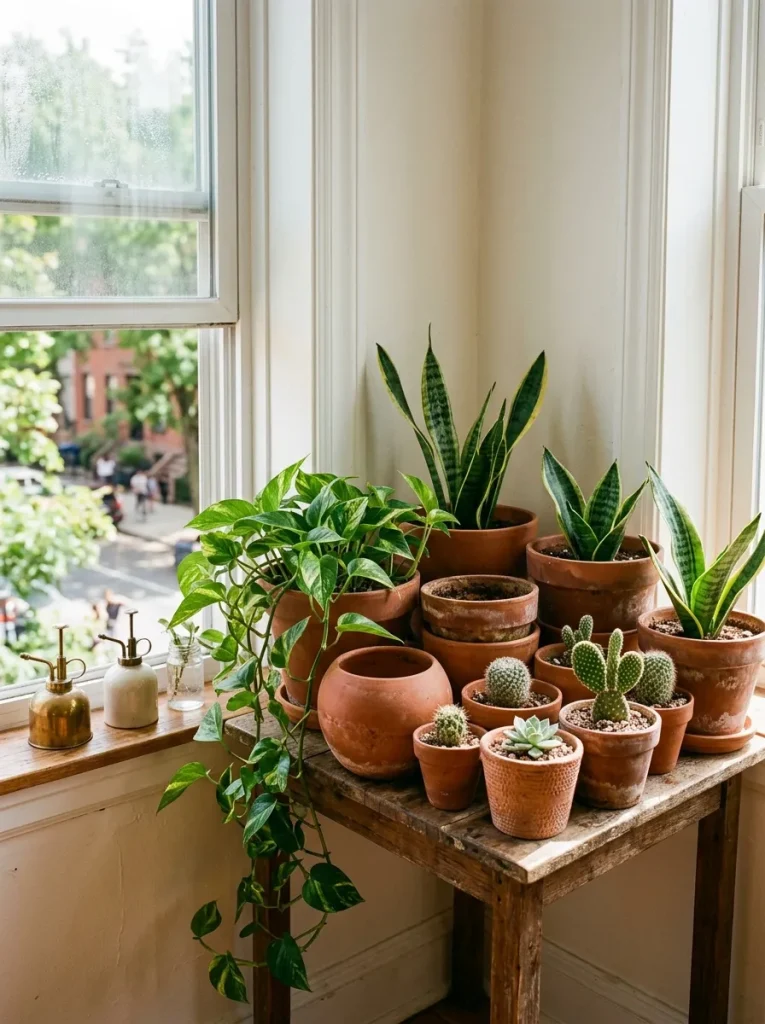
I started propagating plants because I wanted a jungle and could afford exactly one pothos. I clipped a few stems, stood them in jam jars of water on my kitchen windowsill, and watched the roots grow over three weeks, changing the water every few days. Once the roots were five centimetres long, I potted them into plain terracotta pots at under two euros each and grouped five together on a wooden board by the window at different heights. Within a few months my one plant had become a whole shelf of green.
Terracotta looks better as it ages, picking up pale salt marks, and I soak new pots in leftover black tea for an hour so they skip the bright-orange new stage. I always put a saucer under each pot, because raw clay is porous and will leave a damp ring on a wooden shelf overnight. Now I swap cuttings with neighbours, and my windowsill has become a small, free plant exchange.
6. Jute & Twine Accent Wrapping
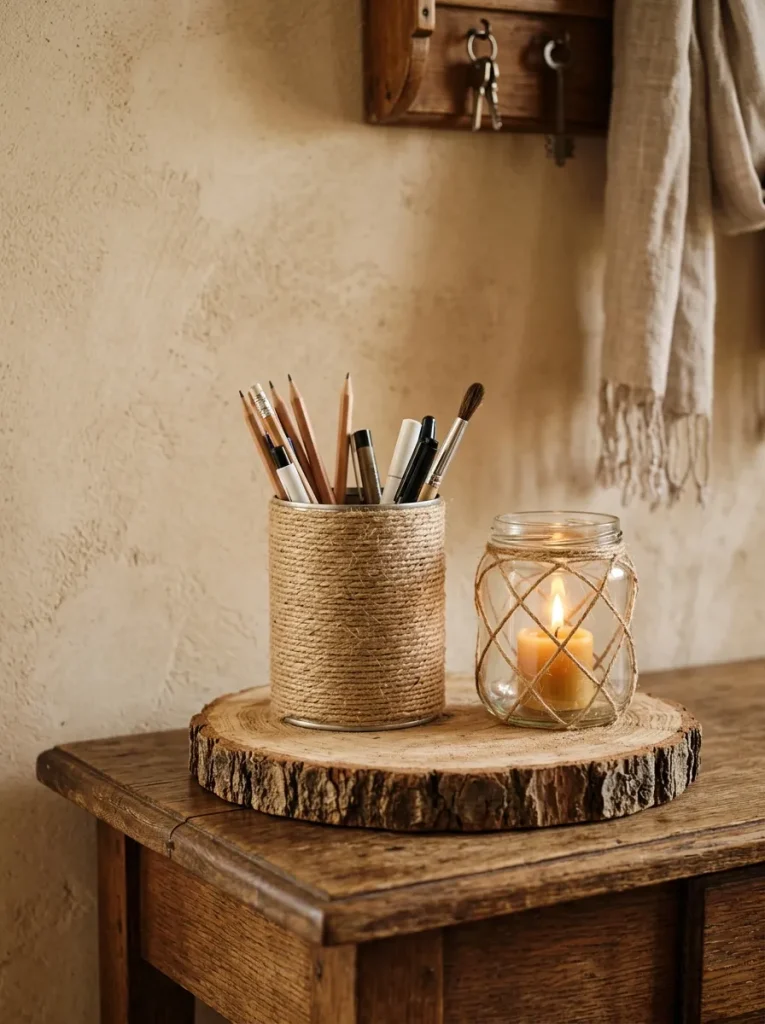
A four-euro roll of jute twine turned my plain glass jars and one dented tin can into the most-used objects on my desk. I started with a dab of hot glue at the base rim, wrapped the twine tightly upwards, and added another dab every few turns so nothing slipped. The first jar took me twenty minutes and looked lopsided; the third one took five minutes and looked like something from a market stall. The tin now holds my pens, and the jars hold makeup brushes and tea lights.
Keep the tension even and the rows touching, because any gap shows the glass underneath and ruins the effect. Snip the twine cleanly and glue the end flat at the top rim, or it frays within a week and looks scruffy. Hot glue burns are real — I keep a small bowl of cold water next to me now. At about one euro per jar, it is the cheapest way I know to make ordinary containers feel intentional.
7. DIY Woven Wall Tapestry using Branch Floating Mounts
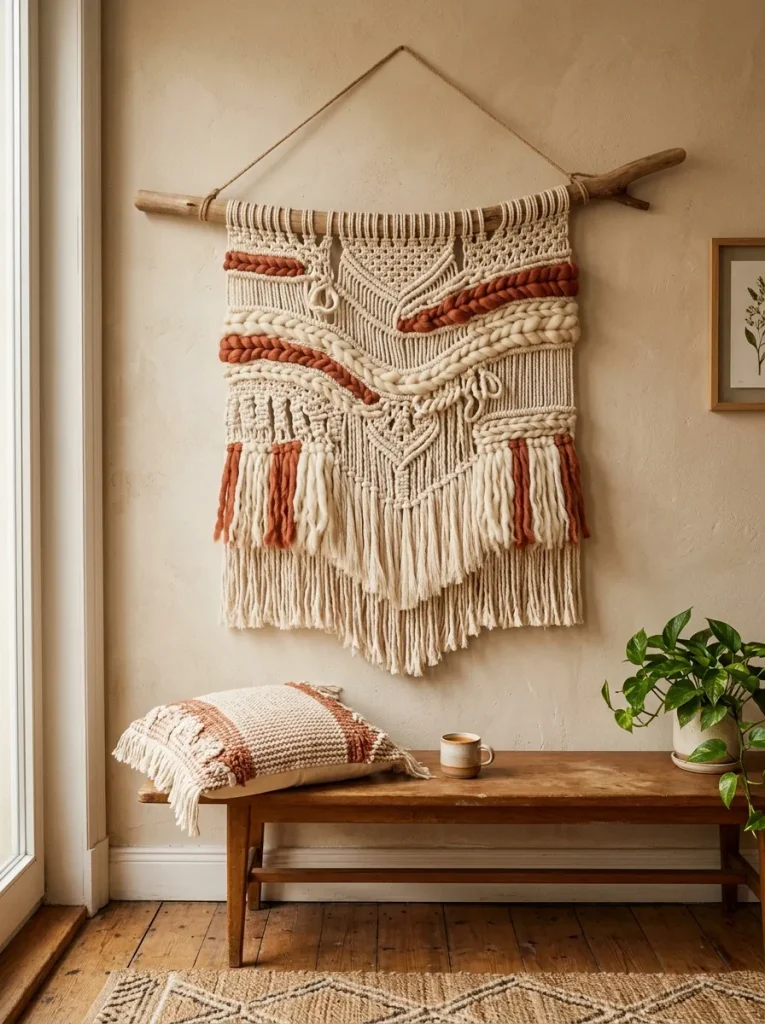
The wall above my bed was the coldest spot in the flat — bare white plaster that made the room echo — and I wanted something soft there without spending fifty euros on a shop-bought macramé piece. I found a straight fallen branch in the park, about sixty centimetres long, sanded it smooth, and hung it from two thin jute cords. Then I cut fifteen lengths of cream cotton cord, looped each over the branch, and pulled the ends through. I combed out the bottom ends with an old hairbrush until they frayed into a soft fringe.
It cost me nothing but the cord, and it changed the room more than any piece of furniture I own — it softens the echo and warms the wall. One picture hook holds it fine, because the branch and yarn weigh almost nothing. My only mistake was cutting the cords too short the first time — now I cut them twice as long as I think I need and trim at the end.
8. Warm Ambient Lighting Overhauls (Paper & Wicker Lampshades)
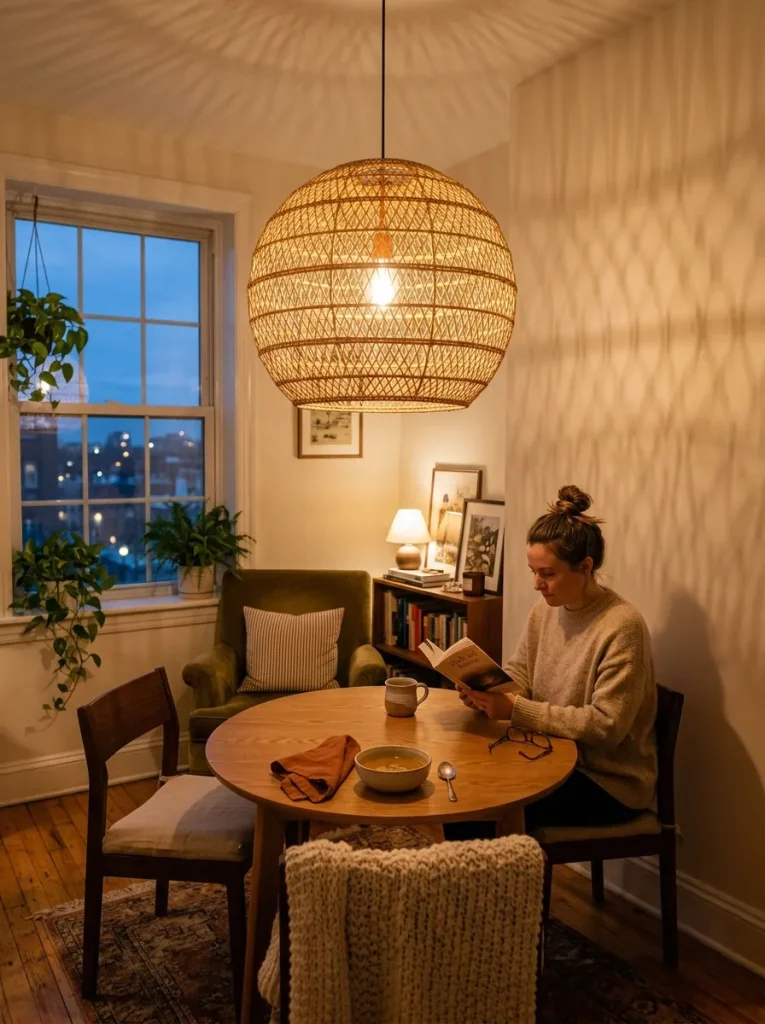
My flat came with one bare bulb per room that made everything look like a dentist’s office, and for months I just lived with it. Then I found a paper lantern for six euros and a woven basket at a flea market for three, and threaded a hemp-cord hanging kit through the top of each. I swapped every bulb for warm 2700K LEDs, and the difference was immediate — the light turned golden and the shadows went soft. I hung the wicker pendant low over my little dining table, and that corner became the place where everyone sits.
The paper lantern hangs in the bedroom, and I check the cords every few months for fraying — a paper shade near a hot bulb is not something to ignore. The LEDs stay cool, which is why this works safely, and they cost less than a euro each now. If you do one thing from this list, change your bulbs first — it is the fastest, cheapest change I made.
9. Peel-and-Stick Faux Wood & Earthy Contact Paper Hacks
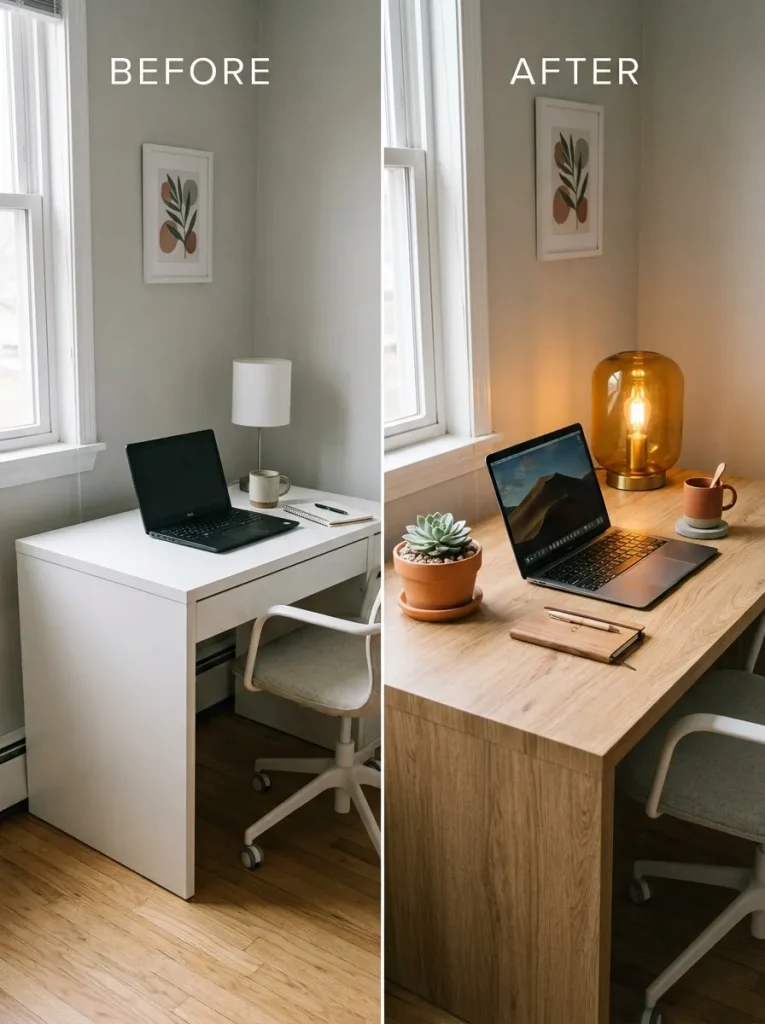
My desk was a white laminate slab with a coffee ring I could not scrub out, and replacing it was out of the question, so I bought a roll of light-oak contact paper for eight euros. I cleaned the surface with rubbing alcohol, cut the paper three centimetres larger than the desk, and peeled back just five centimetres of backing to start. I smoothed it down with an old credit card as I unrolled, and trimmed the overhang flush with a sharp craft knife. Half an hour later, the cheap white desk looked like pale oak.
The first two centimetres decide everything — if the starting edge is crooked, the whole sheet goes crooked, so I line it up twice before pressing anything down. I work in a cool room now, because warm contact paper stretches and then shrinks back, leaving gaps at the edges. Eight months later the desk still looks good, and when I move out I can peel the paper off and get my deposit back.
10. Floating Earthy Open Shelving with Natural Objects
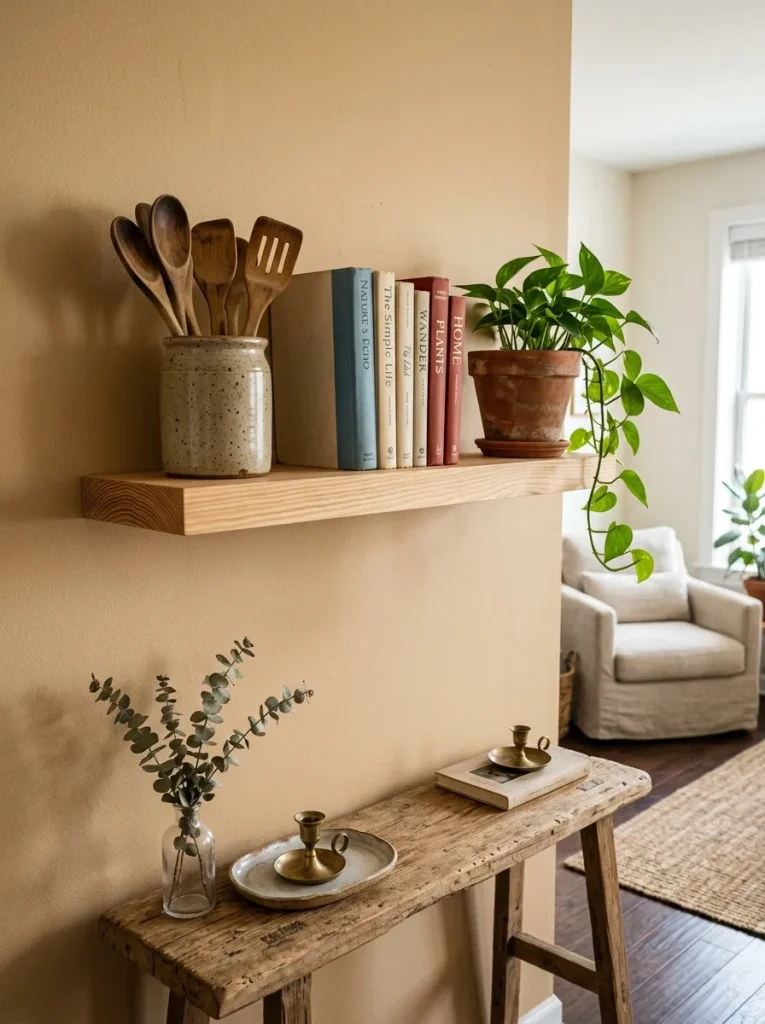
I put up two pine floating shelves in my kitchen for about twenty euros, with light wall anchors and a borrowed spirit level, and they became the best display space in the flat. I styled them with things I already owned: a crock of wooden spoons on the left, thrifted hardbacks with their glossy jackets stripped off in the middle, and a trailing pothos in a terracotta pot on the right. I leave empty space around each object, because a crowded shelf just looks like storage, while a shelf with breathing room looks deliberate.
I rotate one object every month so the display never goes stale — a pinecone in autumn, a dried orange slice at Christmas. I give each shelf a firm tug twice a year, since the lower one holds heavy crockery and I do not want a midnight crash. The shelves hold my everyday things, so they earn their place. That is the real test: decoration alone is clutter, but what you use is home.
None of these cost much, and none happened in one weekend — I did one at a time, on free evenings with a few euros to spare. If you try just one, start with the light bulbs or the drop cloth: those two changed my rooms the most for the least money.