I made my first wire bangle on a rainy Sunday afternoon at my kitchen table in Munich, with a spool of copper wire I had bought on a whim and a pair of pliers that were honestly too big for the job. It was lopsided, the ends scratched, and I wore it anyway for a week because I was so pleased I had made something I could actually wear. Since then I have made dozens of these slim wire bangles, and the ten patterns below are the ones I keep coming back to — the ones that sit comfortably on the wrist, hold their shape, and let a single small charm do all the talking.
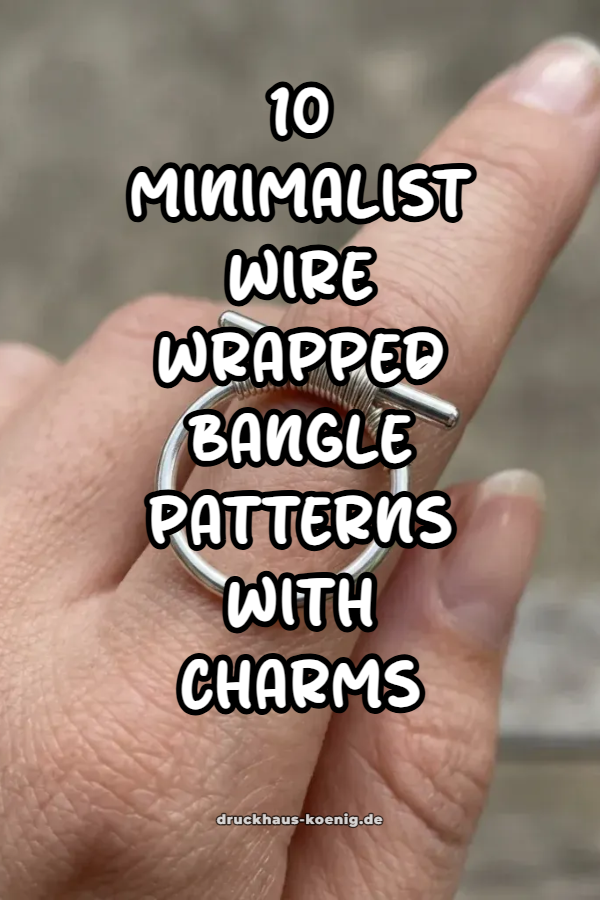
1. The Classic Expandable Bypass Bangle with Floating Charm

This is the bangle I reach for when I am making a gift for someone whose wrist size I do not know, because the open bypass ends let the frame spring apart over the hand and settle back around the wrist on its own. I use 14-gauge half-hard wire for the frame, which is stiff enough to keep its circle after weeks of wear, and I thread a single small charm onto a tiny loop so it slides freely along the curve. The first one I made used soft dead-soft wire and went oval within two days, so I learned to work-harden the frame by tapping it gently all the way around with a rawhide mallet on a steel mandrel. Leave the two ends slightly rounded and filed smooth, or they will catch on sleeves. A little moon or initial charm suits this one beautifully, and it stacks well with two or three plain bands beside it.
2. Hook-and-Eye Latch Bangle with Dangle Charm
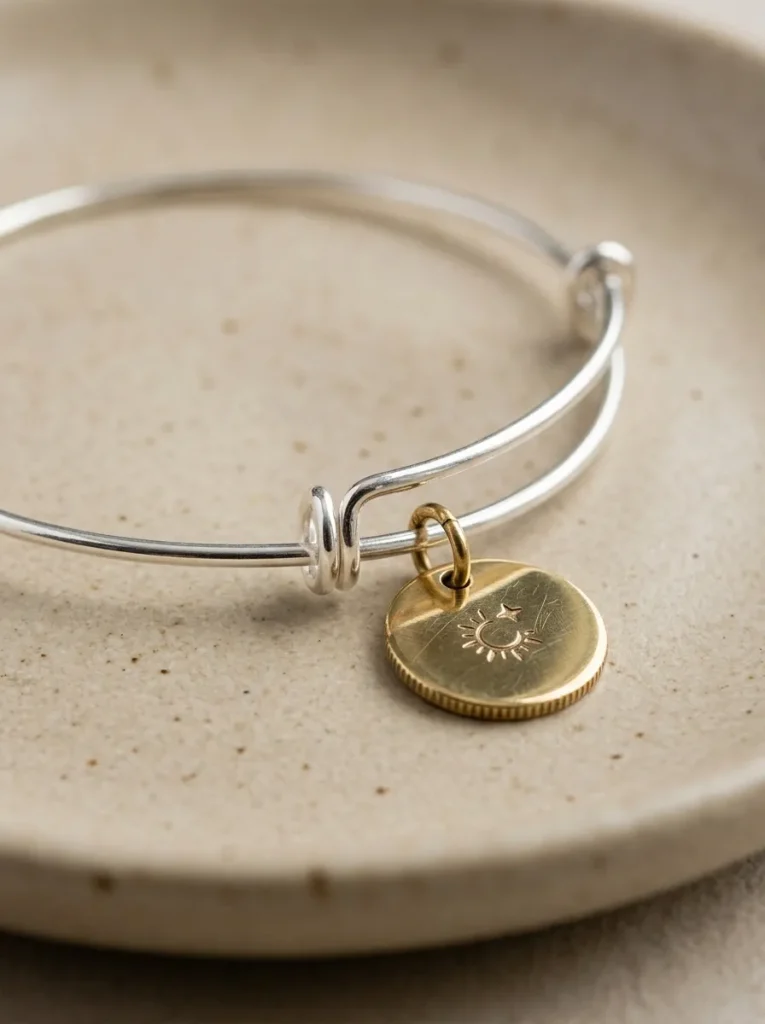
Some days I want a bangle that stays exactly where I put it, and that is when I make this one. The frame is a closed circle with a small hook at the top that catches into a looped eye, and the charm hangs from the same spot, so the closure itself becomes the decoration. I shape the hook with round-nose pliers and test it a dozen times before I call it done, because a hook that is too loose will pop open when I reach for something on a high shelf, and one that is too tight is a daily annoyance. I measure the bangle around my knuckles rather than my wrist, since it has to pass over the widest part of my hand. Silver-filled wire looks lovely here, and I like a slightly longer charm drop, something that moves when I gesture. It takes me about forty minutes now, and it is the pattern I recommend to friends who want one polished piece rather than a stack.
3. Wrapped Center-Bar Bangle with Fixed Charm

I made this one after getting fed up with charms that slid all the way around to the underside of my wrist, where nobody could see them. A short horizontal bar of wrapped wire sits across the top of the band and holds the charm flat and fixed in the centre, exactly where it belongs. I wrap the bar with 26-gauge wire in neat, tight coils, keeping each turn snug against the last, and I anchor the charm with two small loops on either side so it cannot wander. It is a quiet, tidy design, and it suits a flat disc charm or a small stamped initial. The wrap takes patience — my first attempt had gaps you could see through — but once the rhythm clicks it is almost meditative. I wear this one to work a lot, because nothing dangles, nothing jingles against my keyboard, and it still catches the light when I reach for my coffee.
4. Hammered Arc Bangle with Wire-Bound Gemstone Drop

This is the bangle that gets me the most compliments, and it is also the most forgiving to make. I hammer the front arc of the band flat with a chasing hammer on a steel block, which gives it a soft, light-catching texture and hardens the wire at the same time. A single gemstone briolette hangs below the arc on a small wire-wrapped loop, and I use a pale stone like moonstone or rose quartz against silver wire for a gentle contrast. The hammering hides small imperfections, which is a gift when you are still learning, but do go lightly — I once hammered a band so thin in one spot that it snapped when I shaped it. I keep the stone small, no longer than a fingernail, so the bangle stays light. It looks far more expensive than the few euros of wire and one bead it actually costs.
5. Dual-Tone Twisted Rope Bangle with Charm Cluster

When I want a bangle with a bit more presence, I twist two wires together — usually copper and silver — and let the rope texture do the work. I clamp one end in a vice, hold the other with pliers, and twist slowly until the spiral is even all the way along, then I shape it on the mandrel and tuck the ends into neat spirals. A small cluster of three tiny charms hangs from one side, and I keep them small so the whole thing still reads as minimalist rather than busy. The two metals warm each other up nicely, and this is the one I reach for with plain linen tops or a simple black dress, where the bangle is allowed to be the one interesting thing. One practical note: twist the wires before you shape the circle, not after, or the twist will loosen on the curve. I seal the copper with a thin coat of clear jewelry lacquer so it does not mark my skin green on warm days.
6. Bypassed Spiral Bangle with Floating Charm Sheath

This one looks more complicated than it is, which is exactly why I love it. The two ends of an open bypass bangle cross over each other at the top of the wrist and curl into small spirals, and a charm slides in a little sheath between them, free to drift a few millimetres either way but never escape. I form the spirals with the very tip of my round-nose pliers, rolling the wire inward slowly so the coil stays flat and even. The charm I use here is usually something light and round, like a tiny pearl or a smooth bead, because anything heavy pulls the sheath out of line. It is adjustable like the classic bypass, so it works as a gift, and it has a handmade, slightly bohemian feel that the tidier patterns do not. I made three of these one winter evening for Christmas presents, and they were the fastest gifts I have ever made that still looked like I had spent real time on them.
7. Triple-Bead & Charm Balance Bangle
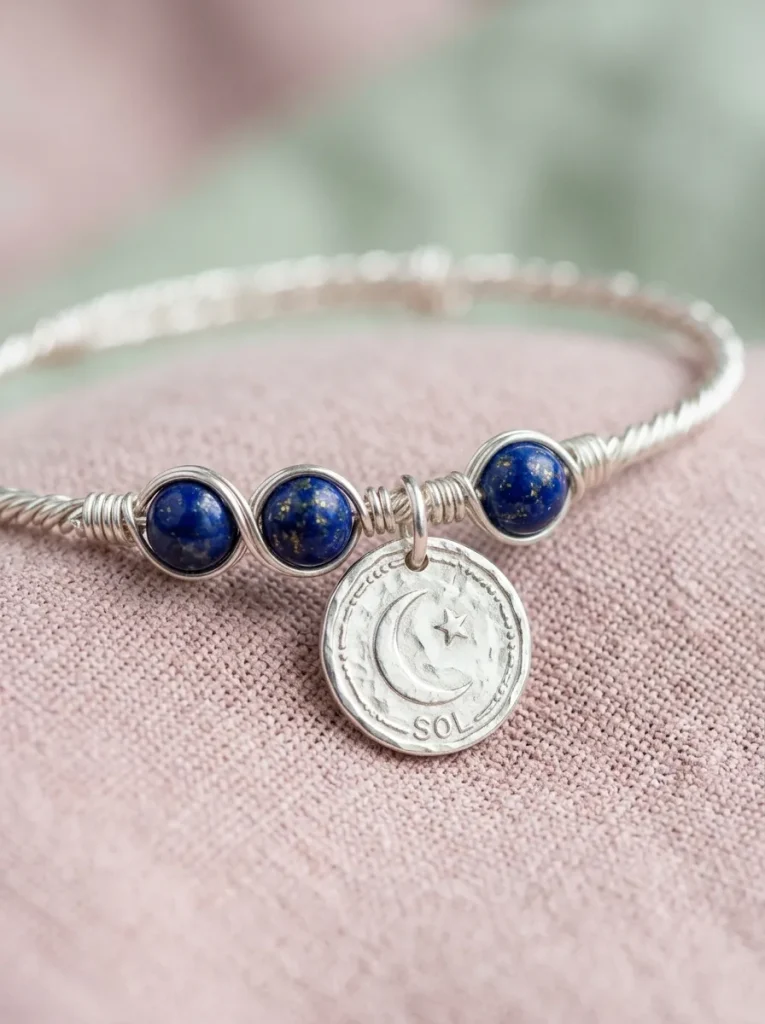
Three small gemstone beads and one charm, arranged in a neat row across the top of a smooth frame — this is the most balanced-looking bangle in the whole set, and my favourite to wear with a watch. I thread the beads onto the frame wire itself, locking each one in place with a few tight wire coils on either side so nothing slides out of position. I like to use three beads of the same stone in slightly different shades, which gives the row a soft, natural variation without looking mismatched. The charm sits in the middle, and I keep it flat and small, a disc or a tiny leaf, so it does not compete with the beads. Measuring matters here: the beads add bulk to the inside of the circle, so I size the frame a touch larger than usual. It takes a little longer than the simpler patterns, but the result is the one I wear when I want to look like I actually thought about my jewellery that morning.
8. Geometric Chevron Bangle with Drop Charm
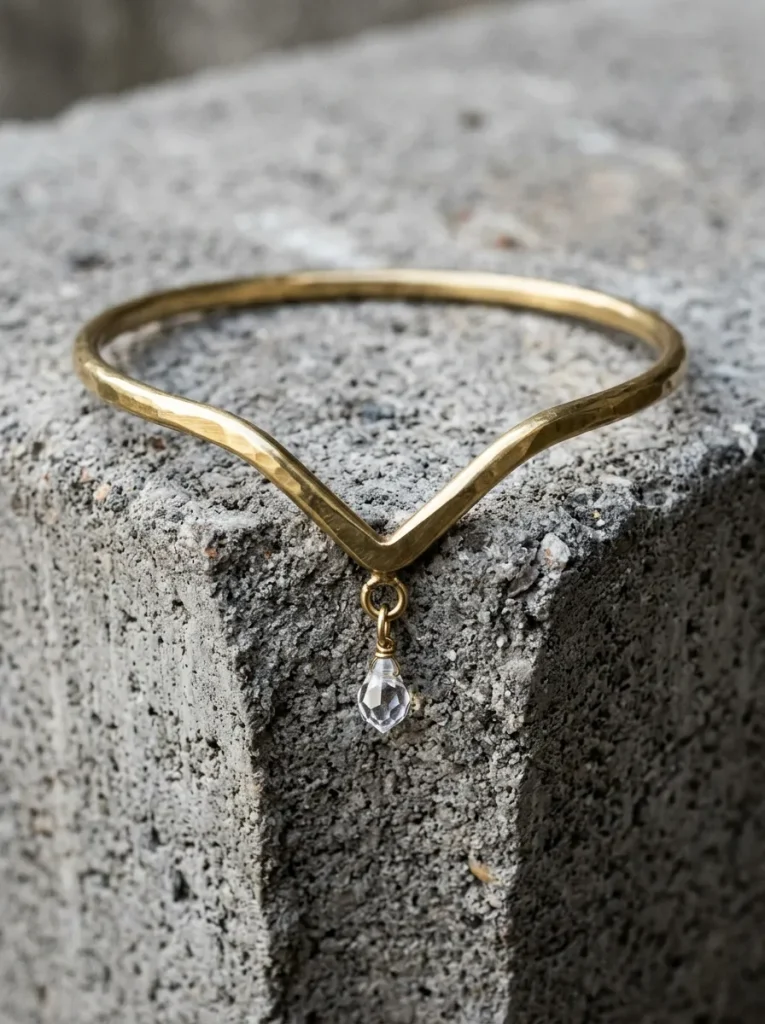
I am a sucker for clean geometry, and this chevron bangle is the most modern piece in my collection. The band comes to a sharp downward V at the front, and a single charm hangs from the very point of the V, held there by the shape itself so it never slides sideways. I bend the point over a small triangular mandrel I made from a scrap of hardwood, working slowly and checking the angle from both sides so the V sits dead centre. Gold-filled wire looks wonderful here, especially with a small dark charm like onyx or a tiny blackened-silver disc. The bend is the tricky part — bend too sharply and the wire kinks, too softly and the chevron reads as a vague dent — so I practice the angle on a scrap piece first. Once it is right, though, it is a striking little piece, and it is the one I make when I want a bangle that looks like it came from a proper jewellery studio.
9. Minimalist Caged Crystal Charm Bangle

I had a little raw amethyst point sitting in a drawer for months before I figured out what to do with it, and this bangle was the answer. A simple wire cage, just four or five thin wires wrapped around the stone in a loose geometric frame, holds the crystal suspended from the band, and the roughness of the stone against the clean wire is what makes it work. I use 22-gauge wire for the cage so it is flexible enough to shape around the stone without snapping, and I make sure the frame wires cross at the top and bottom of the stone so it cannot slip out. The trick is to keep the cage open and airy — too many wraps and it looks like a birdcage, too few and the stone wobbles. I wear this one when I want something a little earthy and a little bit witchy, and it is the bangle friends ask about most when they spot it across a table.
10. The Delicate Double-Strand Floating Charm Bangle
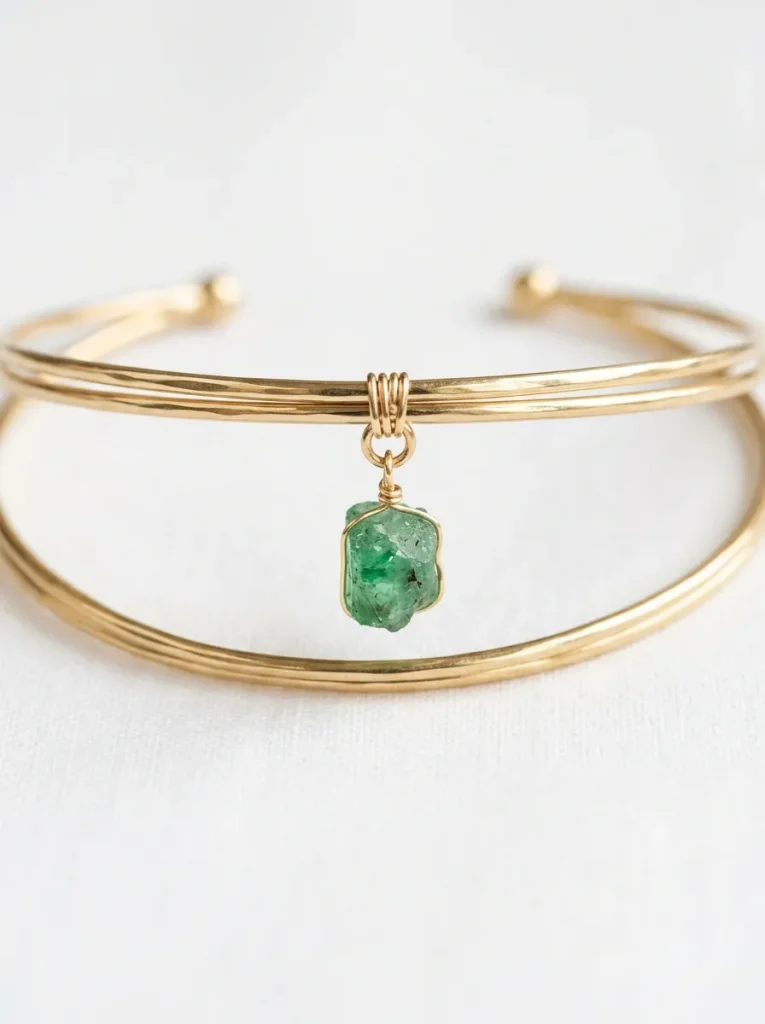
This is the lightest, prettiest bangle of the ten, and the one I make when I want something that barely feels like it is there. Two thin parallel wires run around the wrist, held together by small wire wraps at intervals, and a charm floats in the gap between them, threaded onto both strands so it drifts gently along the band. I use 16-gauge wire for the strands so the double band still holds its shape, and I space the wraps evenly, about a thumb’s width apart, checking as I go that the two strands stay parallel and do not twist around each other. A small star or heart charm suits this one, and I like it in silver with a single pale bead charm for a soft shimmer. It is delicate, so I would not wear it gardening or hauling shopping bags, but for an evening out or a day at the market it is perfect, and it layers beautifully with a plain single band on the same wrist.
Conclusion
Ten patterns, one spool of wire, and a small box of charms — that is genuinely all you need to start. I still keep my first lopsided copper bangle in a drawer, and every time I make a new one I notice how much steadier my hands have become. Start with the classic bypass if you are unsure, pick a charm that means something to you, and give yourself a quiet afternoon to get it right. The best bangle in this whole list is the one you will actually wear tomorrow.