School mornings in our house used to be a small daily crisis, and hair was usually the reason. My niece would appear at the kitchen table with tangled hair, a lost hairbrush, and approximately four minutes before we had to leave, and I would attempt something ambitious that fell apart before we reached the front door. Over a school term, I learned to stop aiming for impressive and start aiming for fast, sturdy, and comfortable — styles that survive a school day, a PE lesson, and a windy walk home. I practised on weekends, timed myself, and kept a mental list of what actually worked. These ten are the styles that made our mornings calmer, and my niece now picks her own from the list the night before, which is a small miracle I do not take for granted.

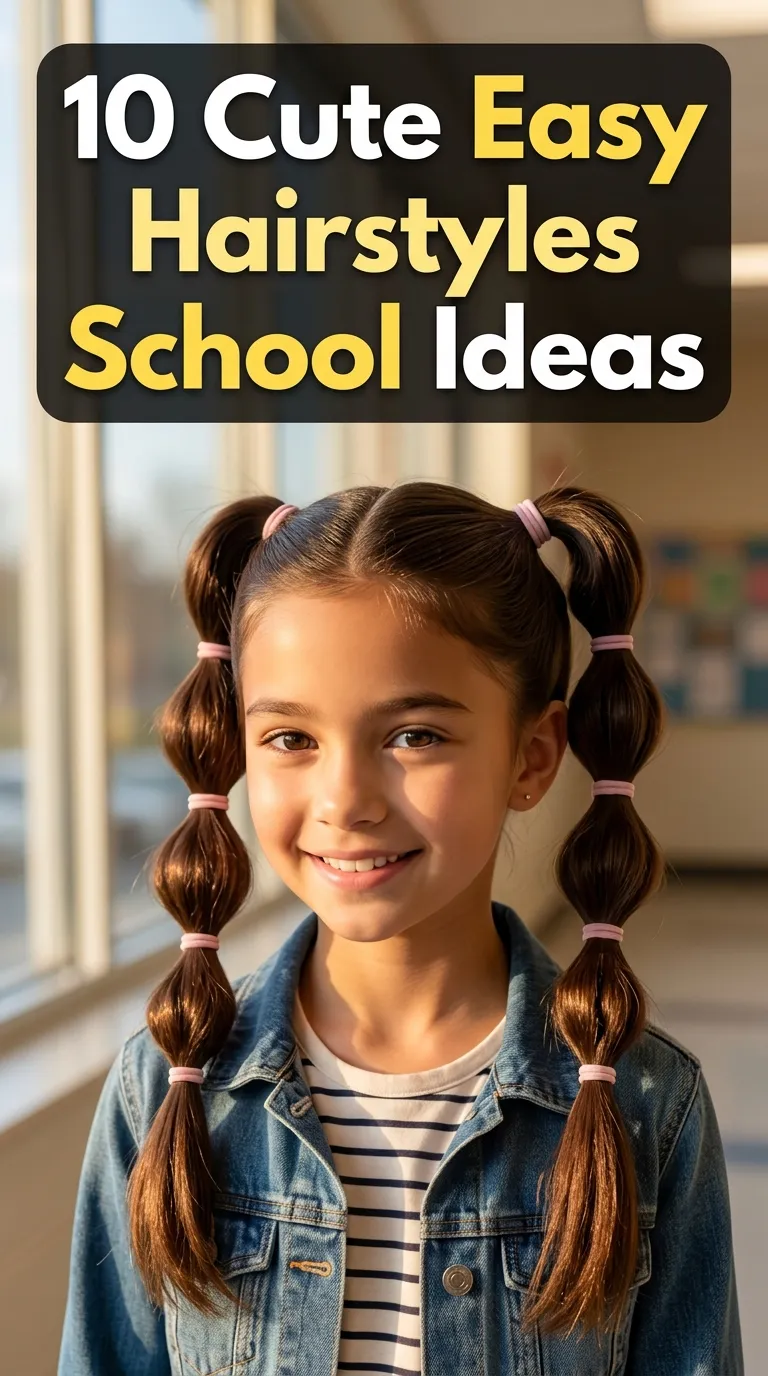
1. The Trendy Bubble Ponytail

The bubble ponytail looks far more complicated than it is, which is why it is my niece’s favourite for days when she wants to look like she tried. I gather her hair into a high ponytail, secure it, then add small elastics down the length of the ponytail at even intervals, gently pulling each section outwards to create the bubble effect. The trick is to use thin elastics that match her hair colour, so the bubbles look soft rather than segmented by bright bands, and to pull each section out only a little — over-pulling makes the bubbles lopsided and hard to fix. It takes me about four minutes now, and it holds up remarkably well through a school day, because each elastic acts as an anchor. If a bubble flattens during the day, she can puff it back out herself in the school bathroom mirror, which gives her a pleasing sense of control over her own hair.
2. The 90s Claw Clip Half-Up

The claw clip half-up is my emergency style, the one I reach for when we are genuinely late and I have maybe ninety seconds. I take the top half of her hair, twist it once, and secure it with a medium claw clip, leaving the rest of her hair loose. It works because it keeps hair out of her face for lessons without requiring a full updo, and the clip itself does most of the work. I learned to buy clips with strong springs and teeth that actually grip, after a cheap clip slid out during assembly and caused a minor incident involving a lot of hair in her face. A good clip stays put all day and can be taken out and put back in without a brush, which is useful after PE. My niece has a small collection now in different colours, and choosing the clip has become part of her morning routine, which I count as a win.
3. Sleek Low Bun with a Silk Scrunchie

The sleek low bun is the polished option, and I use it for school photos, assemblies, and days when my niece wants to feel smart and tidy. I brush her hair back smoothly, gather it low at the nape of her neck, twist it into a bun, and secure it with a silk scrunchie rather than a plain elastic. The silk scrunchie is not just decorative: it grips without pulling, it does not leave a dent in her hair the way a tight elastic does, and it is much gentler if she takes the bun out at the end of the day. I smooth flyaways with a tiny bit of water on my hands rather than hairspray, because hairspray on a school morning feels excessive and she hates the smell. The whole style takes about three minutes, and it lasts through wind, rain, and a full day of lessons without needing attention.
4. Dutch Braided Pigtails

Dutch braids are the style I practised most, because they look impressive and they are genuinely practical for active school days, but they took me a while to learn. A Dutch braid is like a French braid in reverse: instead of crossing sections over the middle, you cross them under, which makes the braid sit on top of the hair like a rope. I part her hair down the middle, braid each side from the front to the back, and secure the ends with small elastics. The first few attempts were uneven and one braid was always tighter than the other, but practising on a weekend, without time pressure, made all the difference. Now they take about eight minutes, which is longer than most styles here, so I save them for days when we have time. They survive PE, swimming lessons, and windy playgrounds better than any other style on this list.
5. Playful Double Space Buns

Double space buns are pure fun, and my niece requests them for Fridays and school parties, when she wants something that makes her friends laugh. I part her hair down the middle, gather each side into a high ponytail, twist each ponytail around itself, and secure it into a bun, pulling out a few loose strands around her face to soften the look. The key is placement: buns that sit too high look like ears, which she loves, but buns that sit too far back slide down during the day, so I position them high and slightly forward, and I use two pins per bun for security. They take about five minutes, and they hold up well because the weight is balanced on both sides. I also learned to check that the buns do not interfere with her sitting back in a chair or lying down for reading time, because a bun in the wrong place becomes uncomfortable very quickly.
6. The Twisted Crown Half-Up

The twisted crown is the prettiest half-up style I know, and it is easier than it looks, which is a combination I always appreciate. I take a section of hair from each side of her face, twist each section back towards the middle, and pin them together at the back of her head, where they cross like a crown. The twists do the decorative work, so the rest of her hair can stay loose and natural, which suits days when she does not want a full updo. I use small, flat bobby pins that match her hair colour, and I push them in with the wavy side down, which grips better — a tip I learned from a hairdresser years ago and have never forgotten. The style takes about four minutes, it looks lovely from behind, and it keeps the front sections out of her eyes during lessons, which is the practical point of the whole exercise.
7. Messy High Bun with a Ribbon

The messy high bun is the style for mornings when her hair will not cooperate and I have given up on sleekness, which happens more often than I would like. I gather her hair high on top of her head, twist it loosely, wrap it around, and secure it with an elastic and a few pins, deliberately leaving it a little loose and textured rather than perfectly smooth. Then I tie a ribbon around the base, which instantly makes the whole thing look intentional rather than rushed — the ribbon is doing a lot of heavy lifting here, and I am grateful for it. The ribbon also serves a practical purpose: if the bun loosens during the day, the ribbon helps hold it together, and my niece can retie it herself. This is a five-minute style that looks effortless, survives a school day, and has saved us on more chaotic mornings than I can count.
8. Accent Micro-Braids with Natural Texture

Micro-braids are small, thin braids added as accents to otherwise loose hair, and they are a wonderful way to add detail without committing to a full braided style. I take two or three small sections near her face, braid each one tightly, and secure the ends with tiny clear elastics, leaving the rest of her hair loose and natural. The braids frame her face nicely and keep the front sections from falling forward during lessons, which is a constant problem with loose hair. They take a little patience — each micro-braid is small and fiddly — but I can do three in about five minutes, and they last for days if she is careful, because they are so small they do not unravel easily. My niece likes to add a tiny bead to the end of one braid on special days, which is a small detail that makes her feel like the style is truly hers.
9. Twisted Rope Ponytail

The rope ponytail is my favourite trick for making a simple ponytail look special, because it takes almost no extra time but looks completely different. I gather her hair into a ponytail, split it into two sections, twist each section in the same direction, then twist the two sections around each other in the opposite direction, and secure the end. The opposing twists lock the rope together, so it holds its shape without needing a lot of pins or product. The first time I tried it, I twisted both sections in opposite directions and the whole thing unravelled immediately, which taught me the rule: twist the sections one way, twist them together the other way. Once you know that, it takes about three minutes, it looks polished, and it stays neat through a school day far better than a regular ponytail, which tends to go fluffy by lunchtime.
10. The Bandana or Headband Wrap

The bandana wrap is the style I reach for on bad hair days, rainy days, and days when we have simply run out of time, because it covers a multitude of sins with one piece of fabric. I fold a bandana into a wide band, place it over her hair like a headband, and tie it at the nape of her neck, leaving the rest of her hair loose or in a low ponytail. A padded headband works the same way and is even faster, because there is nothing to tie. The key is to choose a bandana or headband that stays put: fabric with a bit of grip, or a headband with small teeth on the inside, will not slide back during the day. My niece has a small drawer of bandanas now, and picking one has become part of her outfit decision, which means she is engaged in the morning routine rather than resisting it. That alone makes this style worth keeping in rotation.
The real secret to calm school mornings is not any single style, but preparing the night before: pick the style together in the evening, lay out the elastics and clips, and practise new styles on weekends when nobody is in a hurry. Start with the claw clip half-up and the rope ponytail, both fast and forgiving, and work up to the Dutch braids when you have time to practise. Mornings will still be chaotic sometimes — that is the nature of school mornings — but hair, at least, can stop being the crisis.