
My bedroom used to be the room I forgot about. Every other room in my flat got some love, but the bedroom stayed plain white walls and an old bed frame — and it showed in how I slept. Last spring I finally decided to redo it properly, going for that earthy, cozy, forest-cabin-but-in-Munich feeling: warm woods, clay tones, real plants, nothing glossy. I did it over four weekends and spent just under 400 EUR total, mostly from flea markets and thrift stores. What surprised me most was how much calmer my evenings became once the room stopped looking like a storage unit. These are the ten changes that made the biggest difference, in the order I actually did them.

1. Reclaimed Wood Headboard
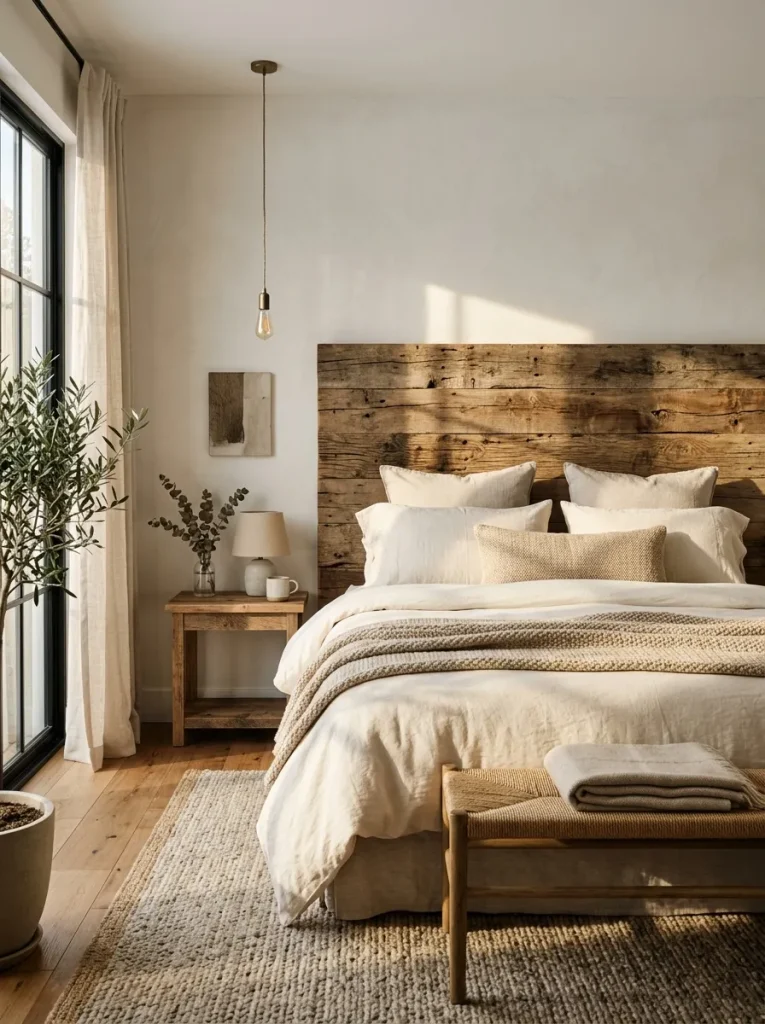
The first thing I built was the headboard, because my bare bed against a white wall was the saddest thing in the flat. I found five weathered pallet planks at a flea market near Riem for 15 EUR total, sanded them with 120-grit paper until splinter-free but still rough, and screwed them from behind onto two vertical battens. Mounting it was the fiddly part — I used heavy-duty flush-mount hangers screwed directly into two wall studs, and I checked the alignment with a spirit level three times because the boards weren’t perfectly straight. A coat of matte clear wood oil brought out the grain beautifully. What I learned: sand more than you think you need to, especially the top edge where your hands land. My total spend was about 30 EUR including screws and oil, and the headboard is the piece everyone asks about. It anchors the whole room, so the earthy look starts here.
2. Terracotta and Clay Accents
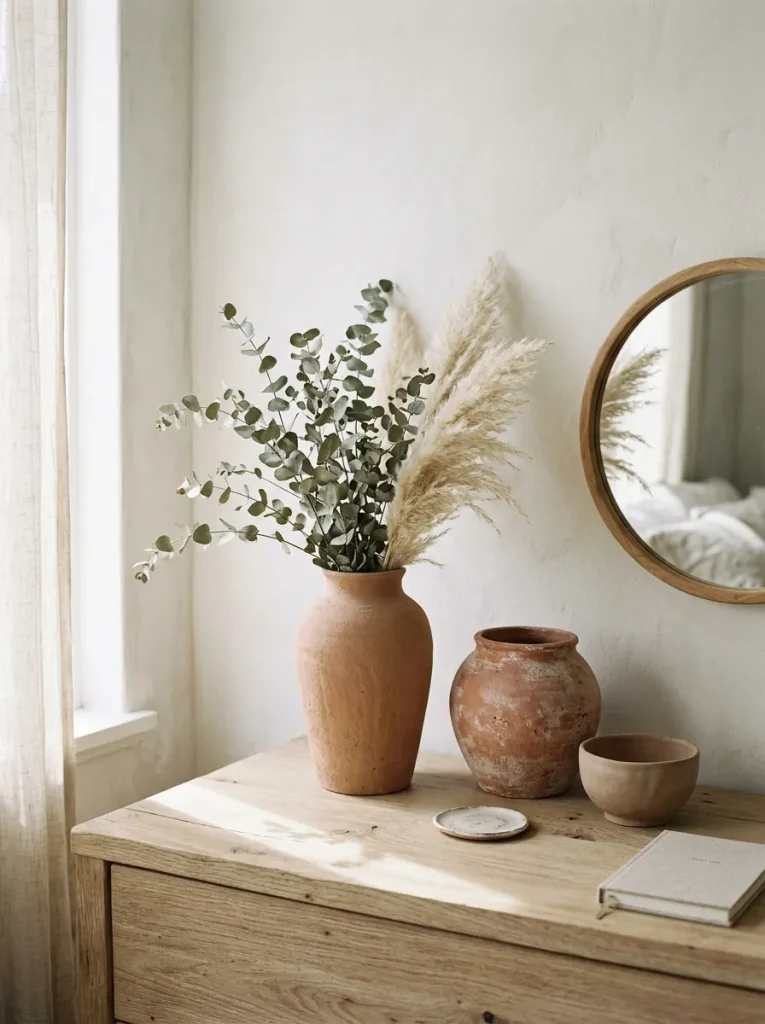
Terracotta pots are the cheapest way to add warmth, and I say that as someone who bought twelve of them in one afternoon. I thrifted a mix of clay pots, a jug, and a couple of saucers for under 20 EUR, washed them all, and arranged them in groups of three on my dresser and nightstand — tallest in back, smaller ones forward. Dried pampas grass and eucalyptus branches from the flower market filled the big ones. My mistake at first: I spread them evenly around the room and it looked like a garden center. Grouped tightly, they read as intentional decoration. A practical note: unglazed clay collects dust in its pores, so I wipe them down with a damp cloth every couple of months. For less than a takeaway dinner you get that warm Mediterranean grounding, and the matte chalky texture looks great against painted walls.
3. Layered Linen Bedding
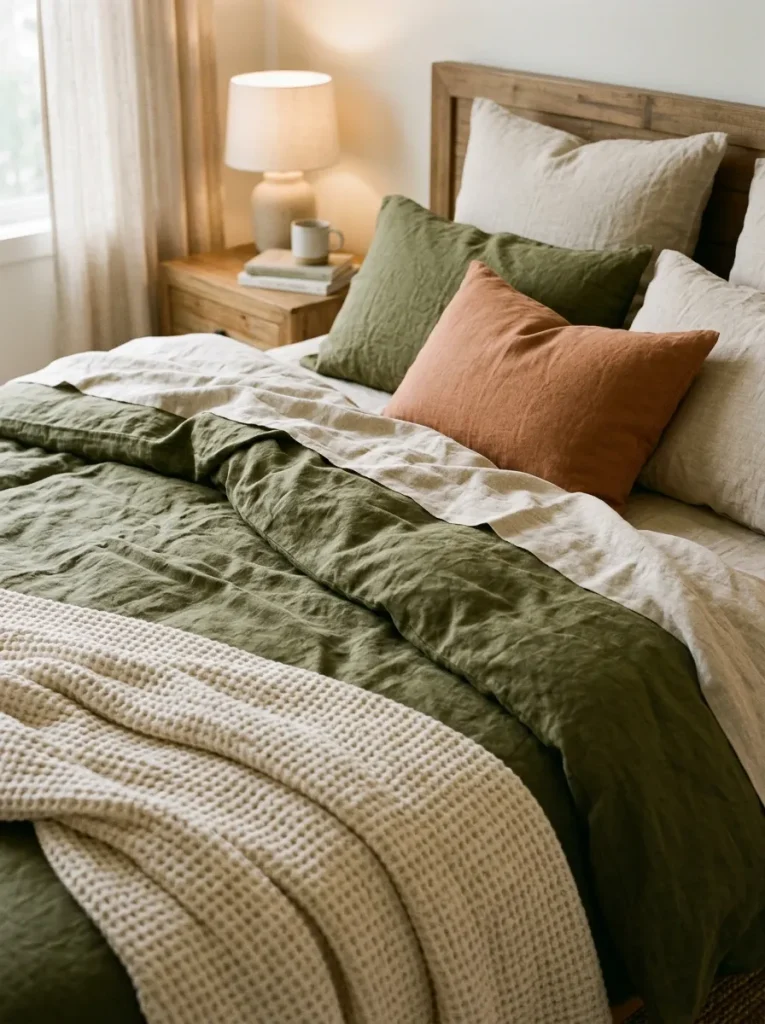
Swapping my scratchy old bedding for washed linen was the single biggest comfort upgrade, worth every cent. I bought an oatmeal linen duvet set and one olive flat sheet during a sale, about 90 EUR all in, layered over a plain sand-colored cotton fitted sheet I already owned. The trick I figured out by trial: fold the top third of the duvet back over itself, put two sleeping pillows against the headboard, then two smaller shams in front, and drape a chunky waffle-knit throw across the foot. It takes me ninety seconds every morning. Linen’s slightly rumpled look means I never iron anything anymore, and it actually breathes better in summer than cotton did — I sleep noticeably cooler. Wash it at 40 degrees and skip the dryer; mine got softer with every wash, which is the opposite of every other fabric I’ve owned.
4. Jute and Sisal Flooring
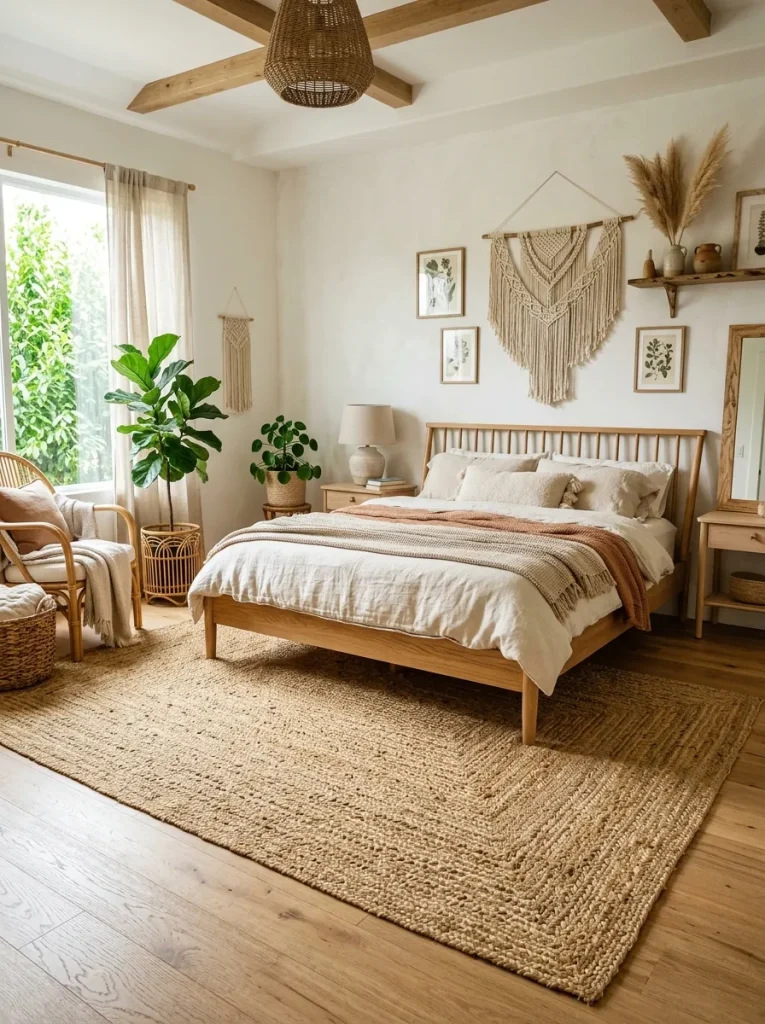
My laminate floor made the room feel cold and echoey, so I got a big jute rug — 160 x 230 cm, wide enough to stick out about 60 cm on each side of the bed. It cost 65 EUR and needed a non-slip pad underneath (another 15 EUR), which I almost skipped and would have regretted. The natural fiber gives the room its golden base tone and ties the wooden furniture together, plus it genuinely dampens sound; the room feels noticeably quieter. One warning from experience: jute sheds like crazy for the first month, so plan extra vacuuming and use suction-only, no rotating brush. Also, never put it somewhere damp — I learned that natural fibers and moisture don’t mix. But as a rug under and around the bed, it is the fastest way to make the floor part of the earthy palette instead of fighting it.
5. Indoor Foliage Sanctuary
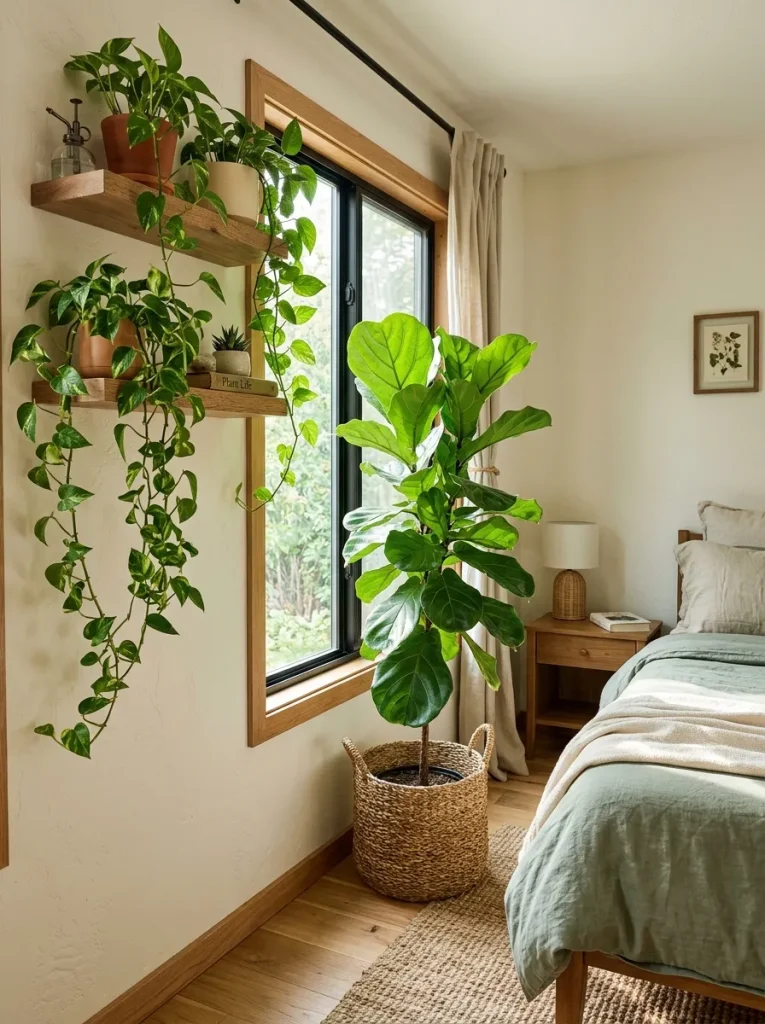
Plants were always the plan, but my track record with them was grim — I’d killed three before this project. So I committed to only unkillable varieties: a snake plant on the nightstand, a pothos trailing from a shelf, and a big ZZ plant in a woven basket in the corner. Total cost was about 40 EUR including pots. The trick that actually worked for me was setting a weekly Sunday morning watering reminder and otherwise leaving them completely alone; overwatering was my real problem, not neglect. Seeing green first thing in the morning genuinely changes the mood of the room. I also put a small succulent on the dresser, which promptly died because that corner gets zero light — lesson learned: match the plant to the actual light, not the light you wish you had. Three healthy plants beat seven struggling ones every time.
6. Warm Amber Lighting
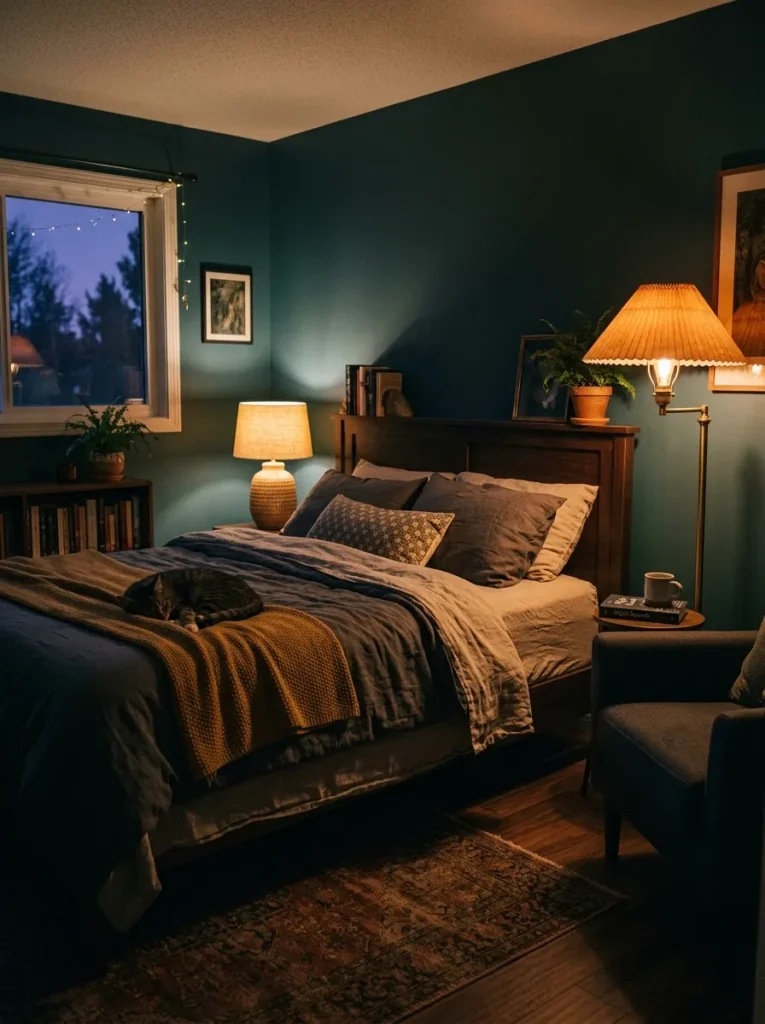
I used to have one brutal ceiling light and nothing else, and it made the whole room feel like an examination hall. I swapped every bulb for warm 2700K LEDs (a box of four was 12 EUR), put matching ceramic table lamps on both nightstands, and added a tall rattan floor lamp in the far corner. What made the biggest difference was a dimmable wall sconce above the reading spot, so evenings now start at about 30 percent brightness. It sounds like a small thing, but my brain gets the sunset signal and winding down is genuinely easier. One tip: use separate switches or at least smart plugs so each lamp is independent — being able to turn off everything from bed is not laziness, it is self-care. A strand of warm fairy lights behind the headboard was my last addition, and on dark winter evenings it makes the whole wall glow like embers.
7. Floating Raw-Edge Shelves
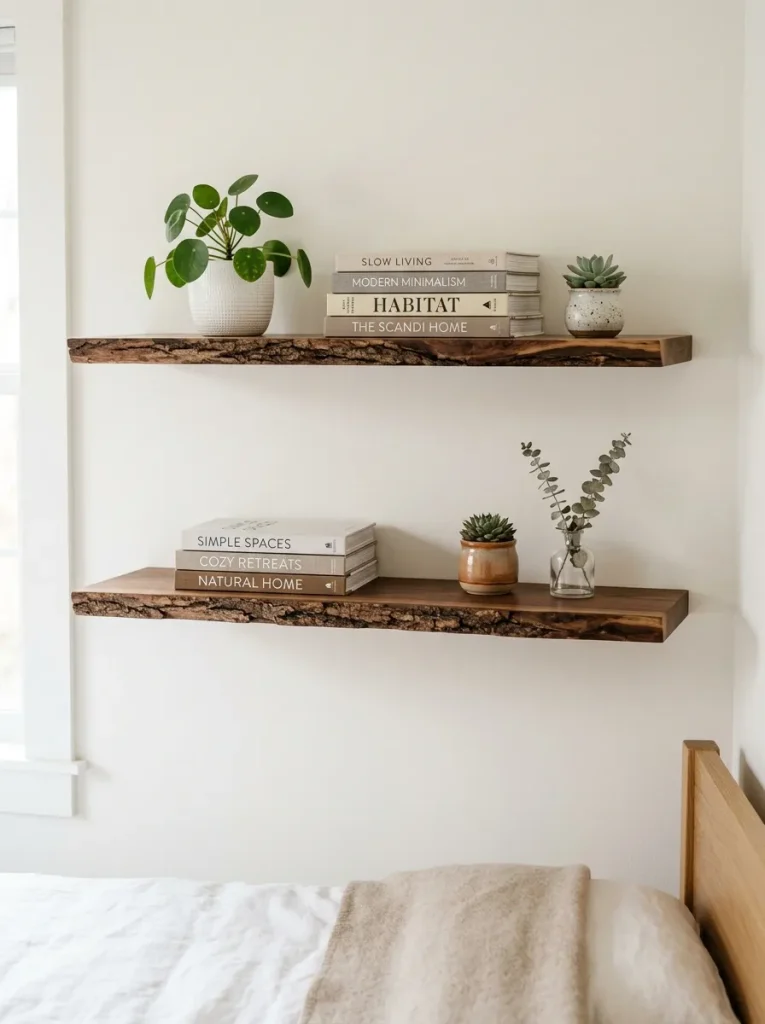
I needed somewhere to put the growing collection of ceramics and books, and live-edge shelves were the obvious answer. I bought two pre-cut oak planks, each about 90 cm long, from a timber offcut bin for 25 EUR, plus heavy-duty concealed brackets rated for 20 kg. Finding the studs took longer than the drilling itself — my flat’s walls are 1960s concrete in places, so I ended up using proper masonry anchors and a hammer drill, which is worth knowing before you buy floating brackets for drywall. The natural wavy edge makes each shelf look like it grew there. Styling them took three attempts; what finally worked was a mix of stacked books, one trailing pothos, and a couple of clay pieces, with more empty space than I instinctively wanted. Leave breathing room — crowded shelves are just storage, styled shelves are decoration.
8. Woven Rattan Accents
Rattan keeps an earthy room from getting heavy, because the weave lets light through where solid wood would block it. My big win was a woven rattan trunk at the foot of the bed — 45 EUR secondhand, serving as a bench and swallowing all my spare blankets. Two graduated sea-grass baskets beside the dresser handle laundry and spare pillows, and a rattan-framed mirror opposite the window bounces daylight into the darkest corner of the room. The mirror was maybe my smartest move: it effectively doubled the perceived light for 20 EUR. Cleaning is easy — a damp microfiber cloth through the weave every so often. The only caution: cheap rattan with loose wrapping unravels fast, so check the joints before you buy secondhand. If it rattles or flexes oddly in the shop, it will not survive a year in your home.
9. Earth-Toned Gallery Wall
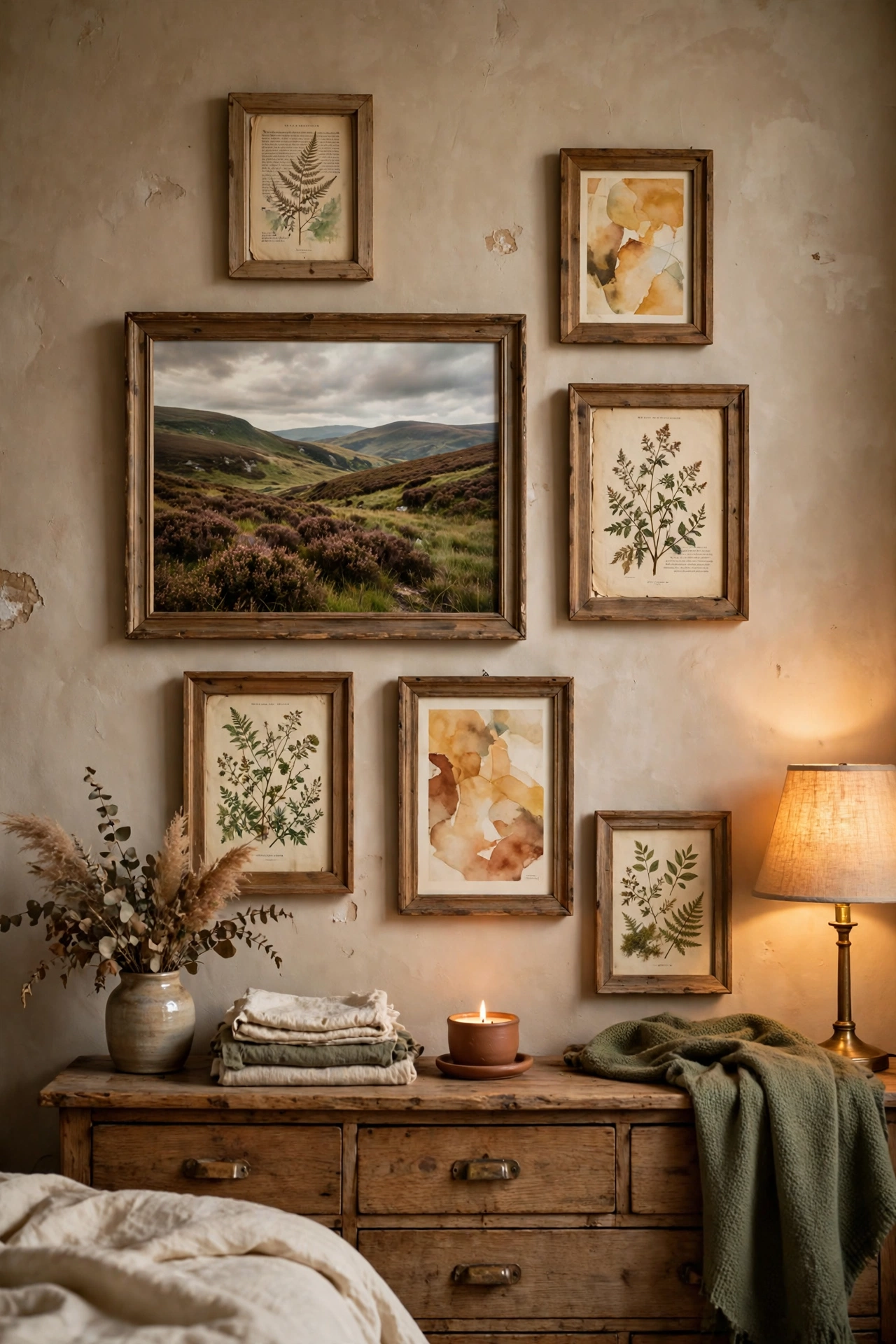
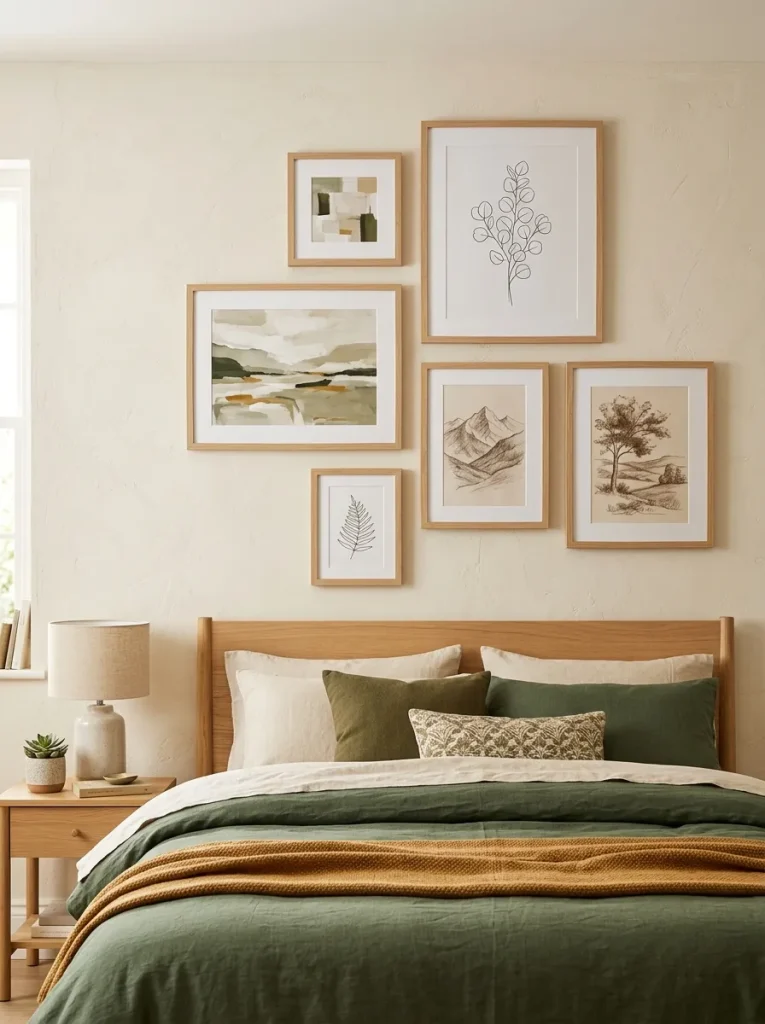
Above my dresser was a blank white wall that made the whole corner feel unfinished, so I built a gallery wall from prints I actually cared about. I collected seven pieces — botanical illustrations from a secondhand bookshop, a moorland photo I took on a hiking trip, two abstract ochre prints — all in a palette of greens, warm browns, and creams. Wooden frames from the thrift store cost me 3 to 5 EUR each. The method that saved me: I traced every frame onto kraft paper, taped the templates to the wall, and lived with the arrangement for two days before driving a single nail. Move things around on paper, not on plaster. I hung the biggest print slightly off-center as the anchor and kept two-inch gaps between frames. It looks like a curated collection instead of a random cluster, and every piece on it means something to me.
10. Textured Macrame Wall Hanging

The wall above the bed needed softness, and a large macrame piece did exactly that. I actually made mine myself from a beginner kit — cotton cord, a driftwood branch, and a pattern I found online — which took one long Sunday afternoon and cost 18 EUR. If knotting is not your thing, thrift stores are full of them for similar money. I hung it on a heavy hook screwed into a stud, since even cotton gets heavy at that size, and combed out the fringe with a wide-tooth comb so it falls evenly. It softens the wall acoustically too; the room sounds calmer with the textile up there, which I did not expect. Maintenance is minimal — a shake outside twice a year and occasionally the vacuum’s upholstery attachment. It is the one piece I catch myself just looking at sometimes, and that is probably the whole point of the aesthetic.
Conclusion
All ten changes together cost me just under 400 EUR and four weekends, and my bedroom went from the most neglected room in my flat to the one I retreat to. If I had to start over, I would do the headboard, bedding, and lighting first — those three carry the whole feeling. The rest is layering, and there is no wrong order to it.