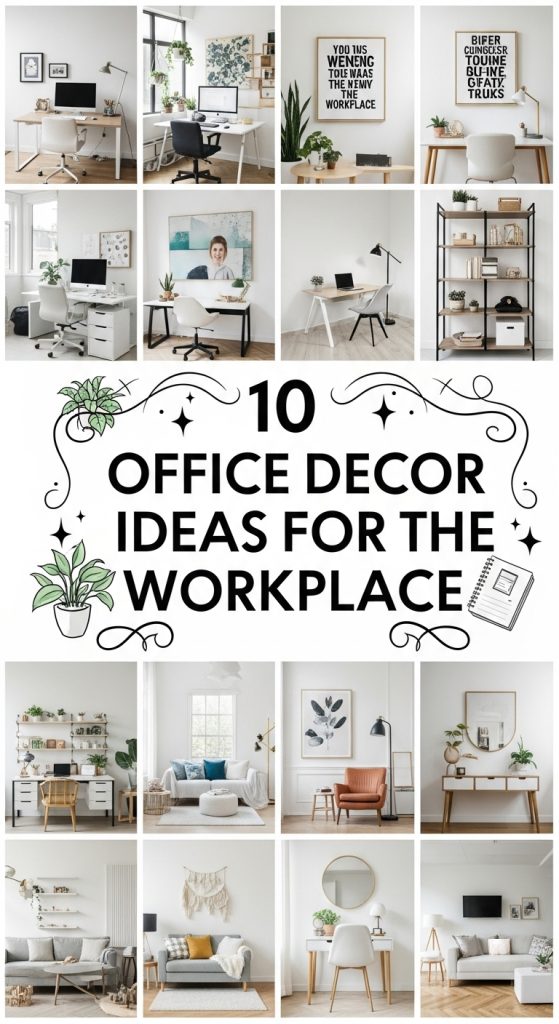
10 Office Decor Ideas for the Workplace
I spent most of last year working from a corner of my flat that I had never really finished, a desk pushed against a bare wall with a chair that hurt my back by lunchtime, and I kept telling myself the room did not matter because I was only there to work. Then a friend who runs a small studio in Munich came round, looked at my setup, and asked me why I would spend eight hours a day in a corner I would never choose to sit in for pleasure, and she had a point I could not argue with. I started changing one thing at a time, plants first, then light, then a chair I actually liked sitting in. These are the ten ideas I tried myself, with the mistakes included so you can skip the ones I made.
1. Incorporate Biophilic Design with Plants
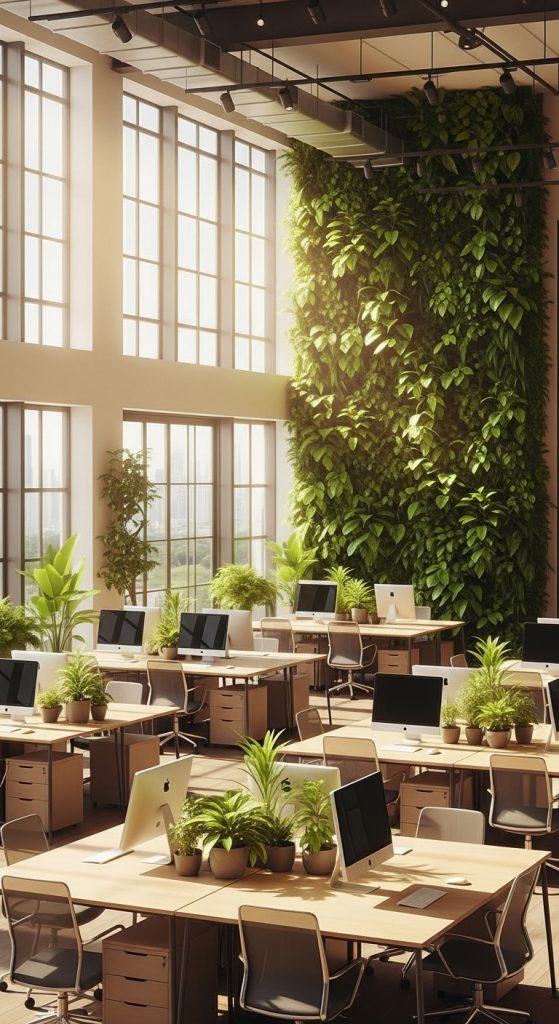
Plants were the first thing I changed, mostly because they were cheap and I could not make the room worse, and I started with a snake plant from a garden centre near Ostbahnhof for about twelve euros because everyone told me it was impossible to kill. I put it on the floor beside my desk where it caught the afternoon light, then added a pothos on the shelf above, and within a week the corner felt less like a storage area and more like a place someone actually worked. I learned the hard way that buying six plants in one go is a mistake, because I watered them all on the same schedule and drowned two of them before I understood that most indoor plants want to dry out between waterings. What worked for me was keeping a small watering can by the desk and checking the soil with a finger on Monday mornings only, which takes about thirty seconds and keeps everything alive. If your desk gets little direct light, stick to snake plants, ZZ plants, and pothos, and skip the fiddle-leaf fig unless you enjoy a plant that sulks for months.
2. Play with Color Psychology
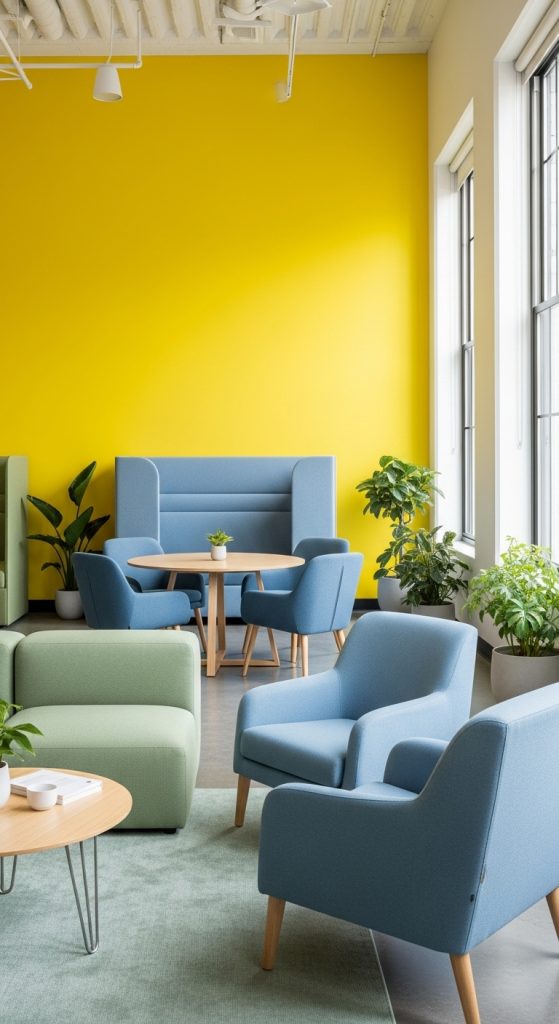
My office corner was painted the same flat white as the rest of the flat, and I had always assumed white was the sensible choice, until I painted one short wall a muted sage green one Saturday afternoon and realised how much the white had been making the room feel like a waiting area. The paint cost me about twenty-five euros and two hours, including the taping, and it changed the mood of the whole corner far more than any piece of furniture I had bought before it. I chose the sage because I wanted something calm for long writing days, and I paired it with a warm mustard cushion for one warm note against the green. If you rent and cannot paint, a large piece of coloured fabric pinned neatly behind the desk, or a row of framed prints in one colour family, gives you most of the same effect without a word from your landlord. The point is not to follow a colour chart, it is to pick one colour that makes you feel steadier and let the rest of the room stay quiet around it.
3. Personalize Workstations
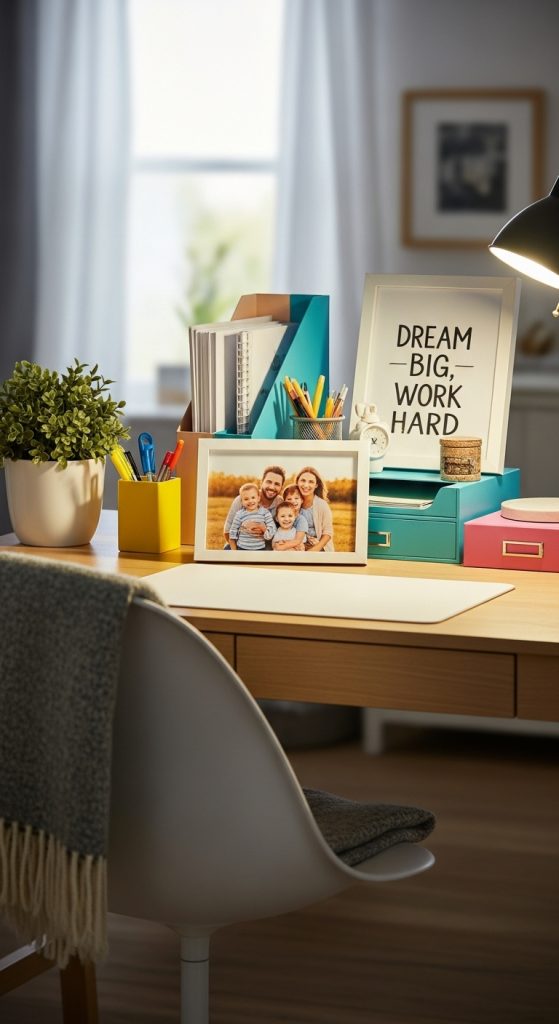
For a long time my desk looked like a showroom display, everything matched and nothing was mine, and I only noticed how strange that felt when I cleared everything off one evening and put back just three things I actually liked, a framed photo from a trip to the Bavarian lakes, a ceramic mug my sister made, and a small cork board with postcards pinned to it. The room immediately felt like mine, and I stopped avoiding sitting down at the desk in the mornings. I keep the personal things to one corner of the desk now, because I learned that spreading them across the whole surface just turns into clutter by Thursday and I spend Friday tidying instead of working. If you share an office, a small tray or a single shelf for personal things keeps the desk feeling like yours without spilling into your neighbour’s space. The goal is not decoration for its own sake, it is having one or two things in view that remind you of your life outside work, which is a surprisingly good way to get through a long afternoon.
4. Invest in Comfortable and Stylish Furniture
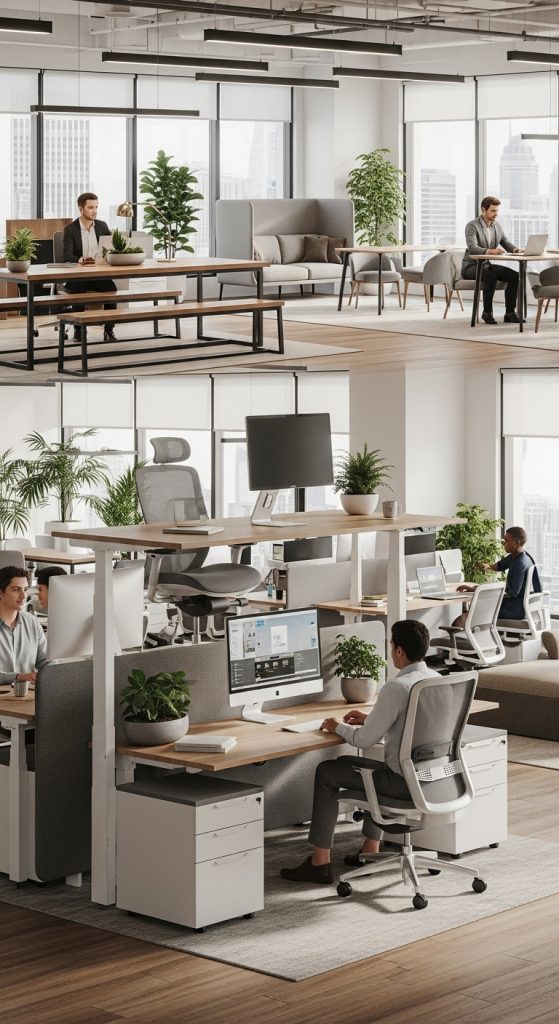
I worked for two years on a dining chair I had dragged into the corner, and my shoulders ached every evening, and I kept telling myself a proper office chair was an extravagance until I finally bought a second-hand ergonomic chair for about ninety euros and realised I had been paying for the cheap chair with my back. The difference was immediate and a little embarrassing, because I had spent so long normalising the ache that I had forgotten what sitting comfortably at a desk felt like. If you buy one thing for your office, make it the chair, and try it in person if you can, because seat depth and lumbar support vary so much between models that a chair someone else loves can be completely wrong for you. My desk was the second fix, a simple solid-wood top on two trestle legs, about 140 by 70 centimetres, which gives me room for a monitor, a notebook, and a coffee without feeling crowded, and cost far less than the fancy adjustable desks I had been looking at. Buy furniture that fits your body and your room, not furniture that photographs well, and your workdays will quietly get easier.
5. Create Inspiring Wall Art and Murals

The wall above my desk stayed empty for months because I could not decide what belonged there, and then I found a large framed print of a mountain lake at a flea market for fifteen euros, hung it slightly off-centre, and the whole corner suddenly had a focal point that made the desk feel intentional instead of improvised. I have since learned that one large piece works far better than a dozen small ones, because a cluster of little frames just reads as clutter from across the room. If you like changing things often, a picture ledge is a good solution, since you can lean prints against the wall and swap them in seconds without new nail holes each time. Avoid the generic motivational quotes printed in curly script, because they stop meaning anything after the first week and they make the room feel like a hotel lobby. Choose art you would genuinely want to look at during a boring phone call, and the wall will do its job without any effort from you.
6. Optimize Lighting for Comfort and Style
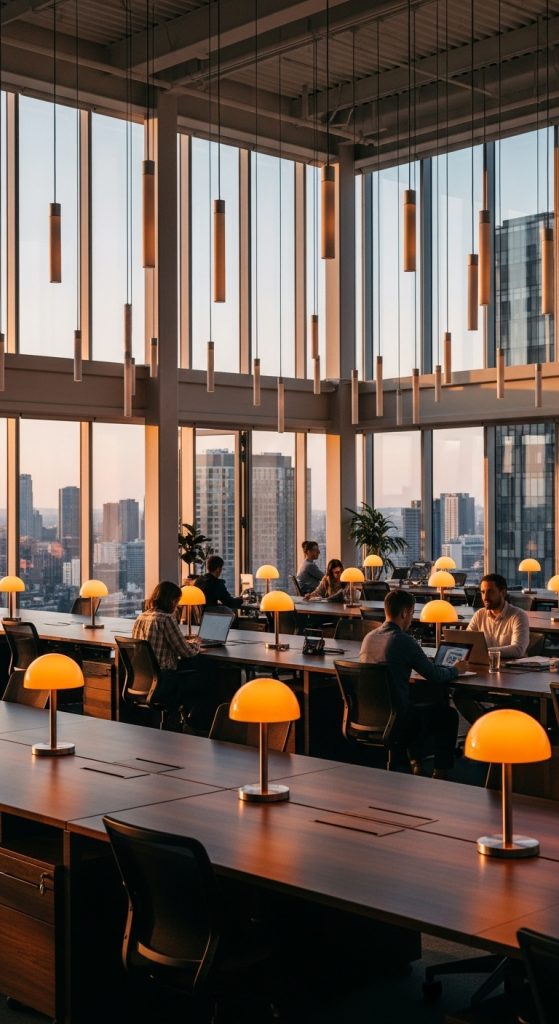
Lighting was the change I resisted longest, because my ceiling light seemed fine, until I spent one grey February week working under it and noticed I was getting headaches by three in the afternoon and squinting at my screen for no good reason. I moved my desk closer to the window first, which cost nothing and helped immediately, and then I bought a simple desk lamp with a warm bulb for about thirty euros so I could light the desk itself instead of flooding the whole room from above. The combination of daylight from the side and a warm pool of light on the desk made the corner feel calmer and my eyes stopped aching. I learned that cool white bulbs are a mistake in a home office, because they make everything feel like a dentist’s waiting room, while a warm bulb around 2700 Kelvin feels like evening light and is much kinder for long sessions. If your desk faces a window directly, put a sheer curtain up, because glare on the screen is worse than a slightly dimmer room and you will end up tilting the monitor at strange angles.
7. Design Collaborative Spaces
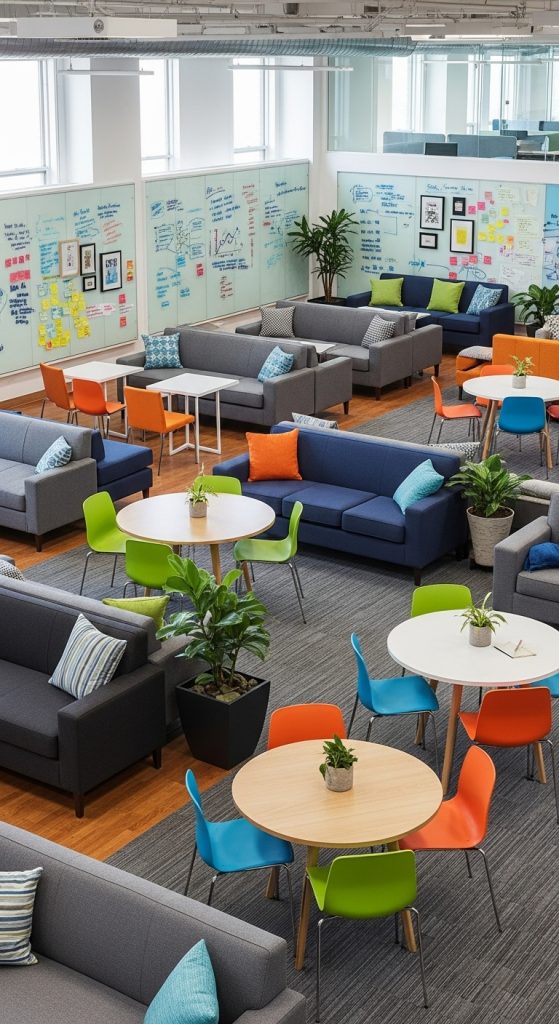
When a friend and I started sharing my flat as a workspace two days a week, I realised my office corner was built for one person hiding from the world, and there was nowhere for two people to sit and talk through an idea without one of us perching on the edge of the bed. I cleared a space by the window, added a small round table I found second-hand for forty euros and two mismatched chairs, and that little corner became the place where we actually planned things. A round table works better than a rectangular one for conversation, because nobody ends up sitting at the far end like they are chairing a meeting, and a couple of cushions on the chairs make people stay and talk instead of rushing back to their screens. If you work alone most of the time, this corner still earns its keep as a reading spot or a place to take a call away from the desk. The mistake to avoid is turning it into a second desk covered in cables, because then it is just more workspace and nobody will ever sit there to talk.
8. Add Texture with Rugs, Curtains, and Fabrics
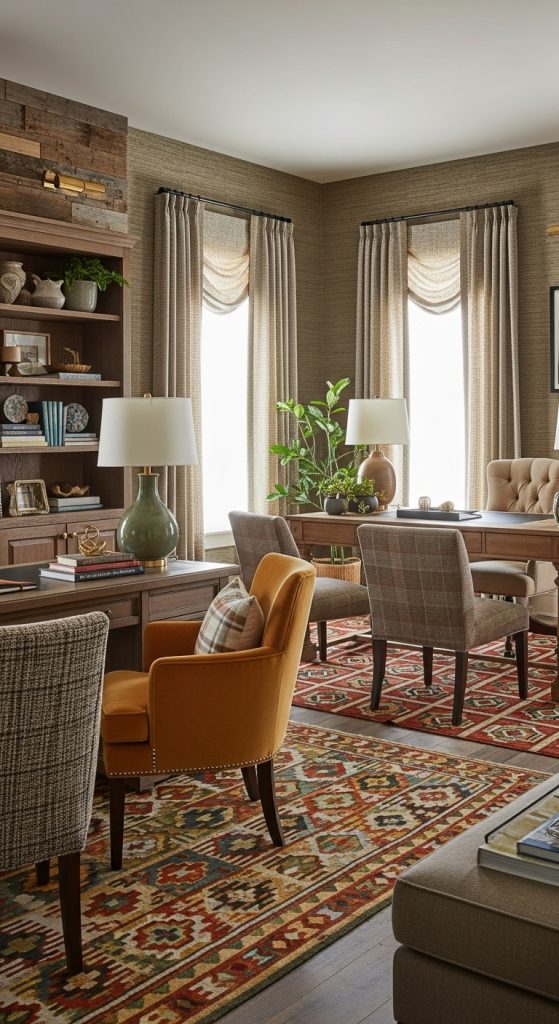
My office floor was bare laminate and every sound in the room echoed slightly, footsteps, the chair rolling, a mug set down too hard, and I had not connected that echo to the flat, tiring feeling of the room until I put down a thick wool rug and the whole space suddenly sounded softer and felt warmer underfoot. The rug was second-hand, about sixty euros, roughly 160 by 230 centimetres, and it sits under the desk and chair so my feet rest on wool instead of cold floorboards all day. I added a linen curtain at the window next, in a warm natural tone, because the bare window made the room feel unfinished and the fabric softened the hard edges of the desk and shelves. The practical warning is to choose a low-pile rug if your chair has wheels, because a deep shag rug will fight you every time you roll back from the desk. Texture is the quietest change on this list, but it is the one visitors notice first, because a room full of soft surfaces simply feels more welcoming than a room full of hard ones.
9. Showcase Company Culture and Values

I once visited a small design studio where the whole back wall was covered in framed postcards from clients, sketches from finished projects, and a row of little awards on a shelf, and I remember thinking that the room told me more about the company in thirty seconds than their website had in ten minutes. When I came home I tried a modest version of the same thing, a shelf above my desk with a few printed pieces from projects I was proud of and a small framed photo of my first market stall, and it changed how I felt about sitting down to work because the room reminded me of what I had actually done. If you work for a company rather than for yourself, the same idea works with team photos or a framed mission statement you actually believe in. The mistake is turning it into a shrine of logos and slogans, because a wall of branding feels like a reception area and nobody relaxes in a reception area. Keep it to things with a story behind them, something a visitor might ask about, and the wall will stay honest about where you are now.
10. Curate a Relaxing Break Area
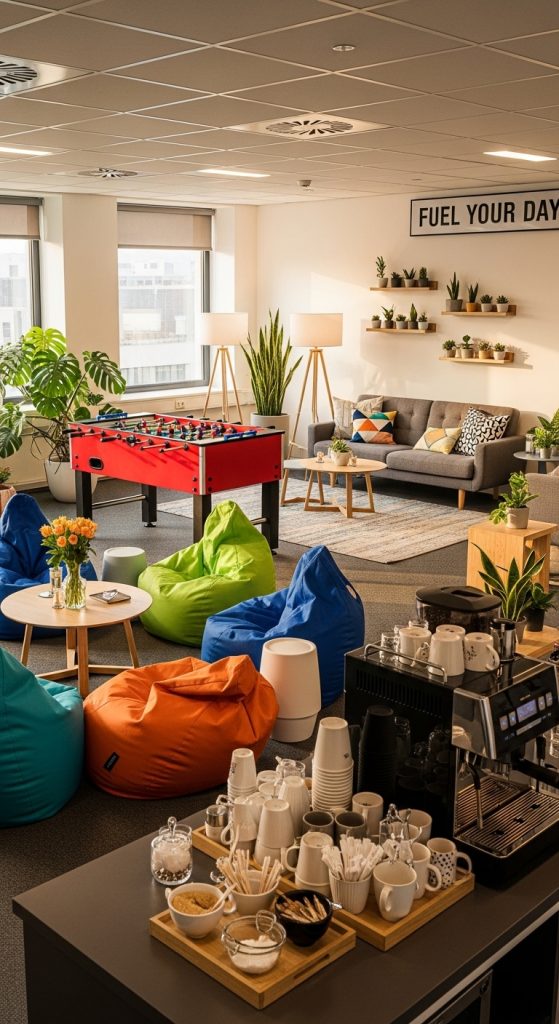
I used to eat lunch at my desk, hunched over the keyboard, and call it efficient, until I noticed I was returning to work in the afternoon more tired than I had been before lunch, which is not what a break is supposed to do. So I set up a small break corner by the window with a second-hand armchair I found for fifty euros, a low side table, and a basket with a few books and a puzzle, and I made a rule that lunch and coffee happen there, never at the desk. The difference was obvious within a week, because stepping away from the screen for twenty minutes, even just to sit in a different chair and look out of the window, sent me back to work with a clearer head. I keep the break corner deliberately low-tech, no charger, no laptop stand, just a lamp and a blanket, because the moment it becomes a second workstation it stops being a break. A small plant and a rug underneath the chair make it feel separate from the work area even though it is only two metres away, and that small distance turns out to matter a lot.
Conclusion
None of these ideas needed a big budget or a renovation, and the ones that helped me most were the cheapest, the plants, the rug, and moving the desk toward the window. If you only try one thing this weekend, pick the change that fixes whatever bothers you most about your workspace right now, because a room that feels good to sit in is a room you will actually want to work in.