After hosting my first Thanksgiving, I realized something: nobody remembered the turkey recipe, but everyone remembered the table. There’s a reason for that — you spend three hours looking at it. So the second year, I treated the table setting as its own project, planned a week ahead, and built it in layers like I was dressing a stage. It worked. Guests sat down and actually gasped, which is not a reaction I usually get for furniture arrangement. Here are the ten table-setting ideas I used, refined, or stole from better hosts — each one tested at my own dining table with real food, real candles, and a cat who considers tablecloths a personal challenge.
1. Harvest-Inspired Centerpieces
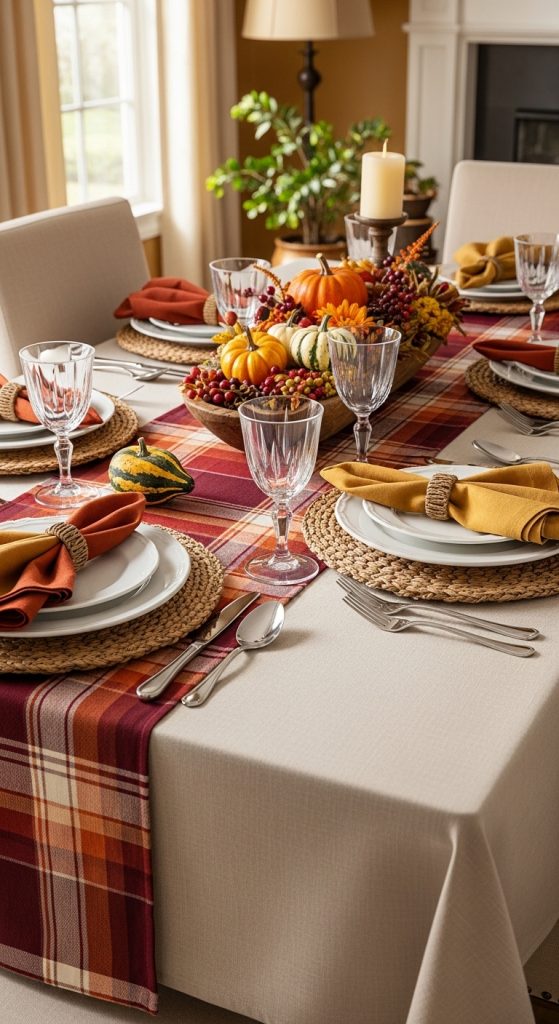
My centerpiece rule, learned the embarrassing way: nothing taller than a wine glass in the middle of the table. The first year I built a glorious tall arrangement and spent dinner peering around it like a meerkat. Now it’s a low wooden board with mini pumpkins, eucalyptus sprigs, pinecones, and three pillar candles at staggered heights. Everything sits below the sightline, the candles throw warm light upward onto everyone’s faces (flattering for all), and the eucalyptus releases scent when the room warms up. I assemble it on the board in the kitchen, carry the whole board to the table, and lift it off in one piece when it’s time for dessert and the table needs clearing. A centerpiece on a tray is a centerpiece you can actually live with during a long dinner.
2. Layered Table Linens
Layering linens is the difference between “we’re having dinner” and “we’re having an occasion,” and it costs almost nothing if you shop your own cupboards. My base is a plain cream tablecloth, then a runner in deep rust down the center, then individual placemats in a natural linen. Three layers, three textures, and suddenly the table has depth. The runner is the workhorse — it protects the cloth from the hot dishes, defines the center line for the centerpiece, and adds the color. I iron the tablecloth the day before (wrinkled linen says “I gave up”) but I don’t iron the runner — a little rumple in a runner reads as rustic, while a rumpled tablecloth just reads as rumpled. If you only buy one thing, make it a good runner in a harvest tone; it does more visual work than anything else on the table.
3. Elegant Tableware and Chargers
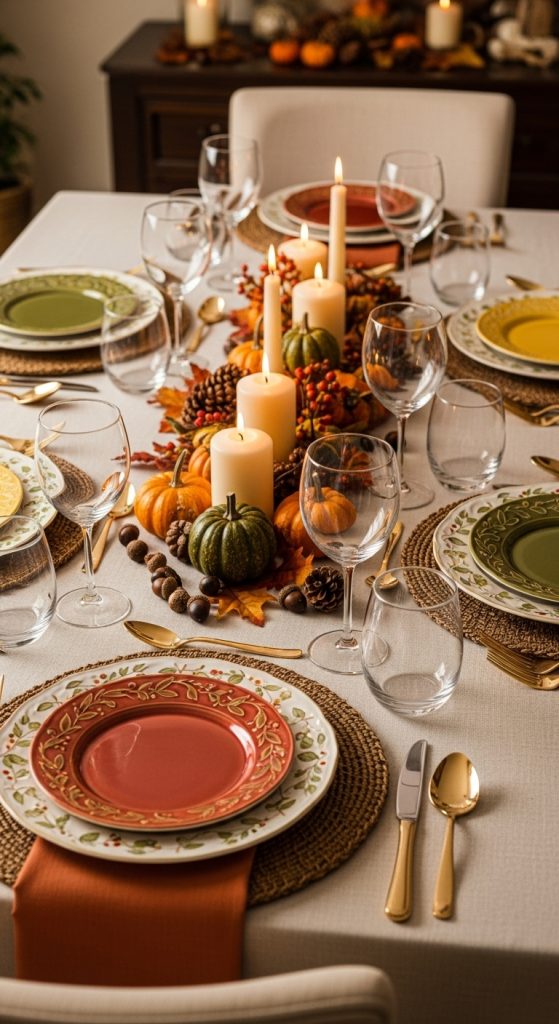
Chargers — those big decorative plates under the dinner plates — are the single item that makes a table look restaurant-level, and I didn’t own any until last year. I bought twelve woven rattan chargers for about thirty euros, and they changed everything: suddenly my everyday white plates looked deliberate, framed in texture. The charger stays through the whole meal while plates come and go, so it’s the constant visual anchor. If rattan isn’t your style, hammered metal or dark wood chargers do the same job. My plates themselves are plain white, which I recommend — patterned plates fight with the food and the centerpiece, while white plates make the food look better and let the chargers and linens carry the design. Twelve matching chargers, mismatched everything else: that’s my formula and I’m sticking to it.
4. Seasonal Napkin and Ring Presentation
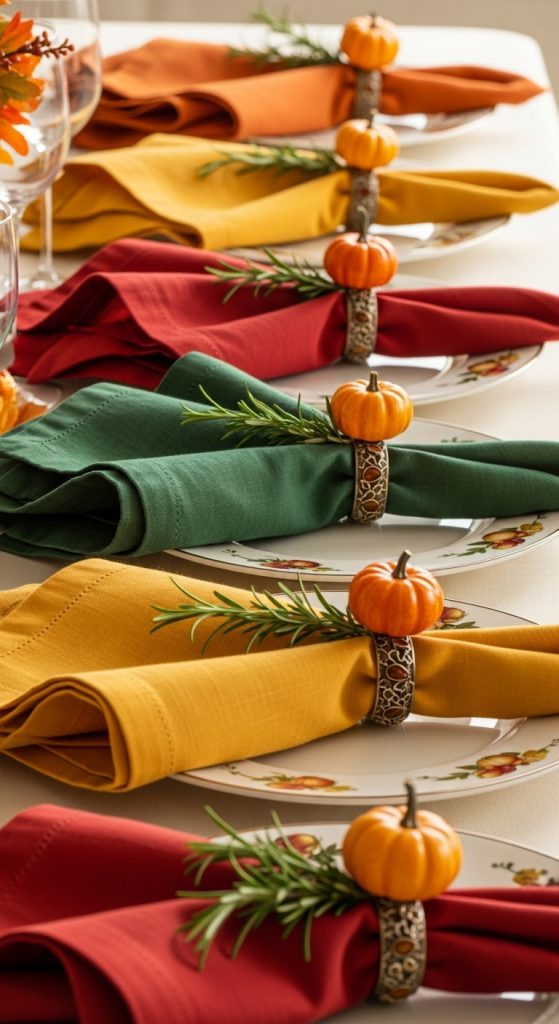
The napkin is the smallest canvas on the table and the one guests handle first, so I make it count. My current move: a cream linen napkin folded in a simple rectangle, a sprig of rosemary and a dried orange slice tucked into a plain wooden napkin ring. It takes thirty seconds per place setting and it looks like a stylist did it. I stopped doing elaborate napkin folds years ago — the fancy swan fold collapses the moment someone picks it up, and a limp swan is worse than no swan. The rosemary does double duty: it looks beautiful and guests crush it between their fingers and smell it all through dinner. Buy linen napkins, not paper, for a dinner like this; paper napkins at a Thanksgiving table feel like a contradiction, and decent linen ones last for years.
5. Creative Place Cards
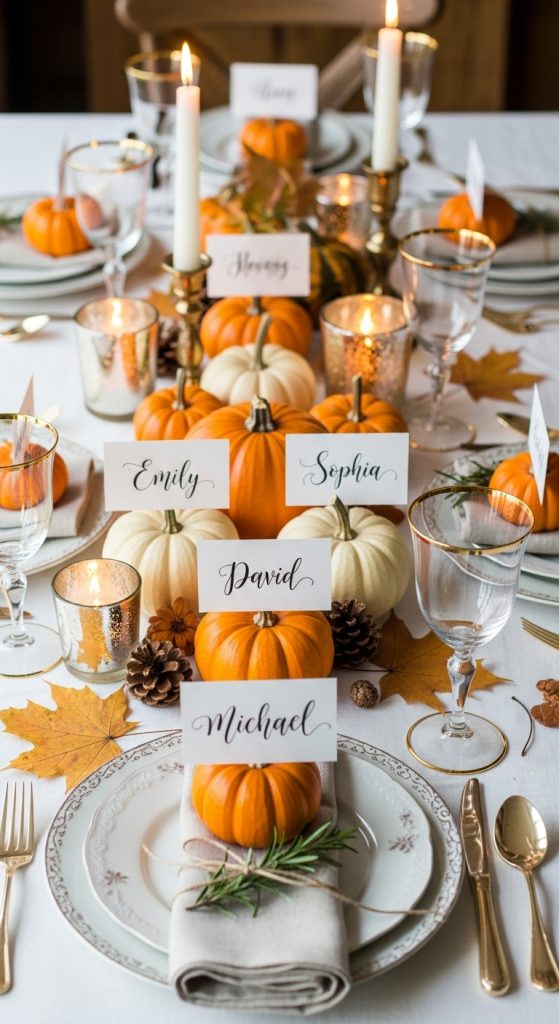
Place cards sound fussy until you host ten people and watch everyone hover awkwardly with plates in their hands. Mine are mini pumpkins with names written in gold pen — they double as the place setting and a take-home favor, and people love them. The gold pen on a white baby-boo pumpkin is the prettiest combination; on orange pumpkins use a dark brown marker instead. Beyond the practicality, place cards let you engineer the seating, which matters more than anyone admits: separate the two relatives who debate politics, seat the shy guest next to the warm conversationalist. I write the names the morning of, prop each pumpkin on its side so the name faces outward, and set them on the chargers. Total cost: ten mini pumpkins and a pen I already owned. Total value: a dinner that starts smoothly instead of awkwardly.
6. Candlelight for Warmth and Ambiance
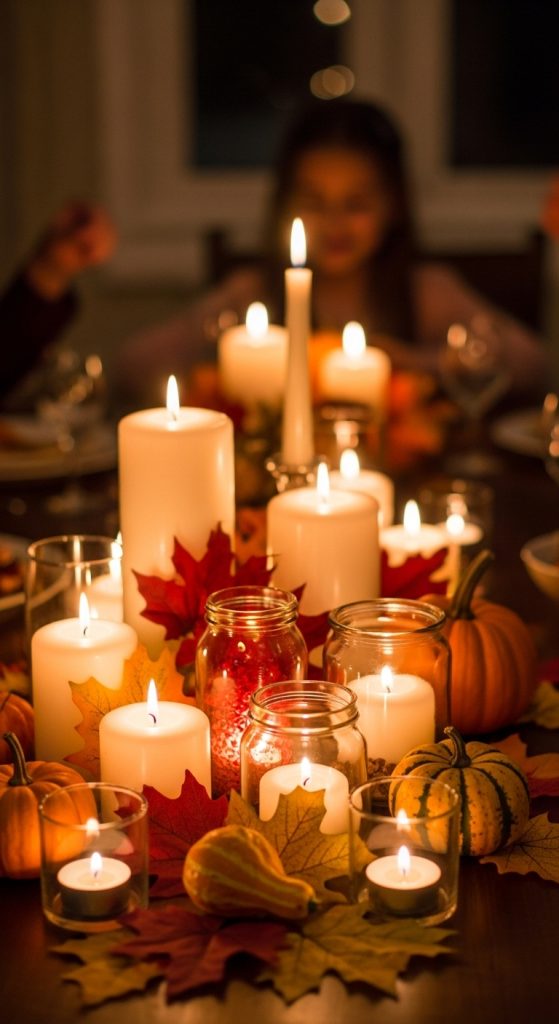
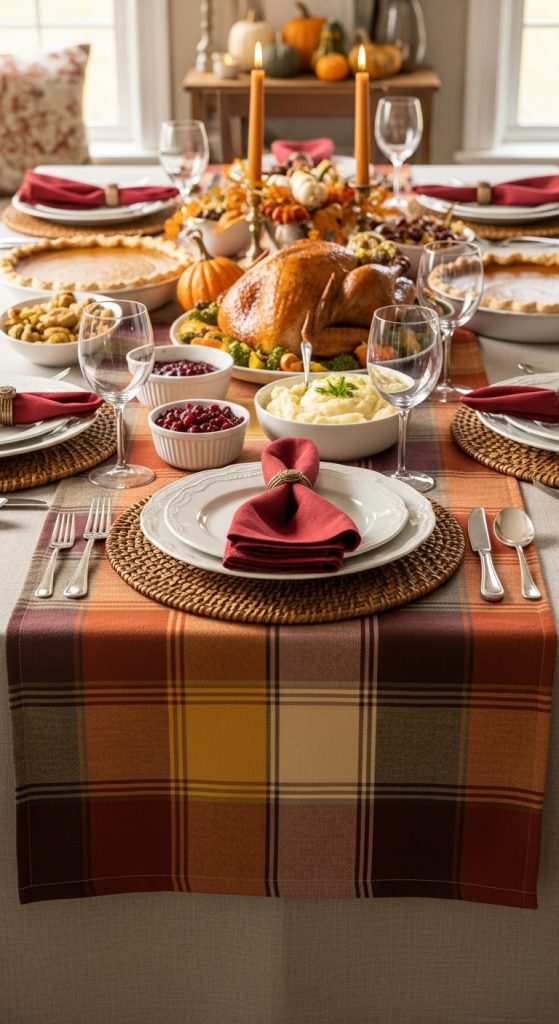
A November dinner without candles is just eating in the dark, and I mean that literally — it’s pitch black outside by five. I run unscented pillars down the center of the table in a mix of heights, plus tealights in small glasses scattered between the serving dishes. The two rules I’ve settled on: unscented only (scented candles and roast turkey are a combination nobody wants), and keep flames clear of anything flammable and anything the cat can reach. I use LED tealights in the low glasses near the table edge — from a seated position you genuinely can’t tell — and real pillars in the center where they’re out of paw range. Light them thirty minutes before guests arrive so the wax pools nicely and the room has that glow when people walk in. Candlelight is the cheapest atmosphere money can buy, and at a harvest dinner it’s non-negotiable.
7. Layered Centerpiece Variations
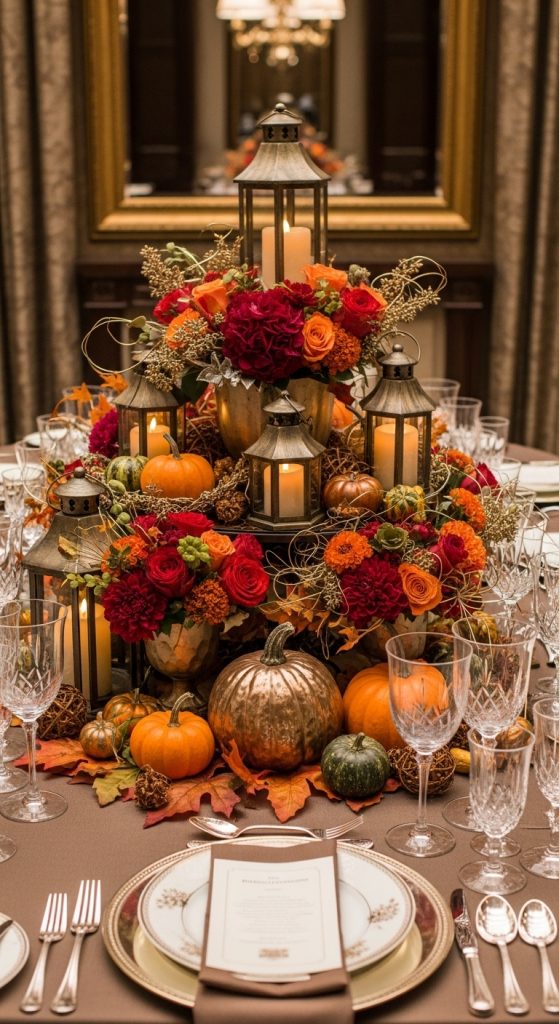
One long centerpiece down a rectangular table can look like a runway — impressive but monotonous. Last year I tried three small arrangements instead of one big one: a pumpkin-and-candle cluster at each third of the table, with eucalyptus sprigs trailing between them to connect the composition. It was better in every way — more interesting to look at, easier to move when serving dishes arrived, and each guest had something pretty near their seat. The variation principle: same ingredients, different arrangements. All three clusters used pumpkins, candles, and greenery, but one was tall, one was low and wide, one was heavy on the candles. Unity with variety — that’s the whole secret of table design, and honestly of most design. When the main courses came out, I lifted the middle cluster onto the sideboard in one move and the table breathed.
8. Seasonal Serving Platters and Bowls
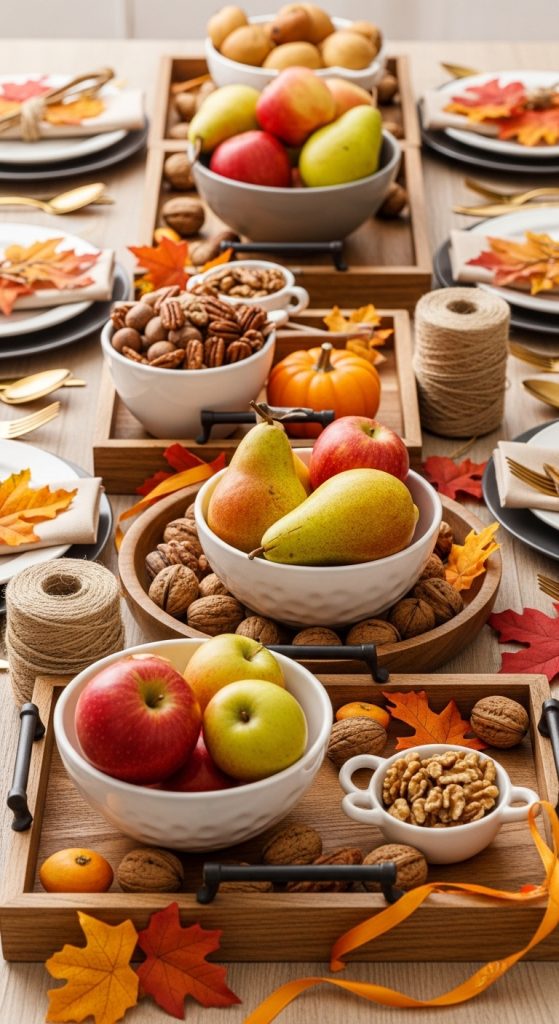
Your serving dishes are part of the tablescape whether you plan it or not, so plan it. I serve in white ceramic and wood — big white platters for the turkey and sides, wooden bowls for bread and salad — and the food becomes the decoration. A glistening roast on a white platter surrounded by roasted vegetables needs no styling; it is the styling. My one investment was a large wooden serving board, which handles the turkey, then the cheese course, then gets wiped down and lives on my counter the rest of the year. Avoid serving in the cooking pots (I did this the first year; the table looked like a kitchen accident) and decant everything into serving dishes before it hits the table. Warm the platters in the oven for ten minutes first — food stays hot longer and the table feels professional.
9. Seasonal Accents and Decorative Elements
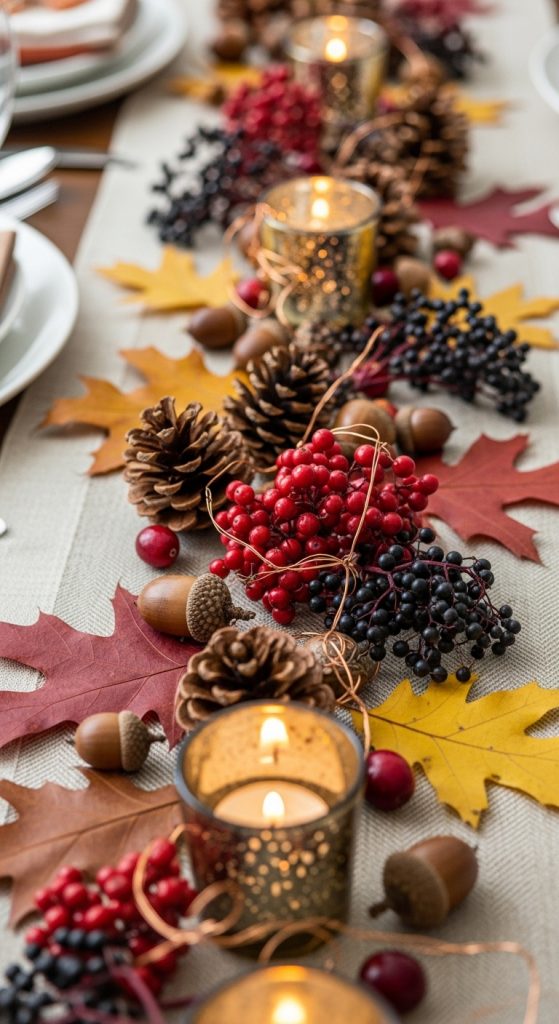
The accents are the jewelry of the table — small, scattered, and what people actually pick up and examine. Mine: dried orange slices tucked into the napkin rings, a few walnuts in their shells scattered along the runner, cinnamon sticks tied with twine at each water glass, and a small dish of cranberries that catches the candlelight like rubies. The rule is restraint: pick three accents maximum and repeat them down the table, because ten different cute ideas becomes clutter. Everything I use is natural and compostable, which means cleanup is easy and nothing goes to waste. The cranberry dish is my favorite — it costs two euros, takes ten seconds, and guests always comment on how the berries glow in the candlelight. Small things, repeated with discipline, beat big gestures every time.
10. Coordinated Color Schemes
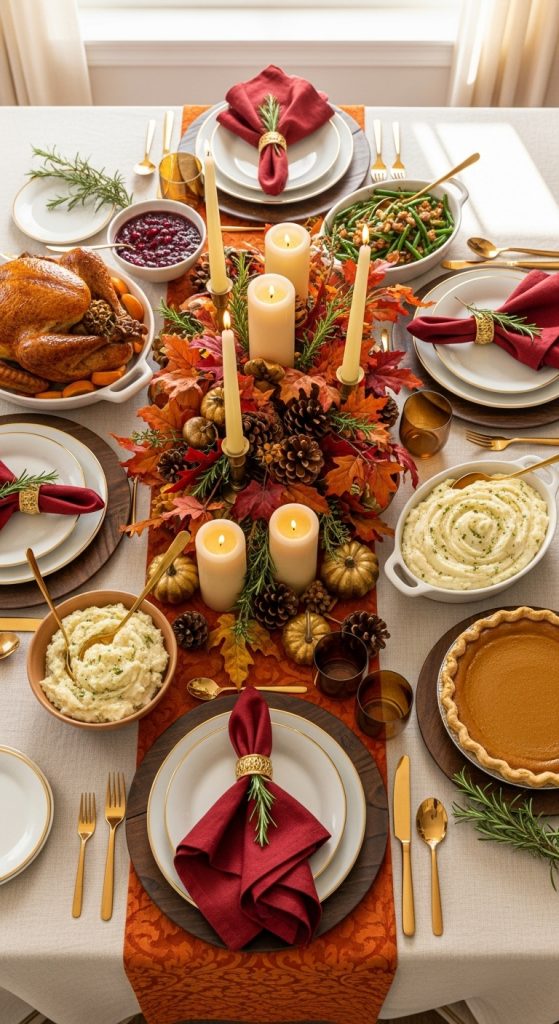
The thing that separates a beautiful table from a busy one is a disciplined color palette, and mine is cream, rust, deep green, and gold — harvest colors, nothing else. Every element auditions against the palette: the rust runner, cream linens, green eucalyptus, gold pen on the place cards, brass candlesticks. When everything shares the same four colors, mismatched plates and different glassware stop looking mismatched and start looking curated. My first Thanksgiving table had no palette — red napkins, blue plates, silver and gold mixed — and in photos it looks chaotic. Now I keep a small box of table linens and accents in exactly these colors, and setting the table is just pulling from the box. Pick your four colors before you buy or borrow anything, and the table practically styles itself.
Conclusion
The table I set last November took me an afternoon to plan and twenty minutes to assemble, and it’s the part of the evening people still talk about. Plan the layers, keep the palette tight, light the candles early — and put the centerpiece on a tray so you can move it when the turkey arrives. Your guests will remember the table long after they’ve forgotten the seating plan.