Last summer a friend asked me to help with the tables for her wedding, and I said yes before I had really thought it through. The reception was one long table, twelve metres of it, forty guests sitting knee to knee in a garden just outside Munich. I spent a whole Saturday afternoon in my flat with a borrowed trestle table, a tape measure, and a pile of greenery from the Viktualienmarkt, working out what actually fits on a narrow banquet table and what just gets in the way. Everything below comes from that afternoon and from the wedding itself, including the mistakes I made, because a long table forgives very little.
1. Trailing Italian Ruscus & Taper Line
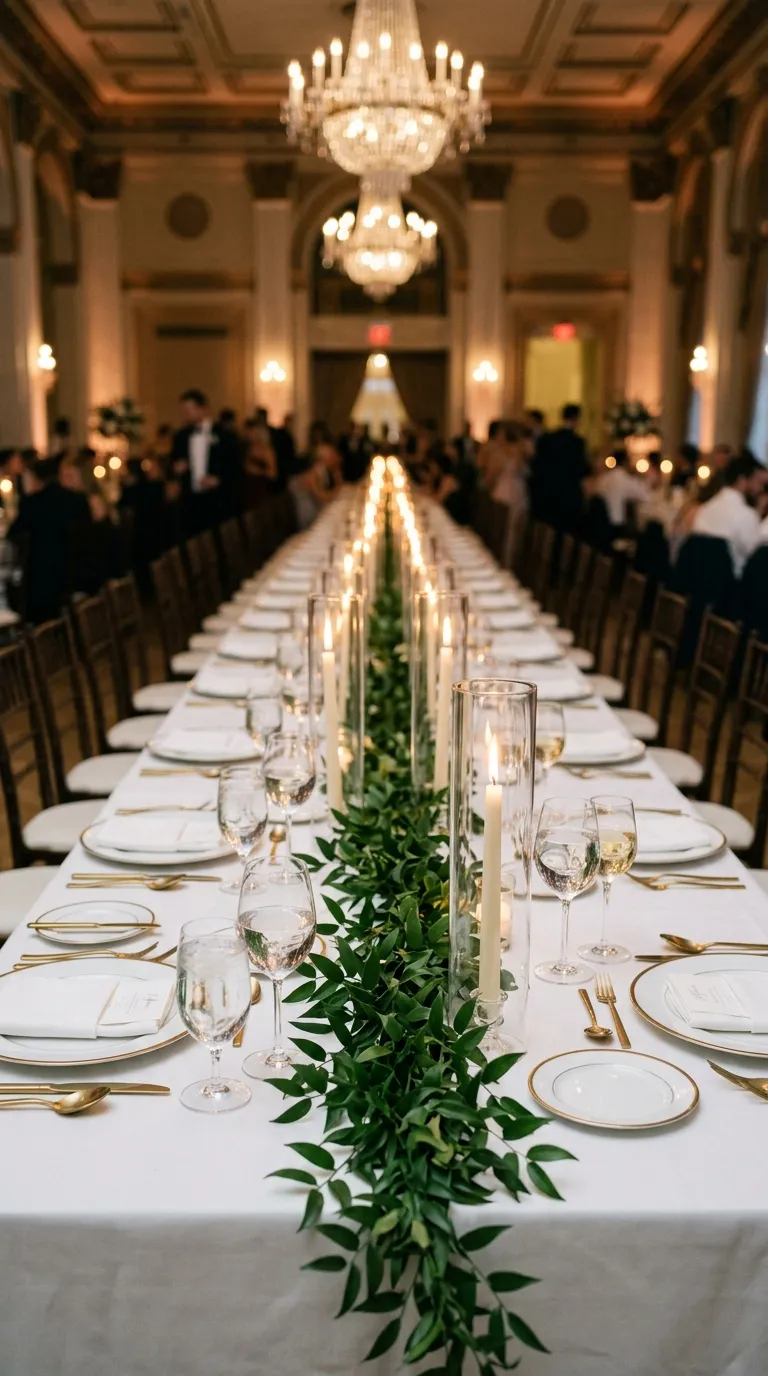
I started with this one because it is the most forgiving look I know, and I needed a win before I tackled anything fiddly. I laid a plain ivory linen runner down the centre of my test table, then wove fresh Italian ruscus end to end in a loose band about 15 to 20 centimetres wide, keeping it well inside the middle third of the table so plates and glasses still had room. I set brass taper holders every 45 to 60 centimetres along the greenery, slipped in ivory dripless tapers, and covered each one with a tall glass hurricane sleeve, because the garden had a breeze and bare tapers would have dripped wax onto the linen within an hour. What surprised me was how long the ruscus lasted: cut the morning before and kept in a bucket of cold water overnight, it still looked crisp twelve hours later with no water at all. My one mistake was letting the greenery creep too wide at first, so it brushed against the bread plates. A bunch of ruscus cost me about 12 euros at the market, and I reused the brass holders and sleeves I already owned.
2. Continuous Bud Vase & Votive Runner
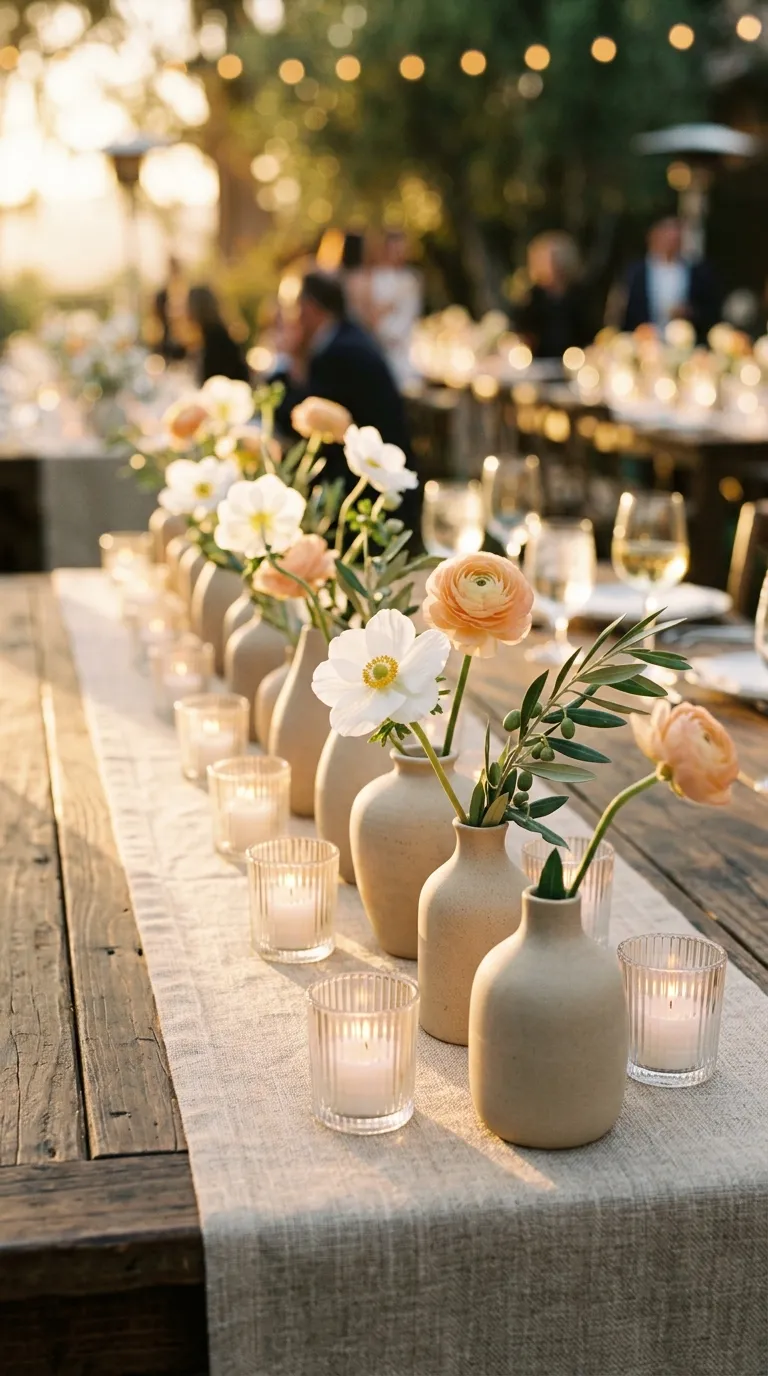
This is the idea I reach for when a couple wants flowers but does not want to pay a florist for full arrangements, and I tested it on my dining table with vases I had collected over years. I spaced small matte ceramic and ribbed glass bud vases, about 10 to 18 centimetres tall, down the centre of the table, roughly three or four per two and a half metres, and put a single stem in each one, a ranunculus here, a cosmos there, a sweet pea leaning at a slight angle so the heights never lined up too neatly. Between the vases I clustered three small ribbed-glass votives, and I set the whole row in a gentle zigzag rather than a dead straight line, which sounds fussy but honestly took thirty seconds and made the table look arranged by hand instead of by ruler. I stripped every leaf below the waterline so the water in the clear glass stayed clean all evening, and I filled the vases only two thirds full so nobody spilled water on the tablecloth when they reached across.
3. Staggered Glass Cylinders & Floating Wicks
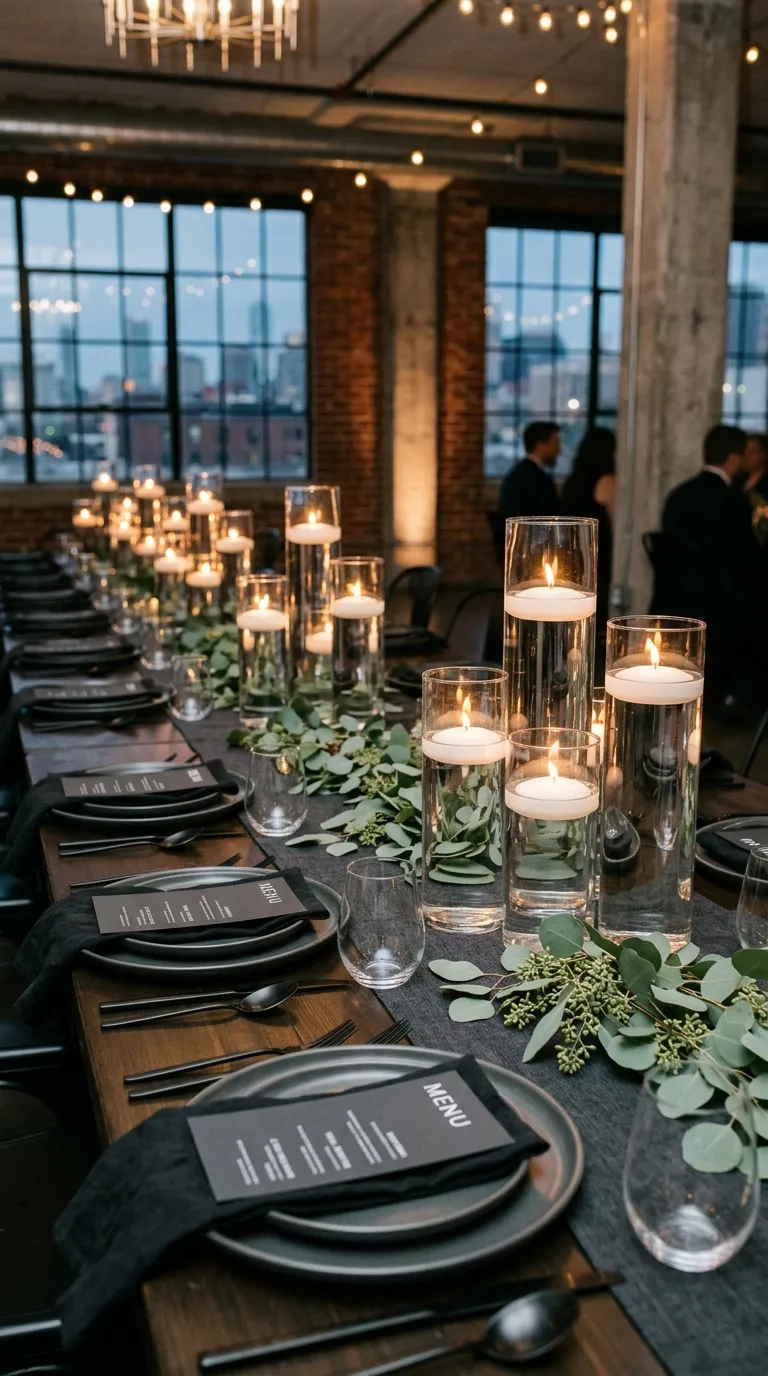
I was nervous about this one because water and weddings sound like a bad combination, but it turned out to be one of the easiest looks to get right, as long as you do the filling at the venue and not at home. I grouped clear glass cylinders in threes, 15, 20 and 25 centimetres tall, every metre or so down the table, and I carried them to the venue empty, in a cardboard box stuffed with tea towels, then filled them on site with a long-spout watering can, leaving about four centimetres of space below the rim. I used room-temperature distilled water, which prevents those tiny air bubbles from clinging to the inside of the glass, and it genuinely worked, the glass stayed crystal clear all evening. A small white floating candle went on each one, wick kept dry, with a few eucalyptus sprigs and flat sheet moss scattered between the groups, and low votives filled the gaps for a soft glow once the sun went down. Do a trial run with one set at home first, because the first time I filled a cylinder too full, the candle drifted to the edge and stuck to the glass.
4. Loose Gauze Cheesecloth & Scattered Citrus
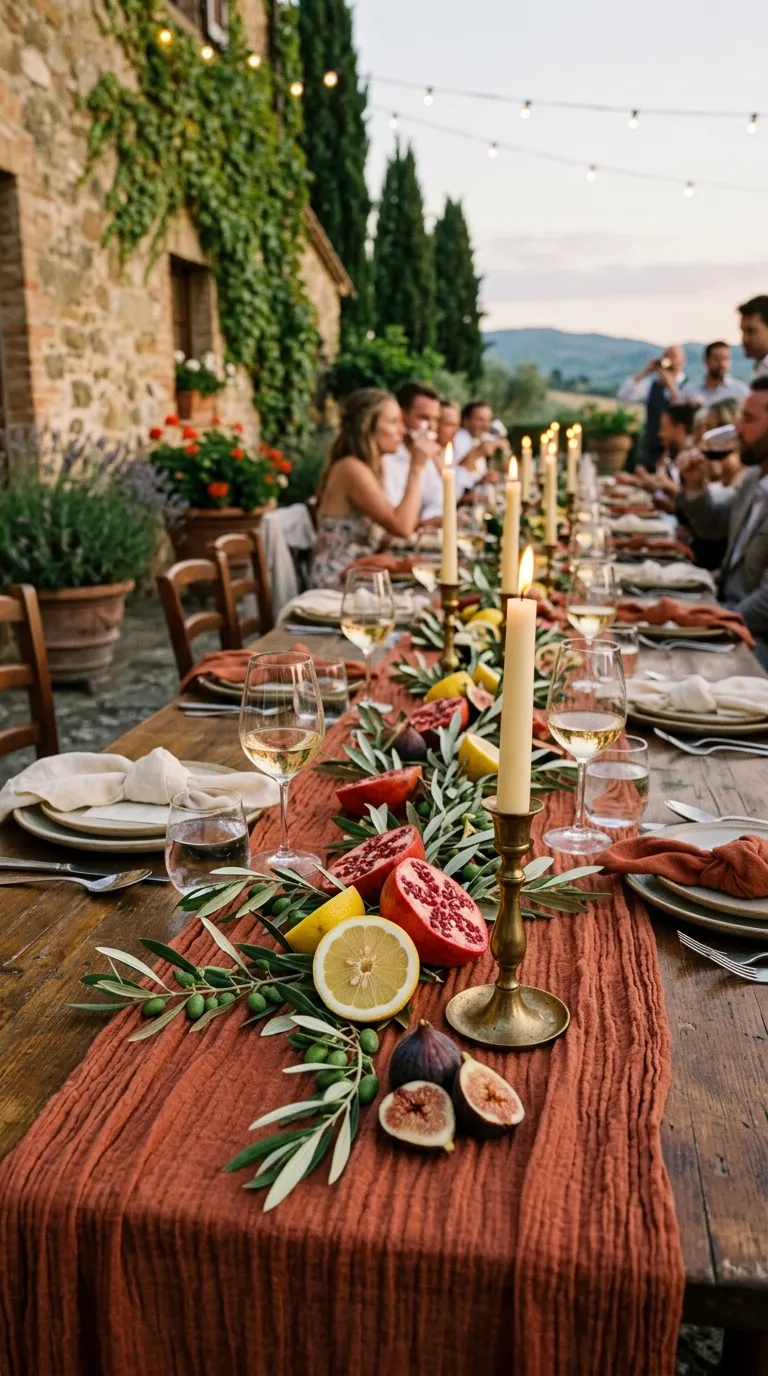
This is the happiest table I have ever set, and also the one that smells the best, which matters more than I expected when forty people sit down to eat. I bought a length of terracotta-coloured gauze cheesecloth, about three metres for 8 euros, and laid it down the centre of the table in loose bunches instead of pulling it flat, so it made soft waves along the wood. Then I wove in fresh olive branches and rosemary sprigs, and scattered whole and halved lemons, blood oranges and dark figs along the folds, with a few beeswax tapers in brass holders tucked between them. The one thing I would do differently is the timing: I cut the citrus the night before for my test run and the cut faces had gone dull and dry by morning, so on the wedding day I sliced everything an hour before the guests arrived, and the fruit looked freshly cut and glistening. I also learned to put a small wax disc or a silicone leaf under each cut half, because lemon juice on pale gauze leaves a mark you cannot wash out.
5. Low Rectangular Floral Troughs
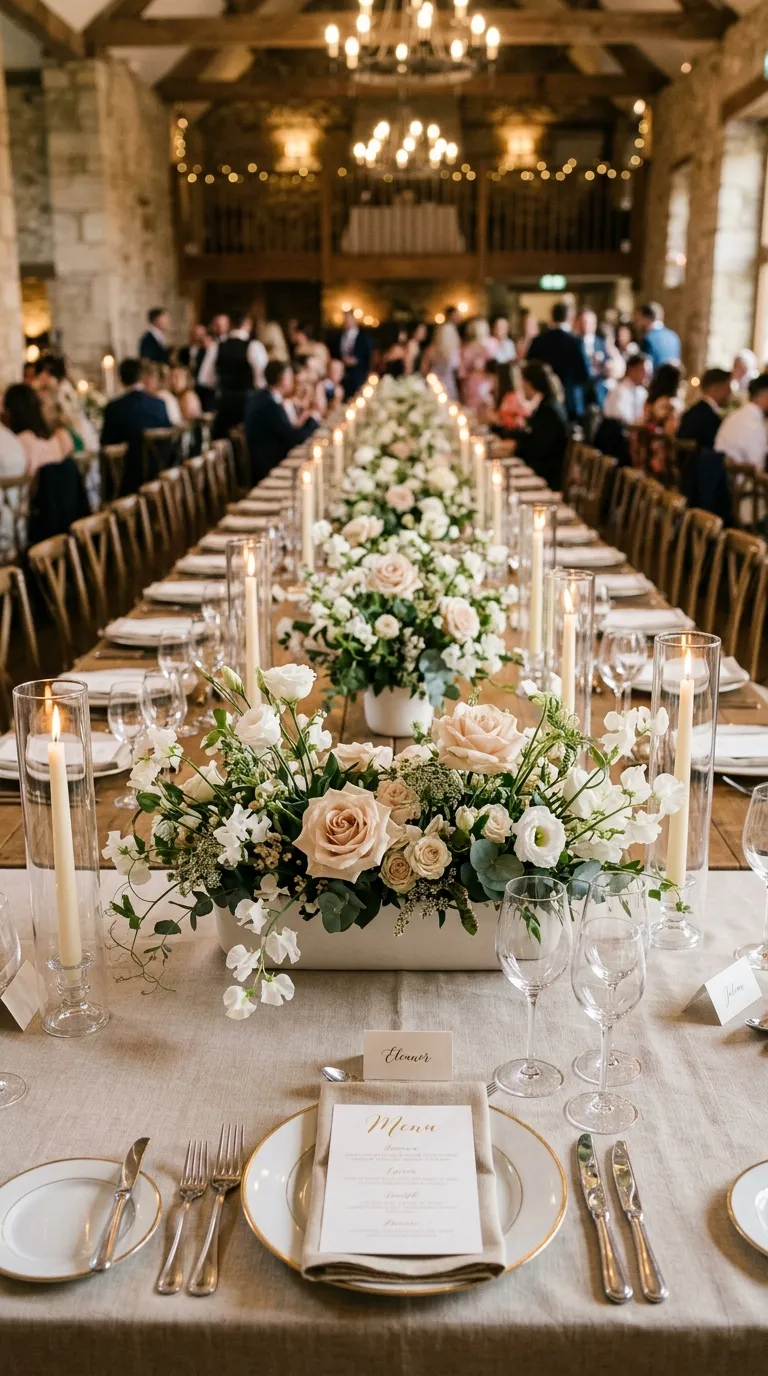
If you want a long table to look like a proper garden without the flowers getting in anyone’s face, these low troughs are the answer, and I wish I had tried them sooner. I used shallow matte-white ceramic troughs, about 30 to 45 centimetres long and only 5 to 8 centimetres high, set down the table axis with about 45 centimetres of breathing room between each one, and I fixed a metal pin frog, a kenzan, inside each trough with a dab of floral clay, which holds the stems upright without any of that green foam I try to avoid. I filled them with water and a little flower preservative, tucked in low greenery at an angle to hide the rim, then added garden roses, quicksand roses and lisianthus at slightly different heights, keeping the tallest bloom under 30 centimetres so nobody had to peer around a flower to talk to their neighbour. Between the troughs I placed pairs of glass-sleeved tapers, which tied the whole line together. The best part is that I assembled the troughs at home the morning of the wedding and carried them to the venue in shallow crates, already finished.
6. Potted Herb & Olive Topiary Row
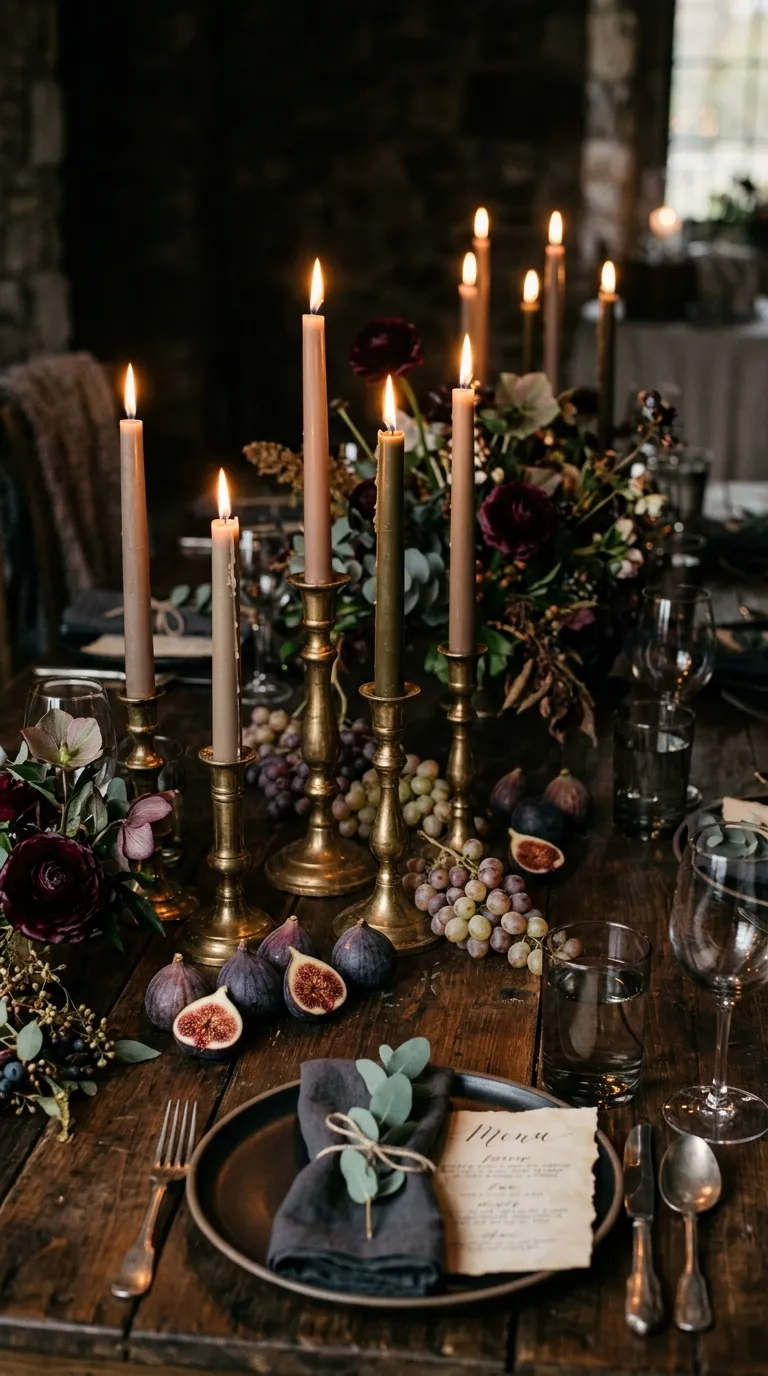
I love this idea because nothing gets thrown away afterwards, and in my flat I am always looking for ways to make pretty things useful. I bought small potted olive saplings, rosemary and thyme in aged terracotta pots, 10 to 15 centimetres across, from a nursery just outside Munich, and lined them up down the centre of the table at about 60-centimetre intervals, on top of an unbleached linen runner that protected the wood from damp and soil. I covered the exposed soil with preserved green sheet moss, which looks far better than bare compost and stops crumbs of earth ending up on the tablecloth, and I flanked each pot with two glass hurricane sleeves holding ivory pillar candles. Before the wedding I wiped every pot with a damp cloth, because terracotta sheds dust and I did not want grey smudges on the linen, and I watered the herbs the night before so they were perky but not dripping. After the meal the guests took the pots home as favours, and I kept two rosemary plants for my own balcony, where they are still alive a year later.
7. Antique Brass Tapers & Fresh Fig Accents
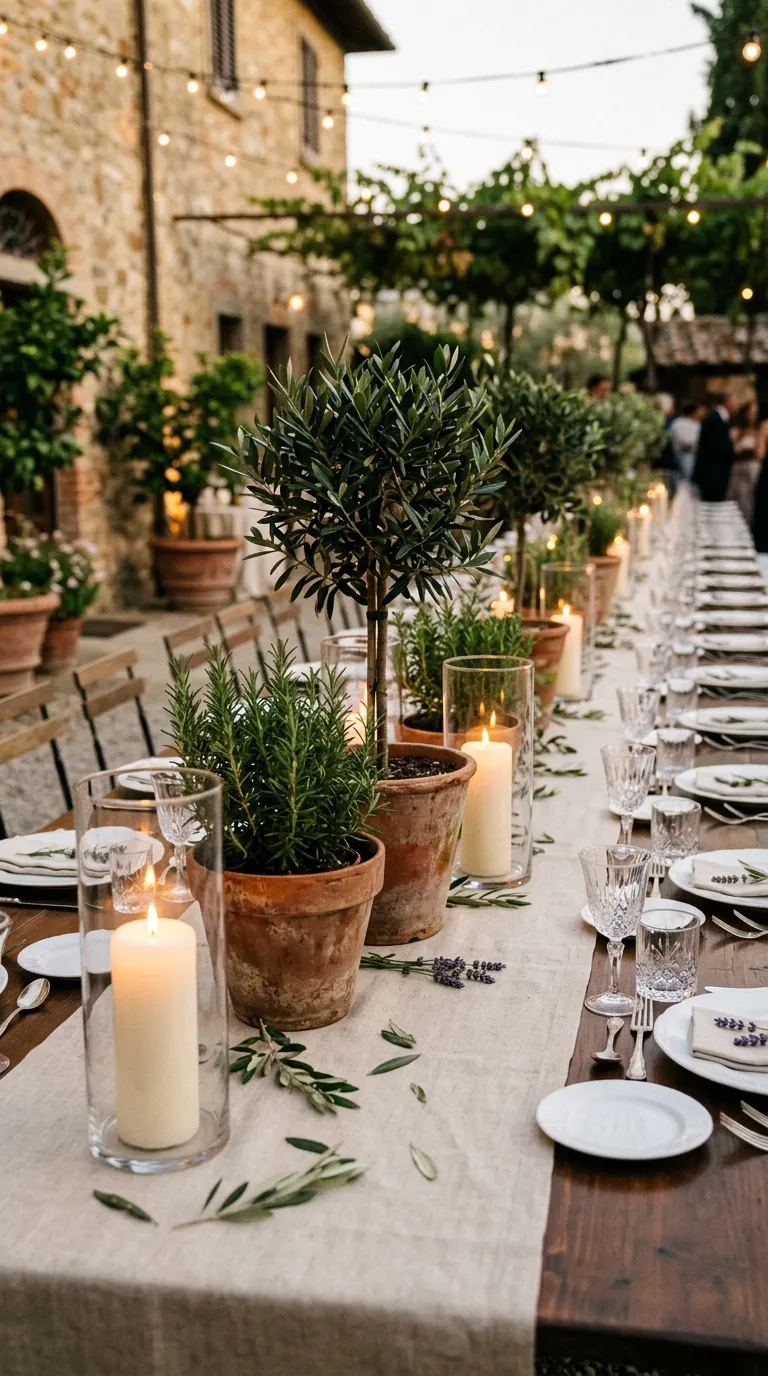
This is the moodiest look of the ten, and it suits a dark wooden harvest table better than any other, because the brass and the deep-coloured candles need that warm grain underneath them. I collected antique brass taper holders in different heights, from about 12 to 28 centimetres, over a few months at flea markets, paying 3 to 8 euros each, and I staggered them down the spine of the table instead of lining them up in height order, which would have looked like a staircase. I used dripless tapers in taupe, dusty plum and espresso, and clustered halved dark figs, green pears and small bunches of champagne grapes around the bases, weaving in a little trailing blackberry vine for depth. A dot of adhesive wax in each holder socket kept every taper standing straight, which sounds like a small detail until you have watched a candle lean slowly sideways during dinner. This one needs a bare wood table to work properly; on a white tablecloth the dark fruit and brass lose their contrast and the whole thing looks muddy.
8. Monochromatic Baby’s Breath Hedgerow
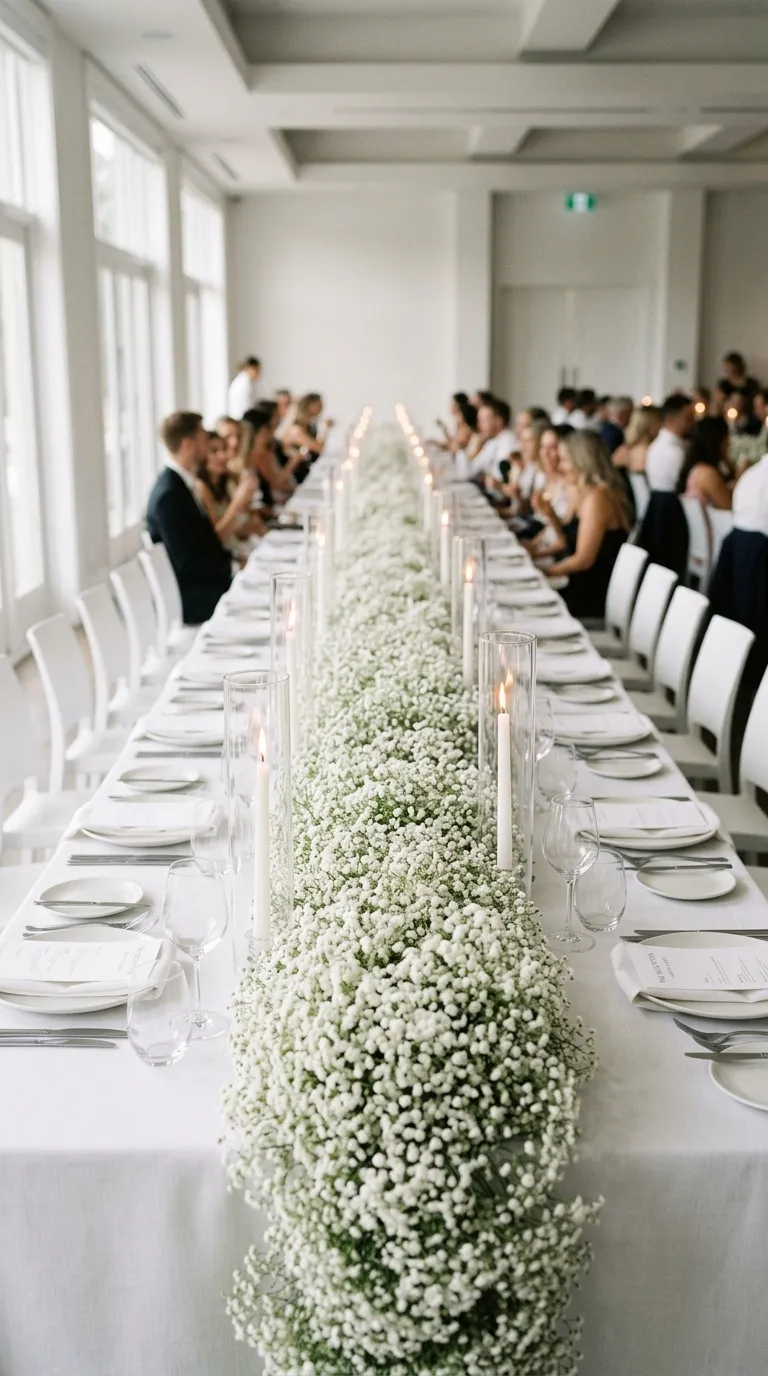
Baby’s breath has a reputation for being cheap filler, but used on its own, in a dense low band down a long table, it looks like a cloud, and I was genuinely surprised by how elegant it turned out in my test run. I connected shallow trays end to end down the centre of the table and packed in short sprigs of fresh white gypsophila until they formed a solid band about 15 to 20 centimetres wide and 15 centimetres tall, with all the stems sitting in a shallow water reservoir underneath so the little white florets stayed crisp. I pushed tall, clear glass cylinder candle holders directly into the cloud at regular intervals, which gave the white band some height without blocking anyone’s view, because glass disappears and only the flame shows. I finished with simple black-and-white menu cards at each place setting, which matched the monochrome mood. Baby’s breath is tough stuff, it held up in a warm room all afternoon without wilting, and a light mist of anti-transpirant spray before the guests arrived kept the blooms bright white.
9. Eucalyptus Garland with White Spray Roses
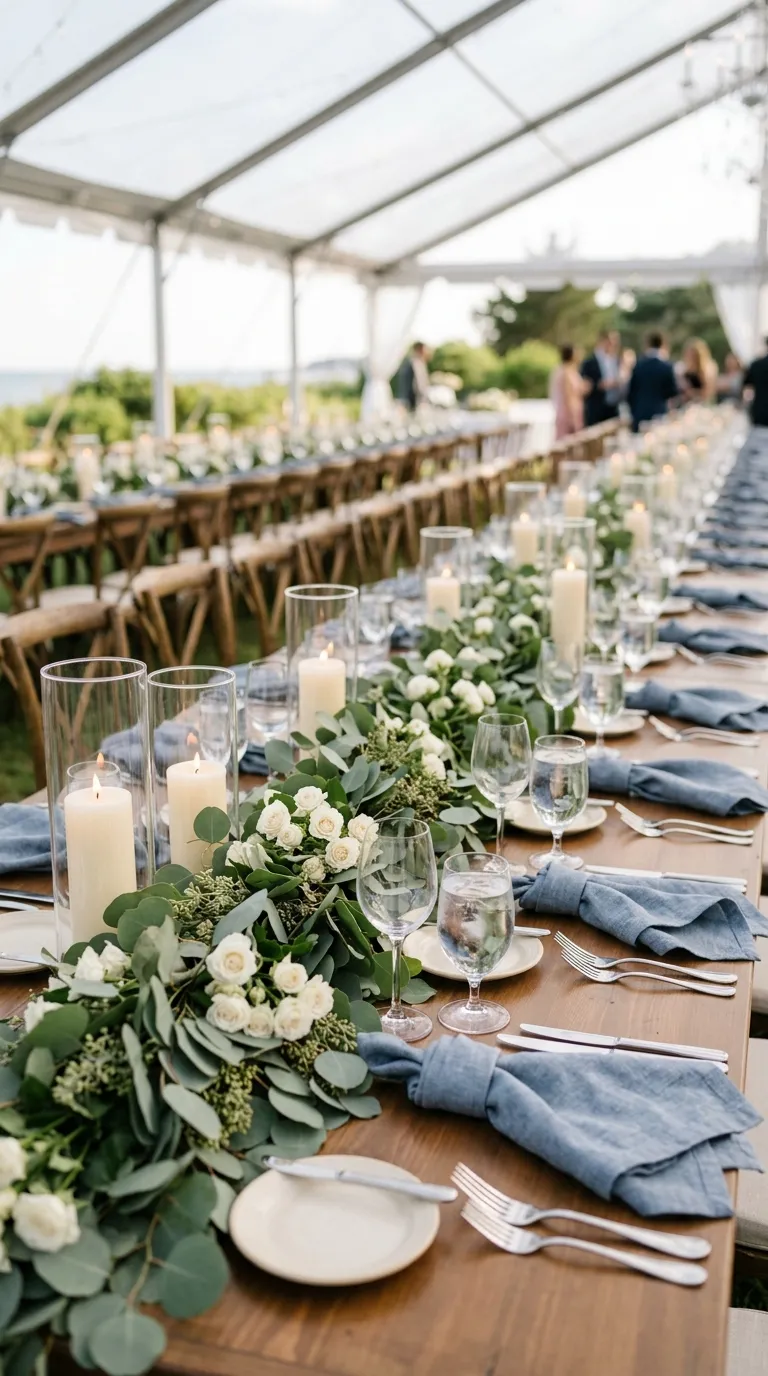
This is the classic for a reason, and it is the one my friend actually chose for her wedding, so I know it works on a real twelve-metre table and not just on my dining table at home. I layered silver dollar eucalyptus and seeded eucalyptus into a full garland down the centre, angling the leaves outward in a loose herringbone pattern so the edges looked feathery rather than flat, and I tucked white spray rose heads into the garland every 20 to 25 centimetres, each one in a little water-filled floral tube hidden underneath the leaves so the roses stayed hydrated for hours. I had cut and hydrated the roses in a cool box overnight, which meant they had opened to full volume by the morning and I was not trying to arrange tight little buds at the last minute. Clear glass cylinder pillar candles in alternating heights sat along the edge of the garland, and small frosted-glass votives nestled into the foliage gave a low glow. Eucalyptus is wonderfully forgiving, it does not wilt in a warm room, it smells lovely, and a garland for the whole table cost me around 40 euros in greenery plus the roses.
10. Single-Variety Botanical Fern Runner
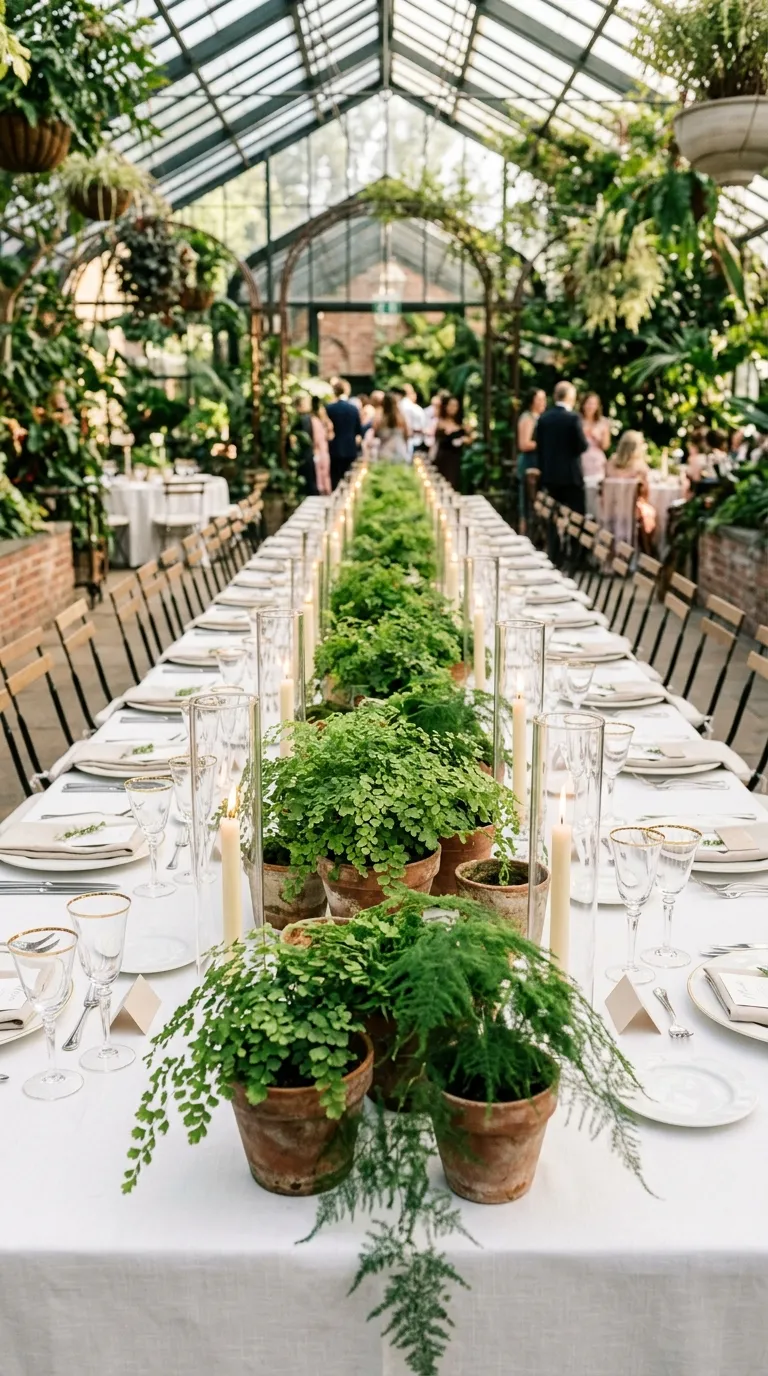
I saved this one for last because it is the simplest to explain and the easiest to get wrong, and I learned that the hard way when I first tried it with ferns straight from a garden centre. I arranged small ceramic pots of maidenhair fern down the centre of the table at about one-metre intervals, on a clean white linen cloth, and wove trailing asparagus fern and flat leatherleaf fronds across the gaps between the pots so the line felt continuous rather than dotted. Glass hurricane cylinders with tall ivory pillar candles went among the ferns, and clear-glass votives scattered underneath lit the delicate fronds from below once it got dark. The place settings stayed crisp and simple, white plates, brushed-silver cutlery and green linen napkins, because the ferns already give the table plenty of texture. The mistake I made the first time was forgetting that maidenhair ferns hate dry heat, and by the time the guests sat down mine had gone limp, so now I mist them thoroughly with a fine water spray thirty minutes before the meal, and I keep them out of direct sun and away from any heaters.
Conclusion
When I look back at that wedding table now, what I remember is not any single arrangement but the fact that people could actually see each other and talk across it, which is the whole point of sitting everyone at one long table. My rule of thumb, after a full day of testing and one very long evening of watching it all in use, is simple: keep the middle band narrow, keep everything low or made of glass, and repeat one rhythm down the whole length. Pick the one idea that fits your table and your budget, try it on your own dining table first, and give yourself an hour longer than you think you need on the day.