My bedroom used to be the coldest-feeling room in my Munich flat, and not because of the temperature. It faces north, so the light comes in flat and grey, and for two years I lived with plain white walls, a dark pine bed frame I had dragged through three moves, and one thin duvet that never looked right no matter how I folded it. Last February I finally stopped scrolling past beige bedrooms on my phone and started painting test patches on the wall behind the bed instead. I painted six squares of warm beige, lived with them for a whole week, and watched how each one changed from morning to evening. The right one made the entire room feel like late afternoon sun, even on a rainy Tuesday. These ten ideas are the ones that actually worked in that room, in that light, with my budget and my very ordinary DIY skills.

1. The Venetian Limewash Plaster Retreat
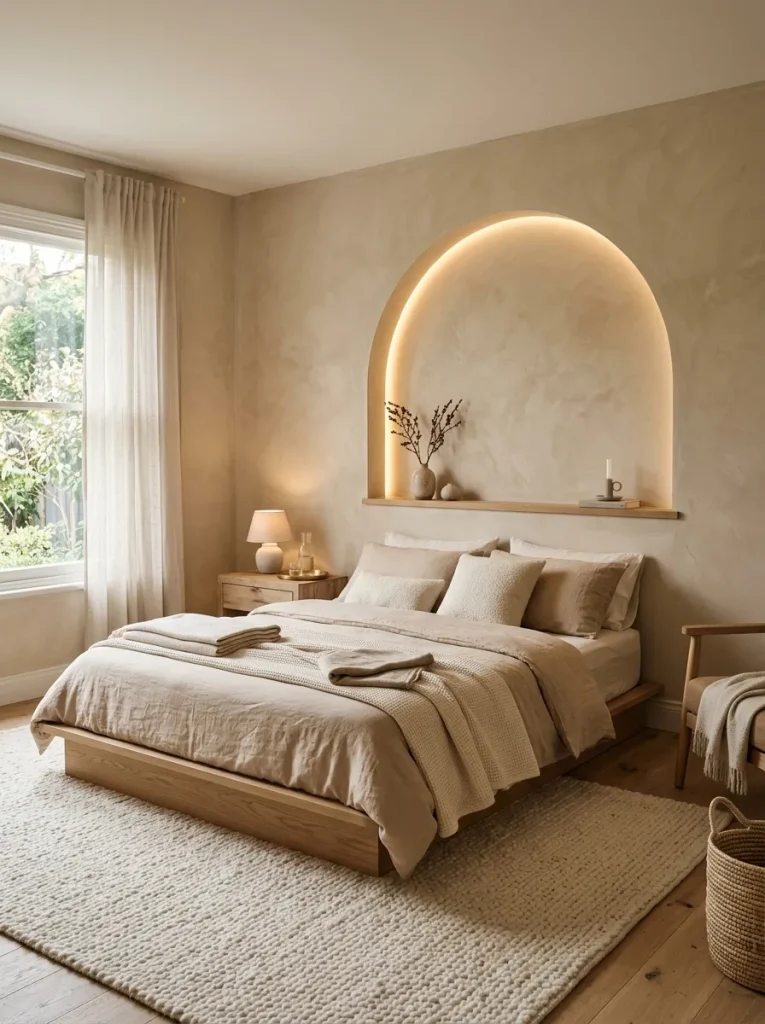
I started with the wall behind the bed, because nothing else I tried made a dent while that flat white wall was staring back at me. I chose a warm limewash in a soft sandy beige, the kind that dries with faint cloudy movement instead of one dead-flat colour, and I put it on with a wide block brush in loose criss-cross strokes.
A 2.5 litre tin cost me about 45 euros and covered the whole feature wall twice, with some left over for the narrow wall by the door. I learned to keep a wet edge and work in sections about a metre wide, because limewash dries fast and overlap lines show if you go back over a dry patch. It took one slow Saturday afternoon, and I left the window open overnight because the smell is chalky but not harsh.
2. Fluted Oak & Biscuit Upholstered Headboard Sanctuary
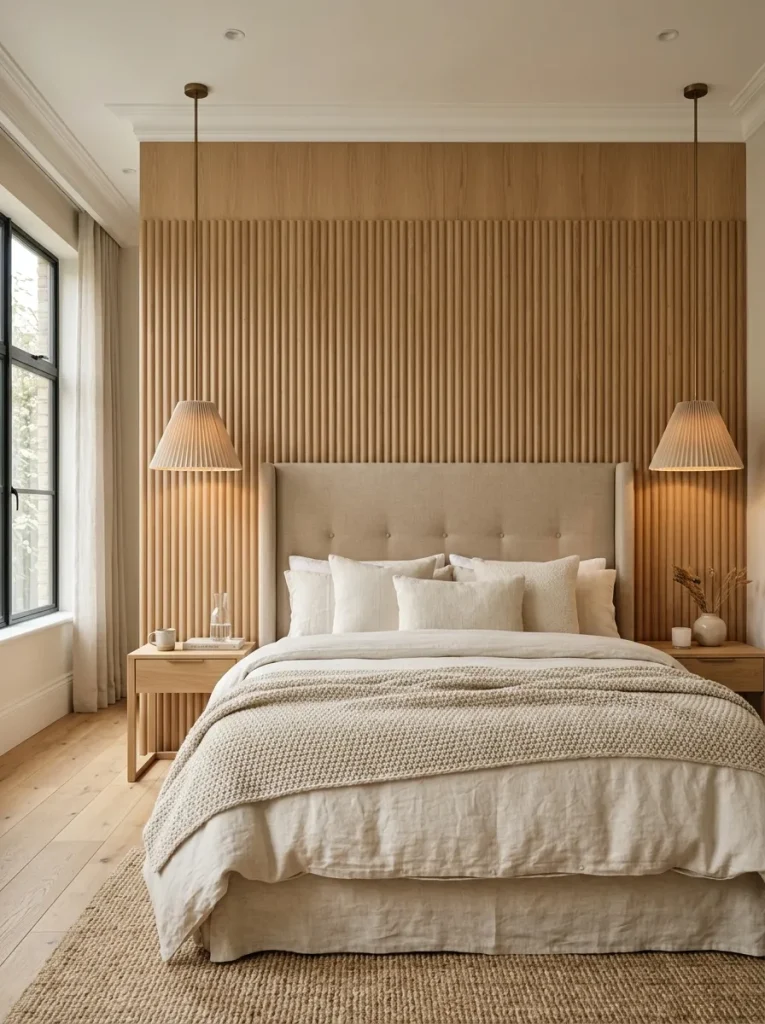
My old headboard was a dark pine slab that made the whole bed feel heavy, so I replaced it with something I built myself over a weekend. I fixed vertical oak slats to a plywood back panel, then upholstered the centre in biscuit-coloured linen-look fabric over a thin layer of foam, so the middle is soft to lean against and the fluted wood frames it on both sides.
The oak battens cost around 60 euros from the timber yard, cut to length for me, and the fabric was a remnant I found for 18 euros a metre. I screwed the panel straight into the wall studs so it does not wobble when I sit up in bed, and I left a two-centimetre gap at the bottom so I can still slide the bed out to vacuum behind it.
3. Layered Bouclé & Chunky Knit Texture Lounge
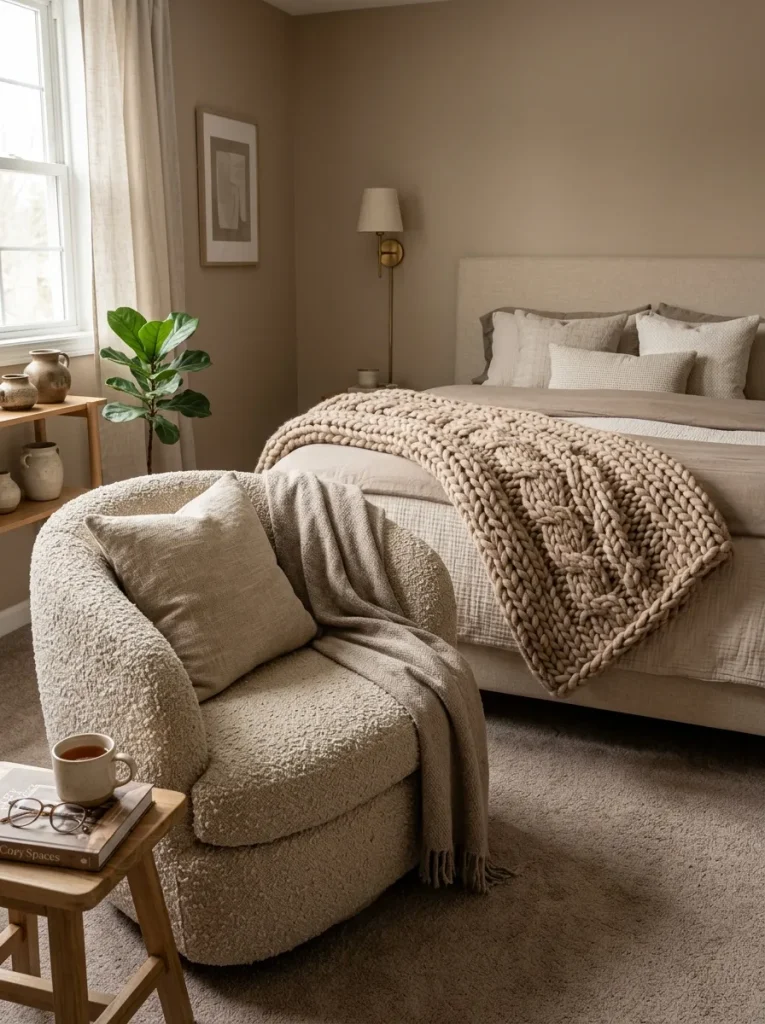
Texture is what keeps an all-beige room from looking like a blank page, and this corner of the bed is where I learned that properly. I layered a cream bouclé throw across the foot of the bed, folded a chunky knit blanket in a slightly deeper oatmeal tone over one corner, and added two linen cushions with visible weave. Nothing matches exactly, and that is the point: the eye moves from the nubby bouclé to the soft knit to the smooth linen, and the room suddenly feels finished.
The bouclé sheds a little for the first few weeks, so I shook it out on the balcony every couple of days until it settled down. I wash the knit blanket on a cold wool cycle and lay it flat to dry, because the tumble dryer would felt it into a stiff mat.
4. Japandi Low-Profile Platform & Bamboo Canopy
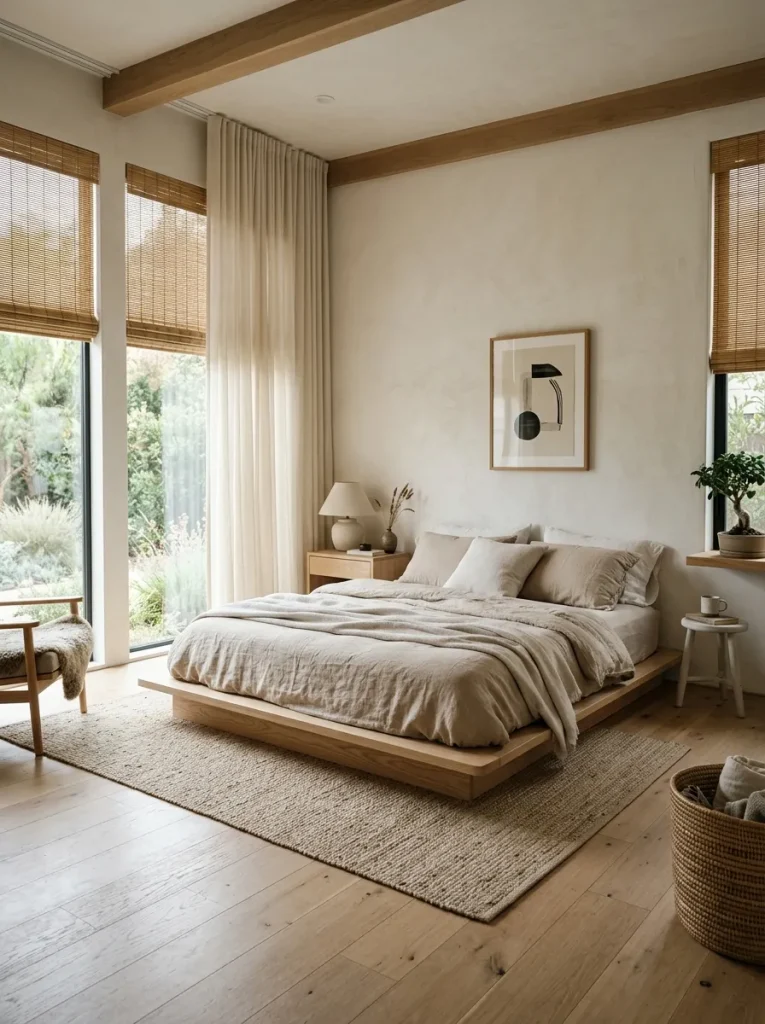
I have always slept better in a low bed, so I swapped my old frame for a platform that sits just 25 centimetres off the floor, built from pale birch plywood with a simple slatted base. Over it I mounted a slim bamboo canopy frame, four light poles joined at the top, and draped a single length of undyed linen across it so the fabric falls softly on both sides.
The platform cost me less than the frame it replaced, about 140 euros in plywood and screws, and I sanded every edge twice because bare feet find every splinter. The bamboo poles are held with simple brass brackets, and I made sure the linen hangs clear of the mattress so it does not bunch up behind my pillows. One honest warning: a low bed gathers more dust underneath, so I run the vacuum under it every week now.
5. Architectural Plaster Arches & Recessed Bed Nook
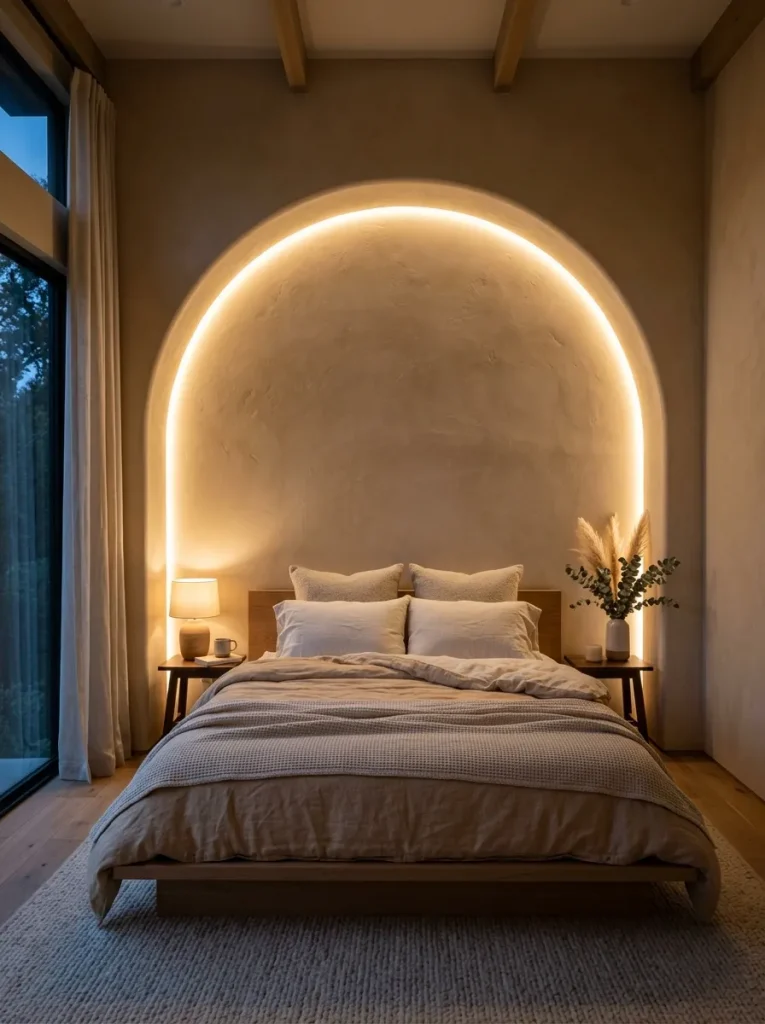
The wall on the left side of my bed had a shallow alcove that used to hold a wobbly shelf and a tangle of chargers, and I decided to turn it into the feature instead of hiding it. I painted a tall arch shape directly onto the plaster, starting about 40 centimetres above the floor and curving up to just below the ceiling, in a warm clay-beige a shade deeper than the rest of the wall.
I drew the arch with a pencil tied to a length of string, pivoting from a nail at the centre point, then painted it freehand with a small brush along the pencil line before filling it in with a roller. What I would pass on is to step back every few minutes while painting, because an arch that looks perfect up close can lean badly from the doorway.
6. Woven Jute, Rattan & Natural Canvas Gallery Wall

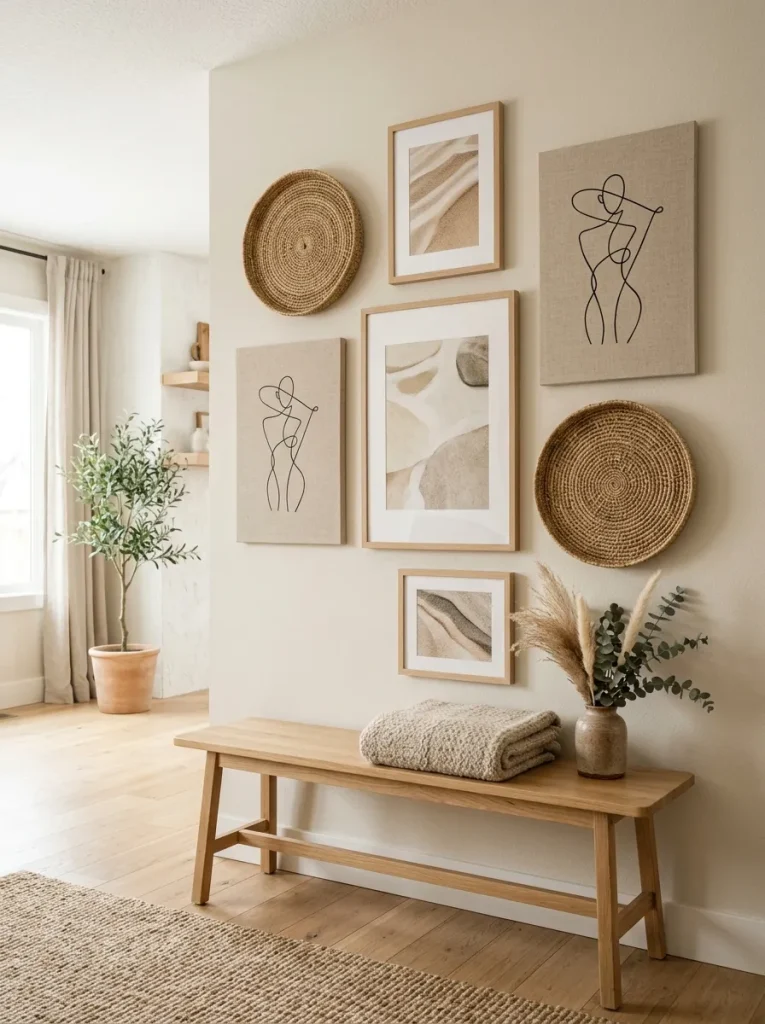
The wall opposite the bed was bare for months because I could not decide what belonged there, and then I stopped trying to buy one big piece of art. Instead I built a loose gallery from natural materials: two rattan-framed prints, a small woven jute hanging, and a stretched natural canvas with a simple line drawing, all in warm beige and cream tones. I hung them in an uneven cluster, the largest piece slightly off-centre, and the wall finally feels collected rather than decorated.
I kept the frames within a few centimetres of each other so the group reads as one arrangement, and I hung the centre of the whole cluster at about 150 centimetres, eye level from the doorway. The jute piece was the cheapest thing in the room, about 12 euros at a flea market, and it adds more texture than anything else on that wall.
7. Modern Canopy Bed with Sheer Cream Drapery
I resisted a canopy bed for years because I thought it would make my small room feel boxed in, but sheer cream drapery does the opposite. I fitted a simple black metal four-poster frame, the slimmest one I could find, and hung two panels of lightweight cotton voile from slim rings so they gather softly at each post. During the day the fabric filters the grey northern light into something warmer, and at night I can pull one panel across for a cocoon feeling without blocking the air.
The voile cost about 9 euros a metre and I hemmed it myself on a Sunday afternoon, which took longer than I expected because the fabric slips under the needle. I wash the panels every six weeks on a gentle cycle and hang them straight back up while they are still damp, so they dry smooth and I never have to iron them.
8. Monochromatic Ceramic & Dried Botanical Corner

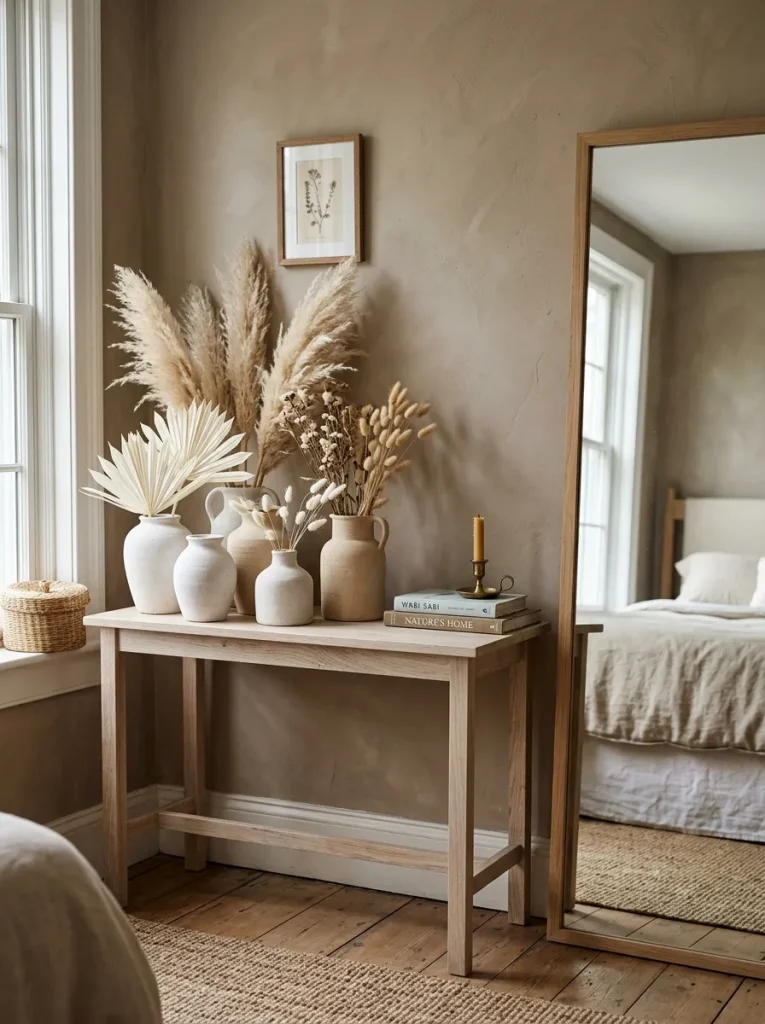
The empty corner by the window used to collect laundry baskets and half-read books, so I gave it a proper job. I placed a tall ribbed ceramic vase in a warm sand tone on the floor, added two smaller matte ceramic pots on a low wooden stool beside it, and filled them with dried pampas stems, bunny tails and a few eucalyptus branches I dried myself. The whole corner is one colour family, just different shapes and heights.
I buy dried stems at the flower market in autumn when they are cheapest, and I keep them out of direct sun so they do not fade to grey within a month. The tall vase weighs enough that it has never tipped over, which matters in a corner I walk past half asleep, and I dust the stems with a soft brush every couple of weeks because a feather duster just shreds them.
9. Bleached Timber Floorboards & Plush Berber Rugs
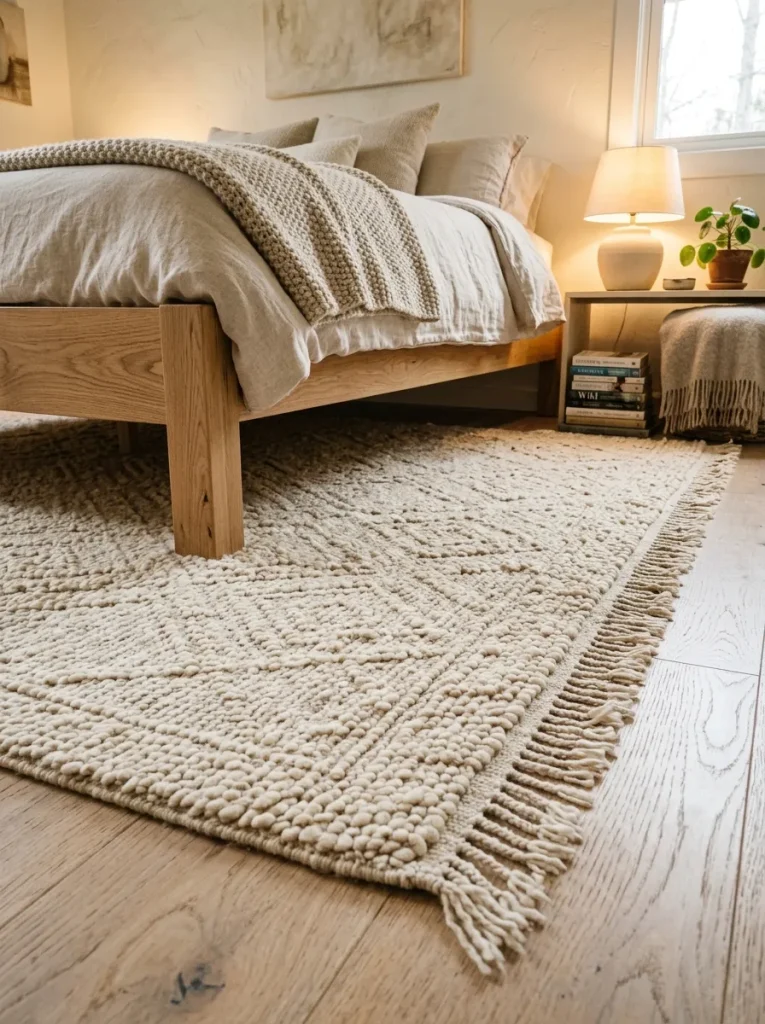
My floorboards were a tired orange pine that fought with every beige thing I brought into the room, so bleaching them was the single biggest change I made. I sanded the boards back, applied a white oil-based wood bleach in two thin coats, and finished with a matte hardwax oil, which left the grain visible but took the orange out completely. The floor now reads as pale driftwood, and every beige textile in the room finally sits comfortably on it.
On top of that pale floor I laid a thick Berber rug, 160 by 230 centimetres, in undyed cream wool with a subtle flecked pattern, positioned so it runs from under the bed out past the foot by about 60 centimetres. The rug cost around 180 euros, and a non-slip pad underneath was another 25 well spent, because a rug that creeps is a rug you trip over at 3 a.m.
10. Monochromatic All-Beige Velvet & Linen Layered Bed
The bed itself is where all the beige comes together, and I built it in layers rather than buying a matching set. I started with washed linen sheets in a warm natural tone, added a light linen duvet cover, then folded a velvet throw in a slightly deeper camel shade across the foot, and finished with cushions in three textures: velvet, linen and a small bouclé square in front. Each layer is a different beige, and together they look intentional instead of washed out.
Linen wrinkles, and I made peace with that on the first night, because the soft creased look suits this room far better than ironed cotton ever did. I wash the linen on a cool cycle and line-dry it when the weather allows, which keeps it soft without fabric softener.
My bedroom is still the same north-facing room with the same grey Munich light, but it feels like mine now, warm and quiet at the end of the day. If you try any of these ideas, start with just one, live with it for a week, and let the room tell you what it needs next.