It started with a bunch of eucalyptus I bought on a whim at the Viktualienmarkt one Saturday morning. I had gone in for bread and came home with three stems of silver dollar eucalyptus, and because I had nowhere sensible to put them, I hung them from the shower arm with a bit of kitchen twine. That first steamy morning the whole bathroom smelled like a spa in the Alps, and I stood under the water for far longer than I should have. My bathroom is small — a typical Munich flat bathroom, white nineties tiles, one frosted window, a shower barely wide enough to turn around in. But that one bunch of leaves changed how the room felt, and over the following year I kept going: a plant here, a teak board there, a tray of river stones by the drain. Every idea below is something I tried, mistakes included.

1. The Overhead Fresh Eucalyptus & Lavender Shower Bundle
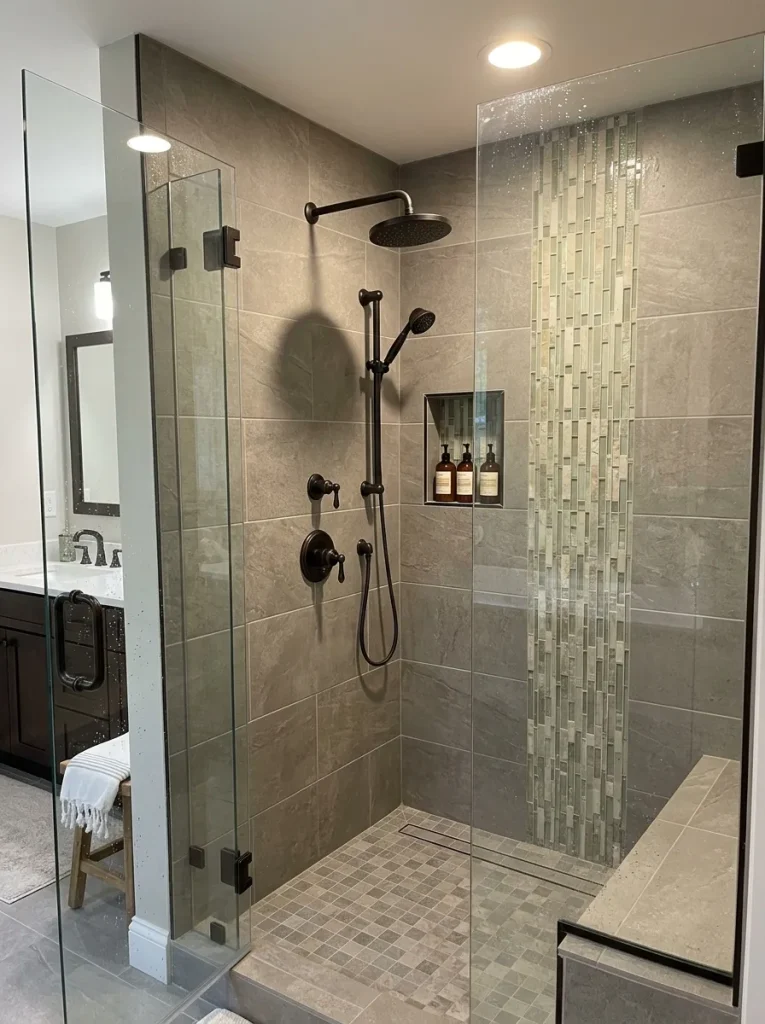
The bundle is the simplest thing in this whole list. I buy a bunch of fresh silver dollar eucalyptus and three or four stems of lavender, trim two centimetres off the stems, and roll a wooden rolling pin gently over the leaves to bruise them and wake the scent up. Then I tie the stems with raw jute twine and hang the bundle from the shower arm, tucked behind the direct spray so the steam reaches it without washing the oils out in a week.
A fresh bundle lasts three to four weeks, and replacing it has become a small Saturday ritual costing around four euros. Hung directly under the showerhead, the leaves went brown and slimy within days — I learned that the hard way. Kept just off to the side, the leaves dry out slowly between showers and the steam does the work for you. If strong scents bother you, start with eucalyptus alone and add the lavender later.
2. Cascading Pothos & Fern Vertical Canopy
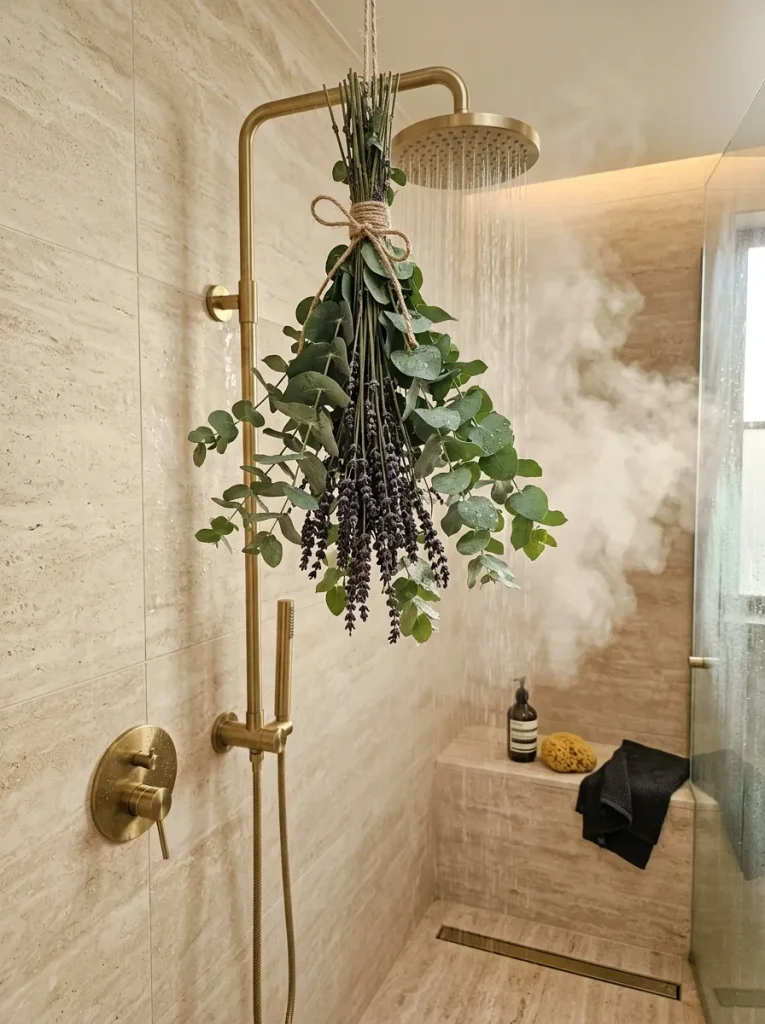
Once the bundle worked, I wanted green that actually lived in the room, so I hung two trailing pothos in macramé hangers from a tension rod fixed high across the wall beside the shower, with a Boston fern in a ceramic pot on the shelf below. Within three months the pothos trailed past my shoulders, and the fern filled the corner with soft fronds. I water the pothos once a week and the fern twice.
What I got wrong at first was the placement. I originally hung a planter right above the showerhead, and the constant spray rotted the soil and left a brown ring on the tiles that took an afternoon of scrubbing to remove. Now everything hangs at the edges of the spray zone, out of the direct water. I also drilled two small stainless hooks into the grout line instead of trusting suction cups, which dropped a pot on my foot in week two.
3. Slatted Teak & Eucalyptus Bath Bridge Station
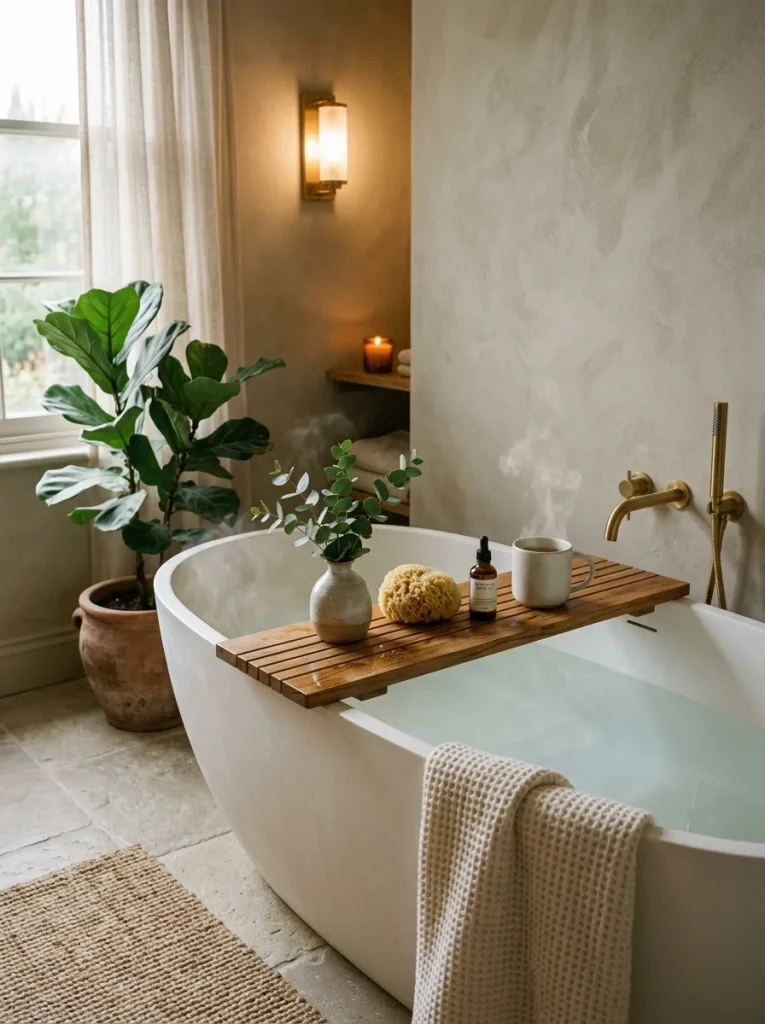
I do not have a bathtub, so my bath bridge is really a slatted teak tray that sits across the wide rim of the shower ledge — one tidy station where everything I need is within reach and nothing sits in a puddle. Mine holds an amber glass shampoo bottle, a sea sponge, a folded washcloth, and a short vase of eucalyptus sprigs. The teak slats let water drain through instead of pooling underneath, and the wood has gone a silvery grey I prefer to how it looked new.
I bought the tray for thirty euros, but you could make one from a teak cutting board and two battens if you are handy with a saw. The one thing I would change is the size: I measured once, in a hurry, and ordered a tray two centimetres too long, so it sat crooked for a month before I sanded the end down. Measure twice, and oil the teak every few months so it does not crack.
4. Recessed Slate Niche with Botanical Vignettes
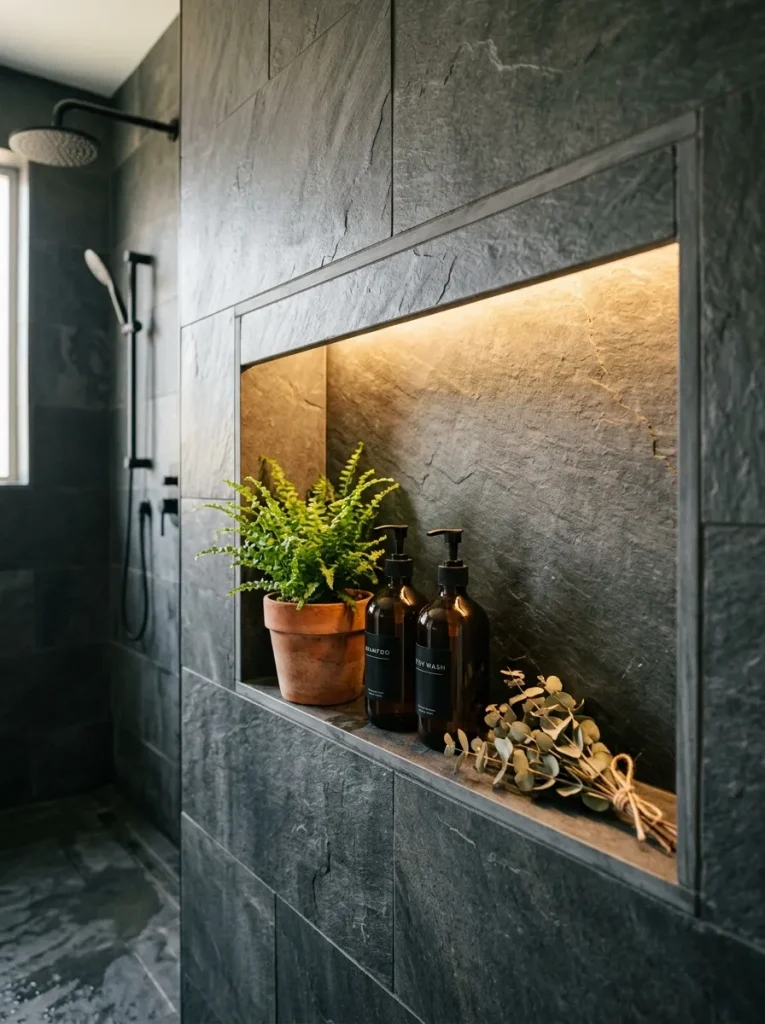
My shower had one of those shallow tiled niches every nineties bathroom seems to have, and for years it held a graveyard of half-empty plastic bottles. I lined the back with a single piece of dark slate cut to size — a garden-centre offcut cost me eight euros — and suddenly the niche looked deliberate instead of forgotten. Now it holds three amber pump bottles, a sea sponge, and a tiny terracotta pot of rosemary, and the dark stone makes the green and amber glow against the white tile.
The slate hides water marks, wipes clean with one swipe, and gives the shower an earthy weight the plain tile never had. I fixed it with a bead of clear silicone, which took ten minutes and has held through a year of daily steam. If your niche is deeper, add a small slate tray as a riser for the back bottles. Decant your products — matching amber bottles are the cheapest upgrade in this entire list.
5. Sunlit Bamboo & Eucalyptus Window Nook
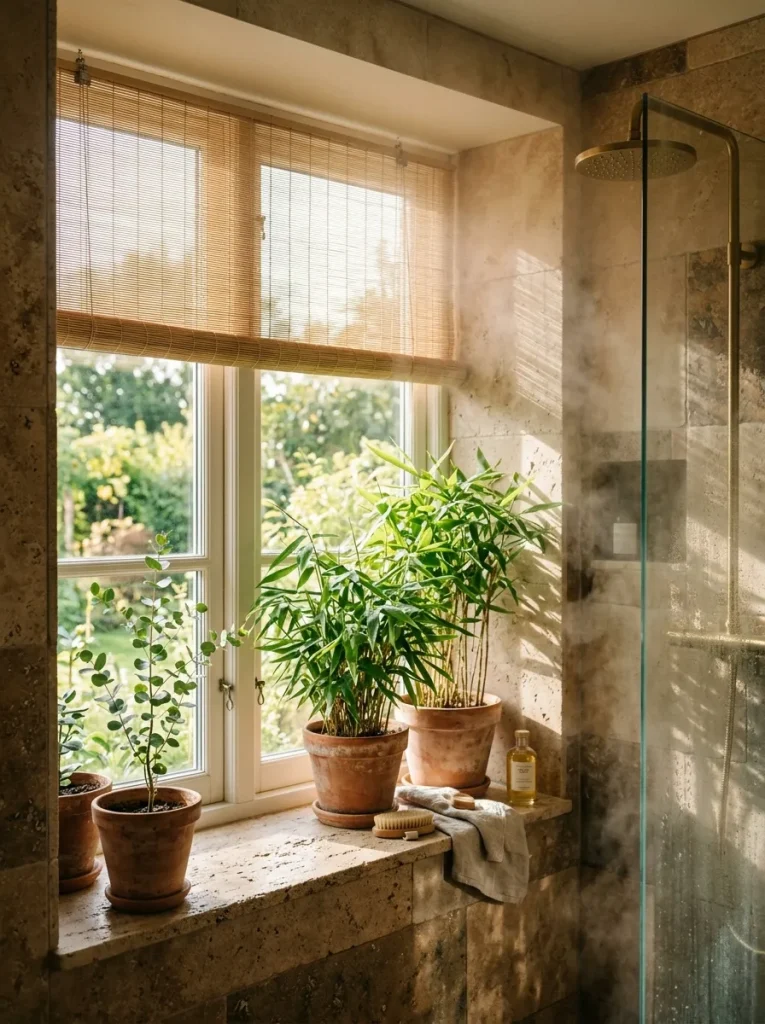
My bathroom has one small frosted window, and for a long time the sill held nothing but a dusty candle and a tube of toothpaste. I built the nook up slowly: a bamboo tray across the sill, a small potted eucalyptus in a woven basket, then a glass jar of dried eucalyptus stems and lavender. In the morning the light comes through the frosted glass and turns the whole corner soft and green. It takes up no floor space, which matters when two people share a small bathroom.
Bamboo was the right choice because it does not mind the damp the way raw pine would, but I sealed the tray with clear outdoor varnish after the first month, when the edges started to darken. The dried stems in the jar need nothing at all and still smell faintly when the room steams up. I swap the potted eucalyptus every few months, since a small pot dries out fast in a warm bathroom.
6. Raw Terracotta & Eucalyptus Plant Clusters
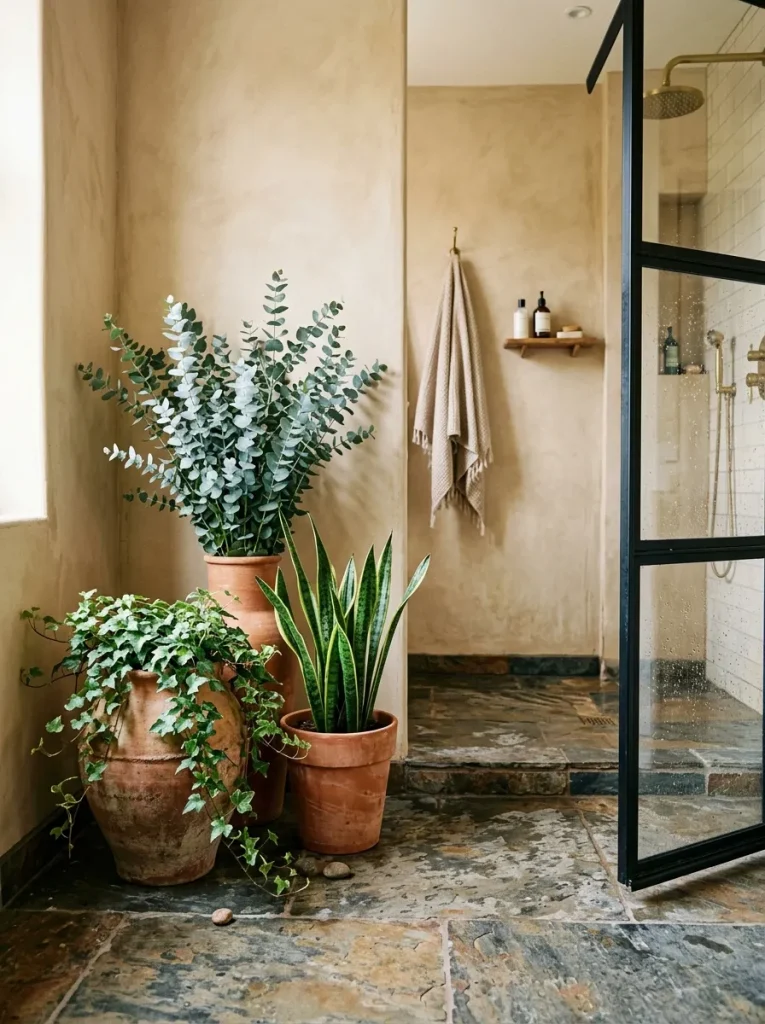
There is a dead corner between the shower screen and the wall, where nothing ever lived except a mop and a spare toilet roll. I filled it with three raw terracotta pots in different heights — eucalyptus in the tallest, trailing ivy in the middle, a snake plant in the shortest — and the dead corner became my favourite spot in the room. The orange clay against white tile and green leaves never gets old.
Terracotta is thirsty, which is useful in a bathroom: the porous clay pulls moisture out of the soil, so I have never overwatered these plants. My one mistake was putting the pots directly on the floor with no saucer. After a few weeks there was a faint orange ring on the tiles, so now each pot sits on a small cork mat. Group pots in odd numbers — three look like an arrangement, two just look like you ran out of ideas.
7. Limewash Plaster & Dried Botanical Wall Art

The one untiled wall in my bathroom was painted a flat, tired white, and it showed every splash and fingerprint. I painted it with warm limewash — two thin coats in loose cross-hatching strokes — and the wall went from flat to softly mottled, like old farmhouse plaster. Then I hung two frames: pressed eucalyptus leaves I dried in a cookbook, and dried lavender tied with twine behind glass. The whole thing took one Sunday afternoon and cost about forty euros.
Limewash is forgiving in a way normal paint is not. The brush strokes are part of the finish, so you do not need a steady hand or a perfect wall — I have neither, and mine still looks good. It handles the damp better than I expected, though I would not use it inside the shower itself. The pressed leaves faded from green to a soft sage, which I like better. Press your own leaves in a book for at least two weeks.
8. River Stone & Steam-Infused Eucalyptus Floor Corner
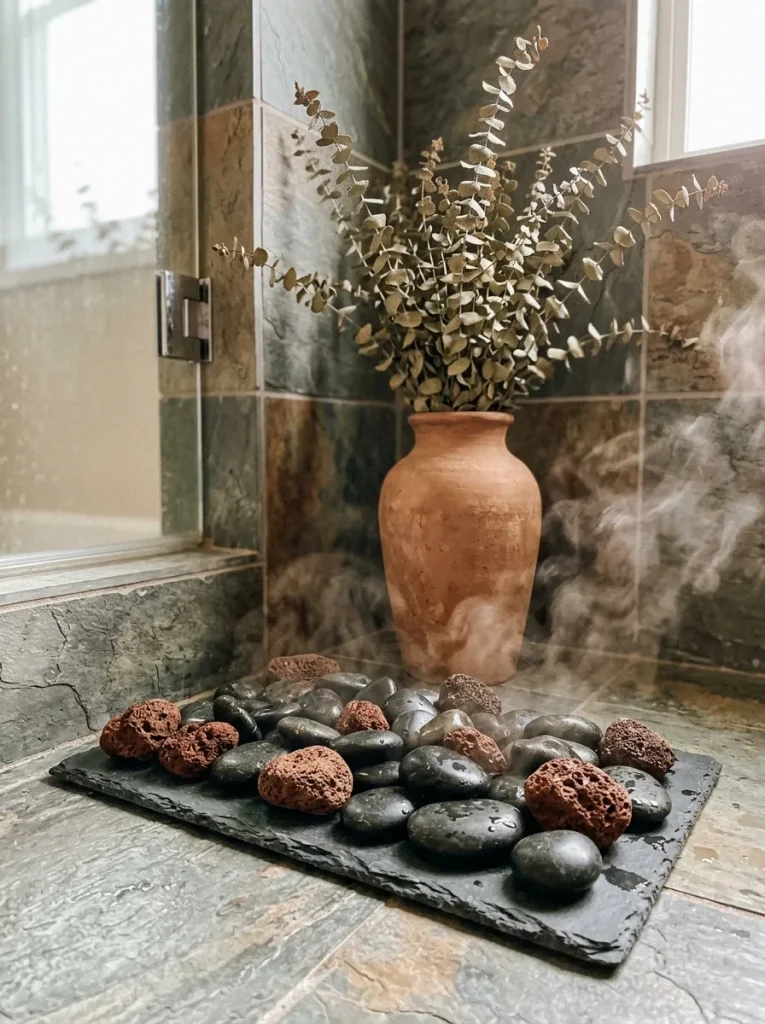
Right where I step out onto the cold tiles, I laid a shallow wooden tray of smooth river stones with a few fresh eucalyptus sprigs tucked between them. Standing on those stones barefoot after a hot shower is the closest thing to a spa treatment at home — the stones are cool and smooth underfoot, and the rising steam carries the eucalyptus scent up around me. The tray is about sixty by forty centimetres, big enough for both feet, and it catches the drips that used to leave puddles on the floor.
I bought a bag of mixed river stones for six euros and washed them in hot soapy water before laying them in the tray — they arrived dusty and grey. Once a month I lift the stones out, rinse the tray, and let everything dry in the sun — that is the only maintenance it needs. Do not skip the tray: loose stones will roll underfoot and end up everywhere.
9. Japandi Teak Bench with Botanical Towel Display

The bench is the piece I use every day: a low, simple teak bench, about ninety centimetres, against the wall opposite the shower. On top I keep rolled towels in sage green and cream, a small ceramic dish with dried eucalyptus, and the book I am reading. It is somewhere to sit while I dry my hair, somewhere to put my clothes, and somewhere to set a cup of tea on slow Sundays.
I chose teak because it handles the humidity without complaint, but I learned to keep the towels rolled rather than folded flat — they look tidier, take up less space, and stay fluffier because air circulates between them. The bench cost just under ninety euros second-hand, and I sanded and oiled it before it came into the bathroom. If your bathroom is small, look for a bench with a slatted lower shelf instead of a solid one, so air moves through and nothing underneath stays damp.
10. Walk-In Wet Room with Integrated Living Botanical Wall

This is the dream version, the one I have not built at home but helped a friend plan for her renovation. Her walk-in wet room has no shower tray and no glass door — just a sloped floor, a rain showerhead, and one wall covered in a living green panel of ferns, pothos, and trailing ivy, planted in a felt-and-frame system on a waterproof backing board. Standing under the rain shower beside that wall of green feels like showering in a greenhouse.
The practical details mattered most. Her builder fitted a waterproof membrane behind the panel, a drainage channel, and a small grow light on a timer for the darker months, because even shade-loving plants need some light. She waters the panel through a drip line and trims the pothos monthly so it does not creep over the showerhead. It was not cheap — the panel and waterproofing ran to several hundred euros — but it changed the architecture of the room itself.
None of this happened in a weekend, and none of it needed to. I started with a four-euro bunch of eucalyptus and added one thing at a time. If you try just one idea, make it the bundle over the showerhead — five minutes, almost nothing, and tomorrow morning your bathroom will smell wonderful.