10 DIY Wooden Cat House Ideas
Our cat Miso has rejected every store-bought cat house we’ve ever brought home — she prefers cardboard boxes, obviously. So I started building wooden ones, and three builds later I’ve learned what actually matters: stability, the right entrance size, and finishes that won’t harm a creature who licks everything. Here are ten wooden cat house designs worth building, with honest notes from my sawdust-covered experience.
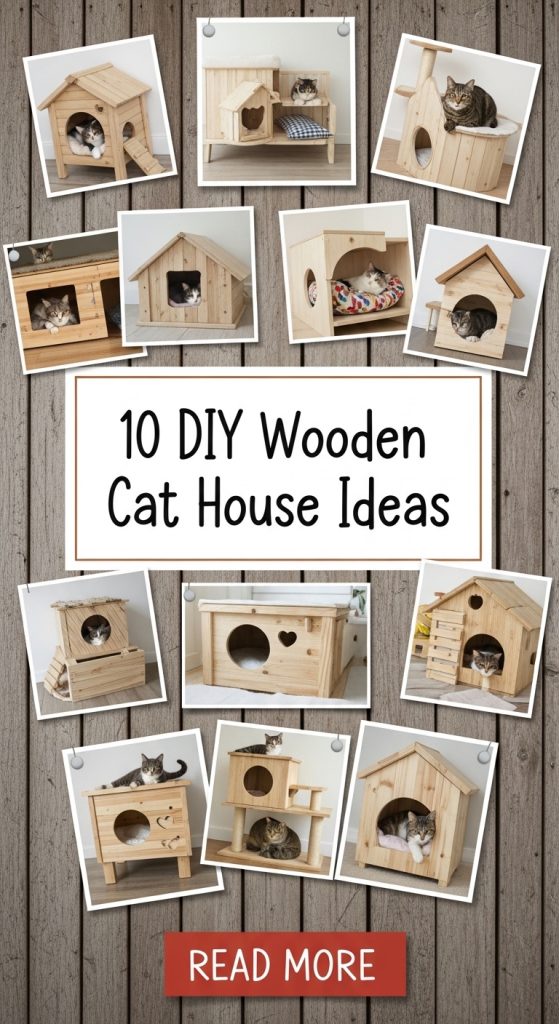
1. Rustic Cabin-Style Wooden Cat House
A tiny log cabin for your cat — pitched roof, little porch, the works. This was my first build, made from fence pickets, and Miso claimed it within the hour (a personal record). The pitched roof isn’t just cute; it sheds dust and gives the interior more headroom. Keep the entrance about 15 cm square — big enough for the cat, small enough to feel den-like. Sand everything smooth and use a water-based, pet-safe finish. Rustic charm with zero cost if you have scrap wood.

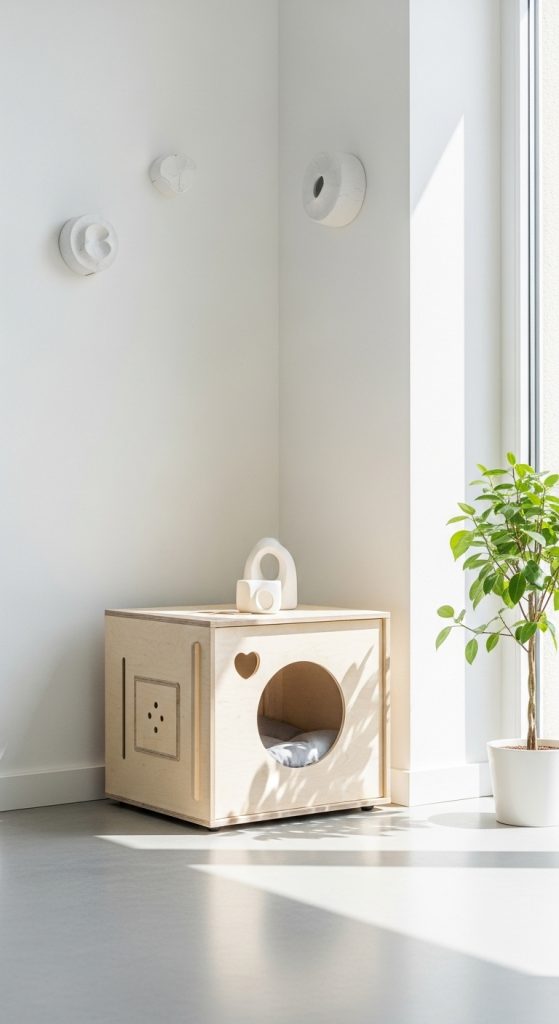
2. Modern Minimalist Cat House
A clean plywood cube with rounded entrances — the cat house for design-conscious humans. I built one from birch plywood with a matte white finish, and it looks like a sculpture Miso happens to sleep in. The minimalist form is actually practical: no crevices to trap fur, easy to wipe down, and it fits any room. Round the entrance edges with a jigsaw and sandpaper — cats rub against entrances constantly, and sharp plywood edges are miserable. Less really is more here.

3. Treehouse-Inspired Cat House
Elevate the house on sturdy legs and add a ramp or steps — cats are vertical creatures, and height makes any house ten times more appealing. My treehouse build sits 60 cm off the ground on 4×4 legs, and Miso surveys her kingdom from the little deck daily. Make the legs rock-solid; a wobbling tower will be boycotted forever after one scare. Add sisal wrapping to one leg and you’ve combined house and scratching post. The best of both worlds.
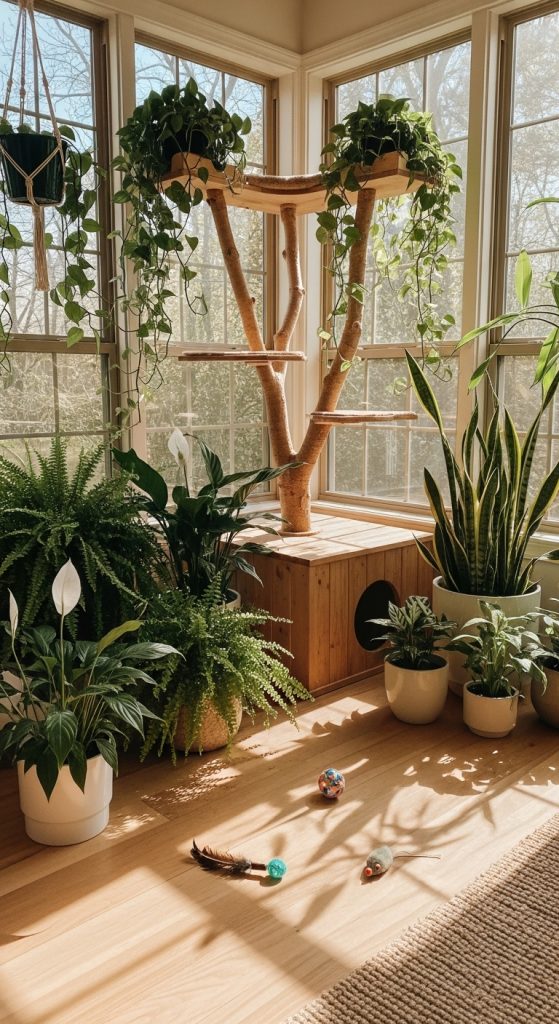
4. Scandinavian-Style Wooden Cat House
Light wood, clean lines, tapered legs — the Scandi cat house looks like it came from a Copenhagen design shop. I used pale pine with white-painted legs, and it blends into our living room so well guests don’t realize it’s for the cat until Miso walks out of it. The Scandinavian ethos (beautiful, functional, honest materials) suits pet furniture perfectly. Keep the palette light and the form simple; the cat provides all the personality needed.
5. Outdoor Insulated Wooden Cat House
For balcony or garden cats, insulation is everything. I built one for our terrace with double walls filled with styrofoam panels, a raised floor to avoid ground cold, and a small entrance with a plastic flap. The key lessons: elevate it, insulate all six sides (most people forget the floor), and make the roof overhang to keep rain out. Use exterior-grade wood and a weatherproof finish. Our terrace stray — now our second cat — survived last winter in it comfortably.

6. Multi-Level Cat Mansion
Why build one house when you can build a mansion? Stacked boxes connected by ramps and holes create a vertical playground. My mansion has three levels: ground-floor den, middle lookout with two exits (cats hate dead ends), and a top sundeck. The critical design rule is multiple routes — every level needs at least two ways in and out, or one cat will trap the other and you’ll have a turf war. Build it modular so you can rearrange; cats get bored, and novelty is free enrichment.

7. Vintage Cottage Cat House
A tiny cottage with shutters, a pitched shingle roof, maybe a miniature flower box — the dollhouse your cat will actually use. I made the shutters from lolly sticks and the roof from overlapping wood shingles, and it’s absurdly charming. The cottage style is forgiving for beginners because small imperfections read as “vintage character.” Paint it a cheerful color (sage green was mine) with cream trim. It takes longer than a cube, but the result is a conversation piece.

8. Space-Saving Wall-Mounted Cat House
No floor space? Go vertical. A wall-mounted box with a cushioned interior gives your cat a perch-house without sacrificing a single square centimetre of floor. Mount into studs — never just drywall — because a cat launching into a poorly mounted box is a disaster. I installed ours above the radiator (cats love warm spots) with a small step below. It doubles as wall art when empty. The ultimate small-apartment solution, and Miso’s favourite napping spot.

9. Recycled Pallet Cat House
Pallets are free, sturdy, and the perfect scale for cat furniture. Break down two pallets and you have enough wood for a solid house. My pallet house cost exactly zero euros and took a Saturday. The caveats: check pallets for the HT stamp (heat-treated, safe) and avoid MB (methyl bromide, toxic); sand thoroughly because pallet wood is rough; and remove every nail — then check again. Free wood with a safety checklist. The rustic look suits the material perfectly.

10. Japanese-Inspired Zen Cat House
Dark-stained wood, clean geometry, a noren-style fabric curtain for the entrance — the zen cat house is meditation in furniture form. I finished mine with a dark walnut stain and a simple linen curtain, and it’s the most beautiful object in our bedroom. The curtain is practical too: cats love the privacy, and it keeps the interior dark for sleeping. Wabi-sabi applies here — let the wood grain show, don’t over-finish. Calm for the cat, calm for you.

Tips for Building Your DIY Wooden Cat House
- Use pet-safe finishes only: Water-based, non-toxic stains and sealants. Cats chew and lick surfaces — if you wouldn’t put it in a crib, don’t put it on a cat house.
- Size the entrance right: About 15 cm square or diameter. Big enough for comfortable entry, small enough to feel like a den.
- Sand everything: Splinters in paws are no joke. Sand all surfaces, especially entrances and edges, to silky smooth.
- Stability first: A wobbling house gets abandoned permanently. Wide bases, solid joints, and wall-mounting into studs.
- Provide two exits where possible: Cats feel trapped in single-entrance boxes, especially in multi-cat homes. Two doors, zero turf wars.
- Make cushions removable: Washable bedding on a removable cushion means the house stays fresh. Velcro the cushion in place.
- Check pallet stamps: Only use HT (heat-treated) pallets. Never MB (methyl bromide) — it’s toxic.
- Elevate outdoor houses: Keep outdoor builds off the ground to avoid cold, damp, and uninvited visitors.
- Let the cat choose the spot: Put the finished house where your cat already likes to rest. Location matters more than design.
- Be patient: Some cats need weeks to trust a new house. Rub it with catnip, place treats inside, and wait. Don’t force it.
Three builds in, Miso now has a cabin, a wall perch, and a mansion — and yes, she still sleeps in the cardboard box sometimes. But the wooden houses get daily use, they look like furniture instead of clutter, and building them taught me more woodworking than any course. Start with the cabin (easiest win), use pet-safe finishes, and remember: the cat is the client. Build what she’d choose.