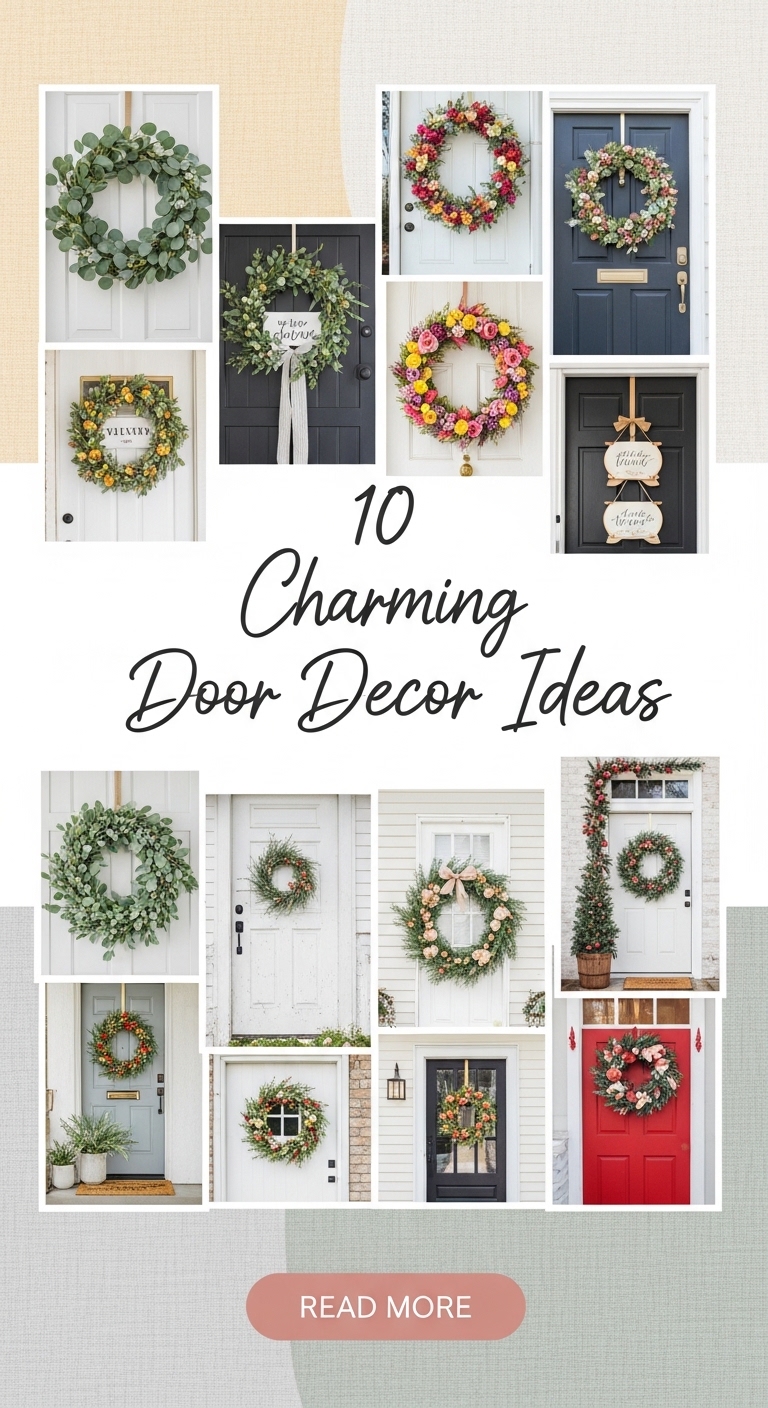
Our front door used to be the most boring part of our home — flat white, no character, the kind of door you walk past without seeing. Then I spent one Saturday on it, and now it’s the thing neighbours comment on. A door is your home’s handshake; it sets expectations before anyone steps inside. I’ve tried wreaths, paint, hardware swaps, and lighting, and here’s what actually makes a door charming rather than just decorated.
1. Classic Wreaths for Every Season
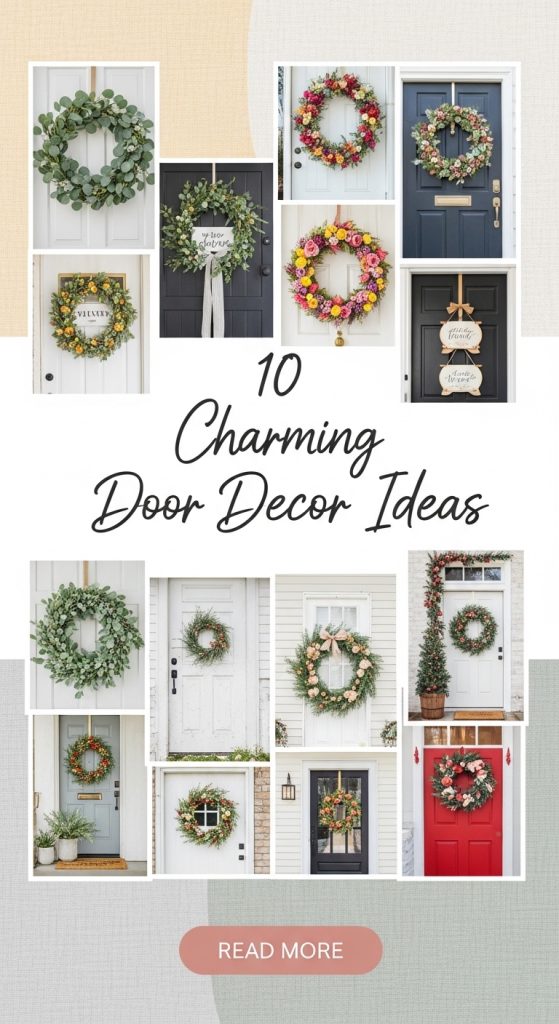
I keep three wreaths in rotation — spring green, summer floral, winter evergreen — and swapping them is my favourite five-minute seasonal ritual. A good wreath instantly says “someone cares about this house.” My advice: buy one quality base wreath and refresh it seasonally with wired-in additions rather than buying three cheap ones that shed. Hang it with a proper over-door hanger or a ribbon from inside; nails in the door are a landlord’s nightmare and they rust. The wreath is the single highest-impact door decoration there is.

2. Statement Door Knockers
I replaced our sad little doorbell with a solid brass ring knocker, and it changed the door’s whole personality — suddenly it had presence. A knocker is jewelry for your door: choose one with some weight, because a flimsy knocker feels worse than none. Brass and black iron age beautifully; cheap zinc looks tired in a year. Installation took twenty minutes with a drill. Guests now knock instead of ringing, which sounds trivial, but the solid thunk of a real knocker is one of life’s small satisfactions.

3. Personalized Door Signs
Our wooden sign with the family name hangs beside the door, and delivery drivers visibly relax when they see it — no more “is this the right house” hovering. A personalized sign makes a house feel like a home from the street. I had ours made by a local woodworker for 35 euros; the big-box version looked fine but the handmade one has soul. Keep the text legible from the pavement — fancy script that nobody can read defeats the purpose. Weatherproof it yearly; my first sign faded to a ghost within two summers.

4. Fresh Paint and Bold Colors
Painting our door deep teal was the bravest 50 euros I’ve spent on the house, and the best. A bold door color is transformative — our plain facade suddenly had a focal point, and the house looks intentional now. The rules I learned: use exterior paint made for doors (it flexes without cracking), paint in dry weather above 10°C, and remove the hardware first rather than taping around it. I tested three swatches on the door for a week before committing. Teal won; the near-black I loved at noon looked funereal at dusk.

5. Greenery Garlands and Door Frames
Framing the door with a garland — eucalyptus in summer, pine in winter — makes the entrance feel like an occasion. I use removable adhesive hooks (the heavy-duty outdoor kind) so there’s no damage, and faux garlands for longevity with a few real sprigs tucked in for scent. The trick is fullness: a skimpy garland looks sad, so buy one size bigger than you think. Draping it asymmetrically, heavier on one side, looks artful rather than fussy. It takes ten minutes and the effect is disproportionate.

6. Decorative Door Mats
The doormat is the punchline of your entrance — make it good. I layer mine: a larger flatweave rug underneath, a coir mat with a witty message on top. The layered look is straight out of a magazine and costs 30 euros total. Replace the coir mat yearly; they wear out and a bald mat undoes all your good work. Funny messages are great until they fade into illegibility, so choose a classic design for the base layer and let the top mat carry the personality. And shake it out weekly — a dirty mat is worse than no mat.

7. Lanterns and Lighting Accents
Two lanterns flanking our door on timers transformed our evenings — the house glows welcoming from the street, and I never come home to a dark entrance. Solar lanterns have gotten genuinely good; mine charge all day and burn till midnight. For wired options, warm 2700K light is non-negotiable — cool white makes a home look like a petrol station. The timer is the key detail; lights you have to remember aren’t lights at all. Our entrance went from foreboding to inviting for about 60 euros.

8. Seasonal and Holiday Door Themes
I go all-in seasonally: pumpkins and corn stalks in autumn, evergreen and lights in December, fresh flowers in a hanging basket come spring. The secret to not spending a fortune is a “base kit” — the wreath hanger, the lanterns, the mat layers stay year-round, and only the seasonal accents change. I store each season’s box labeled in the cellar, and the swap takes twenty minutes. Neighbours think I spend hours; I spend minutes. A themed door tells the street you’re paying attention, and it’s the cheapest curb appeal there is.

9. Creative Door Hardware and Accessories
Swapping all the door hardware to match — handle, knocker, letterbox, house numbers — in one finish (we chose matte black) made our door look designed rather than accumulated. Mismatched hardware is the thing you stop seeing but visitors notice subconsciously. It cost about 120 euros total and an afternoon with a screwdriver. Choose a finish and commit everywhere; mixed metals on one door look indecisive. The house numbers deserve special mention: big, legible, lit if possible. Beautiful and functional.

10. Potted Plants and Doorstep Styling
Two large pots flanking the door — that’s it, that’s the trick. I use evergreen structure (boxwood balls) with seasonal color swapped in front: pansies in spring, geraniums in summer, heather in autumn. Big pots, not small ones; small pots dry out daily and look apologetic. Go as large as the doorstep allows. Watering is the commitment — I lost two summers of plants to optimism before installing a simple drip line on a timer. Now they’re the most complimented, least fussed-over part of our entrance.

Bonus Tips for Perfect Door Décor
- Less is more: I edit ruthlessly — three strong elements beat seven fussy ones. If the door looks busy from the pavement, remove something.
- Scale matters: A tiny wreath on a grand door looks lost. Size decorations to the door, not to the shop shelf.
- Light it: The best door decor is invisible after dark without lighting. Lanterns or a porch light make the investment work evenings too.
- Maintain it: Faded, dusty, or broken decor is worse than none. I do a two-minute door check every Sunday.
- Think in layers: Door color + wreath + mat + lighting + plants. Each layer is simple; together they’re charming.
- Seasonal swaps: Keep a labeled box per season. Twenty minutes, four times a year, endless curb appeal.
- Hardware harmony: One finish for all metal on and around the door. Mixed finishes read as neglect.
- Welcome, really: A clean step, a working bell, a mat that’s not threadbare. The basics are the charm.
Our door went from invisible to the street’s favourite in stages, not all at once — paint first, then hardware, then the seasonal rhythm. Start with whatever bothers you most when you come home. A charming door isn’t about money; it’s about attention. Give yours a Saturday, and it’ll greet you differently every day after.