
When my husband and I moved into our Munich apartment, the bedroom was the one room we fought about most. He wanted clean lines and zero clutter; I wanted layers of textiles and things that felt warm. What finally fixed it was giving the room a clear job description: this is where we rest, read, and actually talk to each other, not where extra furniture goes to die. Over two years of rearranging, returning things, and painting one wall three times, I found ten approaches that genuinely work in a small couples’ apartment. Every one of these I have either tried in my own flat or built for a friend’s rental, so the tips below are the honest kind, including the mistakes.
1. Minimalist Modern Bedroom

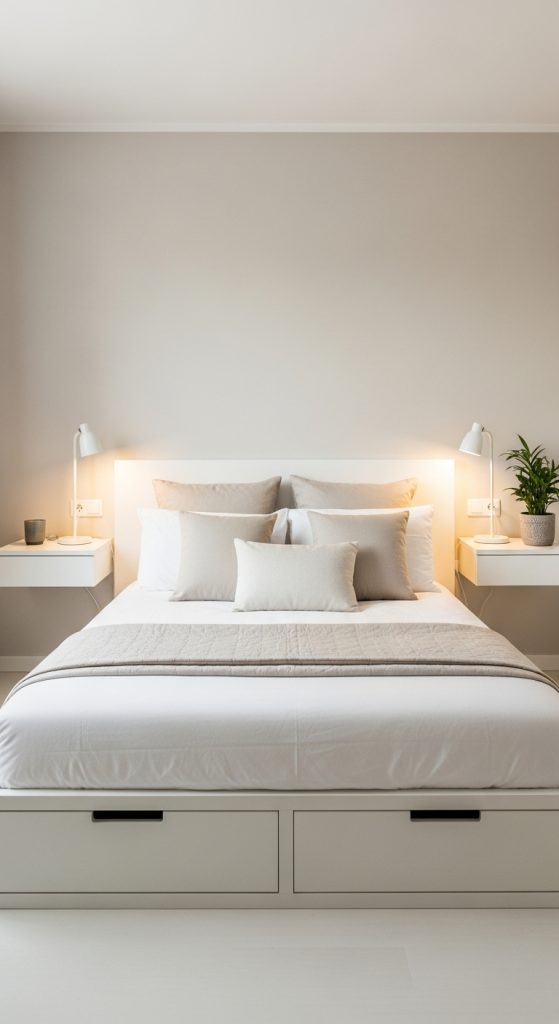
I was deeply skeptical of minimalism because my idea of calm was never his idea of calm. But after I spent one Saturday hauling out the wobbly dresser, the broken floor lamp, and a box of cables I had been keeping “just in case” since 2019, I understood it. We kept the platform bed with its two big storage drawers, two floating nightstands, and exactly one piece of art above the headboard, and suddenly the room felt twice as big. My advice: do the purge before you buy anything. And keep the bedding washable and simple, because a minimalist room with crumpled duvet covers in three clashing patterns just looks like a dorm room. One indoor plant is plenty; I went with a snake plant because it survives my watering schedule, which is to say, barely any.
2. Cozy Bohemian Bedroom
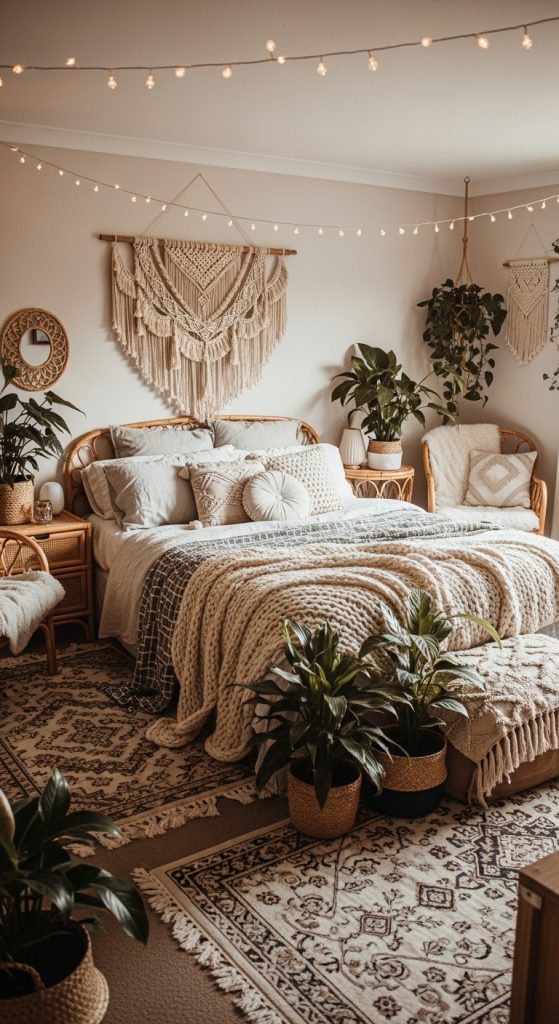
This was the style I pushed for originally, and it taught me that boho done badly is just mess with tassels. What made it work was giving the layers a limit. I chose a warm neutral base, an ivory rug over the parquet, linen bedding in clay tones, and then let myself go wild only on the cushions and one patterned throw at the foot of the bed. The string lights were a mistake in our first version because the wire was always visible, so I swapped them for a salt lamp and a pair of warm bedside lamps, which gave the same glow without the tangle. For couples, the real trick is compromise textiles: one person picks the rug, the other picks the cushions. Nobody gets everything, everybody gets something, and the bed still ends up cozy enough to argue in peacefully.
3. Romantic Luxe Bedroom
I did this one as a surprise weekend project for our anniversary, and it cost me under 200 EUR because I was strategic about it. I did not buy a new bed; I bought a velvet upholstered headboard cover that slides over the existing one, a set of deep wine-colored velvet cushion covers, and two brass table lamps from a flea market on Elisabethplatz for 30 EUR the pair. The lamps were the whole room. Warm light at bed height changes a bedroom more than any wall color I have tried, and candles are lovely in theory but we kept knocking ours over reaching for water, so lamps won. A word of caution: velvet shows every cat hair and every crumb, so if you share your home with a pet, keep the lint roller in the nightstand. Romance survives a lint roller.
4. Scandinavian Simplicity

Living in Munich, I get my share of gray weeks, and this style is the antidote. I painted our north-facing bedroom walls a warm off-white instead of a cold one, which matters more than I expected, and brought in light birch: a simple bench at the foot of the bed, plain wooden frames for our prints. The personalization rule I settled on was one black-framed print each, which kept his graphic posters and my botanical illustrations from fighting. The throws are the secret weapon here: a chunky knit one across the bed in winter, a thin cotton one in summer, and the room never looks finished-unfinished, if that makes sense. Keep the palette quiet and let texture do the talking. Everything in this room wipes clean, which I appreciate more every year.
5. Industrial Chic Bedroom
Our apartment has zero exposed brick, so I had to fake the industrial look, and honestly the faked version works fine. The backbone of it was a matte-black metal bed frame, one Edison-bulb pendant hung low over the side he uses for reading, and a reclaimed-wood bench that doubles as shoe storage. My hard-won lesson: Edison bulbs in a bare pendant are blinding, so I switched to dimmable filament bulbs on a simple plug-in dimmer, which cost about 15 EUR and took five minutes to install. Industrial rooms can read cold fast, so I countered with a thick charcoal rug under the bed and heavyweight linen bedding in dark olive. His half of the nightstand holds a stack of tech magazines, mine holds a stack of novels, and the style is sturdy enough to absorb both without flinching.
6. Compact Apartment Optimization

This one is less a style and more a survival plan for anyone whose bedroom is also the office, the library, and occasionally the drying room. Our second bedroom situation was genuinely tight, so I measured everything before buying, and that measuring tape was the best money I never spent. The winners were a bed with four deep drawers, which swallowed all our off-season clothes, two wall-mounted shelves instead of a bookshelf, and a fold-down desk that closes flat against the wall when we are done working. My one regret is the storage ottoman I bought too big; it blocked the drawer of the nightstand and I tripped over it for a month before selling it. Lesson learned: in a small bedroom, walk the path you will actually take at 3 a.m. before you place anything in it.
7. Nature-Inspired Retreat

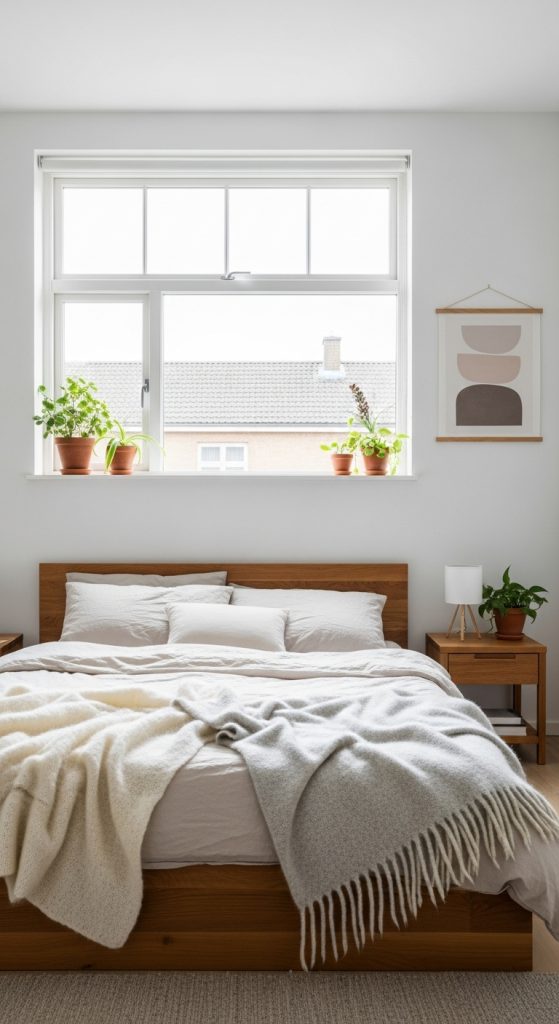
I made this corner of our flat after a winter where I was convinced the sun had permanently left Bavaria. One wall got a soft sage-green paint, the kind that looks gray in dim light and alive in daylight, and I surrounded it with wood: a wicker basket for throws, a wooden tray on the dresser, framed botanical prints I cut from an old calendar and put in cheap frames. Plants are the whole point, so I kept it realistic: a pothos that forgives everything and a fern on the dresser that demands misting, which I do while my coffee brews and somehow remember most days. The room genuinely feels calmer to fall asleep in. If you only do one thing here, paint one wall a green you like in person, not on a phone screen. Phone screens lie about green.
8. Colorful Eclectic Bedroom

This is the style that lets both partners win without pretending either of them is a minimalist. My rule, learned after one spectacularly chaotic attempt where nothing matched, is a 60-30-10 split: one dominant calm color for the big things, a second color for the medium pieces, and then accents you can throw around freely. Ours is warm cream, dusty blue, and then mustard, rust, and teal show up in cushions, a kilim-style runner, and the art. The runner, by the way, was the single best purchase: a flatweave kilim from a carpet shop on the way to the Viktualienmarkt, about 90 EUR, and it ties two people’s taste together like nothing else. Eclectic only works with discipline underneath the fun. Keep the clutter edited or it tips from “collected” to “yard sale” overnight.
9. Smart Technology-Integrated Bedroom

My husband is the tech half of this household, so this room has been our experiment zone, and I have veto power over anything that blinks. What stayed: smart bulbs in both bedside lamps on a warm-dimming schedule, which means the light gently fades at 22:30 and I do not have to have the “lights out” conversation, plus a phone charging drawer in the nightstand so the glowing screens are out of sight. What got vetoed: a voice assistant, because I refuse to whisper commands at night, and a TV on the wall, which made the room feel like a hotel and killed the whole point of a retreat. My recommendation is to hide every cable before you call it done. A basket under the nightstand holds the power strip, and five minutes of cable tidying did more for the room’s look than any gadget.
10. Romantic Vintage Bedroom

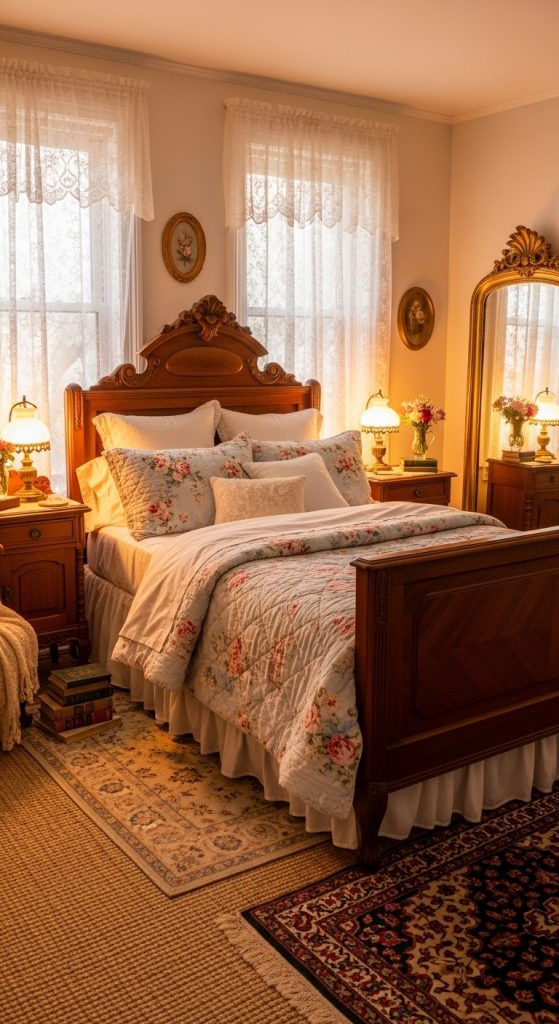
I built this one around a single find: an old carved wooden mirror from a flea market in Schwabing, 45 EUR, heavy enough to need two screws into the wall. Everything else followed it: a secondhand dresser I sanded and painted cream, lace-trimmed curtains that filter the afternoon light beautifully, floral bedding in blush and sage that my husband tolerates because the mirror is “objectively cool.” The trick with vintage is restraint, which I learned after over-accessorizing the first version until it looked like a costume shop. One ornate piece per zone is enough: the mirror over the dresser, the carved headboard detail, one small lace doily under the lamp. Pastels keep it soft and romantic rather than fussy. It is the room guests always photograph, and honestly it is where I go when I want to feel a little bit fancy for no reason.
Conclusion
If I could boil two years of bedroom rearranging into one piece of advice, it is this: agree with your partner on what the room is for before you buy a single thing, and then let each person own one decision completely. Ours is for rest, reading, and talking, and everything in it serves one of those three jobs. Pick the style that matches how you actually live, not the one that photographs best, and start with the light and the bed before anything decorative. And measure twice, because my ottoman mistake cost me a bruised shin and a classified ad. A shared bedroom that works for both of you is the best DIY project there is, and mine is still my favorite room in the flat.