10 Front Porch Flooring Ideas
Our front porch floor was the first thing visitors saw and the last thing we fixed — cracked concrete painted a sad gray that peeled every spring. When we finally tackled it, I researched every option obsessively because a porch floor takes weather abuse year-round. I ended up going with one choice, but I seriously considered them all, priced them all, and have opinions about each. Here’s the honest breakdown.
1. Classic Wooden Plank Flooring
There’s nothing warmer underfoot than real wood on a porch — I grew up with a wooden veranda and the sound of footsteps on planks is pure nostalgia. If you go wood, choose pressure-treated pine or, better, larch or Douglas fir, and leave small gaps between boards for drainage. My parents’ porch needed re-oiling every two years, which is the honest maintenance cost of the look. It’s beautiful, it’s traditional, and it demands commitment. For a covered porch it’s wonderful; for fully exposed weather, think twice.

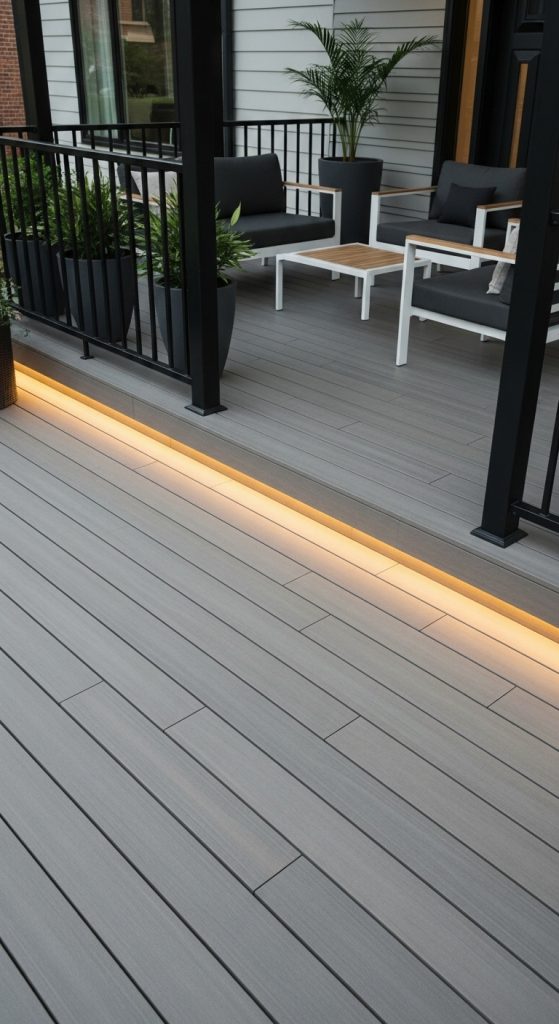
2. Composite Decking for Low Maintenance
My sister chose composite for her porch and hasn’t touched it in four years — no staining, no splinters, no rot. It costs roughly twice as much as wood upfront, which stung, but she did the maths on stain and replacement boards and broke even by year three. Modern composites look convincingly woody now; the cheap hollow ones sound drum-like underfoot, so choose solid boards if you can. For anyone who wants the wood look with zero weekends lost to maintenance, this is the rational winner.
3. Natural Stone Elegance
Flagstone or slate on a porch is the forever choice — it’ll outlive the house. A friend’s 1920s porch still has its original slate, worn smooth and gorgeous. The downsides are real: it’s the most expensive option here, it’s cold underfoot, and smooth stone gets slippery when wet, so choose a honed or textured finish, never polished. Installation is not DIY-friendly; bad stonework looks terrible. But if the budget allows and you want a porch that never needs redoing, stone is the answer.

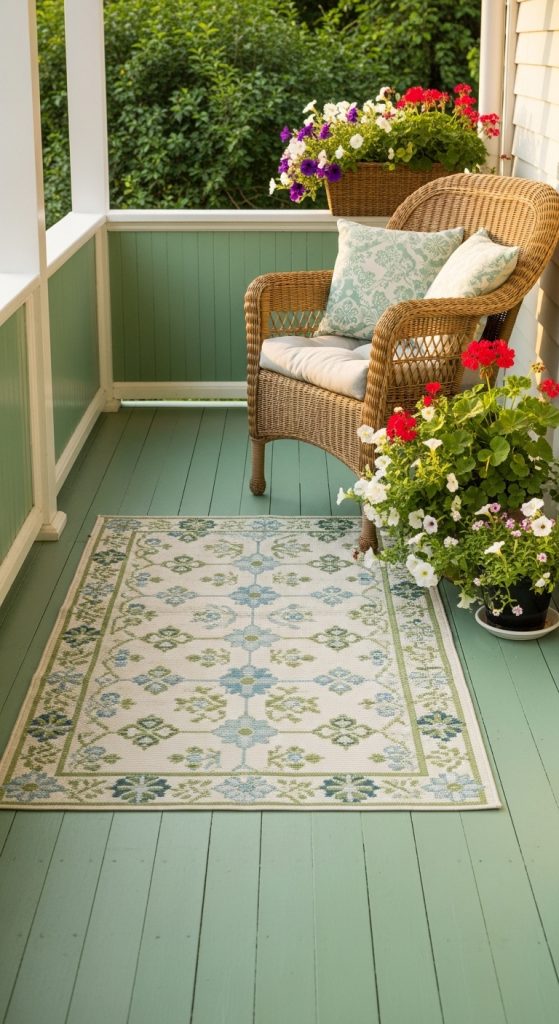
4. Painted Wood Flooring for Color and Personality
This is what I did to our old porch while saving for the real fix: painted the tired boards a deep slate blue with porch-specific paint, added a stenciled border, and bought myself two good-looking years for 60 euros. Painted wood is the budget hero — it hides ugly, adds personality, and you can change your mind next spring. The catch: it needs redoing every 2-3 years, and preparation is everything. I skipped proper sanding the first time and it peeled by winter. Sand, prime with exterior primer, two topcoats, done right.
5. Brick Flooring for Timeless Charm
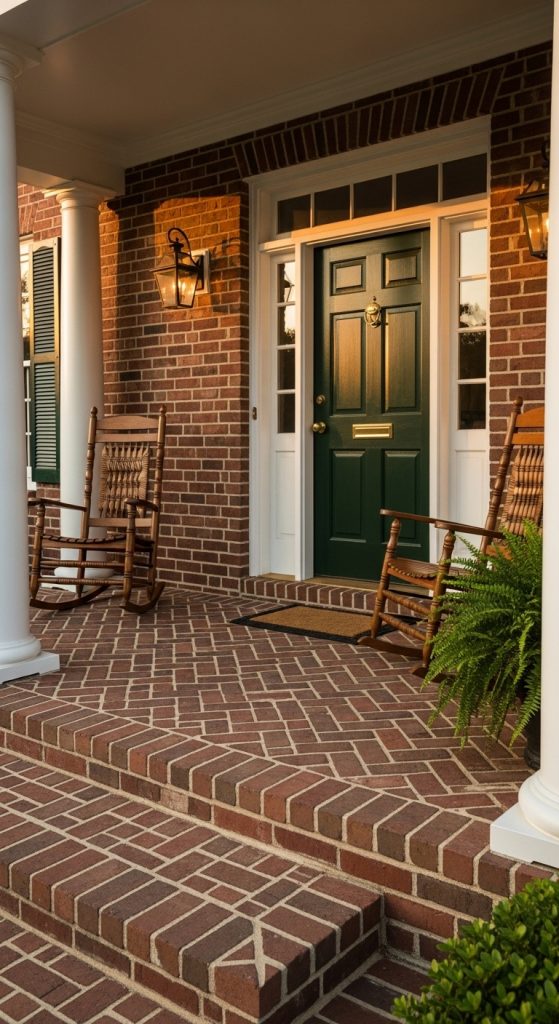
Brick porches make my heart happy — herringbone brick with moss in the joints is pure storybook. It’s incredibly durable and ages beautifully; the patina only improves. But it’s labor-intensive to lay properly (a proper sand or mortar bed, not just bricks on dirt, or they shift), and hard underfoot. I priced it for our porch and the labor doubled the material cost. If you love the look and plan to stay put, it’s wonderful. For a quick flip or a rental, it’s overkill.
6. Stamped Concrete for Versatile Style
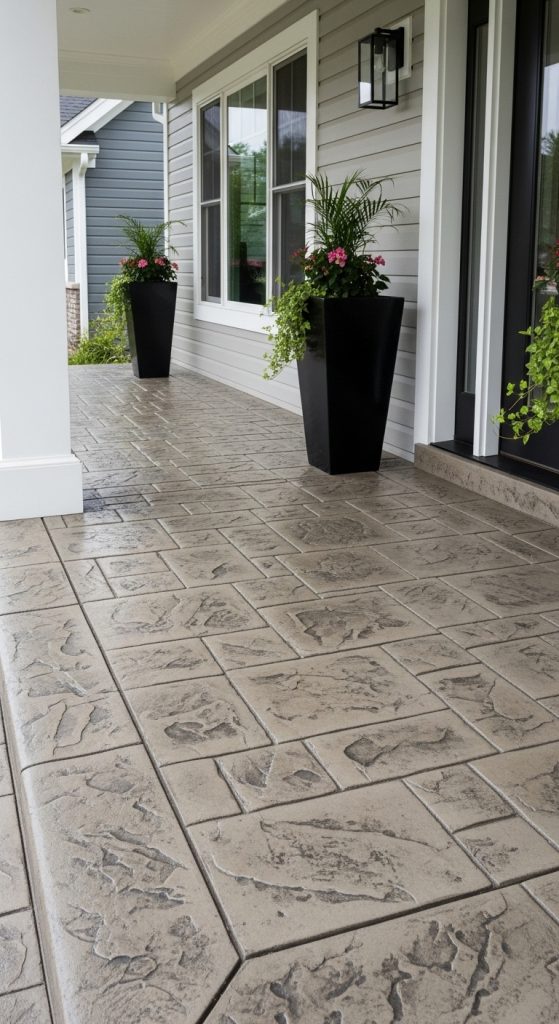
Stamped concrete is the chameleon: it can mimic stone, tile, or wood at a fraction of the price. Our neighbour’s stamped “slate” porch fools everyone until you knock on it. It’s durable and low-maintenance, but the pattern is only skin-deep — if it chips, the gray underneath shows. Choose a skilled contractor; bad stamping looks like a bad tattoo. And seal it every few years, or winter freeze-thaw will find every weakness. A solid mid-budget choice that punches above its price.
7. Tile Flooring for Artistic Expression
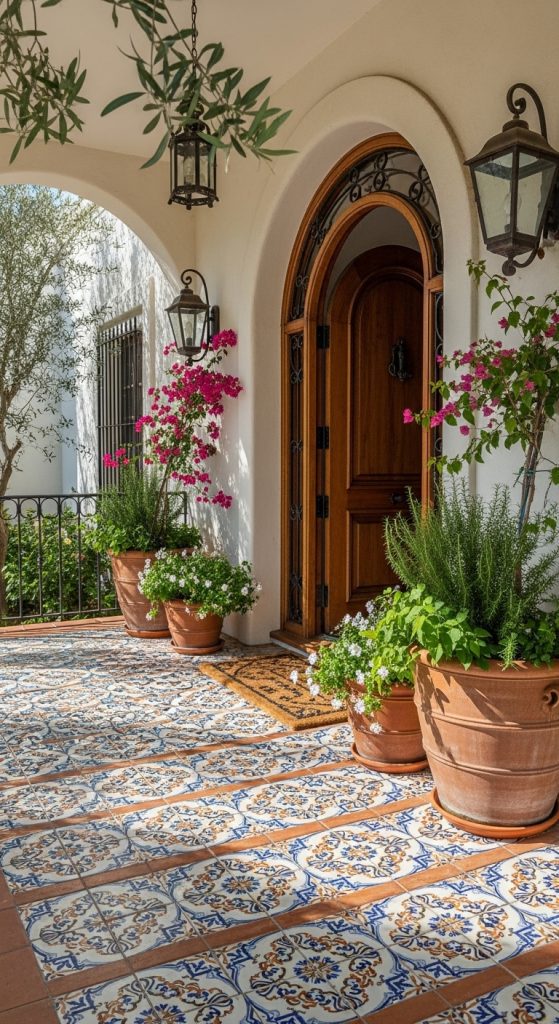
Encaustic-look porcelain tiles on a porch are stunning — I nearly chose this. The patterns turn the floor into art, and porcelain shrugs off weather. But tiles on an exterior porch need proper frost-proof rating and a perfect substrate; a cracked tile in a patterned floor screams. It’s also unforgiving underfoot and can be slippery — choose textured, matte tiles with good grip rating. Gorgeous, but it’s the highest-maintenance choice in terms of installation precision. For covered porches in mild climates, wonderful.
8. Gravel and Stone Mix for Rustic Simplicity
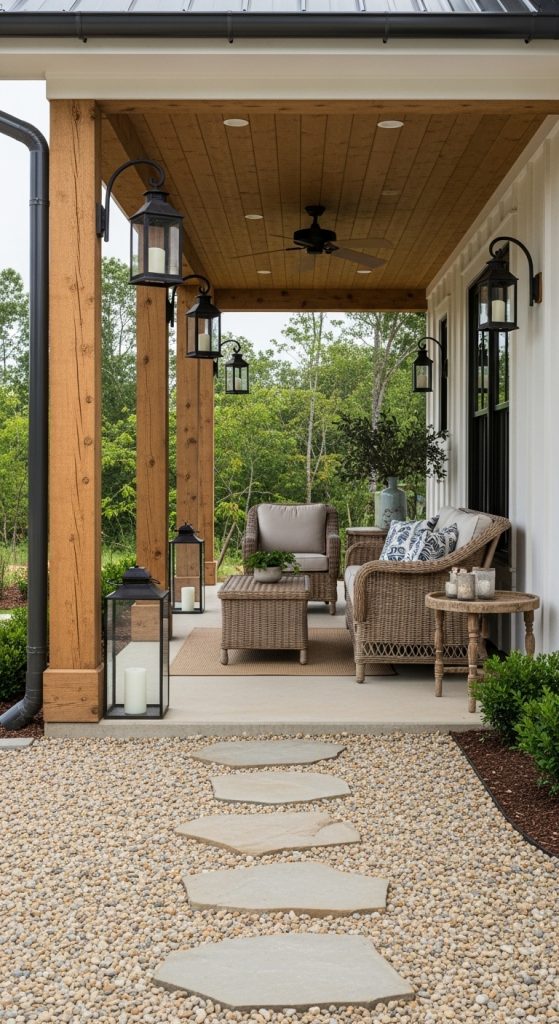
For a cottage or garden porch, compacted gravel with stone pavers is charming and the cheapest proper option here. I did a gravel-and-slab path to our side door for under 100 euros and it looks intentional, not cheap. The crunch is lovely, drainage is perfect, and repairs mean raking, not contractors. Downsides: gravel migrates (edging is essential), it’s not wheelchair or stroller friendly, and you’ll sweep. Best for secondary porches and rustic styles, not the grand front entrance.
9. Vinyl or PVC Plank Flooring
Exterior-rated vinyl planks are the dark horse: waterproof, warm underfoot, easy DIY install, and surprisingly good-looking now. I used them in our covered side porch and two winters later they look new. The key is buying actual exterior-rated product, not indoor LVP — indoor vinyl will curl and fade outdoors. It’s not the most prestigious choice, but for a covered porch on a budget, the value is unbeatable. Guests assume it’s wood until they knock on it.

10. Concrete with Painted or Stained Finishes
This is what we ultimately did: our cracked concrete got repaired, then stained a warm gray with concrete stain (not paint — stain soaks in and doesn’t peel). Two weekends of work, about 150 euros in materials, and the porch looks intentional now instead of apologetic. Stain is more forgiving than paint on concrete and lasts years longer. Etch first, stain in thin coats, seal after. If your concrete is structurally sound but ugly, this is the best-value transformation on the list — I wish I’d done it years earlier instead of living with the sad gray.

If I had to choose again from scratch with a normal budget: stained concrete for the main porch (what we did, no regrets), painted wood as the quick fix while you save, composite if you never want to think about it again. Whatever you choose, fix the drainage first and the surface second — no flooring survives standing water. Our porch finally looks like the welcome we meant all along.