10 Laundry Room Shelves Ideas
Our laundry corner used to be the one place in our flat where I closed the door before guests arrived. Detergent bottles crowded the top of the washing machine, clean towels balanced on a wobbly pile, and the one small shelf we had sagged under the weight of everything I had shoved onto it. One rainy Saturday I finally emptied the whole corner onto the kitchen floor, measured every wall with a tape I borrowed from my neighbour, and started again from scratch. What follows is everything I learned about laundry room shelves, including the mistakes I made, so your laundry corner can become a place you actually enjoy walking into.
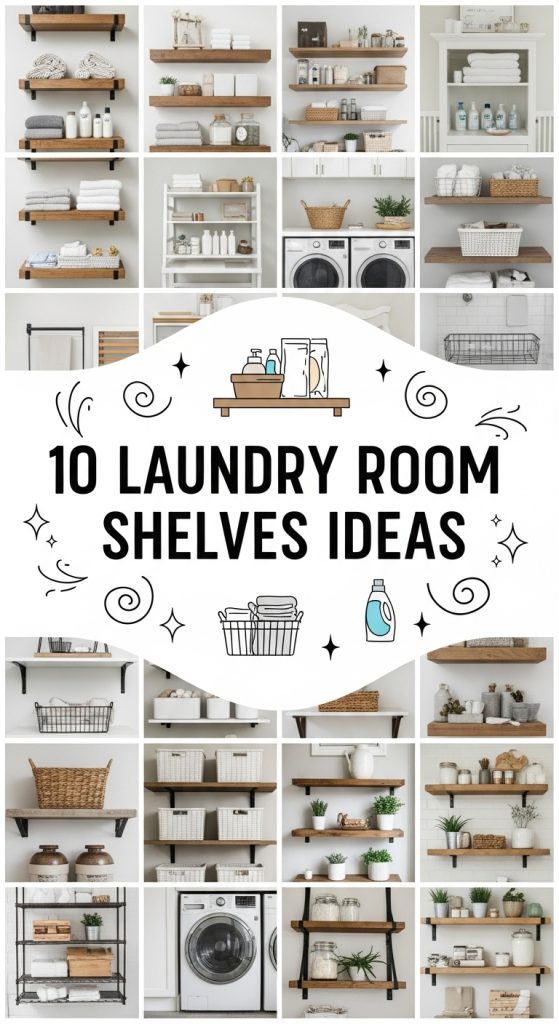
4 Things Worth Knowing Before You Start
- Measure the detergent bottles first: Tall bottles need at least 35 centimetres of clearance, so measure your tallest bottle before you fix a shelf height.
- Find the studs: A shelf full of detergent is heavy, so fix brackets into wall studs or use proper wall plugs rated for at least 20 kilos per bracket.
- Leave a folding gap: Keep one shelf or counter clear at all times, because a shelf you cannot use for folding is a shelf wasted.
- Plan for steam: Laundry rooms get damp, so choose sealed wood, metal, or melamine rather than raw chipboard that swells in humidity.
1. Floating Shelves Above the Washer and Dryer

The first shelves I put up were two floating boards above the washing machine, and they changed the room more than anything else I did. I chose solid pine boards, 120 centimetres long and 25 centimetres deep, which cost about 30 euros including the hidden brackets, and I sanded them smooth before sealing them with two coats of clear varnish. The varnish matters more than the wood, because laundry steam finds every unsealed edge, and my first unsealed board started to swell within two months. Now the detergent, fabric softener, and stain spray live on the lower shelf within easy reach, while the upper shelf holds folded towels and a small basket for pegs and lost socks.
I learned to leave a gap of at least 45 centimetres between the top of the machine and the first shelf, because anything lower gets knocked every time I open the detergent drawer. I had sketched the layout after browsing laundry room makeover ideas, which helped me decide the heights before I drilled a single hole. I also put a small potted plant on the end of the upper shelf, a trailing pothos that seems to love the humidity, and it makes the whole corner feel less like a utility space and more like part of our home. The shelves took about an hour to install with a level and a drill, and the hidden brackets mean there are no visible supports to collect dust. If your machines vibrate, check the shelf fixings after the first week, because a shaking machine can loosen a bracket that felt solid on day one.
Try this: Hang the lower shelf at shoulder height so you can grab the detergent without stretching, and keep a small basket on it for the bits that always end up loose. This setup suits a small laundry corner perfectly, and it works just as well above a stacked washer dryer in a flat.
2. Open Industrial Style Shelving

I have always liked the look of wood and black metal together, so for the wall opposite the machines I built an open industrial style shelf using two scaffold boards and four black pipe brackets. The boards cost 18 euros from the timber yard, and the brackets were about 25 euros online, which made the whole thing far cheaper than a shop bought unit. I sanded the boards until they were smooth enough that no splinters could catch on towels, then sealed them with a matt varnish that has survived two years of steam without a mark. The open design means I can see everything at a glance, which is exactly what you want when your hands are full of wet laundry.
On these shelves I keep glass jars of washing powder with wooden scoops, neatly folded tea towels, and a row of wire baskets for the smaller things like stain sticks and spare buttons. I labelled the jars with a simple chalk pen, which wipes off when I change the contents, and I learned to keep the heaviest jars on the lowest shelf, because a full jar of powder weighs more than you expect. The industrial look suits our flat because the kitchen has the same black metal details, so the laundry corner finally feels like it belongs to the rest of the home instead of being an afterthought. A quick wipe with a damp cloth once a week keeps the metal brackets free of rust spots.
Good to know: Scaffold boards need a good sanding on all four edges, since the rough sawn finish can snag fabric and scratch your hands. This style fits a loft flat or a modern home beautifully, and it is a strong choice for a laundry room that opens onto the kitchen.
3. Built In Cabinet Shelves

When I finally had a little money saved, I invested in built in cabinet shelves around the machines, and it was the single best thing I did for the room. I ordered two simple white wall cabinets from a flat pack range, which cost about 180 euros, and I fitted them myself over a weekend with a friend who owned a proper drill. The cabinets hide the cleaning sprays and the spare bleach behind closed doors, while the open shelf between them displays folded linen and a few pretty glass jars. The difference is remarkable, because the room now looks calm even when the washing basket is overflowing, and I no longer have to look at a row of bright plastic bottles every time I walk past.
I measured the space three times before ordering, and I am glad I did, because the gap between the machines and the wall was two centimetres narrower than I had guessed. I also left a small open niche above the sink for the hand wash items, which keeps them separate from the machine laundry and easy to find. The cabinets are painted melamine, so they wipe clean with a damp cloth and they have not swollen at all despite the steam from the dryer. If built ins feel too expensive, a single wall cabinet above the machines gives you most of the same benefit for a third of the price, and you can add the second one later when the budget allows.
Budget tip: Flat pack kitchen wall cabinets are cheaper than laundry specific units and they fit the same way, so compare the two before you buy. Built ins suit a larger laundry room best, and they are ideal for a home where the laundry area is visible from the hallway.
4. Corner Shelving Units
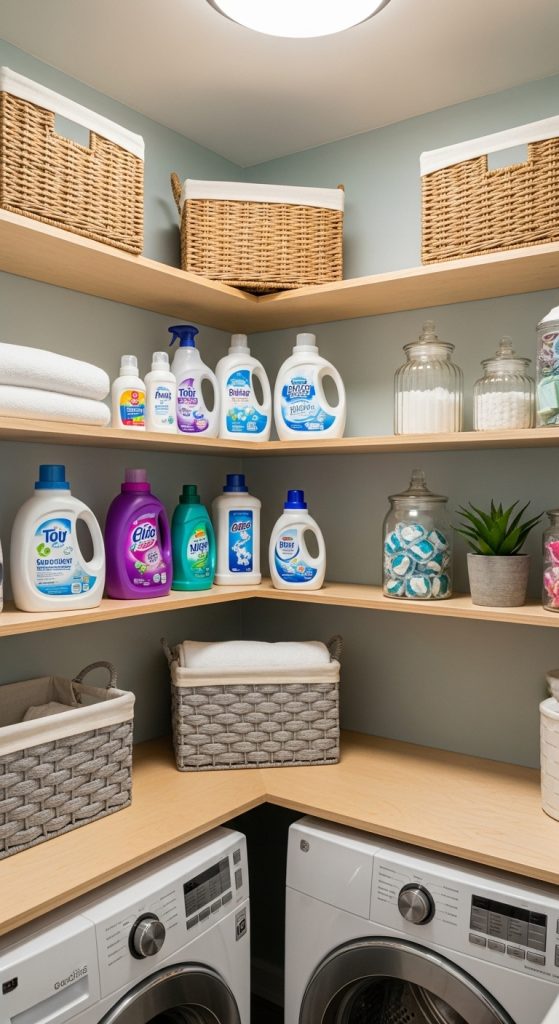
The corner of our laundry room sat empty for years because I assumed nothing would fit there, which was a mistake, because corners are exactly where small shelves earn their keep. I bought a set of three triangular corner shelves for 22 euros and fixed them one above the other in the corner beside the door, and they now hold the stain remover, the fabric softener, and a small basket of pegs. The shelves are only 30 centimetres across, so they never get in the way, but they freed up a surprising amount of space on the main shelves, and the room finally feels balanced instead of lopsided. I used a small level for each shelf, which took a few extra minutes but meant none of them tilt, and tilted shelves are the fastest way to lose a bottle of detergent onto the floor.
I keep the top corner shelf for things I use rarely, like the special wool wash and the spare iron cleaner, and the lower two for everyday items, because reaching into a corner is awkward when you are in a hurry. A tiny potted succulent lives on the middle shelf, which sounds unnecessary, but it is the first thing I see when I open the door, and it makes the chore feel a little less grey. If your corner is awkwardly shaped, a custom L shaped shelf made from two offcuts of plywood will fit better than any shop bought set, and a local timber yard will cut the pieces for a few euros. Measure the angle of the corner first, because older flats rarely have perfect ninety degree corners.
Where it works: Corner shelves are made for a small laundry room or a laundry closet where every centimetre counts. They also work well in a hallway laundry nook, where they turn a dead corner into useful storage without blocking the walkway.
5. Over the Door Shelves

When I lived in a rented flat, I was not allowed to drill into the walls, so over the door shelves saved my laundry routine completely. I bought a simple wire rack that hooks over the top of the door for about 15 euros, and it held the stain spray, the ironing spray, and a small basket of cleaning cloths without a single screw. The rack took two minutes to hang, and when I moved out I simply lifted it off and took it with me, which is the kind of solution every renter dreams of. I learned to keep the weight light, because a heavy rack makes the door swing oddly and the hooks can mark the paint, so I keep only light bottles and cloths on it and nothing made of glass.
The trick that made it work was adding small non slip pads behind the hooks, which stopped the rack from rattling every time the door moved. I had seen the same trick in hallway laundry closet ideas, where every centimetre of door space counts, and it works just as well here. I also hung a second smaller rack on the inside of the door for the items I reach for most, like the lint roller and the fabric freshener, so everything is at hand the moment I open the door. If your door is hollow, check the top edge before you buy, because some racks need a solid door to sit properly. For a laundry closet with bifold doors, a slim over the door rack on the inside of one panel works just as well, and it keeps the supplies out of sight when the doors are closed.
Beginner tip: Start with a light wire rack and only hang plastic bottles on it, never glass, because a falling glass bottle on a tiled floor is a mess you do not want. This is the best option for renters and for a small flat, and it is perfect for a laundry closet where wall space is already taken.
6. Adjustable Wire Shelving

Wire shelving was the first system I ever used, and I still recommend it to anyone who wants flexibility without spending much. I bought a freestanding wire unit with four shelves for about 40 euros, and I could move the shelves up and down in minutes whenever my storage needs changed. When I switched to a taller detergent bottle, I simply raised one shelf by ten centimetres, and when I needed space for a stack of folded sheets, I removed a shelf entirely. The open wire design lets air circulate, which matters in a damp room, because towels and cloths dry faster and nothing develops that musty smell that closed shelves sometimes trap.
The one thing I did not expect was how much I would come to rely on the baskets. I added three fabric bins in soft grey, one for cleaning cloths, one for spare pegs, and one for the odds and ends that never seem to have a home, and suddenly the wire shelves looked tidy instead of cluttered. I also learned to put a thin board or a tray under anything that might drip, because wire shelves let drips fall straight through onto whatever is below. The unit is light enough to pull out for cleaning behind it, which I do once a month, and it has never rusted, because I chose a chrome finish rather than the cheaper painted kind.
Make it yours: Add fabric bins in a colour you love, because they turn a plain wire unit into something that looks intentional and calm. Wire shelving suits a basement laundry room well, and it is a practical choice for a utility room where damp items need air to dry.
7. Pull Out Shelves for Hidden Storage

Pull out shelves were a small luxury I added when I replaced the lower cabinets, and I wish I had known about them years earlier. I fitted two pull out trays inside the cabinet beside the washing machine, each one on smooth drawer runners that cost about 12 euros a pair, and now I can slide the whole shelf out and see everything at once instead of reaching blindly into a dark cupboard. The trays hold the detergent, the softener, and the stain treatment, and because they pull right out, I never knock a bottle over while feeling around at the back. I made the trays from plywood offcuts with a raised edge, which stops bottles from sliding off, and I sealed them with varnish so any drips wipe off easily.
Installing the runners took patience, because they have to be perfectly level or the tray sticks, and I measured twice and drilled once, which is advice I give myself often and ignore too rarely. The result is worth the fiddling, because the cabinet looks completely plain from the outside while hiding a very organised interior. I also added a narrow pull out tray for the ironing board accessories, which keeps the spray starch and the iron cleaner together in one place. If you are buying new cabinets, ask for pull out trays to be included, because adding them later costs more than fitting them at the start.
Good to know: Drawer runners are rated by weight, so choose ones rated for at least 25 kilos when the tray will hold full detergent bottles. Pull outs are ideal for a deep cabinet in a larger laundry room, and they are a kindness to anyone who dislikes bending into low cupboards.
8. Rustic Wooden Shelves with Hooks

The farmhouse look came to our laundry corner through a single reclaimed wood shelf with hooks underneath, and it is still my favourite piece in the room. I found the wood at a salvage yard for 10 euros, a beautiful old beam that I cut to length and sanded until it was smooth, and I fixed five black metal hooks underneath it for hanging the dust cloths, the reusable shopping bags, and the little mesh bag I use for delicates. The shelf itself holds two glass jars of washing powder and a small vase with dried lavender, which smells lovely every time the dryer warms the room. The whole thing took one afternoon, and it cost less than a takeaway dinner for two.
I learned that reclaimed wood needs a proper clean before it comes indoors, because old beams can carry dust and the odd woodworm hole, so I scrubbed it with soapy water, let it dry for two days, and sealed it with a hard wax oil that has held up beautifully. The hooks and jars echo the cozy rustic bathroom organization hacks I used in our bathroom last year, and the two rooms now feel like they belong to the same home. The hooks are the real workhorses here, because hanging the dust cloths to dry means they never sit damp in a pile, and the reusable bags are always where I need them when I head to the shops. I also hung a small chalkboard label on the end of the shelf, where I write the washing settings for anything unusual, like the wool jumpers that need a cold wash. A shelf like this brings warmth to a room that can otherwise feel cold and clinical.
Try this: Look for reclaimed wood at a salvage yard or a demolition sale, because a single beautiful board costs far less than a new shelf and it brings real character with it. This style is perfect for a farmhouse style home, and it adds warmth to a laundry room that feels too plain or too white.
9. Wall to Wall Shelving Units

When we moved to a house with a proper laundry room, I finally had a whole wall to work with, and I built wall to wall shelving across it in a single weekend. I used three long pine boards, each two metres long, fixed with sturdy brackets into the studs, and I gave each shelf a job: the top shelf holds bulk supplies and seasonal items, the middle shelf holds everyday detergents and folded linen, and the lower shelf holds baskets for sorting. The boards cost about 60 euros in total, and the brackets were another 30, which is a fraction of what a fitted unit would have cost. I painted the brackets the same soft grey as the walls, so they disappear, and the shelves look like they were built with the house.
The biggest lesson was to leave one section of the wall completely empty, because a wall of shelves that is full to the brim looks stressful rather than organised. I left a clear space above the folding counter, which means I always have somewhere to put a basket down, and I keep a small step stool nearby so I can reach the top shelf safely. I also learned to put the heaviest items, like the bulk detergent and the spare iron, on the lowest shelf, because lifting a five kilo bottle down from above your head is an accident waiting to happen. The wall now holds everything our family of four needs, and I can find any item in seconds, which is the whole point of a laundry room.
Watch out: A top shelf that you cannot reach without a stool becomes a shelf for forgotten things, so keep the top shelf for items you truly only need twice a year. Wall to wall shelving suits a larger laundry room or a family home, and it is ideal for a utility room that also stores pet supplies and cleaning gear.
10. Decorative Display Shelves

The last shelves I added were purely decorative, and I hesitated before buying them, because a laundry room hardly seems like a place for pretty things. I am glad I did it, though, because a small display shelf with glass jars of colourful laundry pods, a trailing plant, and a framed print with a simple washing day saying has made the room feel like part of our home. I placed the shelf at eye level beside the door, where I see it every time I walk in, and it reminds me that even a chore room deserves a little beauty. The jars cost a few euros each, and I filled them with pods and pegs, so they are decorative and useful at the same time, which is the best kind of decoration.
I keep the display shelf deliberately light, because it is not meant for heavy storage, and I dust it once a week along with the rest of the room. The plant is a small pothos in a ceramic pot, which thrives in the humidity and needs watering only every couple of weeks. I also change the framed print with the seasons, a simple thing that costs nothing and keeps the room feeling fresh. If you are short on space, a single narrow display shelf above the door gives you the same lift without taking any useful storage away. A laundry room that looks cared for is a laundry room you will actually enjoy using, and that is worth more than any amount of extra storage.
Make it yours: Fill a glass jar with colourful pegs or pods and put it on a small shelf, because it costs almost nothing and it makes the whole room feel considered. Display shelves suit any laundry room, and they are especially lovely in a laundry room that opens onto the hallway, where guests can see it too.
Conclusion
Our laundry corner went from a cluttered afterthought to a room I am quietly proud of, and the shelves did most of the work. I started with two floating boards and a tape measure, and I learned as I went, including the sagging shelf and the unsealed board that swelled in the steam. If you take one thing from my experience, let it be this: measure your tallest bottle, fix into studs, and leave one clear space for folding. The rest is just wood, brackets, and a little patience, and the result is a room where laundry feels less like a chore and more like a small daily ritual.