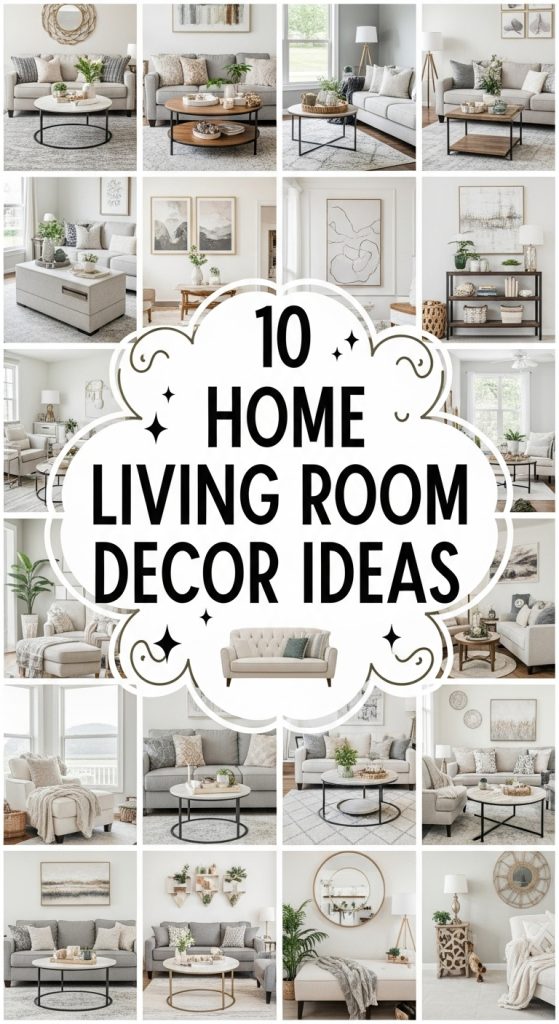
10 Home Living Room Decor Ideas
Our living room was the first room I decorated in our flat, and it was also the room I got wrong most often. I bought a sofa that was too big, hung a picture too high, and chose a rug that slid across the floor every time someone sat down. It took me two years of small changes, and a lot of moving furniture around on Sunday afternoons, before the room finally felt right. The ideas below are the ones that survived all that rearranging, the ones I would do again tomorrow, and the ones that cost the least and made the biggest difference.
1. Statement Furniture That Earns Its Place

The sofa is the biggest piece in any living room, so I learned to choose it first and build everything else around it. Ours is a deep green velvet two seater that I found on sale for 450 euros, and I waited three months for the right one instead of buying the first grey sofa I saw. I measured the wall twice, taped the outline on the floor with masking tape, and lived with the empty rectangle for a week before I ordered, which felt silly at the time but saved me from buying a three seater that would have blocked the door. The green velvet sounds bold, but it works because everything else in the room is calm, cream walls, a pale rug, and wooden furniture, so the sofa is the one strong voice in the room.
I paired the sofa with a single armchair in a warm mustard colour that I found second hand for 60 euros, and the two pieces together make the seating area feel intentional rather than accidental. I learned that a statement piece does not have to be expensive, it just has to be chosen on purpose, and a second hand chair with a good shape and a new cushion can look better than a new chair bought in a hurry. I also keep a small side table beside the sofa for coffee and books, because a statement sofa without a place to put your cup is a beautiful frustration. One strong piece, chosen slowly, will do more for a room than five pieces bought in a weekend.
Budget tip: Tape the outline of a sofa on the floor before you buy, and live with the empty space for a week, because a sofa that is ten centimetres too long will annoy you every single day. A statement sofa suits a living room where you spend most evenings, and it is the best place to put your decorating budget first.
2. Layered Lighting for Every Hour

For the first year, our living room had a single ceiling light, and every evening felt like sitting under a spotlight in a shop. I changed that by adding a floor lamp beside the reading chair, a table lamp on the sideboard, and a dimmer on the main pendant, and the room now feels different at every hour of the day. The floor lamp was a second hand find for 25 euros, and I fitted a warm linen shade that softens the light beautifully. In the morning, the daylight does the work, in the afternoon the table lamp adds a gentle glow, and in the evening the dimmed pendant and the floor lamp together make the room feel like a quiet restaurant rather than a waiting room.
I learned to choose warm white bulbs for every living room lamp, because cool white light after sunset makes a home feel like an office, and nobody relaxes under office lighting. The dimmer switch cost 12 euros and took an electrician twenty minutes to install, and it is the best small investment I have made in the room, because we lower the lights for films and raise them when friends come for dinner. I also keep a string of small fairy lights along the bookshelf in winter, which adds a soft sparkle that costs almost nothing to run. Lighting is the decoration you feel rather than see, and once you have lived with layered light, you will never go back to a single bulb.
Good to know: A dimmer switch and two lamps at different heights will change a room more than any piece of furniture, so start there before you buy anything else. Layered lighting suits a living room perfectly, and it is essential in a room where you read, watch films, and entertain in the same space.
3. Area Rugs That Define the Room
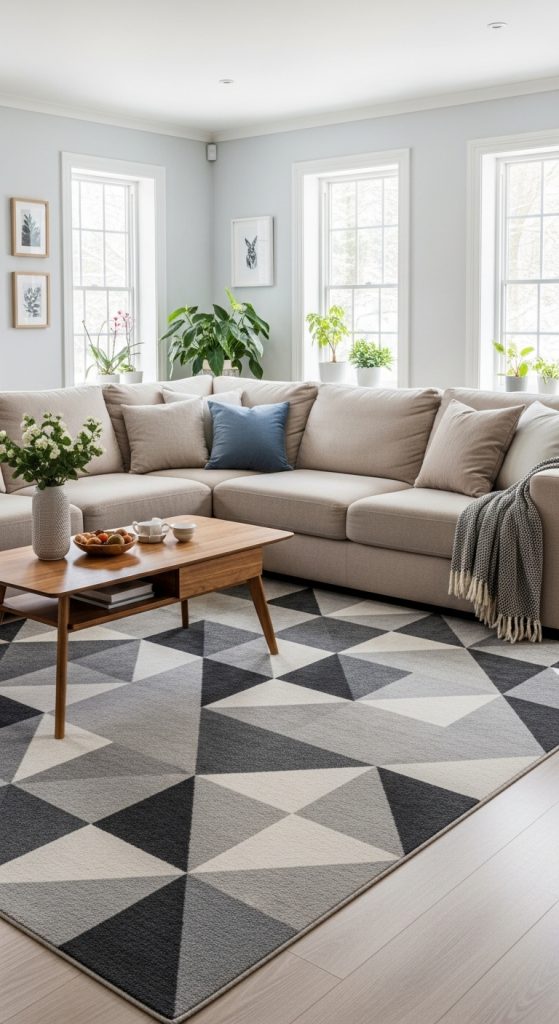
The rug was the piece I resisted longest, because good rugs cost real money, and I kept telling myself the wooden floor was fine on its own. It was not, and the room only came together when I finally bought a large rug, 200 by 290 centimetres, in a soft pattern of cream and sage for 120 euros in a sale. I placed the front legs of the sofa and the armchair on the rug, which anchors the whole seating area, and suddenly the furniture stopped looking like it was floating on a big empty floor. The rug also made the room quieter, because our wooden floors echoed every step, and it is much kinder on bare feet on cold winter mornings.
I learned to buy a rug larger than I thought I needed, because a rug that is too small makes the room look smaller, not larger, and it ends up looking like a mat under the coffee table. I also bought a non slip underlay for 18 euros, which stopped the rug from creeping every time someone stood up, and I vacuum it twice a week to keep the fibres fresh. In spring I take it outside and beat it properly, which is an old habit from my grandmother that still works better than any gadget. If a large rug is too much for your budget right now, layering two smaller rugs can give you a similar effect, and you can move them around whenever you fancy a change.
Try this: Measure your seating area and add 30 centimetres on every side, because that is roughly the rug size that will anchor the furniture properly. A large rug suits a living room with wooden floors, and it is a simple way to separate a seating area from a dining area in an open plan home.
4. Wall Art and Gallery Walls

Bare walls were the reason our living room felt unfinished for so long, and the fix turned out to be simpler than I expected. I hung one large canvas above the sofa, a print of the English Garden in autumn that cost 40 euros at a market, and I built a small gallery wall beside it with four framed photos and a little watercolour in matching wooden frames. I laid the whole arrangement on the floor first and moved the pieces around for half an hour before I put a single nail in the wall, which saved me from a wall full of holes. The canvas hangs with its centre about 150 centimetres from the floor, which is eye level for most people, and I learned that hanging art too high is the most common decorating mistake in any home.
The gallery wall is where our family story lives, with photos from holidays, a drawing my niece made, and a postcard from our first trip together, all in matching frames so the different images feel like they belong together. I found the frames at a flea market for a few euros each, and I painted two of them the same cream colour so they matched the rest. If you rent, removable picture strips will hold most frames safely, and I have used them for two years without a single frame falling. I studied wall art living room ideas before I started, and the advice to hang one large piece first and build the gallery around it was the tip that made the whole wall work. A room with art on the walls feels like someone lives there, and a room without it feels like a showroom.
Make it yours: Hang one piece you genuinely love, even if it clashes with everything else, because a room with one honest piece of art feels more personal than a room full of safe choices. Wall art suits a living room above the sofa, and it is a lovely way to warm up a hallway or a bedroom wall too.
5. Cozy Textiles and Layers

Textiles were the cheapest way I found to make our living room feel cosy, and they are still the first thing I reach for when the room feels flat. I bought a chunky knitted throw in cream for 30 euros and draped it over the arm of the sofa, and I added two cushion covers in a soft rust colour that I swap for pale linen ones when summer arrives. The sofa went from looking like a piece of furniture to looking like a place to sit, and on cold evenings the throw is the first thing anyone reaches for. I also hung simple linen curtains for about 50 euros, which soften the window and filter the afternoon sun in a way that blinds never managed.
I learned to buy cushion covers with zips, because they wash easily and I can change the whole colour scheme of the room for the price of two covers. I keep a basket beside the sofa with a spare throw, so guests can help themselves, and I wash the covers once a month to keep them fresh. The trick is to mix textures, so a knitted throw beside a smooth linen cushion feels richer than two pieces of the same fabric, and a velvet cushion in winter adds a warmth that no other material matches. Textiles are also the kindest decoration for a rented flat, because they change everything about a room and damage nothing at all. A living room that feels soft to the touch is a living room people want to stay in.
Where it works: Layered textiles suit a living room or a bedroom, and they are the quickest way to make a guest room feel welcoming before visitors arrive. They are especially lovely in a reading corner, where a throw and a cushion turn a chair into a favourite spot.
6. Indoor Plants and Greenery

I used to think I had no talent for plants, until a friend gave me a snake plant and it survived two winters, a holiday without watering, and a move across the city. That plant now lives on our windowsill, and it has been joined by a trailing pothos on the bookshelf and a small fiddle leaf fig in the corner, which I water once a week and mist when I remember. Together they make the living room feel alive in a way no object ever could, and the green against the cream walls is the calmest colour combination in the whole flat. I bought the snake plant for 12 euros and the pothos for 8 euros, which makes them the cheapest decoration in the room by far.
I learned to choose the plant for the light rather than the look, because a plant that wants full sun will never be happy in a north facing window, no matter how much you love it. I also repotted everything into pots with drainage holes after losing a fern to root rot, which is the most common way beginners kill plants. The pots are part of the decoration, so I chose ceramic pots in cream and terracotta that match our cushions, and I put a cork mat under each one to protect the wood. Plants do not just decorate a room, they change how it feels to sit in it, especially in winter when the world outside the window is grey and bare.
Beginner tip: Start with a snake plant and a pothos, because both forgive forgotten watering and low light, and you can build your confidence before you try anything fussy. Plants suit a living room windowsill or a bookshelf, and they are a gentle way to soften a home office that feels too stark.
7. Functional Yet Stylish Storage

Clutter was the enemy of our living room for a long time, because every remote control, charger, and magazine ended up on the coffee table, and the room never looked tidy even when I had just cleaned it. The fix was a low wooden storage bench beside the sofa, which I found second hand for 45 euros, and it now holds the board games, the spare blankets, and the cables that used to tangle on the floor. I also added a woven basket for the throws and a lidded box on the sideboard for the remote controls, which means the coffee table holds only a candle and a book, and the room looks calm even in the middle of a busy week. I chose storage that looks like furniture rather than boxes, because a beautiful basket is a decoration in itself.
I learned to give everything a home before I bought any storage, because a basket without a purpose just becomes another place to hide clutter. I did a clear out first, and I was honest about what we actually use, which meant the old magazines and the broken charger finally left the house. I also keep one drawer completely empty, which sounds wasteful, but it means there is always somewhere to put things when guests arrive unexpectedly. A living room with good storage is a living room that stays tidy without constant effort, and that is worth far more than any single piece of decoration.
Good to know: Storage that looks like furniture, like a bench or a beautiful basket, will get used far more than a plastic box hidden in a cupboard. Stylish storage suits a living room where the family gathers every evening, and it is essential in a small flat where every square metre has to work hard.
8. Accent Walls and Paint Colours

For two years our living room walls were plain white, and I told myself I liked the clean look, but the truth was that I was afraid of choosing the wrong colour. Then I painted the wall behind the sofa a soft sage green, one tin of paint for 32 euros and a Saturday afternoon, and the room changed completely. The green makes the cream sofa look warmer, the wooden furniture look richer, and the whole seating area feel like a room of its own rather than a corner of a bigger space. I tested three shades on the wall first, lived with the test patches for a week, and chose the one that looked best in both morning light and evening lamplight, because a colour that looks good only at noon will disappoint you every evening.
I learned that one accent wall is enough, because painting the whole room a strong colour can feel overwhelming, while a single wall gives you the drama without the commitment. I also painted the inside of the bookshelf the same sage green, which ties the two areas together and makes the shelves look built in rather than bought. If you are nervous about colour, start with a soft shade like sage or warm grey, because these colours feel calm rather than bold, and you can always go deeper later. I looked at color palette inspiration living room ideas before I chose, and the advice to test the colour in evening light was the tip that saved me from picking a shade that would have looked cold after dark. Paint is the cheapest transformation in any home, and it is the one I recommend to everyone.
Watch out: Always test a paint colour on the wall for a full week before you commit, because the same shade can look completely different in morning light and evening lamplight. An accent wall suits a living room behind the sofa or the television, and it is a simple way to define a dining area in an open plan home.
9. Personal Touches and Decor Accessories

The decorations that mean the most to me are the ones with a story, and they are what make our living room feel like ours rather than a showroom. On the sideboard sits a small wooden bird my grandmother carved, beside it a shell from our first holiday together, and above them a framed drawing my niece made of our flat, complete with a purple sofa that does not exist. I also have a shelf of family photos in the hallway, printed in black and white so they look calm together even though they span thirty years. These are the pieces visitors always ask about, and they are the ones I would save first if I ever had to leave in a hurry.
I learned to give personal things proper places instead of letting them gather on every surface, because a single shelf of meaningful objects feels special, while a room full of them feels cluttered. I rotate them now and then, so the shell spends a summer on the bookshelf and a winter on the sideboard, and each move makes me notice it again. I also keep a small box for the things that do not fit the current display, because a memento stored safely is better than one knocked off a crowded shelf. I borrowed the darker, moodier side of our home from the dark farmhouse living room ideas I admired last year, which taught me that a few deep toned accessories can ground a pale room beautifully. A home decorated with personal things does not need to follow any trend, because it already has something no shop can sell, which is your own history.
Make it yours: Display one object that tells your story, even if it does not match anything else in the room, because a home with personal pieces always feels warmer than a home full of shop bought decoration. Personal touches suit a living room sideboard or a bookshelf, and they are a lovely addition to a bedroom where you see them every morning.
10. Multi Functional Layouts

Our living room has to do more than one job, because it is where we watch films, where I read in the morning, and where friends gather for dinner when the kitchen table is too small. I learned to plan the layout around those three uses instead of pretending the room had only one purpose. The sofa faces the television for film nights, the reading chair sits by the window with its own lamp for quiet mornings, and a small folding table lives behind the sofa for the evenings when we eat in the living room. The rug defines the seating area, the bookshelf marks the edge of the reading corner, and the whole room shifts between its jobs without any furniture needing to move.
The trick that made it work was keeping the centre of the room clear, because a room with a clear centre feels bigger and more flexible than one filled with furniture. I chose a coffee table on wheels, which I can push aside when we need floor space, and I keep the dining chairs stacked in the hallway until they are needed. I also learned to plan the lighting for each zone separately, so the reading corner has its own lamp and the dining area has its own pendant, which means each part of the room feels intentional rather than accidental. A living room that serves three purposes well is far more useful than a living room that serves one purpose perfectly, and it is the layout I would choose again in any home.
Try this: Sketch your living room on paper and mark the three things you do there most, then check that each one has its own light and its own place to sit. A multi functional layout suits a small flat or a family home, and it is essential in an open plan space where one room has to serve the whole household.
Conclusion
Our living room took two years to feel right, and I am glad it did, because the slow version is the one that lasted. I bought the wrong sofa first, hung pictures too high, and chose a rug that slid across the floor, and each mistake taught me something the next choice got right. If your living room feels unfinished, start with the thing that bothers you most, whether it is a bare wall, a dark corner, or a sofa that does not fit, and fix that one thing properly. The rest of the room will follow, one small change at a time, until one evening you walk in, put the kettle on, and realise the room finally feels like home.