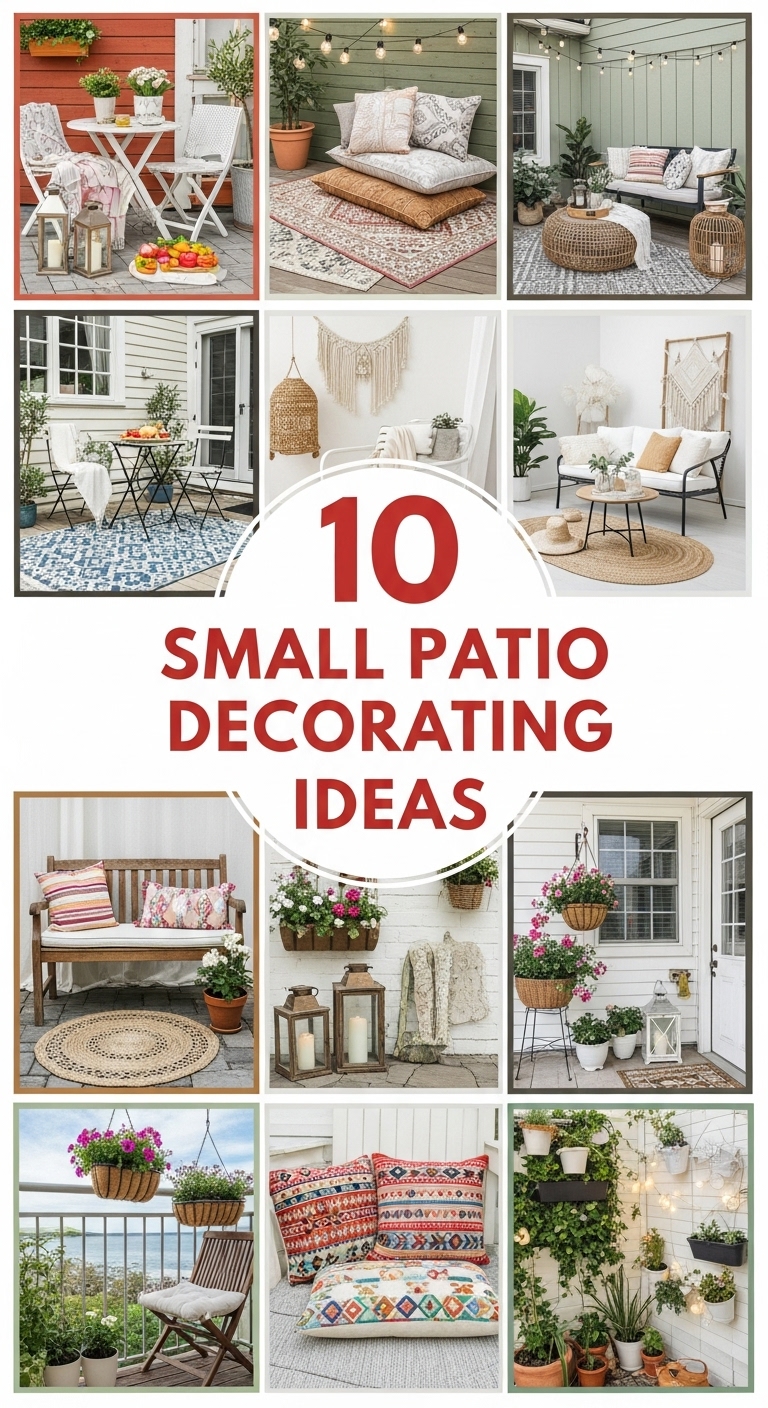
My balcony is four square metres, give or take a geranium, and for the first two summers I lived here it was basically a storage shelf with a view — the bike lock lived there, a broken watering can, and a chair I never sat in because it wobbled. Then a friend came over with a bottle of wine, we squeezed onto that wobbly chair together, and she said, “You know, this could actually be lovely.” She was right, and I was embarrassed enough to finally do something about it. Over the next month I worked through these ten ideas one weekend at a time, spending about 200 EUR total, and the balcony went from dead space to the room I use most from May to October — including the mistakes I made along the way.

1. Embrace Vertical Gardening

With four square metres, the floor was already spoken for, so the walls had to do the gardening. I screwed a simple wooden trellis panel to the balcony wall — 18 EUR at the hardware store — and hung a row of small metal pots from S-hooks, planted with basil, mint, and two trailing nasturtiums I grew from seed. The herbs paid for themselves by July; I have not bought basil since. My first attempt used a flimsy fabric pocket planter, and the pockets dried out in a day under the Munich sun, so I switched to proper pots with saucers and a drip tray underneath, which also keeps the downstairs neighbour dry. Water the vertical stuff daily in summer — it dries out twice as fast as ground-level pots, and I learned that the crispy way.
2. Opt for Multi-Functional Furniture

Every piece on my balcony has to earn its footprint twice, so I bought a storage bench instead of a chair — a 110 cm wooden box with a hinged lid, 70 EUR secondhand, that holds the cushions, the watering can, and the citronella candles, and seats two people when the lid is down. Under it, a folding bistro table that drops to half its size when I only need my morning coffee. The rule I enforced on myself: if it cannot fold, stack, or store something, it does not go out there. What did not survive the cut was a beautiful but enormous terracotta pot my mother gave me — it ate a quarter of the floor and held exactly one sad lavender, so it moved to her garden where it is much happier.
3. Layer with Outdoor Rugs

I resisted the outdoor rug for a whole summer because it seemed like a luxury, and now I consider it the single most transformative 25 EUR I spent on the balcony. A flat-weave polypropylene rug in a simple geometric pattern, big enough to sit under the bench and the table, and suddenly the concrete floor stopped looking like a car park and started looking like a room. It also makes bare feet possible in the morning, which matters more than I expected. My one mistake: I bought a cotton rug first because it was prettier, and the first real rain turned it into a soggy, mildewy mat I had to bin. Polypropylene only — it dries in an hour and shakes clean.
4. Incorporate String Lights

The string lights were my friend’s idea from that wine evening, and she was right about them too. I ran one 10-metre solar string along the top of the railing — 15 EUR, no wiring, charges all day — and the balcony turned into the place where evenings happen instead of the place where evenings end. They come on by themselves at dusk, which means I never have to remember, and the warm white glow (2700K, always warm white) makes even a Tuesday feel deliberate. I tried draping them across the middle of the space first, and my husband walked into them twice, so now they live strictly on the railing line and the wall. Above head height or not at all — that is the whole rule.
5. Use Foldable or Stackable Seating

The storage bench seats two, but dinner for four needed a plan, so I bought two folding wooden chairs that hang flat on the wall when nobody is over — 30 EUR for the pair at a flea market, sanded and oiled, and they look like they cost four times that. When guests come, they come down; when they leave, they go back up, and the balcony is spacious again in thirty seconds. I added flat seat pads in a weatherproof fabric, 8 EUR each, because bare wood gets uncomfortable after an hour and cold after sunset. The lesson I learned the hard way: check the wall hooks’ weight rating before hanging chairs on them. My first pair of hooks bent slowly over a month until one chair slid down the wall at 2 AM and woke the whole flat.
6. Add Potted Plants of Varied Heights

Once the vertical wall was planted, the floor pots needed to earn their space too, so I went for the layered look: one tall olive tree in a big pot in the corner (35 EUR, and it has survived three winters wrapped in fleece), two medium terracotta pots with lavender, and a row of small pots with trailing rosemary along the railing. Different heights, same warm palette, and the balcony suddenly had depth instead of looking like a shelf of identical plants. The terracotta is doing half the work — it breathes, so the soil does not stay soggy, and the colour ties everything together. My honest advice: buy fewer, bigger plants rather than many tiny ones. Ten small pots dry out, tip over, and look fussy; three confident ones look like a garden.
7. Experiment with Color Schemes

My first balcony summer was a riot of random colours — a red pot here, a blue cushion there — and it looked like a jumble sale. The fix cost nothing: I picked one palette and stuck to it. Warm terracotta, cream, and deep green, with the rug’s geometric pattern as the anchor, and everything else had to speak that language or leave. The cushions got cream covers, the pots stayed terracotta, the one green throw I already owned suddenly looked intentional. It is the cheapest design trick I know, because you are not buying new things — you are just editing. The palette also made shopping easier: I stopped buying every pretty pot I saw and started asking, “does it match the family,” which has saved me real money.
8. Install Privacy Screens

My balcony faces the neighbour’s kitchen window at a distance that makes eye contact unavoidable, so privacy was not optional. I tried bamboo roll screening first — 20 EUR, cable-tied to the railing — and it worked, but it went grey and brittle after two summers. The replacement is a wooden trellis with climbing jasmine, which cost more (45 EUR for the trellis and two plants) but smells incredible in June and looks better every year. The jasmine took one full season to cover the trellis, so the first summer was a bit sparse, but now it is a green wall I can sit behind with my coffee and pretend I am somewhere much fancier. If you rent and cannot drill, tension rods with outdoor curtains work — my sister did that, and hers look lovely.
9. Include DIY Decor Accents

The handmade bits are what make the balcony feel like mine rather than a showroom. I painted a thrifted wooden crate (3 EUR) in the terracotta palette and use it as a side table next to the bench — it holds the wine glasses and looks like it was always meant to be there. A macramé plant hanger I knotted from cotton cord (6 EUR of cord, one evening in front of a film) holds the trailing rosemary at eye level. And the string of small terracotta bells I picked up at a market clinks softly in the wind, which my husband finds charming and the neighbour presumably tolerates. None of it cost more than a lunch, and these are the things visitors actually ask about — nobody ever asked where I bought the bench.
10. Introduce a Compact Fire Pit

A full fire pit was never going to happen on four square metres — and frankly the building rules would have opinions — so I went with a tabletop ethanol lantern, 40 EUR, that sits on the folding table and gives real flame without smoke or sparks. It extends the balcony season by a good two months on either end; there is something about a small flame that makes 12 degrees feel cosy instead of just cold. I surround it with the floor cushions on cool evenings, and it has become the reason friends stay for one more glass. The practical notes: ethanol fuel is about 8 EUR a litre and one fill lasts roughly three hours, and I keep it well away from the cushions and the jasmine. Small flame, big atmosphere, zero complaints from the Hausverwaltung.
Conclusion
Two summers after the wobbly chair and the wine, my four square metres are the most-used room in the flat from May to October — and the whole transformation cost less than one weekend trip. Start with the rug and the lights; they do ninety percent of the work. The plants can come one pot at a time, and the flame is the reward for getting everything else right.