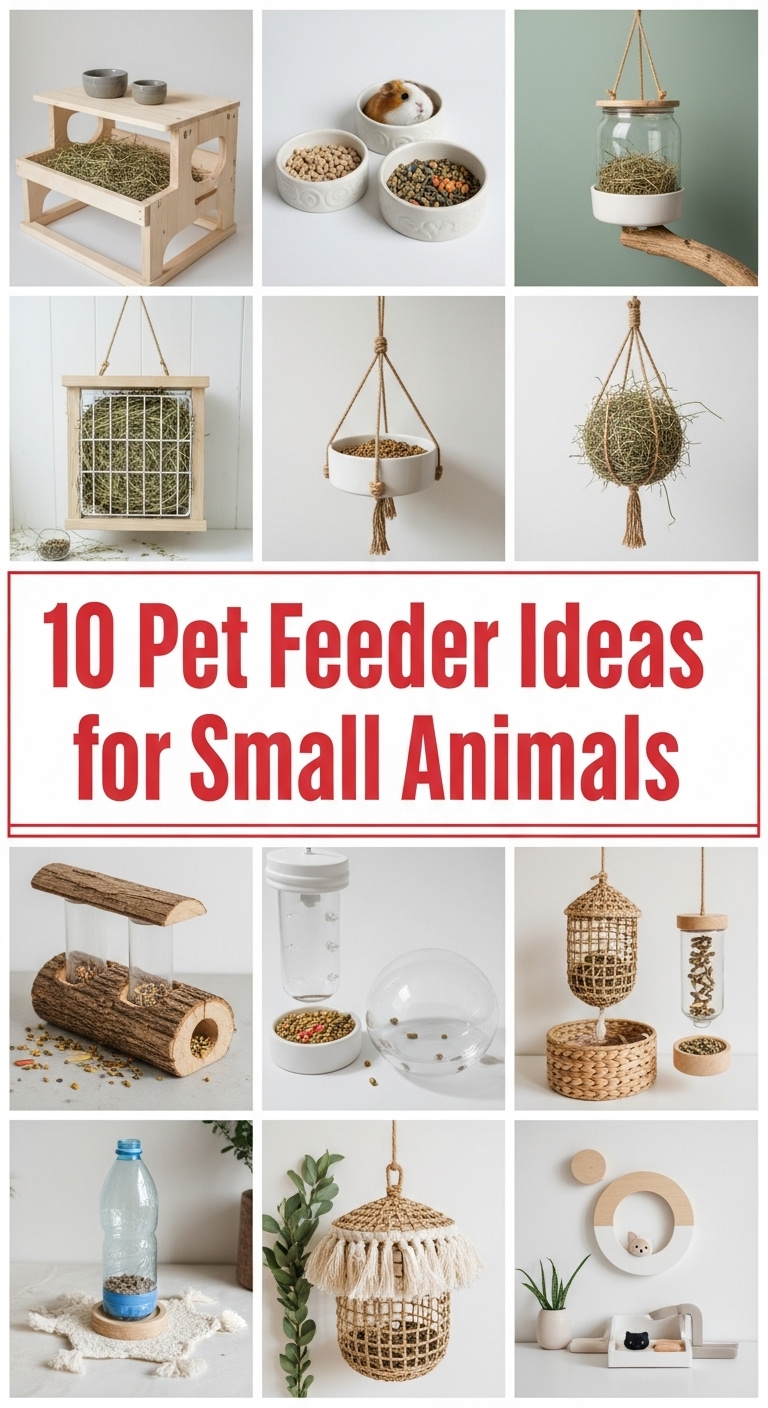
When my daughter brought home her first hamster — a round little thing she named Knödel — I thought feeding him would be the easy part. Two weeks later I was fishing pellets out of bedding, finding seeds stashed in every corner of the cage, and learning that a bored hamster is a surprisingly destructive hamster. Since then our flat has hosted a guinea pig, two rabbits, and a budgie, and I have tested just about every feeder on the market alongside a few I built myself. These are the ten feeding setups that actually worked for our small animals, plus the mistakes I made along the way.
1. Gravity-Fed Feeders
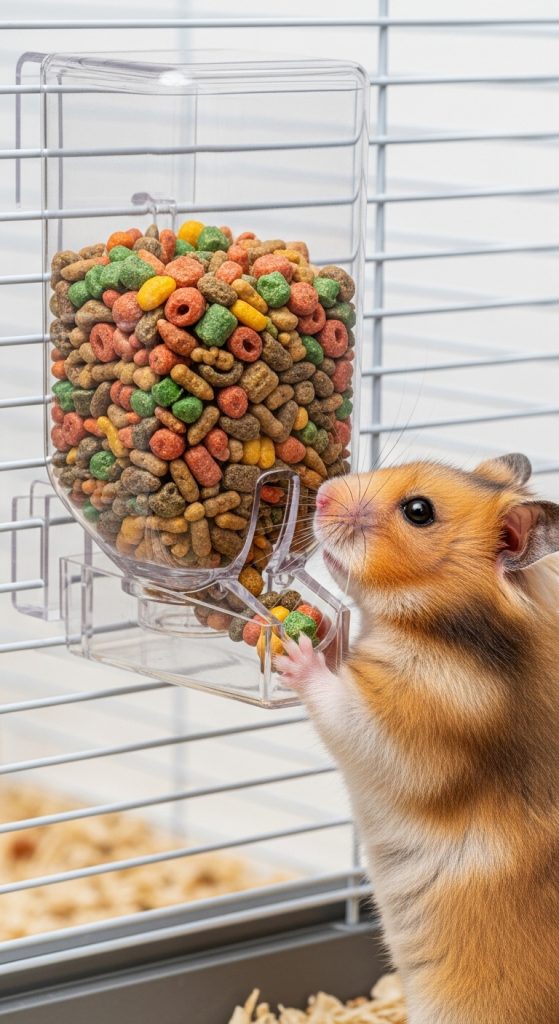
The gravity feeder was the first real upgrade we bought for Knödel, and I chose it for the laziest reason: I kept forgetting to refill his little dish every evening. A hopper feeder that releases pellets as he eats solved that completely, and the 500 ml model we got lasted him nearly a week at a time. What I learned the hard way is to pick one with an adjustable opening, because the first cheap one dumped food faster than he could eat and I ended up with the same bedding mess as before. I also clip a small plastic tray underneath now to catch the bits that roll out, which cut our food waste by at least half. For dry pellets in a hamster or mouse cage, this is the setup I recommend to every beginner, though it is no good for fresh vegetables or hay.
2. Automatic Timed Feeders
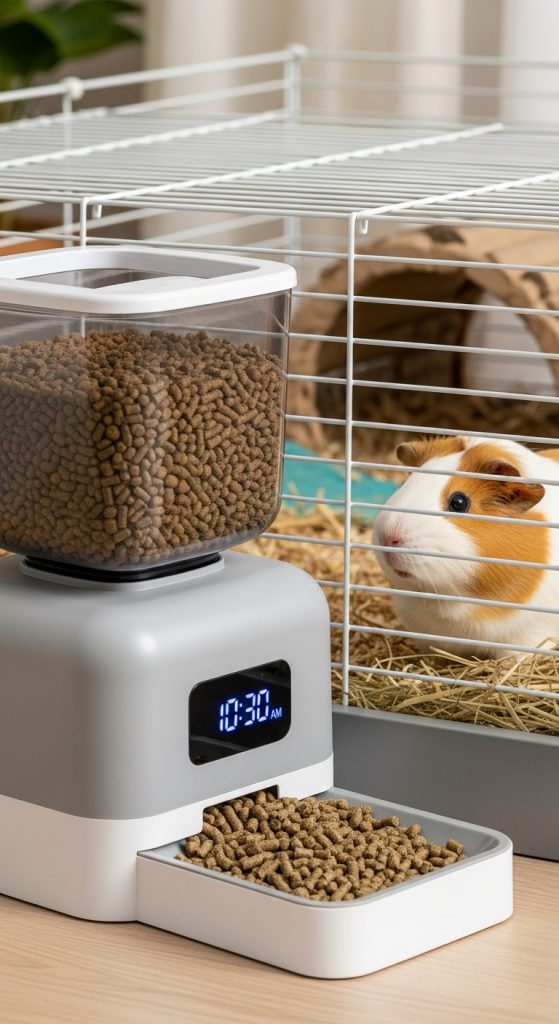
Our guinea pig Socke had the opposite problem from Knödel: she ate whatever we put down within the hour and then wheeked at us for more until someone gave in. A battery-operated timed feeder ended the negotiations, dispensing two small measured portions a day at exactly 7:00 and 18:00, and her weight finally stabilized. I will admit I was skeptical about spending 45 EUR on a plastic box with a clock, but the lid seals well enough that our budgie cannot freeload, and it has survived being chewed, tipped, and sat on for two years. One thing to check before buying: make sure the dispensing tray is too small for your pet to climb into, because Socke absolutely tried that in the first week. If your rabbit or guinea pig is on a vet-ordered diet, this is the most reliable tool I have found.
3. DIY Cardboard Foraging Boxes
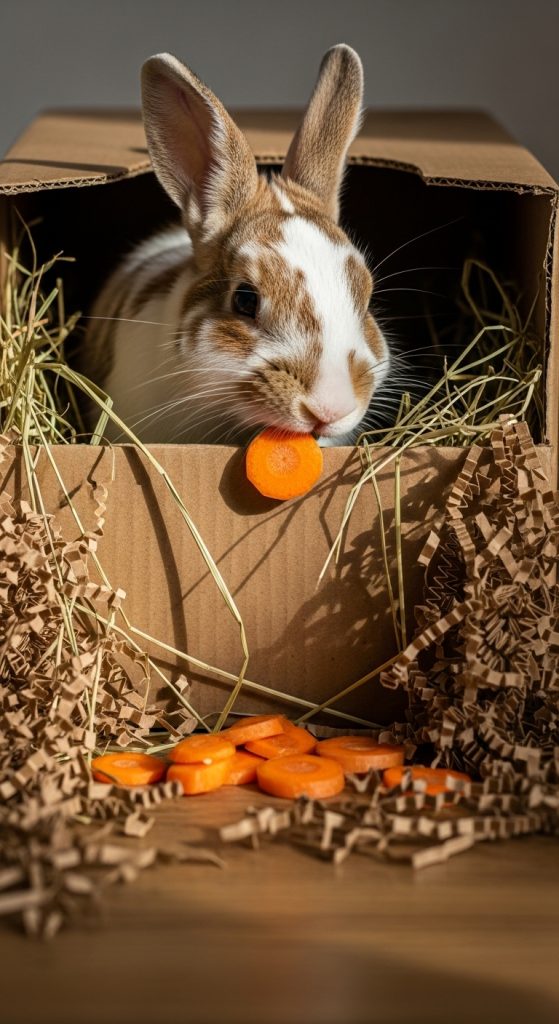
This is the cheapest idea on the list and the one my daughter loves most, because she gets to build it. We take an untreated cardboard box, stuff it with folded layers of plain packing paper and a few hay tufts, and hide pellets and tiny pieces of dried apple between the layers for our rabbit to dig out. The first time we made one, the whole family sat around the coffee table watching the rabbit work through it for an hour, which is more entertainment than our television provides. I replace the box every few days since it gets chewed and peed on, so I only use plain unprinted cardboard with no tape or staples, and I toss any box that gets damp. It costs nothing, it keeps the animal’s brain busy, and it turns treat time into a little event instead of a handful of food dropped in a corner.
4. Ceramic Heavy-Bowl Feeders
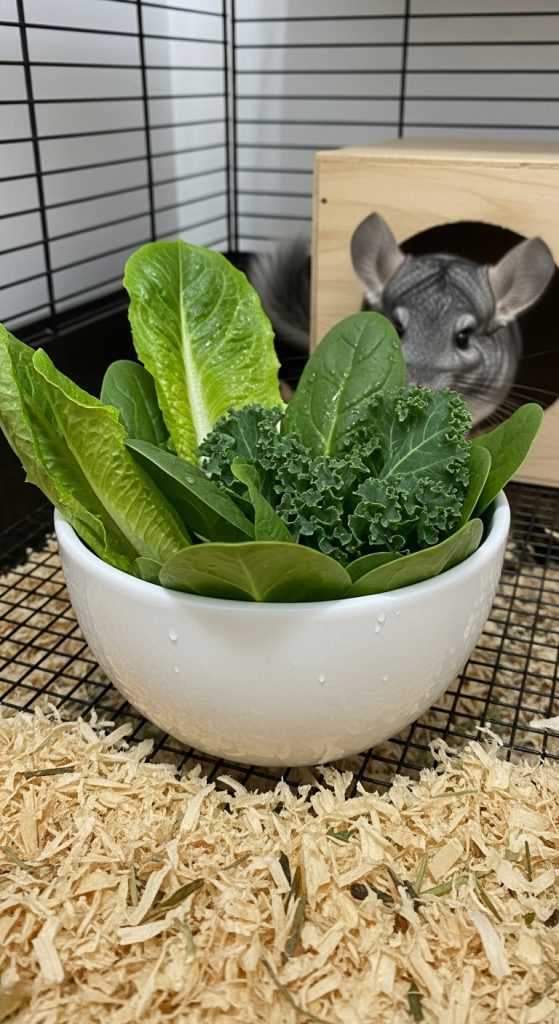
Our chinchilla Dusty treated every lightweight plastic bowl like a personal toy, flipping it across the cage within minutes and grinding food into the bedding. The heavy ceramic bowl ended that game on the first day; it weighs nearly half a kilo and has not moved since, not even when Dusty launches herself off the shelf behind it. I buy the shallow wide ones, about 12 cm across, so pellets spread out instead of piling up, which means she cannot sit in the food either — she did try that too. Cleaning is genuinely easy because the glaze is smooth, and I run it through the dishwasher once a week with the regular plates. At 8 to 12 EUR from any pet shop, it is the cheapest fix on this list for a tipping problem, and I now keep a spare because Dusty once chipped one during what I can only describe as a celebration.
5. Hanging Wire Feeders
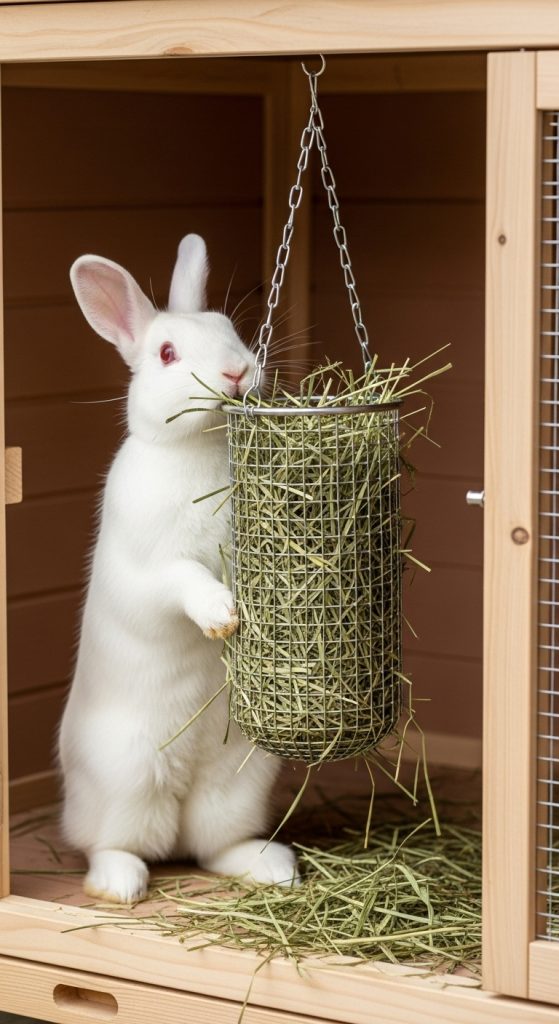
When we moved our rabbits into a bigger hutch, the floor-level hay rack turned into bedding in about a day, so I hung a wire feeder on the side bars instead and the hay finally stayed clean. Hanging it at nose height means they pull strands through the bars the way they would graze, and the uneaten hay stays up off the floor instead of getting trampled. The one mistake I made was buying a feeder with a wide mesh first: our rabbit caught a paw in it once, and after that I only use ones with bars close enough together that a paw cannot poke through. I check the wire edges monthly for rust or rough spots and replace the feeder the moment it looks worn. For leafy greens it works just as well as for hay, and it frees up floor space, which in a rabbit hutch is always in short supply.
6. Adjustable Portion Feeders
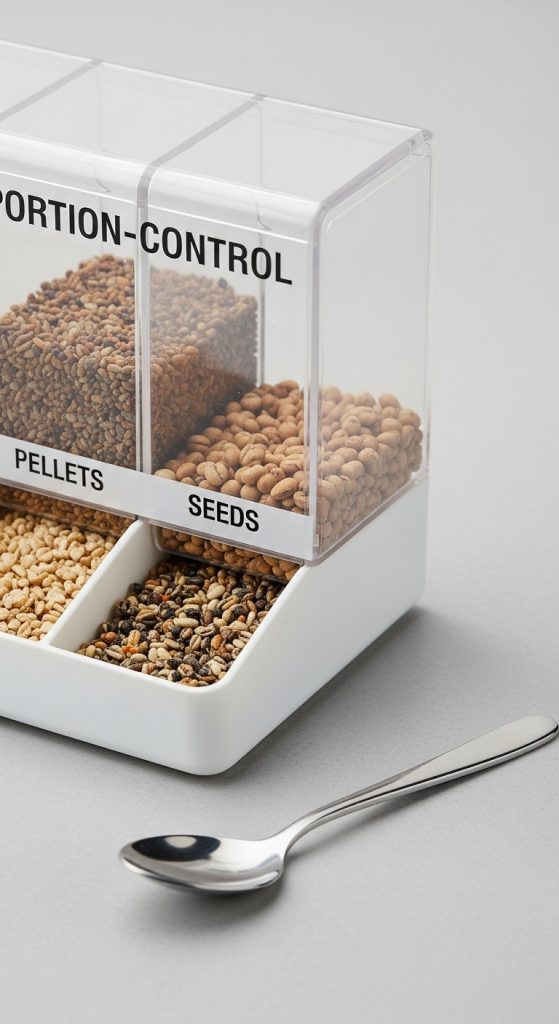
Our dwarf hamster Knödel’s successor, a tiny thing named Erdnuss, hoarded food like a pensioner preparing for winter, and her cheeks were permanently stuffed. The vet pointed out she was overweight, which I had genuinely not realized was possible in a hamster, so we switched to a portion feeder with measured compartments and a lid that closes after each portion is eaten. I fill the day’s ration each morning — about two teaspoons of mix plus a small piece of vegetable — and that is all she gets until tomorrow, which stopped the cheek-hoarding almost immediately. It took her about three days to learn that pushing the little door only opens the current compartment, and she figured it out faster than I expected. If your small pet is gaining weight or eating too fast, this is the tool I reach for before anything fancier.
7. Puzzle Feeders for Mental Stimulation
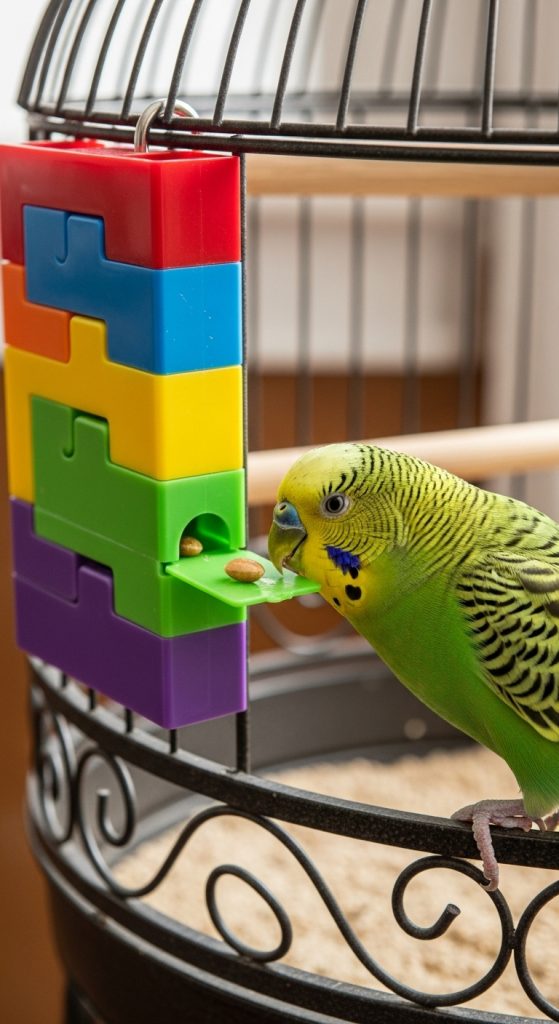
Our rats were so clever that a plain food bowl bored them, and bored rats chew whatever is closest, which in our case was the wooden ramp. A puzzle feeder with sliding panels and little cups turned their dinner into a twenty-minute problem-solving session, and the ramp-chewing stopped within the week. I started them on the easiest setting with treats visible in the open cups, then gradually made it harder over about two weeks, and watching them figure out each level was honestly the best part. I only use sturdy BPA-free plastic ones now, because the first cardboard puzzle was shredded and partially eaten in one evening, which taught me something about rat priorities. One caution from experience: puzzle feeders do not replace their regular balanced diet, they are for treats and enrichment, so keep the portions small and the calories sensible.
8. Treadmill-Style Dispensers
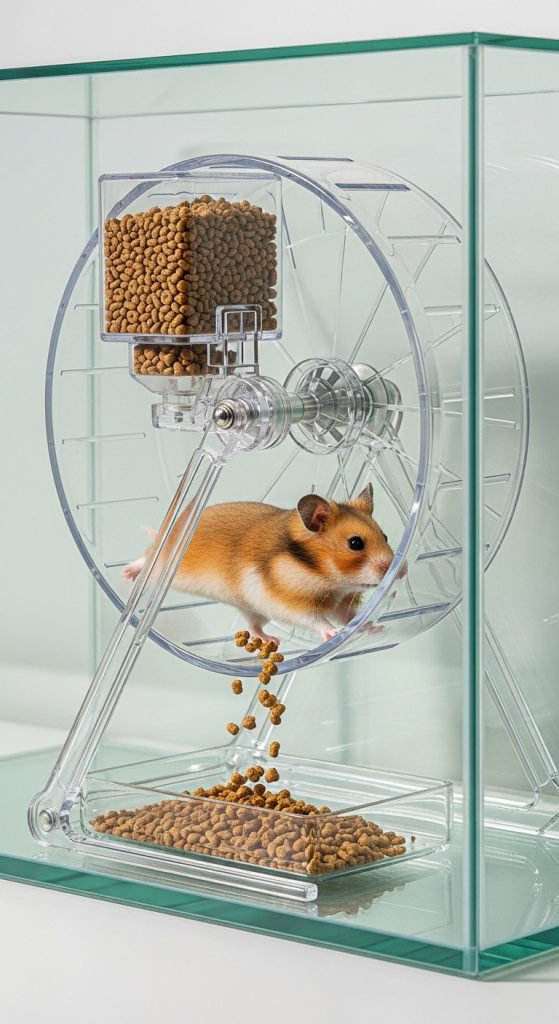
This one sounds like a joke until you see a chubby hamster discover that running releases food, and suddenly the wheel is the most popular spot in the cage. Our hamster Pico was getting round despite a huge cage, so I bought a wheel-dispenser that drops a pellet every few rotations, and within a month he was noticeably more active and back to a healthy weight. I do watch the total food closely with this one, because a very determined hamster will run a marathon for treats, so I load it with only his daily ration and nothing more. The mechanism is simple enough that it has not jammed in over a year, though I do brush out dust and crumbs from the dispenser slot once a week. It is not for every animal — I would not use it for rabbits or guinea pigs — but for a nocturnal hamster with too much energy, it channels that energy exactly where it should go.
9. Silo-Style Hay Feeders
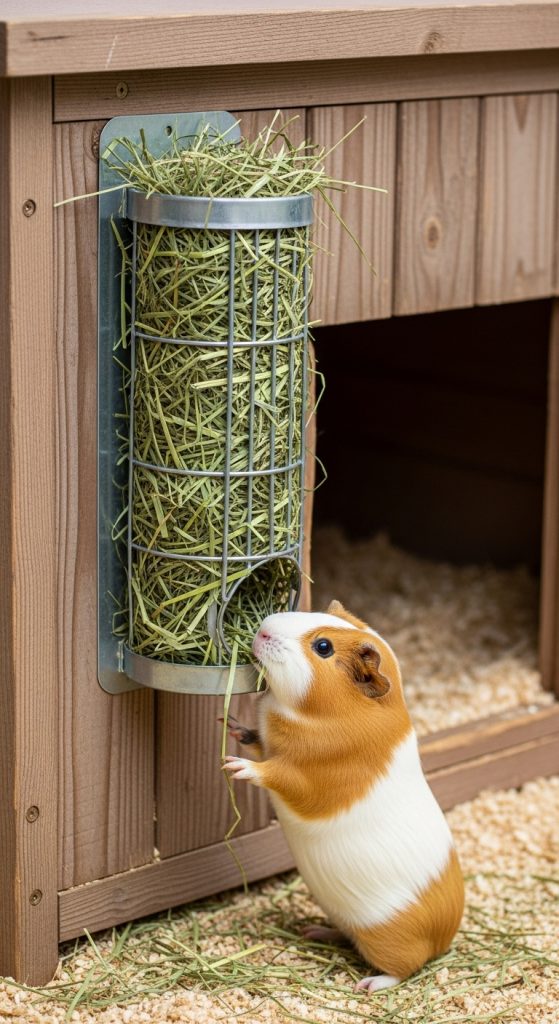
Guinea pigs eat an astonishing amount of hay, and before we got the silo feeder, half of every bag ended up trampled into the bedding within a day. The upright silo keeps a big bundle of hay clean and dry inside, and Socke pulls strands out through the slots, which means we waste maybe a third of what we used to. I hung ours on the outside of the cage bars with the slots facing in, which keeps the bulk of it out of the living area and makes refilling easy without opening the cage. The only real rule here is material: I use a rust-resistant metal one, because the BPA-free plastic version we tried first got gnawed into a modern art piece within a month. If you have guinea pigs or rabbits, this single feeder will pay for itself in saved hay within about two months — hay is not cheap, and I do the maths every time I buy a new bag.
10. Multi-Chamber Feeders
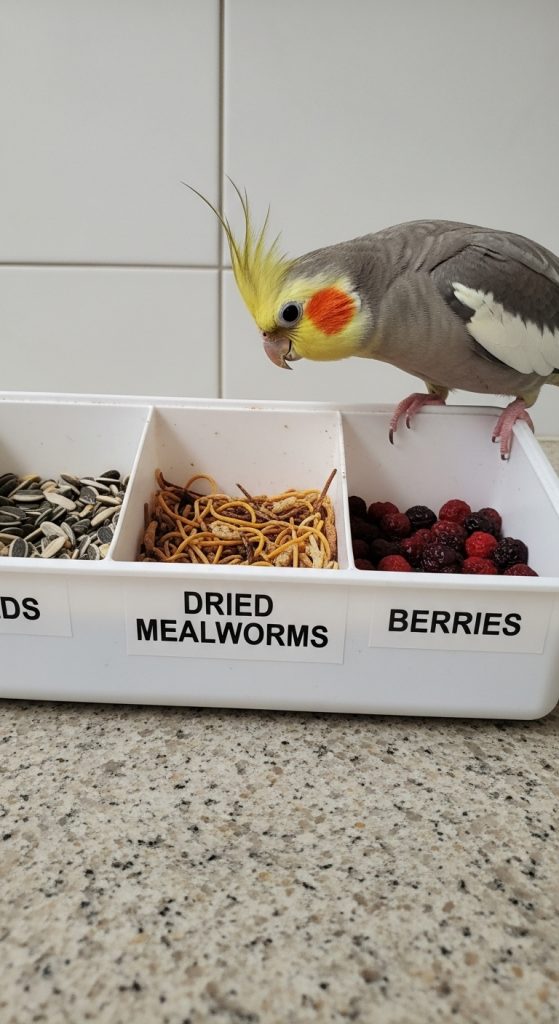
Our budgie Felix eats seeds, millet, and the occasional bit of chopped greens, and keeping all of that in one dish meant the seeds got buried under everything else. The multi-chamber feeder with three separate compartments keeps each food type in its own lane, and I can see at a glance which one needs refilling. I labeled each chamber with a tiny sticker when my daughter was small so she could do the morning refills without mixing things up, which made her feel very official about her bird duties. It mounts to the cage bars so it cannot be tipped, and the clear plastic lets me check levels from across the room. The one downside is that it needs a proper wash every couple of weeks, because the grooves around the dividers collect seed husks, but a bottle brush takes care of that in two minutes. For any pet with a varied diet, it is a small upgrade that makes daily feeding noticeably tidier.
Conclusion
Five small animals and several chewed feeders later, my rule is simple: match the feeder to the animal in front of you, not the one in the catalogue. Start with the basics, watch what your pet actually does with it for a week, and upgrade only where the problems are. The right feeder will not just make your life easier — it will keep a small animal busy, healthy, and, in Pico’s case, running marathons.